
Reviewed · COOKING CLASSES
Cape Town: Bo-Kapp Walking Tour and Malay Cooking Class
Cape Town’s Bo-Kaap is more than a row of photogenic houses. This four-hour experience connects the colorful cobbled streets with a local home kitchen, where you help fold samosas, make flaky roti, and cook a Cape Malay meal. I especially like the spice-shop stop and the chance to meet local artists and shopkeepers along the way.
I also like the warm, hands-on teaching. Faldela, Gadija, and other local hosts bring plenty of personality, and you are encouraged to take part rather than simply watch. The main consideration is the small cooking area, which may mean that only one or two people can work at the counter at a time. The experience is still social, but not every guest will have equal kitchen space.
Key points to know before booking
- The walking tour gives the food a sense of place: Learn about Bo-Kaap’s Muslim community, old buildings, first mosque, museum, and local businesses before cooking.
- The spice stop is a highlight: You will hear about different spices, their uses, and their possible health benefits.
- You make more than one dish: The menu includes samosas, chicken curry, roti, sambal, and koesisters, with some sessions also including chili bites.
- Local hosts lead the experience: Faldela is the main name associated with the cooking class, while Gadija, Gandija, and Ilyas have also guided the walking portion.
- You leave with useful recipes: The recipes are sent by email, making it possible to try the dishes at home.
- Plan for comfort, not speed: Wear comfortable shoes for the cobbled streets and allow four hours for the full walk, class, and meal.
Why this Bo-Kaap experience works so well
Bo-Kaap is easy to reduce to a quick photo stop. The painted houses are striking, but a short wander alone will tell you little about the people, faith, food, and past behind them. This tour adds the missing context, then lets you taste it.
The format is simple and effective. You first walk through the neighborhood with a local guide. After seeing historic buildings, shops, art spaces, and the area’s first mosque, you return to a host’s home for a cooking lesson. The meal is not an afterthought. It is the second half of the story.
The experience has a rating of 4.7 out of 5 from 105 ratings, and the praise is especially consistent about the hosts, the food, and the useful cooking instruction. That matters here because the personality of the guide shapes the whole afternoon. Faldela is often described as funny, warm, and closely connected to the community, while Gadija and Ilyas have led engaging walks through the area.
At $68 per person, this is not the cheapest way to see Bo-Kaap. You are paying for four hours, a local guide, museum entry, a cooking lesson, a full meal, water, and recipes to take home. The value is strongest if you want more than photographs and would otherwise book a separate walking tour and food activity.
A few more Cape Town trips to weigh up
- Cape Town: Malay Cooking Class and Lunch in Bo-Kaap
★ 4.8 · 515 reviews - Authentic African Cuisine Cooking Experience
★ 5.0 · 236 reviews - Cape Town: Cape Malay Cooking Class in Bo-Kaap
★ 4.8 · 120 reviews
Beginning with Bo-Kaap’s painted streets
The meeting point is a purple house with flower pots on top. That detail is useful because Bo-Kaap has plenty of colorful facades, and a clear landmark is easier to spot than a vague street description.
Bring comfortable shoes. The walk follows cobbled streets and includes older buildings, local shops, and community landmarks. The tour is not described as a strenuous hike, but uneven paving can make poor footwear annoying.
Your guide explains how the neighborhood developed and introduces the traditions of the local Muslim community. The focus is on people and daily life, not just architecture. You will hear about the area’s old buildings and the way Bo-Kaap’s identity is tied to Cape Malay culture and Islam.
The colorful houses naturally attract attention, but the guide helps you look past the paint. The architecture reflects earlier colonial periods, and the streets carry signs of present-day community life too. One particularly interesting detail is that support for Palestine has been painted on some house fronts. The subject may become part of the conversation, depending on your guide and the day’s discussion.
The walk is short enough to leave time for cooking, yet substantial enough to give the neighborhood meaning. Several people found it especially useful to begin with the walk, rather than arriving only for the food. I agree. Once you understand a little about Bo-Kaap, the dishes feel connected to a place instead of appearing as a stand-alone cooking demonstration.
The mosque, museum, and local community
The route includes information about South Africa’s first and oldest mosque, as well as the cultural museum. Museum entry is included in the price, although the amount of time spent there may depend on the group and guide.
One practical point deserves attention: allow extra personal time if the museum is especially important to you. The four-hour activity combines several parts, and one rating noted that the group did not visit the museum during the tour. The same feedback suggested making separate time for it. In other words, museum entry is included, but a dedicated museum visit should not be assumed.
The walk may also include local art and souvenir shops. You might meet artists or browse businesses run by people from the community. This adds more substance than a route that only pauses at the most photographed houses.
I like this part because it directs some attention toward local enterprises. You are not simply looking at Bo-Kaap from the street. You have a chance to see how residents present their work and culture, and perhaps buy something directly from a local shop.
Learning spices at a Bo-Kaap shop
The spice-shop visit is one of the more distinctive parts of the itinerary. Your guide introduces different spices, explains how they are used, and discusses their possible health benefits.
This can be a lively lesson, especially with Faldela, whose enthusiasm for spices is a major part of her teaching style. One useful tip is to start recording video when the spice explanation begins, if your guide permits it. There is a lot to remember, and the information covers more than simply which powder goes into the curry.
The spice stop also prepares you for the cooking class. Instead of reaching the kitchen with a list of unfamiliar ingredients, you have already begun to understand the flavors. You may not become an expert after one visit, but you will leave with better instincts about how Cape Malay cooking builds taste.
Do not treat this as a formal health consultation. The guide shares traditional uses and general benefits, not medical advice. Still, it is a memorable bridge between the neighborhood walk and the meal.
Same country, a completely different kind of day:
- Wine Tour: Paarl, Franschhoek & Stellenbosch incl 3 wineries
★ 5.0 · 3,940 reviews - Cape Town: Hop-On Hop-Off Bus Tour with Optional Cruise
★ 4.8 · 3,929 reviews - Cape Town: Cape of Good Hope & Penguins Day Tour with Pickup
★ 4.7 · 3,362 reviews - Zipline Cape Town – From Foot of Table Mountain Reserve
★ 5.0 · 3,179 reviews
Cooking samosas, chili bites, and roti
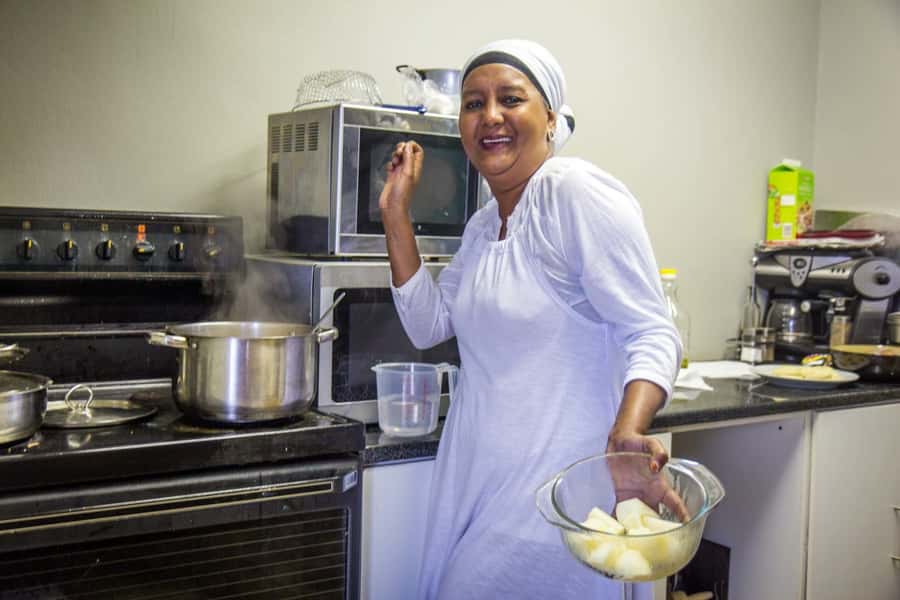
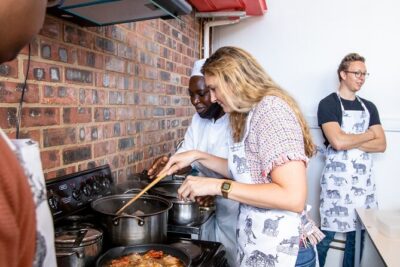
The cooking takes place in a local host’s home. Faldela is the principal cooking teacher named for this activity, though some sessions involve another host or guide. Bilquis has also been involved in the cooking portion.
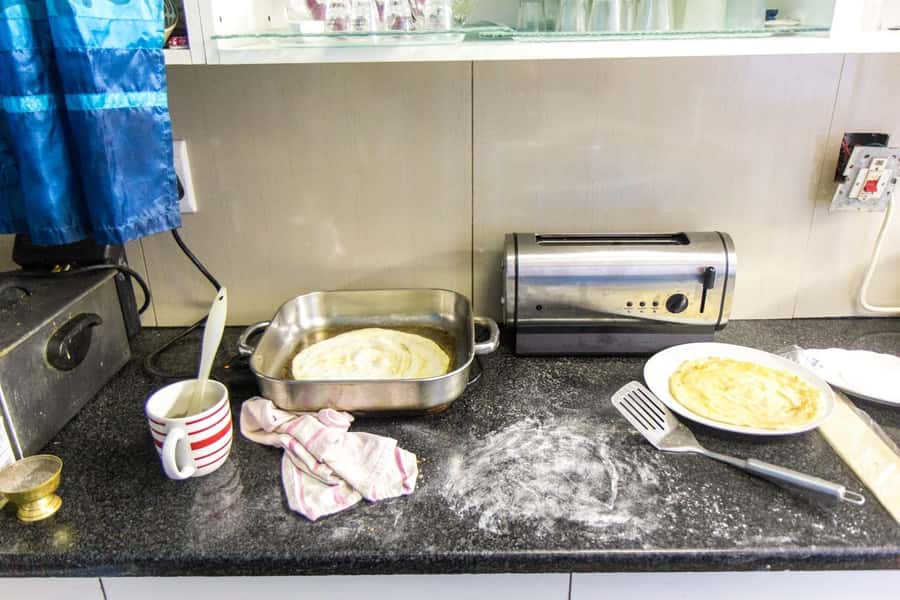
You begin with the first course, folding samosas. Some sessions also include chili bites. Folding the pastries is one of the most useful hands-on tasks because you can repeat it at home without special equipment. Several people went home and made samosas again.
The class is organized so that beginners can take part. You do not need to arrive as a cook. The host demonstrates the techniques, explains the ingredients, and keeps the process moving. Guests have described the instruction as relaxed but thorough, with the host stepping in when needed.
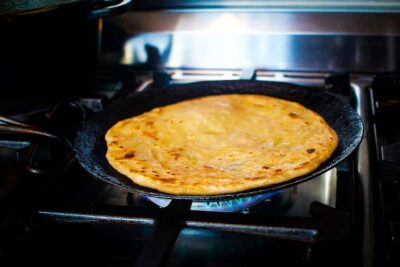
Roti is another highlight. You help prepare the flatbread from scratch and learn the method for making it flaky. This is the sort of small technique that can change the result of a home-cooked meal. It is also one of the few parts that benefits from seeing the movements in person.
The main drawback is space. The cooking area is tiny, so only one or two people may be able to work directly at a time. If you want a class where each person has a large work station, this will feel limited. If you are happy to watch part of the demonstration, take turns, and chat while the food cooks, the compact setting becomes less of a problem.
Dietary needs have been handled well in at least some sessions, but you should still communicate them when booking. The supplied information does not promise specific substitutions, so do not assume that every restriction can be met without advance notice.
Preparing Cape Malay curry and sambal
The main dish is chicken curry, prepared with the spice knowledge introduced earlier. You help with the cooking rather than simply sitting down to a meal prepared in advance.
The menu also includes roti and sambal, described here as a salsa salad. Together, these dishes give you a useful sense of contrast: warm, spiced curry; soft, flaky bread; and a fresh side that cuts through the richness.
The lesson is as much about technique as ingredients. The host shares personal methods that make the food flavorful, including tips that are not always obvious from a written recipe. This is where the class earns its place on a Cape Town itinerary. You are learning how a local cook approaches the food, not just following a printed list.
The cooking portion is also social. You meet people from different countries, talk with the host, and take part in a shared task. One solo participant was pleased that the activity went ahead even with only one person booked, but group size can vary. A smaller group may offer more direct time with the teacher, while a larger group can bring more conversation and energy.
Sitting down to the meal
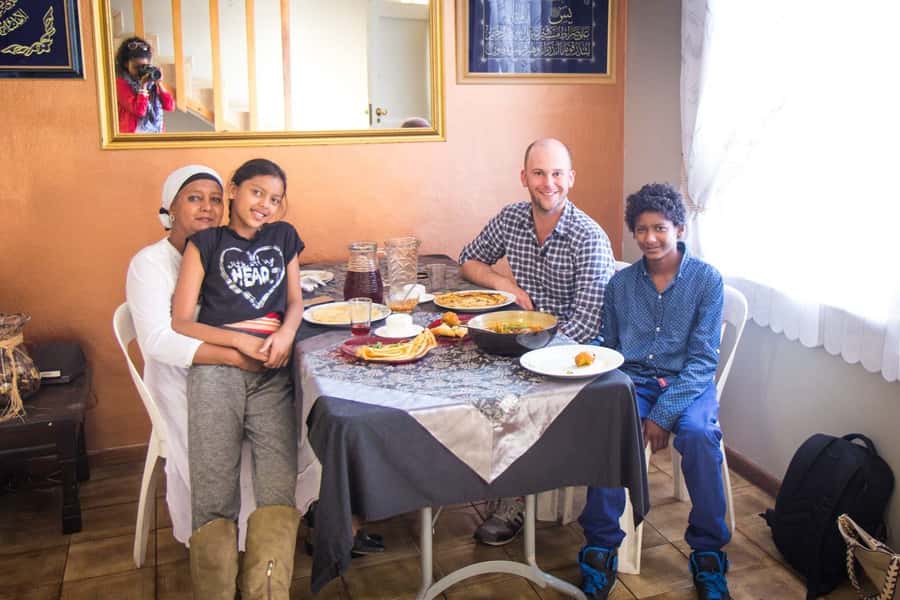
After the cooking, everyone sits down to eat. The meal is described as generous, and the menu includes the samosas, chicken curry, roti, sambal, and dessert. Water is included, while the activity information lists food and drinks as not included, with no alcohol. Because that wording is not perfectly clear beside the cooking-and-meal description, confirm exactly what is covered in your booking price before you go.
The meal is served with cardamom tea and koesisters, described as spicy, savory donuts. This is a pleasant finish after the cooking, especially because you have helped make much of what is on the table.
The shared meal is important. You get time to ask questions that may not arise while everyone is chopping or folding. You can talk with your host about the area, compare notes with other participants, and enjoy the food at a slower pace.
You should not expect a restaurant-style service or a polished demonstration kitchen. The appeal is the home setting and personal welcome. That also means the experience has a more informal rhythm, with limited space and the host doing some of the work to keep the meal on track.
Recipes are provided by email after the class. This adds real value. You can remember the meal through the recipes, then test your roti, samosas, curry, or chili bites once you are back home.
Guide personalities make the difference
The experience provider is Cooking with Love, and the guides named in the feedback include Faldela, Gadija, Gandija, and Ilyas. Faldela is particularly associated with the cooking lesson, while Ilyas has led the walk. Names and roles may vary by date.
Faldela’s style is lively and direct. She involves the group, keeps the class entertaining, and shares plenty of practical information. Her connection with people on the street is also part of the experience. Local residents greet her, which gives you a sense that she is not simply passing through with a group.
Gadija and Gandija are described as friendly and effective guides for the historical walk and cooking instruction. Since the guide can change, you should book this for the format and subject matter rather than expecting one specific person unless the operator confirms it.
One point of balance: the walking discussion may include current political subjects connected to the community. Most people will find this adds context, but one participant felt that a political explanation went further than needed during a cooking activity. If you prefer a strictly neutral food lesson, keep this possibility in mind.
Who should book this experience
I would choose this for you if you want to understand Bo-Kaap beyond its famous facades. It suits people who enjoy local food, cultural background, conversation, and small-group activities with a personal touch.
It is also a strong choice if you are not confident in the kitchen. You will receive guidance, and the host does not expect you to produce perfect pastries or roti on your first attempt. The point is to learn the method and enjoy the result.
Families and mixed-age groups may like the variety, though the supplied information does not specify an age minimum. People with mobility concerns should note the cobblestones and walking portion, since no accessibility details are provided.
This may be less suitable if you want a large, professional cooking studio, a quiet museum visit, or a tightly timed sightseeing route. The home kitchen is compact, and the tone is personal rather than formal.
Practical details and value at $68
The activity lasts four hours and is conducted in English. Starting times vary, so check availability when choosing your date.
Museum entry and water are included. Alcohol is not included. The activity information also lists food and drinks as not included, so ask for clarification about meal costs before paying. This is the one pricing detail I would not leave vague.
Free cancellation is available up to 24 hours before the activity for a full refund. You can also reserve now and pay later, which helps if your Cape Town schedule is still shifting.
At $68, the price is fair if you value the combination of a guided neighborhood walk, local introductions, a cooking class, and a sit-down meal. It is less compelling if you plan to spend only an hour taking photographs in Bo-Kaap. The experience asks for half a day, but it gives you food skills and recipes in return, not just sightseeing.
Should you book the Bo-Kaap cooking class?
Book it if you want a personal introduction to Bo-Kaap and Cape Malay food, especially if you like learning by doing. The strongest reasons are the local guides, the spice lesson, the homemade meal, and the chance to make roti and samosas yourself.
Go with realistic expectations about the kitchen. You may need to take turns, and the museum visit may not be a full part of the walk. Confirm the food cost, mention dietary needs ahead of time, and wear comfortable shoes.
For a first visit to Cape Town, this is a useful way to spend four hours in Bo-Kaap. You leave with a fuller understanding of the neighborhood, a full stomach, and recipes that can bring a little of the Cape Malay table into your own kitchen.
FAQ
How long does the Bo-Kaap walking tour and cooking class last?
The full experience lasts four hours, including the walk, spice-shop visit, cooking class, and shared meal.
Where is the meeting point?
Meet your host at a purple house with flower pots on top.
What language is the activity conducted in?
The live tour guide speaks English, and the listed activity language is English.
Is the museum entrance included?
Yes. The museum entrance fee is included in the activity price.
Will the tour definitely visit the museum?
Museum entry is included, but the timing of the visit can vary. One recorded experience did not include a museum visit during the walk, so make separate time if seeing the museum is important to you.
What food will I prepare?
The planned meal includes samosas, chicken curry, roti flatbread, sambal or salsa salad, and koesisters with cardamom tea. Some sessions have also included chili bites.
Do I get the recipes after the class?
Yes. The recipes for the food you prepare are sent by email.
Is water included?
Yes, water is included. Alcohol is not included.
What should I bring?
Bring comfortable shoes for the walk on cobbled streets.
Can I cancel for a full refund?
Yes. You can cancel up to 24 hours in advance for a full refund. You can also reserve now and pay later.
More Walking Tours in Cape Town
- Cape Town: Nathi Langa Township Walking Tour
★ 4.9 · 493 reviews - Cape Town: Art, Culture & History Walking Tour
★ 4.9 · 392 reviews - Cape Town: Street Art Walking Tour in Woodstock
★ 4.8 · 293 reviews - Cape Town: Langa Township Walking Tour
★ 4.8 · 272 reviews
Just added around Cape Town
- Lion’s Head Hike: Cape Town – Sunrise or Sunset Hike★ 5.0 · 29 reviews
- Lion’s Head Sunrise or Sunset Hike + Hotel Pick-Up★ 5.0 · 24 reviews
- Lion’s Head: Hike with a registered hiking guide★ 5.0 · 3 reviews
- Kruger National Park 3 Days Best Ever Safari from Cape Town★ 4.1 · 11 reviews
- Koeksister and Samoosa Class by the Malay Cook Up★ 4.8 · 9 reviews
- Kirstenbosch Garden, Bo-Kaap-Penguins & Cape Peninsula Tour★ 3.9 · 7 reviews
- Khayelitsha: 3-Hour Township Walking Tour★ 5.0 · 6 reviews
- Cape Town: Constantia Half-Day Wine Tour & Tastings★ 4.9 · 15 reviews
Cooking Classes, compared.
Half-Day Small Group Cooking Experience in Franschhoek
Read our review →
GQ: City Walking Tour & African Cuisine Cooking Class
Read our review →
Browse the lists this tour appears in