

Reviewed · SOWETO TOURS
Soweto: Walking Tour with a Local Guide and Lunch
Soweto is not a sightseeing backdrop. It is a living community shaped by protest, music, politics, faith, and ordinary family life. This four-hour walk connects the 1976 uprising with the streets people live on today, led by a guide who knows Soweto from personal experience.
I like the thoughtful storytelling, especially from Maweza, whose talks cover apartheid, South African politics, and daily life without turning the tour into a dry lecture. I also like the chance to eat a local kota and use a minibus taxi, two small details that make the outing feel less packaged.
The main consideration is the amount of walking. You cover a lot of ground, and the visit to an informal settlement may feel confronting. The tour runs rain or shine, Mandela’s House costs extra, and lunch is simple rather than a sit-down restaurant meal.
Key things to know before you go

- The tour begins at a major site: Meet outside Vilakazi Espresso, opposite the Hector Pieterson Memorial.
- The guide makes the difference: Maweza is frequently named for his clear, personal storytelling, while Teboho, Thabo, and Mulalo also lead tours.
- The route mixes famous and everyday Soweto: You see Mandela’s House and the Soweto Towers, then walk through less commercial areas and Nomzamo Park.
- Lunch is local street food: A kota, sometimes described as a Soweto-style chip butty, is included. Vegetarian food has been available.
- A minibus taxi is part of the experience: You ride from Orlando West to Orlando East, giving you a glimpse of normal local transport.
- Bring cash and good shoes: Cash is useful for drinks, tips, and possible street performers. Comfortable footwear matters.
Why this Soweto walk is different

Many Johannesburg outings show you Soweto from a vehicle. This one asks you to walk through it. That change in pace matters. You notice the distance between landmarks, the mix of old and new buildings, the street life, and the way major national events are tied to specific corners and homes.
The tour also avoids presenting Soweto as only a place of struggle. You hear about apartheid and the 1976 student uprising, but you also meet local people, stop for food, pass homes linked with major political figures, and ride public transport. The result is a more rounded picture.
The strongest part is the guide’s role. Maweza is described as a historian by several guests, and that fits the experience: he explains events, answers questions, and adds personal insight from growing up in or living around Soweto. His approach is animated but serious when it needs to be.
This is a good choice if you want context rather than a quick photo stop. It is less suitable if you prefer a short, vehicle-based tour with little walking or a polished museum-style presentation.
More Soweto Tours in Johannesburg
- Johannesburg: Hop-On Hop-Off Bus with Optional Soweto Tour
★ 4.6 · 985 reviews - Soweto /Johannesburg and Apartheid Museum Guided Full Day Tour
★ 5.0 · 932 reviews - Johannesburg Hop-On Hop-Off City Tour with Soweto Option
★ 4.5 · 768 reviews
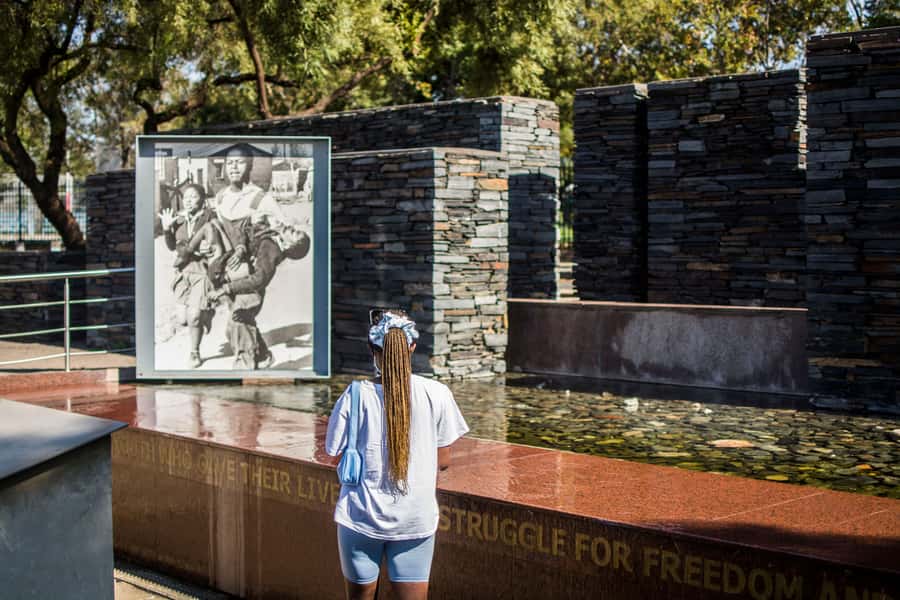
Starting at the Hector Pieterson Memorial
Meet your guide in front of Vilakazi Espresso, opposite the Hector Pieterson Memorial. This is a practical meeting point because the memorial immediately places you inside the central story of Soweto.
The memorial commemorates the students killed during the 1976 Soweto Uprising. The protest began when schoolchildren opposed the forced use of Afrikaans in education, and the resulting violence became a major turning point in opposition to apartheid. Your guide explains the events and the wider system behind them before leading you on foot.
You spend about 20 minutes at the memorial, including a guided visit, sightseeing, and a photo stop. Do not rush this section. The memorial is not just an opening attraction. It gives meaning to the route that follows.
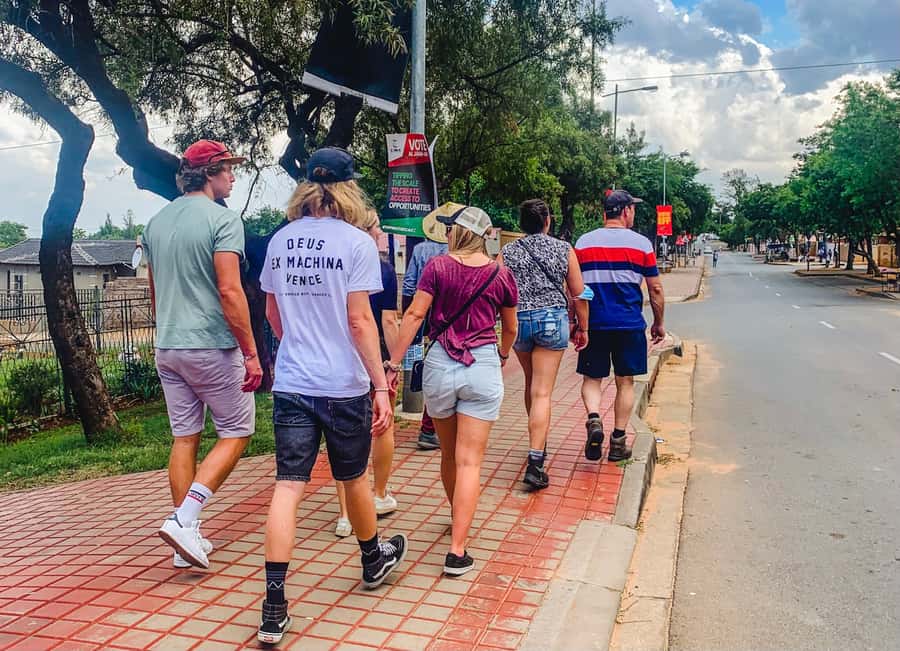
From here, you walk down Moema Street, retracing part of the historic march. That physical connection is one of the tour’s best ideas. Instead of hearing about an event in an abstract way, you move through the streets where it unfolded.
The guide’s storytelling is especially useful here. You can ask about the uprising, apartheid laws, and how Soweto fits into South Africa’s wider struggle for freedom. The talks are designed for questions, so come prepared with a few of your own.
Vilakazi Street and two Nobel Peace Prize homes

The route continues along Vilakazi Street in Orlando West. This is one of Soweto’s best-known streets because it is associated with both Nelson Mandela and Desmond Tutu. It is also the part of the tour where the famous landmarks and modern visitor activity come closest together.
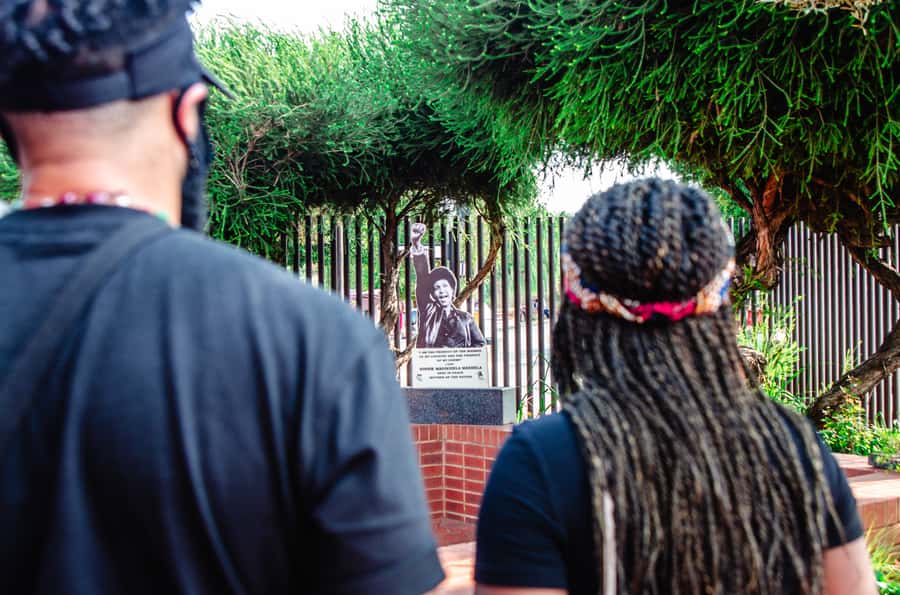
At Mandela’s House, you have roughly 20 to 25 minutes for a visit, guided explanation, photos, and possible shopping. The house is where Nelson Mandela lived before and after his imprisonment, and the tour description gives you time to go inside if you choose.
Admission is not included. That extra cost is easy to overlook, so decide before the tour if entering matters to you. If you want only the exterior and the surrounding street, you can keep the pace moving. If you want to see the interior, allow for the entrance fee and use the short visit well.
The stop at Tutu House lasts about five minutes. It is mainly an exterior photo and explanation stop, but its value is clear. Seeing these two homes on the same street helps you understand how Soweto became linked with South Africa’s political transition.
You then pass Winnie Mandela’s House for around ten minutes. Again, this is a short stop for photos and explanation, not a long interior visit. Together, the three homes create a compact lesson in the people and families connected with the anti-apartheid movement.
Vilakazi Street can feel more visitor-focused than the residential areas later in the tour. That is not a flaw, but it is useful to know. The route gives you both the famous names and a look beyond them.
Lunch on Vilakazi Street

Lunch takes about 25 minutes and is served at a local shop on Vilakazi Street. The meal is included, along with bottled water, but other drinks are not.
The food is simple street fare. The most specific description is a kota, a substantial local sandwich often filled with chips and other ingredients. One guest compared the meal to a Soweto-style chip butty, while another called the kota superb. A vegetarian option has been available, but you should state your dietary needs when booking or meeting the guide.
Do not expect a long restaurant meal with a broad menu. One useful criticism is that the lunch choice may be set, and some people might prefer the dishes they see at nearby food spots. Still, the local shop setting adds something that a standard restaurant would not.
I see the lunch as part of the cultural lesson, not just a way to refuel. You get a taste of an everyday favorite and a short break before the second half of the route. If you want additional food or a particular drink, bring cash.
Same country, a completely different kind of day:
- From Johannesburg: Pilanesberg Nature Reserve Game Safari
★ 4.8 · 1,327 reviews - Full Day Ultimate Pilanesberg National Park Safari from Johannesburg or Pretoria
★ 4.5 · 718 reviews - Half-Day Tour of Soweto Tour
★ 4.5 · 712 reviews - Jo’berg in 1 Day: Soweto, Apartheid Museum & City Tour
★ 4.8 · 524 reviews
Riding a minibus taxi to Orlando East
After lunch, the tour uses a minibus taxi to reach Orlando East. This is one of the more memorable details because it shows you a normal form of local transport rather than moving between attractions in a private tourist vehicle.
The taxi ride is brief, listed at about 15 minutes including the Orlando East visit. Your guide handles the route and helps the group understand what is happening. It also gives your legs a break after the first walking section.
This part may feel less controlled than a private transfer. That is the point, within reason. You are getting a small taste of how people move around Soweto. The tour is still guided, but it does not keep you inside a tourist bubble at every stage.
The guides are also attentive to comfort. One guide waited with a participant when an Uber failed to arrive at the end, and another made sure a group member reached their ride safely. That does not replace your own care, but it helps explain why the experience feels reassuring to many people.
Nomzamo Park and the question of responsible visits
Nomzamo Park is an informal settlement and one of the most sensitive parts of the route. You spend about 25 minutes there, with a guided walk, photos, and time to observe daily life.
This is where the tour moves beyond famous names and memorials. You see how some Soweto residents live, hear about present-day challenges, and have the chance to meet members of the community. The guide’s relationships matter greatly here. A local who can explain the setting and introduce visitors respectfully is far preferable to wandering in with a camera.
Your comfort level is important. The tour can involve walking near corrugated-metal homes and interacting with local residents and children, but you can also choose to observe from more distance. The visit is presented as optional in practice by the guide, even though it appears in the route, so ask if you feel unsure.
Photography requires good judgment. Ask before photographing people, especially children. Keep your camera away if someone seems uncomfortable, and listen to the guide about where to walk and how to behave.
A donation may be possible and can benefit the community, but it is not listed as an included cost. Carry small notes if you want to contribute. Do not treat the area as a human exhibit. The value of this stop comes from respectful contact and better understanding, not from collecting dramatic images.
Orlando East and the Soweto Towers

The final major stops are in Orlando East and at the Soweto Towers. The Orlando East section takes about 15 minutes and includes guided sightseeing and a walk. The towers receive another 15 minutes for photos and views.
The colorful cooling towers are among Soweto’s most recognizable modern landmarks. They offer a strong contrast with the memorials and political homes earlier in the day. The towers also show how industrial structures can become part of a township’s visual identity and visitor culture.
This is mainly an exterior stop. Do not assume the tour includes tower activities or an extended visit. The listed experience is sightseeing, walking, and photography.
By this point, you have moved through several versions of Soweto: a place marked by state violence, a center of political leadership, a neighborhood where people eat and commute, and a community facing uneven living conditions. That range is the real reason to choose this route.
How much walking and effort to expect
The tour lasts four hours and covers a fair amount of ground on foot. The timed stops add up quickly, but the walk between them is part of the experience rather than empty transfer time.
Wear comfortable shoes. This is the single most practical instruction. Bring sunscreen, water, a camera, hand sanitizer or tissues, and a face covering if you prefer one. The operator supplies bottled water, but carrying your own water is still sensible on a hot day.
The tour continues in rain or sun. A rainy day can make the walking less comfortable, while strong heat can make the route tiring. One group completed the experience in heavy rain and wind, and the guides adjusted their approach, but weather remains a real consideration.
The activity is not suitable for wheelchair users. The walking route, street conditions, informal settlement visit, and minibus taxi make access difficult. Families with older children can manage it: a group with children aged 8, 12, and 15 completed the tour successfully. Fitness matters more than age, though.
Guide quality and the value of local insight
The guide is the main reason to book this particular experience. Maweza receives the strongest praise, with repeated mention of his energy, personal stories, careful explanations, and ability to answer difficult questions. Teboho, Thabo, and Mulalo are also named as friendly and capable guides.
The best descriptions point to a guide who can adjust the talk to the group. If you are already familiar with South African history, you can ask about politics, memory, and the changes in Soweto. If you are starting from scratch, the guide can explain the basic timeline and key figures.
The tone also seems balanced. You hear about the violence and poverty linked with apartheid, but the tour does not reduce Soweto to suffering. Music, food, humor, local pride, and ordinary daily routines have a place too.
I would ask questions throughout rather than waiting for a final explanation. The guides appear willing to discuss both the past and present, and the walk gives you plenty of openings to connect the two.
Is $43 a fair price?
At $43 per person, this is good value if you want a four-hour guided walk with lunch, bottled water, a local guide, public transport, and several major sites. The price is not simply paying for access to landmarks. You are paying for interpretation and for a guide who can make the route respectful and understandable.
The value is strongest when you use the guide’s time well. Ask questions, stay engaged during the street walks, and do not treat the memorials as quick photo stops. The local lunch and minibus taxi are modest inclusions, but they help create a fuller day.
Remember the costs outside the headline price. Hotel pickup and drop-off are not included, drinks are extra, tips are not listed, and admission to Mandela’s House costs extra. Bring cash, especially if you want to tip your guide or support street performers.
Free cancellation up to 24 hours before the start and reserve-now, pay-later booking add useful flexibility. Starting times vary, so check availability before planning the rest of your Johannesburg day.
Who should book this Soweto tour?
Book it if you want to understand why Soweto matters, not just photograph its famous sites. It suits visitors interested in apartheid history, South African politics, local food, township life, and conversations with a guide who can explain events from a Sowetan point of view.
It is also a good fit for people who usually avoid tours but want help making sense of a complicated place. The route has structure, yet the guides can answer questions and adjust the pace.
Think twice if you dislike walking, want a luxury lunch, need step-free access, or prefer not to visit an informal settlement. The day can be emotionally serious, especially at the Hector Pieterson Memorial and Nomzamo Park.
The overall rating is 4.9 from 648 reviews, and the repeated praise centers on the guide’s warmth, safety, and command of South African history. Those are the qualities that make this more than a standard sightseeing circuit.
FAQ
Where does the Soweto walking tour start?
Meet your guide in front of Vilakazi Espresso, opposite the Hector Pieterson Memorial.
How long does the tour last?
The tour lasts four hours. Starting times vary, so check availability when booking.
What language is the tour conducted in?
The live tour guide speaks English, and an English audio guide is included.
Is lunch included?
Yes. Lunch and bottled water are included. Drinks other than the supplied water are not included.
Is admission to Mandela’s House included?
No. You have time to visit Mandela’s House, but the entrance fee is not included.
Does the tour include hotel pickup and drop-off?
No. Hotel pickup and drop-off are not included, so you need to arrange your own way to and from the meeting point.
Is the tour suitable for wheelchair users?
No. The experience is not suitable for wheelchair users because of the walking route and other transport and street conditions.
Should you book it?
Yes, if you want a serious, personal introduction to Soweto with time for both famous landmarks and everyday community life. Bring comfortable shoes, cash, sunscreen, and an open mind. I would also budget for Mandela’s House admission and a tip.
The tour is at its best when you let the guide set the context, ask questions, and treat Nomzamo Park with care. If that sounds like the kind of Johannesburg experience you want, $43 buys a thoughtful half-day with much more substance than a drive-by township tour.
More Walking Tours in Johannesburg
- Johannesburg: Local Food Tasting Guided Walking Tour
★ 4.7 · 192 reviews - Johannesburg: City Centre Walking Tour
★ 4.8 · 152 reviews - Johannesburg City Centre Walking Tour
★ 5.0 · 80 reviews - Johannesburg: Guided Walk with Lions in the African Bush
★ 4.7 · 45 reviews
More Lunch Experiences in Johannesburg
- Full-Day Soweto, Apartheid Museum and Lunch Tour
★ 5.0 · 410 reviews - Soweto: Guided Bicycle Tour with Lunch
★ 4.9 · 292 reviews - Soweto Walking Tour with Lunch
★ 5.0 · 288 reviews - Johannesburg and Soweto Apartheid Full Day Tour w/Lunch
★ 4.9 · 219 reviews
Just added around Johannesburg
- Lion park★ 4.5 · 5 reviews
- Lesedi cultural village:★ 5.0 · 6 reviews
- Lesedi Cultural Village with lunch or dinner cultural food★ 4.6 · 9 reviews
- Lesedi Cultural Village Half-Day Tour★ 4.7 · 9 reviews
- Lesedi Cultural Village★ 4.9 · 4 reviews
- Kruger National Park – 5 Day Safari Tour★ 4.7 · 4 reviews
- From Johannesburg: Kruger National Park 4-Day Luxury Safari★ 4.8 · 9 reviews
- Kruger National Park – 4 Day Safari Tour★ 4.8 · 19 reviews
Soweto Tours, compared.

Soweto /Johannesburg and Apartheid Museum Guided Full Day Tour
Read our review →
Johannesburg Hop-On Hop-Off City Tour with Soweto Option
Read our review →
Jo’berg in 1 Day: Soweto, Apartheid Museum & City Tour
Read our review →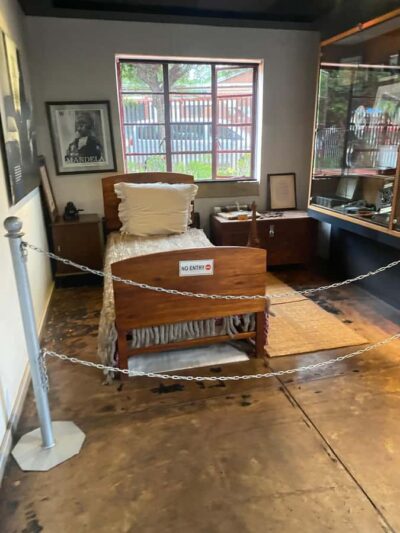
Full-Day Tour with Soweto and Apartheid Museum
Read our review →

Full-Day Soweto, Apartheid Museum and Lunch Tour
Read our review →Browse the lists this tour appears in