
Reviewed · SOWETO TOURS
Soweto: Guided Bicycle Tour with Lunch
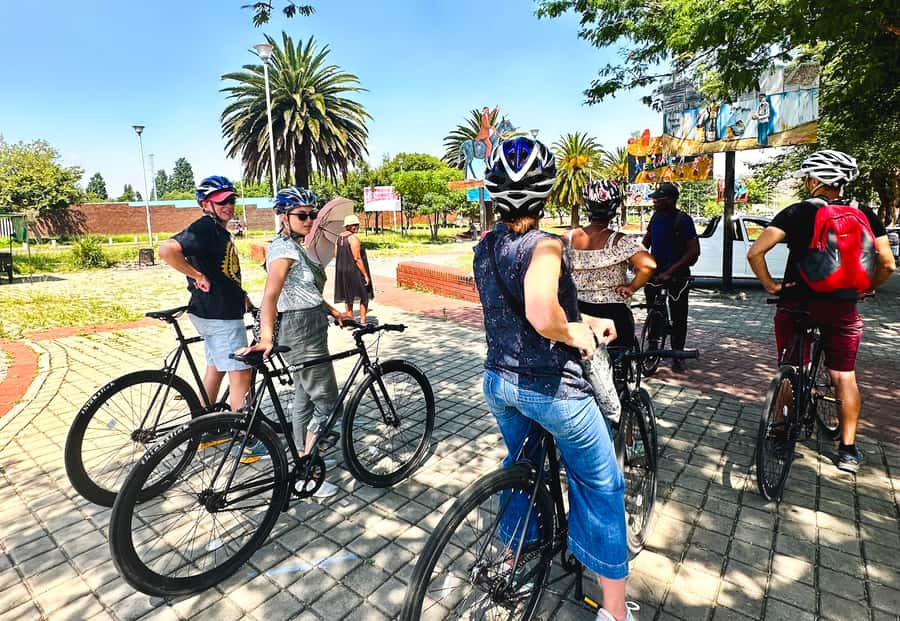
Soweto’s story comes alive when you move through its streets by bicycle. This four-hour ride takes you from Hector Pieterson Museum to Mandela House, Tutu House, Orlando Stadium, community neighborhoods, and an informal settlement area, with a local guide explaining what you are seeing along the way.
I like the way the tour covers more than the famous Vilakazi Street, and I like the honest mix of difficult apartheid history, present-day township life, and a simple kota lunch at a local restaurant. The main thing to consider is the cycling: the route covers roughly 11 kilometers, includes hills, and may be harder if you are used to bikes with gears.
Key points to know before you book
- About 11 kilometers by bicycle: You cover a broad stretch of Soweto rather than staying around one landmark.
- A serious history lesson: Hector Pieterson Museum, Mandela House, Tutu House, and Mama Lilian Ngoyi’s home connect the route to the anti-apartheid struggle.
- Local guides make the difference: Thabo, Teboho, and Themba have led many departures, with a style that mixes clear explanations, humor, and personal knowledge of Soweto.
- Lunch is a kota: This South African sandwich is filling, informal, and a useful taste of everyday township food.
- Expect hills and outdoor conditions: Bring sunscreen, rain gear, and enough fitness for uphill sections, especially on a bike without gears.
- A respectful way to see Soweto: The route includes ordinary neighborhoods and an informal settlement visit, so listen carefully and follow your guide’s lead.
Why a bicycle gives you a better sense of Soweto
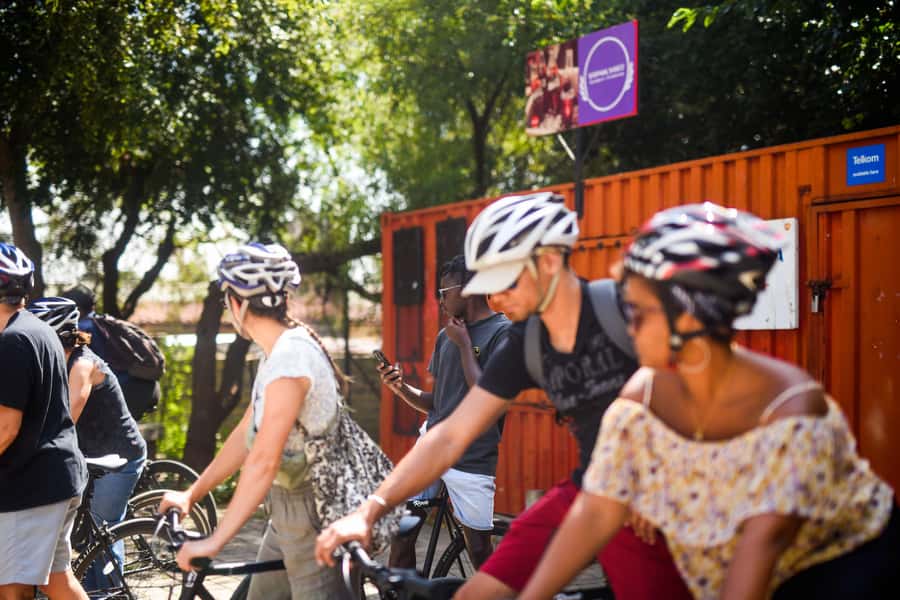
Soweto is not one single neighborhood. It is a large urban area made up of districts with different appearances, incomes, and stories. A vehicle can carry you from one famous stop to another, but a bicycle lets you notice the changing streets between them.
The route moves through Orlando West and Orlando East, Mzimhlophe, and areas around Orlando Stadium and the community center. You get a look at the well-known sites, but also at the neighborhoods that give Soweto its everyday character.
I particularly like this balance. The ride is not built only around dramatic political landmarks, and it is not presented as a simple sightseeing circuit. Your guide talks about how Soweto was created in 1904, how communities developed, and how apartheid shaped movement, housing, education, and protest.
That said, cycling puts more responsibility on you than sitting in a minibus. You need to pay attention to the road, manage your energy, and stay with the group. The route has uphill sections, and one rider described it as reasonably easy while still noticing the effects of Johannesburg’s altitude. You do not need to be a racing cyclist, but you should be comfortable riding for several hours.
More Soweto Tours in Johannesburg
- Johannesburg: Hop-On Hop-Off Bus with Optional Soweto Tour
★ 4.6 · 985 reviews - Soweto /Johannesburg and Apartheid Museum Guided Full Day Tour
★ 5.0 · 932 reviews - Johannesburg Hop-On Hop-Off City Tour with Soweto Option
★ 4.5 · 768 reviews
Starting at Vilakazi Espresso in Orlando West
The meeting point is Vilakazi Espresso, on or near Vilakazi Street in Orlando West. This is a useful place to begin because the area already has a strong link to Soweto’s political story and is close to Mandela House and Tutu House.
You receive a bicycle and meet your English-speaking local guide. Past guides have included Thabo, also called Teboho by some participants, and Themba. Their approach appears to be personal and conversational rather than a lecture delivered at every stop. Thabo has been praised for explaining both historical events and present-day South Africa, while Themba has been noted for helping riders get comfortable with the bikes and dealing quickly with a flat tire.
The bikes have generally been described as being in good condition. Still, do not assume you will receive an electric bicycle or a modern multi-gear touring bike. One rider specifically wished for bicycles with gears, and another advised booking only if you are comfortable cycling uphill on a bike without gears.
Hector Pieterson Museum and the Soweto uprising
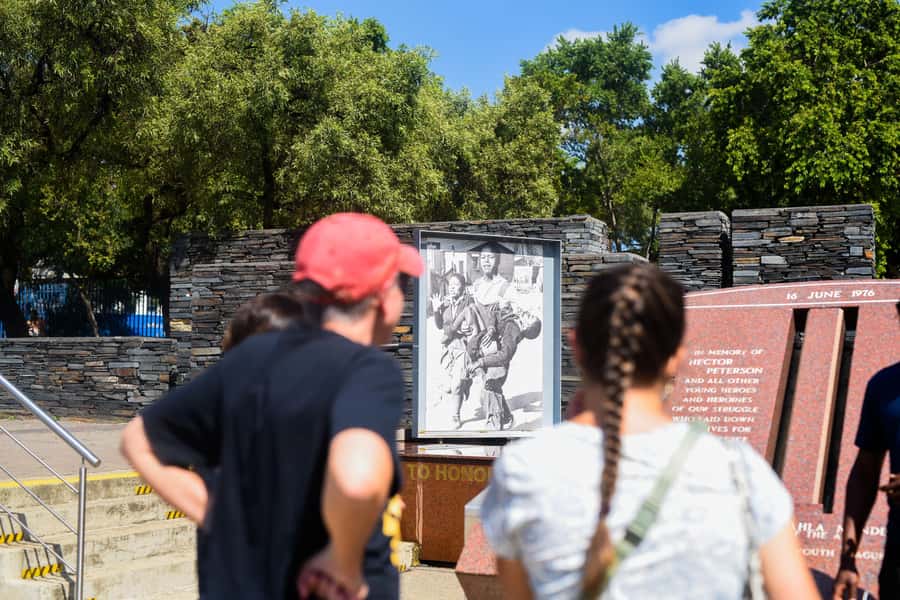
The first major stop is Hector Pieterson Museum, where you spend around 20 minutes on a visit, guided explanation, and short walk. This is one of the most important places on the route.
The museum and memorial focus on the Soweto uprising of June 16, 1976. Schoolchildren protested against the forced use of Afrikaans in education, and the police response turned the demonstration into a defining moment in the struggle against apartheid. Hector Pieterson, a 13-year-old student, became a symbol after a photograph of his body being carried through the streets spread around the world.
Your guide helps connect the museum to the streets outside. That matters because the event was not an isolated museum topic. It happened in the community you are cycling through, and the route gives you a physical sense of the area around the uprising.
This stop can feel heavy. The tour is energetic and social, but the subject is painful, so allow yourself time to listen rather than treating the museum as a quick photo stop. The scheduled visit is short, and the amount of time spent inside may depend on the group and the guide.
Mzimhlophe and the story of forced housing
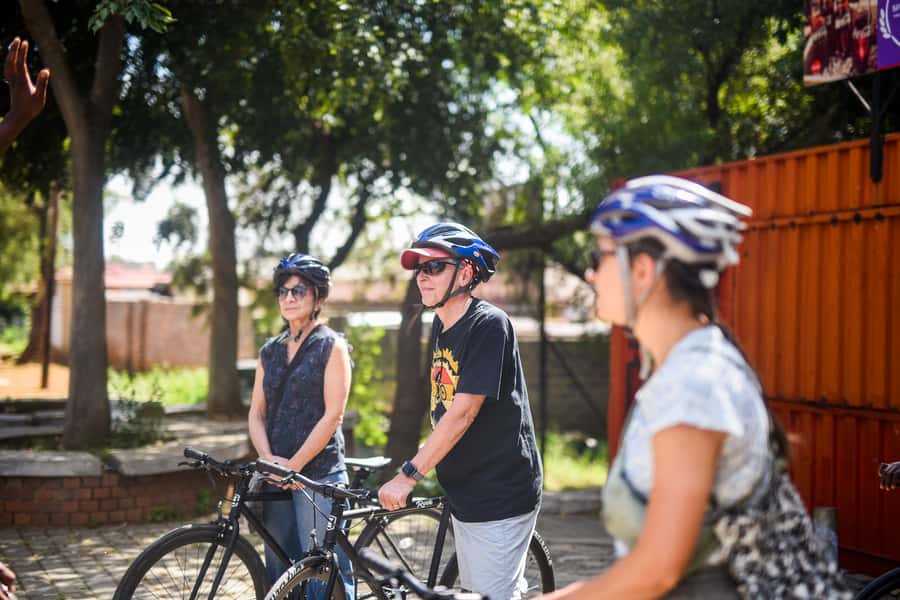
The ride continues toward Mzimhlophe, with a stop of about 15 minutes around the Mzimhlophe Internet Cafe and nearby sights. The itinerary also includes the Mzimhlophe Women’s Hostel.
This part of the route helps explain the social structure imposed on Black South Africans during apartheid. Hostels were tied to labor policies that separated workers from their families and controlled where people could live. The Women’s Hostel offers another angle on that system, moving the story beyond the better-known names of Mandela and Tutu.
You also see a neighborhood that functions as a living community rather than a preserved historical site. That is one reason the bicycle works well here. You are not simply checking off a museum. You are moving through the places where the policies, protests, and family stories unfolded.
An informal settlement visit is also typically included with a local guide. You may be invited to offer a gratuity of R20 to R50, or more if you wish, during or after that visit. This is optional, but carry some South African cash if you want to take part.
Same country, a completely different kind of day:
- From Johannesburg: Pilanesberg Nature Reserve Game Safari
★ 4.8 · 1,327 reviews - Full Day Ultimate Pilanesberg National Park Safari from Johannesburg or Pretoria
★ 4.5 · 718 reviews - Half-Day Tour of Soweto Tour
★ 4.5 · 712 reviews - Soweto: Walking Tour with a Local Guide and Lunch
★ 4.9 · 648 reviews
Orlando East, Orlando Stadium, and community life
The tour then passes through Orlando East, Orlando Stadium, and the Orlando Community Centre. These stops are brief, ranging from about five to ten minutes, but they broaden the picture.
Orlando Stadium is a major local landmark and a useful reference point as you ride between districts. The community center gives you a glimpse of local public life, while Orlando East shows how the township extends beyond the streets most often shown in guidebooks.
Do not expect long guided visits at each of these places. They are part of the route rather than full museum stops. Their value comes from the wider pattern: your guide points out how neighborhoods differ, where people gather, and how Soweto looks away from its main tourist street.
Several participants have especially liked the way the route includes more than one side of the township. You see the visitor-focused area around Vilakazi Street, then ride toward districts that feel less arranged for sightseeing. That can be informative, but you should keep your camera use respectful and follow local instructions.
Vilakazi Street and a proper kota lunch
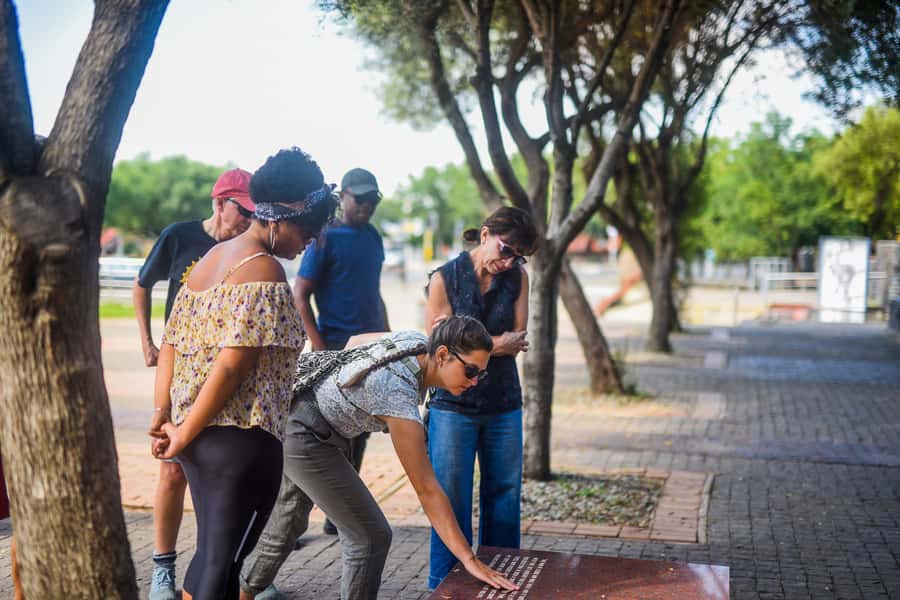
After the morning ride, you stop on Vilakazi Street for lunch and food tasting. The scheduled break lasts about 25 minutes, though the pace of the day can affect the exact timing.
Lunch is a kota, a popular South African sandwich often served with substantial fillings. It is not a formal restaurant meal or a delicate tasting menu. Think filling, local, and casual. Several participants singled out the kota as one of the best parts of the experience, and I can see why: after cycling through Soweto, an everyday local meal fits the tone far better than a standard tourist lunch.
Food and drinks are included in the price. It is still sensible to bring cash for personal spending and the optional gratuity connected with the informal settlement visit. One useful improvement would be carrying your own water, since a past participant specifically wished the tour supplied a bottle.
Vilakazi Street is famous for having been home to two Nobel Peace Prize winners, Nelson Mandela and Archbishop Desmond Tutu. It is also a busy cultural meeting point, so lunch here gives you time to pause and take in the setting rather than rushing from one address to the next.
Tutu House and the political meaning of Vilakazi Street
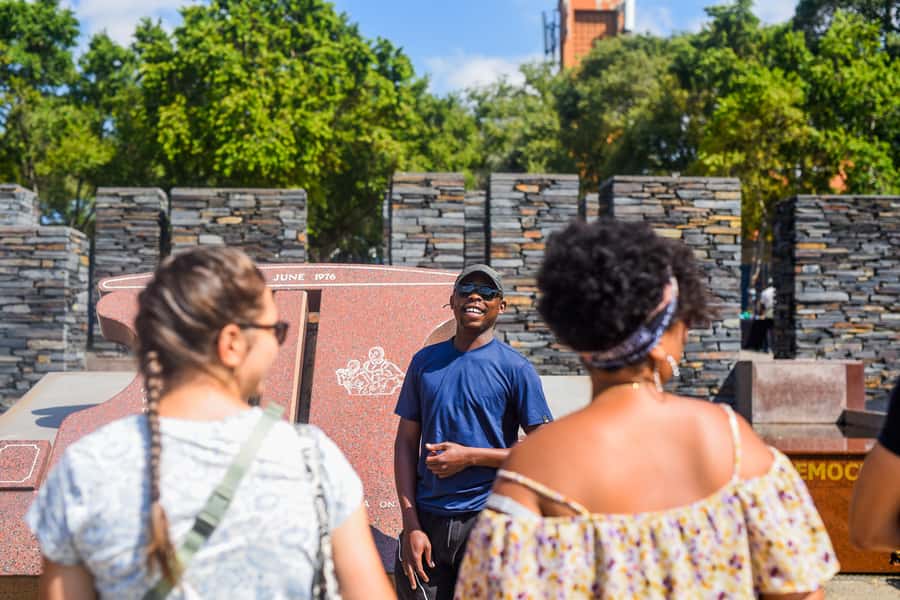
The brief stop at Tutu House takes about five minutes. Archbishop Desmond Tutu and his family once lived here, making Vilakazi Street unusual for its connection to two Nobel laureates on the same block.
The guide explains Tutu’s role in opposing apartheid and in the wider political change that followed. The stop is short, so you should not expect a long interior visit. Its importance comes from the address itself and from hearing how Tutu’s work fits into the story already introduced at Hector Pieterson Museum.
The guide may also point out olive trees planted by Mandela, Tutu, and Bill Clinton in memory of Hector Pieterson. This is a small detail, but it links the street’s public symbolism to the young person whose death became tied to the 1976 uprising.
Mandela House and the end of the ride
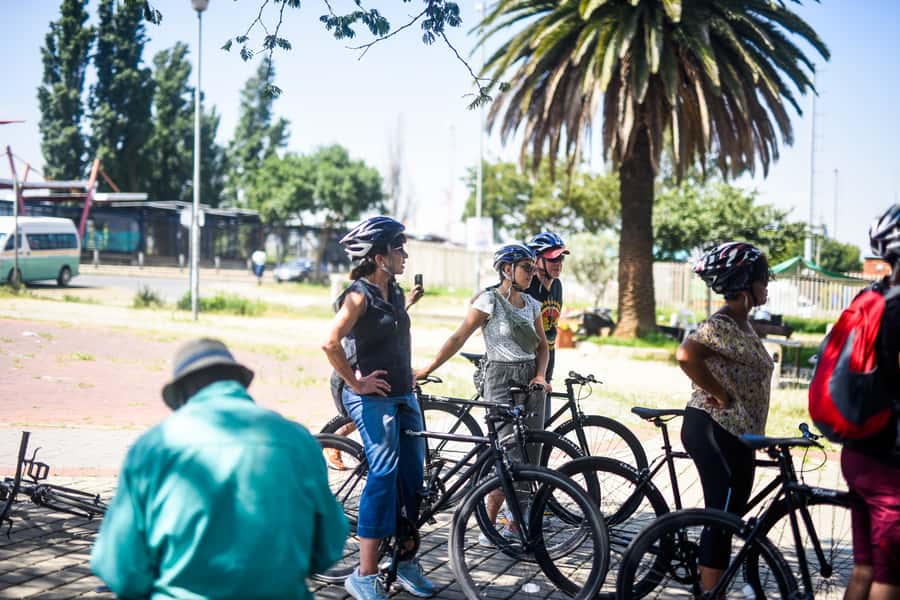
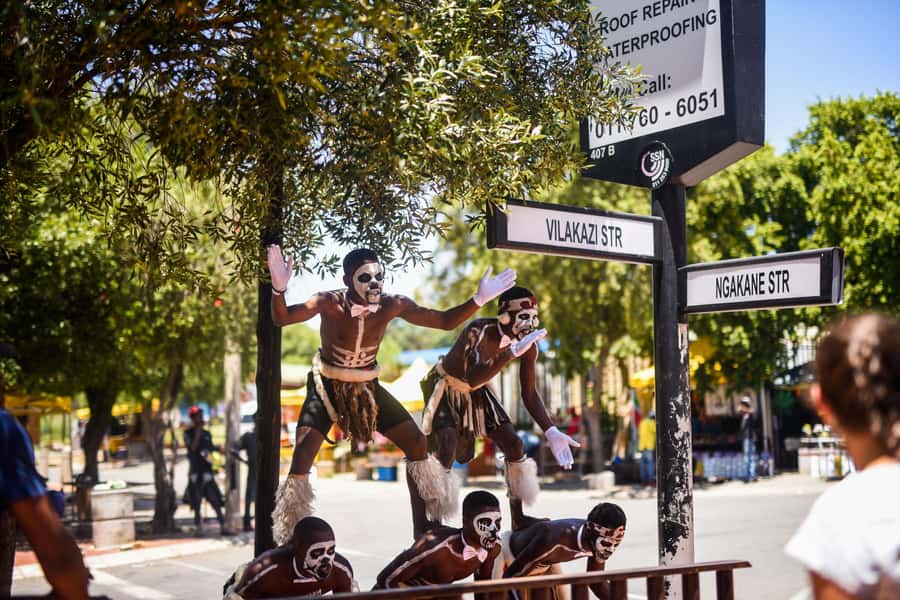
The final major landmark is Mandela House, where Nelson Mandela lived from 1946 to 1962. The stop lasts around 15 minutes and can include a guided explanation, a photo stop, and a traditional dance show.
Mandela House is valuable because it puts scale on a familiar name. Mandela was not only a distant political figure. He lived in this ordinary Soweto neighborhood while working against apartheid, and the house helps place his early political life in a real domestic setting.
The visit is relatively short in the planned schedule. If you want a long, detailed house-museum visit, check how the day’s timing is handled before booking. The strength of this tour is the wider route, not an extended examination of one building.
After Mandela House, you cycle back to Vilakazi Espresso. The ride back completes the loop and gives you one last chance to ask questions. Some guides also add a traditional dance presentation, depending on the departure and schedule.
What the guides add to the experience
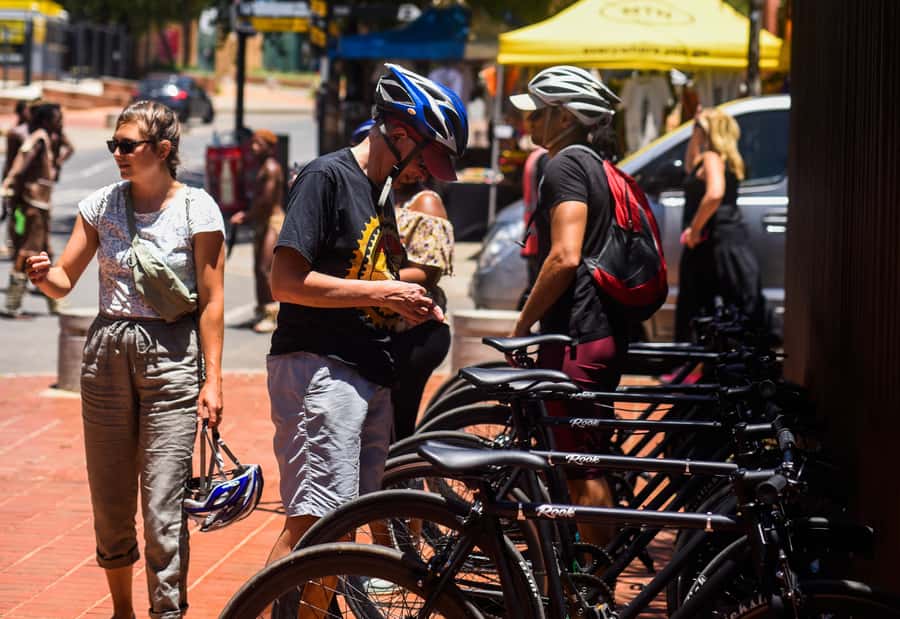
The strongest part of this tour is the guide’s ability to connect landmarks with current life. Thabo has been repeatedly praised for clear explanations, humor, and an easy manner. Teboho has been described as a passionate local guide who brings Soweto’s political story to life. Themba has been praised for his warmth, safety awareness, and ability to answer questions about both past and present.
Guide names and assignments can change, so you cannot book a particular person with certainty unless the operator confirms it. Still, the repeated pattern is useful: this experience depends heavily on the person leading it, and the local perspective is a central part of the value.
A good guide also helps keep the experience respectful. Soweto is not a display of hardship for outsiders. You pass through homes, streets, community spaces, and an informal settlement where people live. The best approach is to listen, ask questions politely, and avoid treating residents or houses as photo props.
Fitness, safety, and what to pack
The ride is described as suitable for people with different fitness levels, but the route is not completely flat. Reviews place the distance at about 11 kilometers, with several uphill stretches. If you are fairly fit, you may find it manageable. If you rarely cycle, the hills and altitude could make the four-hour outing tiring.
The guides are responsible for group instruction and route leadership, and past participants have felt well looked after while riding. You should still ride within your ability and tell the guide if you need a slower pace or a short pause.
Bring:
- Sunscreen
- Rain gear
- Cash
- Comfortable clothing for outdoor exercise
- Water, since it is not clearly listed as supplied
The tour is not suitable for pregnant women, people who cannot ride a bicycle, or wheelchair users. An electric bike is not included, so do not count on motor assistance for the hills.
Is 52 dollars good value?
At 52 dollars per person, the price includes the bicycle, local English-speaking guide, food, and drinks. Hotel pickup and drop-off are not included, so you must arrange your own way to Vilakazi Espresso.
I consider the price reasonable if you want one activity that combines transport around Soweto, several historical sites, local commentary, and lunch. A guided visit to only Mandela House or Hector Pieterson Museum would give you more time at one location, but it would not show you the spaces between them.
The value is also in the time saved. Over four hours, you cover Orlando West, Mzimhlophe, Orlando East, the stadium area, community spaces, and Vilakazi Street without having to plan separate rides. A private departure may happen if only one person books, while small groups can keep the ride personal and allow plenty of questions.
The limitation is that the schedule gives only short visits at several landmarks. If your main goal is a detailed museum experience, you may want extra time before or after the ride. If your goal is to understand how Soweto fits together, the broad route is the better choice.
Who should book this Soweto bicycle tour?
I would choose this experience if you want history with movement rather than a stop-start sightseeing bus. It suits active couples, small groups, solo visitors, and families with older children who can ride confidently.
It is especially useful early in a Johannesburg stay because it gives you context for Soweto’s geography and political history. It also suits anyone who wants local food and conversation alongside major landmarks.
I would hesitate if you have limited mobility, dislike hills, need a geared or electric bicycle, or prefer a slow museum-focused outing. You should also be ready for a serious discussion of apartheid and the Soweto uprising, not just a light half-day excursion.
Should you book it?
Book this tour if you can comfortably cycle about 11 kilometers and want to see both famous addresses and ordinary Soweto neighborhoods. The combination of Hector Pieterson Museum, Mandela House, Tutu House, community stops, and a kota lunch gives you a useful view of the area in one morning or afternoon.
The best reason to go is the local guide. Thabo, Teboho, and Themba have each been praised for warmth, humor, clear storytelling, and careful attention to safety. Just pack sunscreen, rain gear, and cash, and expect a few uphill pushes. For an active, respectful introduction to Soweto, this is a strong-value choice.
FAQ
Where does the Soweto bicycle tour start?
The tour starts at Vilakazi Espresso in Soweto’s Orlando West area.
How long does the tour last?
The scheduled duration is four hours.
How much does the tour cost?
The listed price is 52 dollars per person.
Is lunch included?
Yes. Food and drinks are included, with lunch featuring a South African kota sandwich.
What language is the tour conducted in?
The live tour guide speaks English.
Which major sites does the tour visit?
The route includes Hector Pieterson Museum, Mandela House, Tutu House, Vilakazi Street, Orlando Stadium, Orlando Community Centre, Orlando East, and Mzimhlophe.
Do I need to be fit to take part?
You need to be able to ride a bicycle for roughly 11 kilometers, including uphill sections. The tour is not suitable for people who cannot ride a bike.
Are hotel transfers included?
No. Hotel pickup and drop-off are not included, so you must get to Vilakazi Espresso independently.
What should I bring?
Bring sunscreen, rain gear, and cash. Carrying water is also sensible because a bottle is not listed among the included items.
Is there an informal settlement visit?
An informal settlement visit is typically conducted with a local guide. You may offer a gratuity of R20 to R50, or more at your discretion, during or after the visit.
More Lunch Experiences in Johannesburg
- Full-Day Soweto, Apartheid Museum and Lunch Tour
★ 5.0 · 410 reviews - Soweto Walking Tour with Lunch
★ 5.0 · 288 reviews - Johannesburg and Soweto Apartheid Full Day Tour w/Lunch
★ 4.9 · 219 reviews - Guided Bicycle Tour of Soweto with Lunch
★ 5.0 · 180 reviews
Just added around Johannesburg
- Lion park★ 4.5 · 5 reviews
- Lesedi cultural village:★ 5.0 · 6 reviews
- Lesedi Cultural Village with lunch or dinner cultural food★ 4.6 · 9 reviews
- Lesedi Cultural Village Half-Day Tour★ 4.7 · 9 reviews
- Lesedi Cultural Village★ 4.9 · 4 reviews
- Kruger National Park – 5 Day Safari Tour★ 4.7 · 4 reviews
- From Johannesburg: Kruger National Park 4-Day Luxury Safari★ 4.8 · 9 reviews
- Kruger National Park – 4 Day Safari Tour★ 4.8 · 19 reviews
Soweto Tours, compared.
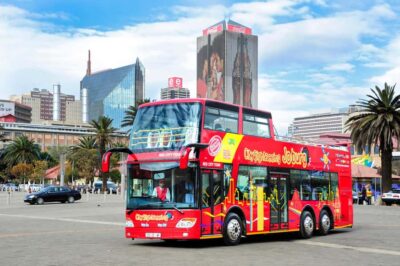

Soweto /Johannesburg and Apartheid Museum Guided Full Day Tour
Read our review →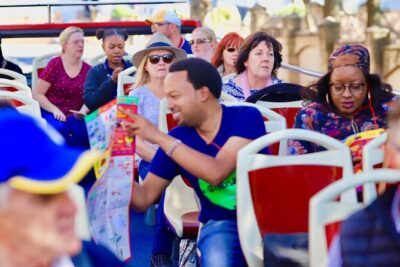
Johannesburg Hop-On Hop-Off City Tour with Soweto Option
Read our review →
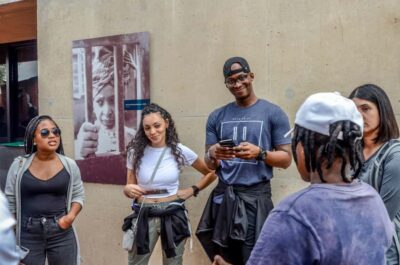
Jo’berg in 1 Day: Soweto, Apartheid Museum & City Tour
Read our review →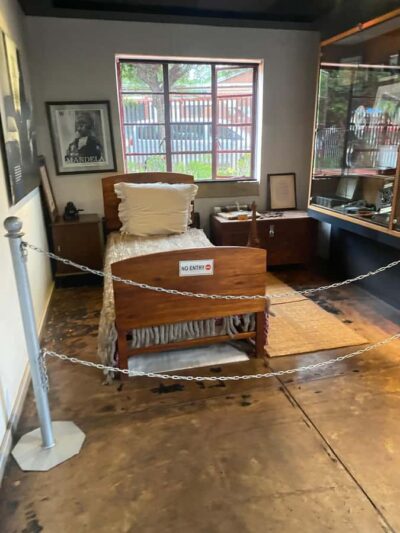
Full-Day Tour with Soweto and Apartheid Museum
Read our review →
Browse the lists this tour appears in