
Reviewed · SOWETO TOURS
bicycle tour soweto
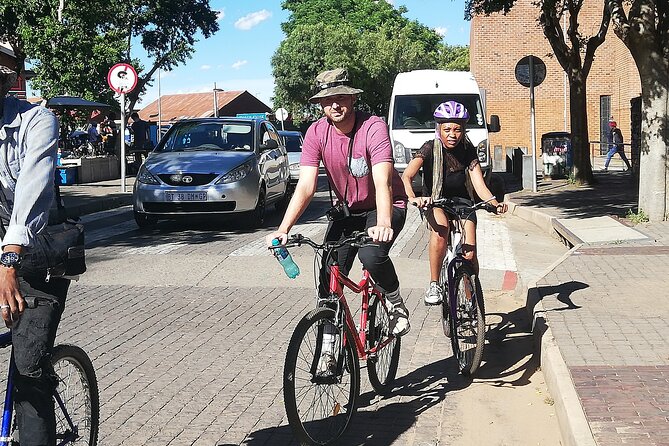
Soweto comes into focus quickly on this three-hour bicycle tour, which links major landmarks with streets and local places you would be unlikely to find by yourself. You cycle past Orlando Stadium and Orlando Towers, hear about the 1976 student uprising, and visit the former homes of Nelson Mandela, Winnie Mandela, and Archbishop Desmond Tutu.
I like two things here: the bicycle lets you cover more ground than a walking tour, and guides such as MK bring a personal, passionate explanation of Soweto’s past. The visit to a local home and a walk through narrow township lanes may add a human touch that museums alone cannot provide. The main concern is consistency: a few bikes have needed repair, and pickup or equipment problems have occasionally affected the experience.
Key points to know before you book

- The tour connects major Soweto landmarks: You can see Orlando Stadium, Orlando Towers, the Hector Pieterson Museum and Memorial, and famous residents’ former homes in one outing.
- The guide shapes the experience: MK is specifically praised for tailoring the ride to your interests and explaining South African history with feeling.
- A local encounter may be part of the route: Depending on the day, you may walk through narrow alleyways and visit a resident’s home.
- Transport is included: Round-trip transportation to Soweto, bottled water, a helmet, bicycle use, and the entrance fee are covered.
- The ride is private: Only your group takes part, which allows room for questions and some flexibility.
- Check the practical details: One poor experience involved a late driver, missing water, and no helmet, while another raised concerns about bike condition and pressure to buy local goods.
Why seeing Soweto by bicycle changes the visit

Soweto is too important to reduce to a quick drive past a few famous addresses. The bicycle gives you a closer view of the neighborhood, while the guide connects streets, homes, schools, museums, and public spaces to the events that shaped modern South Africa.
You are not simply moving from one photo stop to the next. The route is designed to explain how daily life, schooling, mine work, politics, and protest fit together. That matters because Soweto’s story is not limited to Mandela’s house or one museum. The wider setting helps you understand why the area became such a powerful center of resistance during apartheid.
The ride lasts about three hours, long enough to cover several sites without taking up an entire day in Johannesburg. You receive bottled water, a helmet, and the bicycle, and round-trip transportation to Soweto is included. Those details make the experience easier to fit into a short visit, especially if you do not want to arrange transport across Johannesburg yourself.
This is also a private activity. Your group participates alone, rather than joining a large bus tour. That can make a real difference at places where you want to ask about family life, education, or the events of 1976.
More Soweto Tours in Johannesburg
- Johannesburg: Hop-On Hop-Off Bus with Optional Soweto Tour
★ 4.6 · 985 reviews - Soweto /Johannesburg and Apartheid Museum Guided Full Day Tour
★ 5.0 · 932 reviews - Johannesburg Hop-On Hop-Off City Tour with Soweto Option
★ 4.5 · 768 reviews
Starting with the Hector Pieterson Museum and Memorial
The Hector Pieterson Museum and Memorial is the emotional center of the route. It focuses on the 1976 student uprising, when schoolchildren in Soweto protested against the apartheid government’s education policies.
The tour uses this stop to explain the local schooling system and the role of students in the uprising. The museum gives the political events a human scale, while the surrounding neighborhood shows you where ordinary families lived and where young people organized and marched.
Admission is included, so you do not need to budget separately for entry. Your guide’s commentary is important here. A museum visit can give you photographs, objects, and written accounts, but a local guide can help explain how the events affected Soweto and why the uprising remains such a key part of South African memory.
Allow yourself time to listen rather than rushing through the displays. The bicycle portion makes it easy to think of the museum as just one stop on a sightseeing loop, but this is where the tour’s central subject becomes clear. The ride is not only about seeing Soweto. It is about understanding the community’s resistance to apartheid.
Orlando West High School and the story of 1976
The tour also passes Orlando West High School, linking the school to the student uprising. This is one of the most useful parts of the route for anyone who wants to understand how apartheid reached into daily routines.
Education was not a neutral subject under apartheid. The guide explains the schooling system and the protest that followed, giving you a clearer sense of why students became central to the events of 1976.
You may find this stop less polished than a formal museum, but that is part of its value. The school is connected to the neighborhood itself, not removed from it behind display cases. The guide’s explanation fills in the context, so listen closely and ask questions if you want more detail about the students, the schools, or the government policy that caused the conflict.
Mandela, Winnie Mandela, and Desmond Tutu’s homes
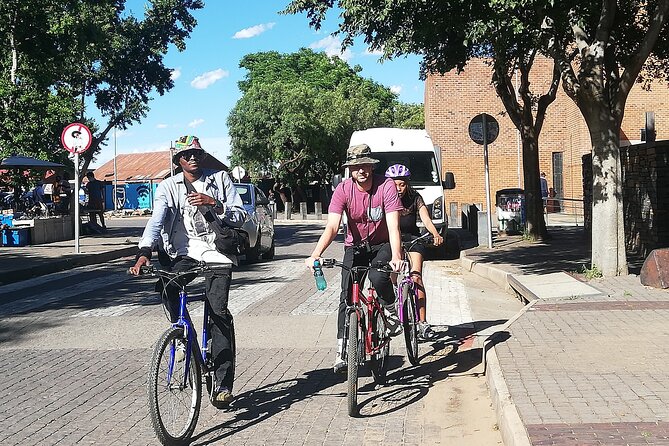
The route passes the former homes of Nelson and Winnie Mandela and the home of Archbishop Desmond Tutu. These addresses bring several major figures in South African public life into the same neighborhood setting.
Mandela’s former home is the best-known stop for many people. It offers a direct connection to the man who became South Africa’s first democratically elected president, but the guide can help you place him within a wider community rather than treating the house as an isolated shrine.
The visit to Desmond Tutu’s former home adds another important voice. Tutu was a church leader and a major opponent of apartheid, and seeing his home alongside Mandela’s helps show how different forms of leadership shaped the struggle.
You should expect these stops to be brief exterior visits or neighborhood-based points of interest unless your booking details say otherwise. The supplied information confirms that the tour takes you to the homes, but it does not promise a full interior visit at each address.
That distinction matters when you compare this ride with a museum-focused tour. You are paying for the route, the guide’s interpretation, and the chance to see the wider area, not only for admission to historic buildings.
Same country, a completely different kind of day:
- From Johannesburg: Pilanesberg Nature Reserve Game Safari
★ 4.8 · 1,327 reviews - Full Day Ultimate Pilanesberg National Park Safari from Johannesburg or Pretoria
★ 4.5 · 718 reviews - Half-Day Tour of Soweto Tour
★ 4.5 · 712 reviews - Soweto: Walking Tour with a Local Guide and Lunch
★ 4.9 · 648 reviews
Orlando Stadium, Orlando Towers, and Soweto’s public face
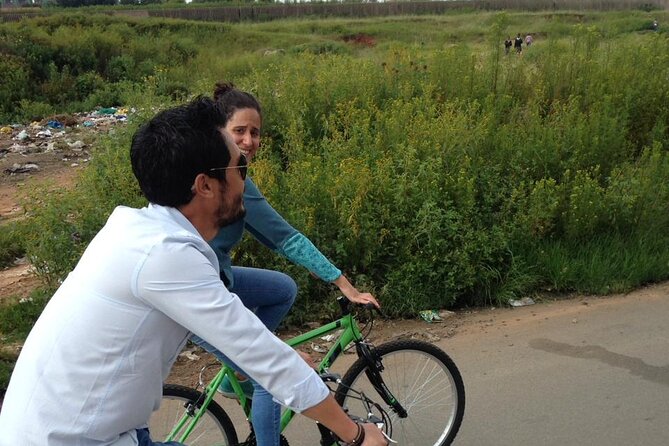
The bicycle route includes Orlando Soccer Stadium and Orlando Towers, two recognizable Soweto landmarks. The stadium represents the area’s sporting life, while the towers are among its most memorable pieces of industrial architecture.
These stops break up the heavier political subject matter. You get a sense of how Soweto functions as a living neighborhood, not only as a place associated with apartheid and protest.
The tour may also include the Soweto stacks, described in one account as part of the main attraction list. This appears to refer to the Orlando Towers, but you should confirm the exact route if a specific site matters to you.
Cycling between the landmarks gives you a better feel for distance and layout than sitting in a vehicle. You notice the transitions between major roads, local streets, public spaces, and residential areas. The tradeoff is that the bicycles and route conditions matter more than they would on a standard sightseeing drive.
A hostel, local streets, and everyday Soweto
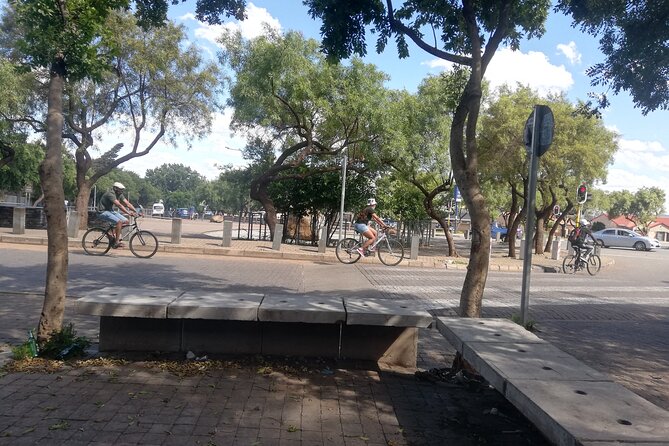
The itinerary includes a visit to a hostel for mineworkers. This offers a different angle on Soweto, shifting attention from famous political figures to labor and housing.
Mineworkers’ hostels are tied to the migrant labor system that shaped South African cities under apartheid. The stop helps explain how work, family separation, and urban life were organized during that period.
The tour can also include a guided walk through narrow alleyways and a visit inside a local resident’s home. One account describes meeting the family there, which can turn the ride into a more personal exchange rather than a series of landmarks.
You should approach this part with respect. A private home is not an attraction in the usual sense, and local visits work best when you listen, avoid treating people as photo subjects, and follow your guide’s lead about what is appropriate.
There is also a practical warning here. One account noted pressure to purchase local goods. You can be polite and clear if you do not want to buy anything. The experience is meant to connect you with the community, but you should still feel free to set your own boundaries.
What the guides add to the ride

The guide is the most important part of this experience. The bicycle route itself is useful, but the meaning comes from the person explaining the places along the way.
MK receives especially strong praise for his historical explanations, his passion, and his ability to ask what interests you before shaping the ride. That is a good sign for visitors who want more than a fixed speech. You might prefer apartheid history, local life, sport, architecture, or the stories of Mandela and Tutu, and a private group gives the guide room to adjust the emphasis.
The guide also leads the way, so you do not need to study a map or work out how the sites connect. That is valuable in a large urban area where independent navigation can take time and attention away from the place itself.
Still, guide quality and guide support are separate issues. Some feedback raised concern about guides being paid very little. The operator disputed that account, so you should not treat it as settled fact, but it does point to a useful practice: acknowledge good guiding directly and budget for a gratuity if you feel the service deserves it. Gratitude is not included in the price.
Price, private format, and what your $80.75 covers
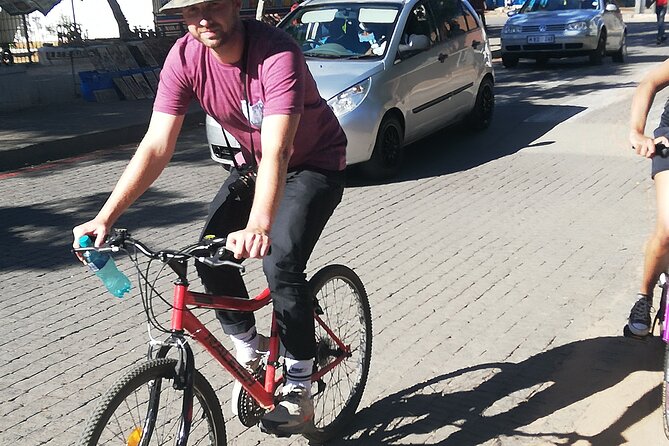
At $80.75 per person, this is not the cheapest way to see Soweto. The price makes more sense when you count what is included: round-trip transportation, a private guide, bicycle use, a helmet, bottled water, and the entrance fee.
A private tour can offer better value for couples, families, or small groups who want to ask questions and avoid the pace of a large outing. You are also covering several parts of Soweto in three hours, which can save a full day of arranging separate taxis, museum tickets, and local transport.
The value is weaker if you mainly want a short ride or a quick photo outside Mandela’s house. In that case, the cost may feel high for the amount of time spent cycling.
The tour is booked an average of 34 days ahead, so planning early is sensible. Confirmation is provided at booking, and free cancellation is available if you cancel at least 24 hours before the start time. Cancellations or changes inside that window are not refunded or accepted, and the activity can be canceled if its minimum number of participants is not reached.
Bikes, helmets, water, and pickup
The operator lists bicycles, helmets, and bottled water as included. Most people can participate, service animals are allowed, and the activity is near public transportation. Pickup is offered, with round-trip transport to Soweto included.
The equipment deserves a quick check before you set off. One account described bikes as being in poor condition, and the operator said it would look into bike maintenance. I would ask to inspect the bicycle, test the brakes, and make sure the helmet fits before leaving the starting point.
Pickup also needs attention. Most of the practical experience appears to have gone smoothly, including one report of an on-time hotel pickup, but another described a driver arriving an hour late and an Uber being used instead. Confirm your pickup time and location clearly, and keep the operator’s contact details handy.
The listed duration is approximately three hours. That estimate includes cycling, stops, commentary, and the museum visit, so the exact amount of time spent riding will vary with the group and route.
Who will enjoy this bicycle tour most
I would choose this experience if you want a guided introduction to Soweto that combines movement, history, and local contact. It suits visitors who prefer seeing several sites in one outing and who enjoy asking questions as they go.
It is particularly useful during a short Johannesburg stay. The included transportation removes much of the planning, while the private format lets you spend more time on the subjects that interest you.
You should think twice if you dislike bicycles, have difficulty cycling for several hours, or want a highly polished operation with guaranteed equipment standards. The activity is described as suitable for most people, but the supplied information does not give details about distance, hills, bicycle sizes, or accessibility adaptations.
The tour may also feel uncomfortable if you prefer not to visit residential areas or enter a local home. Those encounters can be meaningful, but they require courtesy and an open attitude.
Should you book the Soweto bicycle tour?
I would book it if you want to connect the Hector Pieterson Museum, Orlando West High School, Mandela’s former home, Tutu’s home, Orlando Stadium, Orlando Towers, and local streets in a single private outing.
Its greatest strength is the combination of a well-chosen route and guides such as MK, who can make the history personal and answer questions in the moment. Its main weakness is uneven practical reliability, especially concerning bicycles, helmets, water, and pickup.
Before paying, confirm the meeting or pickup details and ask about current bicycle condition. If those basics are clear, the $80.75 price is reasonable for a private three-hour tour with transport, admission, equipment, and local interpretation. If you want a thoughtful first look at Soweto rather than a passive drive past famous names, this is a strong choice.
FAQ
How long is the bicycle tour?
The tour lasts approximately three hours.
Where does the tour take place?
The experience takes place in Soweto, Johannesburg, South Africa.
Is transportation to Soweto included?
Yes. Round-trip transportation to Soweto is included, and pickup is offered.
Is the tour private?
Yes. Only your group participates in the activity.
What equipment is included?
A bicycle, helmet, and bottled water are included.
Is admission included?
Yes. The entrance fee, including the listed visit to the Hector Pieterson Museum and Memorial, is included.
Can most people participate?
The activity states that most travelers can participate. It also allows service animals and is near public transportation.
What is the cancellation policy?
You receive a full refund if you cancel at least 24 hours before the local start time. Cancellations or changes made less than 24 hours before the experience are not refunded or accepted.
Just added around Johannesburg
- Private Soweto Tour 5 hours approximately from Johannesburg or Pretoria.★ 4.5 · 9 reviews
- Taste of Africa★ 5.0 · 9 reviews
- Two day Kruger National Park Safari from Johannesburg★ 5.0 · 19 reviews
- Airport & Private Shuttle and Transfer Services in Johannesburg★ 5.0 · 9 reviews
- Sun City Day Tour From Johannesburg★ 4.5 · 6 reviews
- Pilanesberg National Park Safari, BIG 5 Full Day★ 5.0 · 4 reviews
- Full-day Johannesburg Bike Or Walking tour – With Transport★ 5.0 · 10 reviews
- Half-Day Walking Tour in Soweto★ 5.0 · 38 reviews
Soweto Tours, compared.
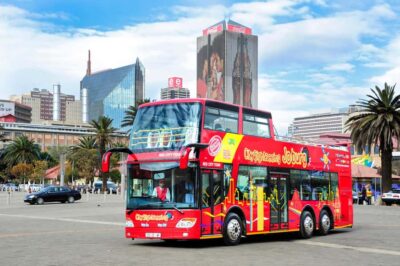

Soweto /Johannesburg and Apartheid Museum Guided Full Day Tour
Read our review →
Johannesburg Hop-On Hop-Off City Tour with Soweto Option
Read our review →
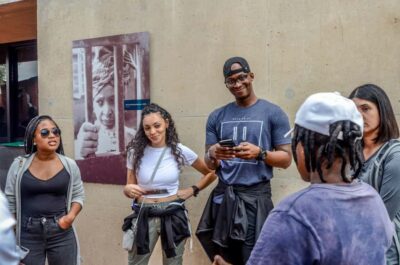
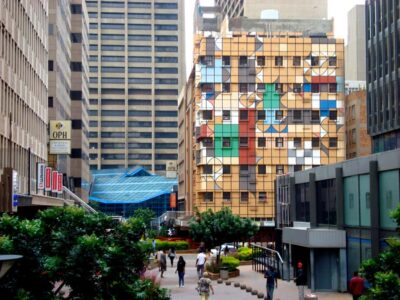
Jo’berg in 1 Day: Soweto, Apartheid Museum & City Tour
Read our review →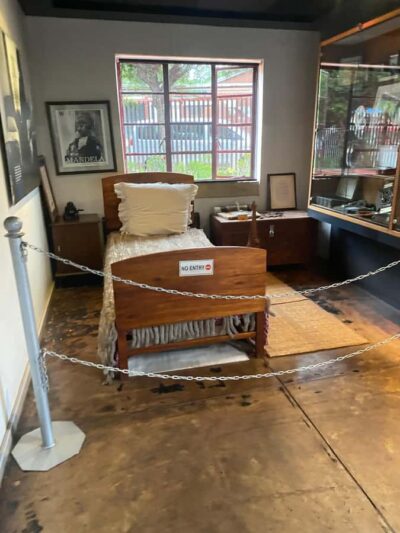
Full-Day Tour with Soweto and Apartheid Museum
Read our review →
Browse the lists this tour appears in