
Reviewed · WALKING TOURS
LocalPlaces Understanding Johannesburg Walking Tour
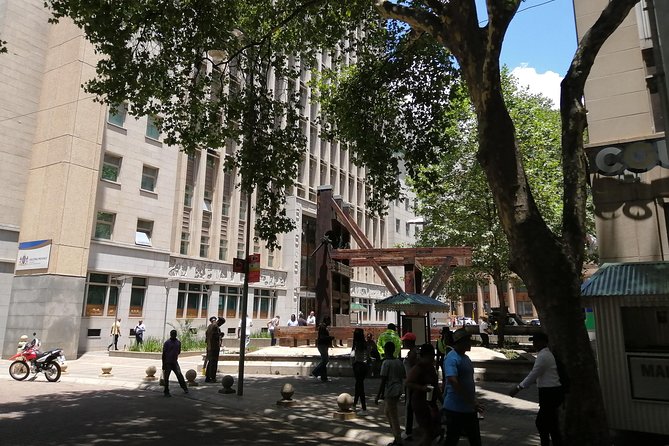
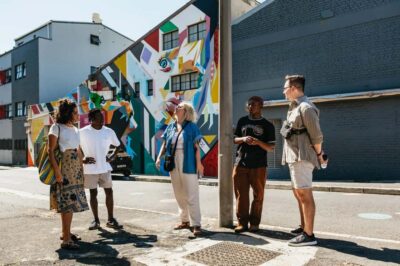
Johannesburg’s story is written in its streets, old financial buildings, court squares, and battered landmarks. This four-hour walk takes you through Marshalltown, the city’s older central district, where gold, mining money, Gandhi, Mandela, and present-day renewal all meet. The abandoned stock exchange, with its stained-glass windows, is the sort of unexpected sight that gives the tour its force.
I like the clear historical arc, from the city’s pre-gold-rush days to its boom, decline, and current revival. I also like the human details, including Gandhi’s work as a young lawyer and the former Mandela and Tambo offices marked by the Shadow Boxer sculpture. The main consideration is simple: you are walking through an inner-city district, not touring a polished museum quarter, so come ready for an honest look at Johannesburg rather than a tidy postcard version.
Key points to know before you go
- Marshalltown tells the whole city story: Follow Johannesburg from mining camp to financial center, troubled CBD, and place of renewal.
- Gandhi Square is more than a meeting point: You see the sculpture of Gandhi as a young lawyer and learn about his work in Johannesburg.
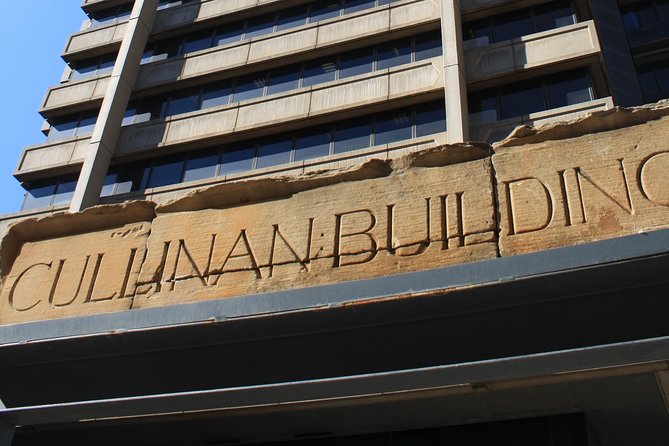
- Architecture carries the tour: Edwardian buildings, mining-era landmarks, and stained glass help explain the city’s early wealth.
- Main Street brings the story into the present: The pedestrianized street now includes coffee shops and eateries among old corporate buildings.
- Charlie is a lively storyteller: A review specifically praises his style and the way he brings the former CBD to life.
- You get a private experience: Only your group participates, and group discounts are available.
Why Marshalltown is the right place to start
Many first visits to Johannesburg begin with its famous townships, museums, or modern shopping areas. This walk starts somewhere different: in Marshalltown, the older part of the central business district. That choice matters because Johannesburg’s origins are tied closely to mining, finance, law, and the sudden wealth created by gold.
The tour begins with storytelling about the opening history of the city. You are not simply pointed toward buildings and given dates. The walk connects the streets to the forces that made Johannesburg what it became: the gold rush, the rise of mining companies, the Edwardian building boom, urban decline, and the return of business and social life to parts of the center.
I find this approach useful because Johannesburg can seem scattered when you first arrive. A broad view of the city’s past helps you read what you see. A grand old façade is not just an attractive building. It may reveal how much money once passed through the district. A quiet or worn-looking block may point to the years when companies and residents moved elsewhere.
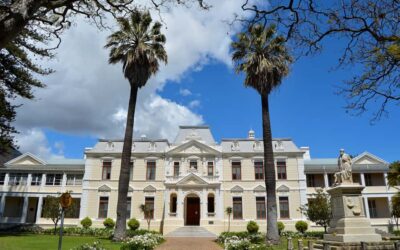
Marshalltown is described as the Wiser West, the oldest district of the inner city. The name gives the area a sense of place, but the real value is in seeing the layers together. This is where the city’s mining and financial companies first gained their footing, and where early Johannesburg left much of its architectural mark.
A few more Johannesburg trips to weigh up
- Soweto: Walking Tour with a Local Guide and Lunch
★ 4.9 · 648 reviews - Soweto Walking Tour with Lunch
★ 5.0 · 288 reviews - Johannesburg: Local Food Tasting Guided Walking Tour
★ 4.7 · 192 reviews
Gandhi Square and the young lawyer who came to Johannesburg
Gandhi Square is the first named stop and an important anchor for the walk. The central square contains a sculpture of Gandhi as a young lawyer, a detail that surprises many people who know him mainly from his later political life.
Here, you learn that Gandhi worked in Johannesburg as a business lawyer. That fact gives the city’s history a different texture. Johannesburg was not only a mining town filled with prospectors and financial firms. It was also a place where legal, commercial, and political lives crossed.
The visit to the square takes about 15 minutes. That is enough time to look at the sculpture and hear the story without turning the opening into a long lecture. Since the tour starts at 9:00 am at 2 Pritchard Street, Gandhi Square also helps set the tone early, before the walk moves into the surrounding streets.
I like this stop because it brings a famous historical figure into an ordinary working context. Gandhi was here as a lawyer, not yet the worldwide political leader most people picture. That small shift in perspective is exactly the kind of detail that makes a city tour worthwhile.
Main Street, mining wealth, and Edwardian Johannesburg
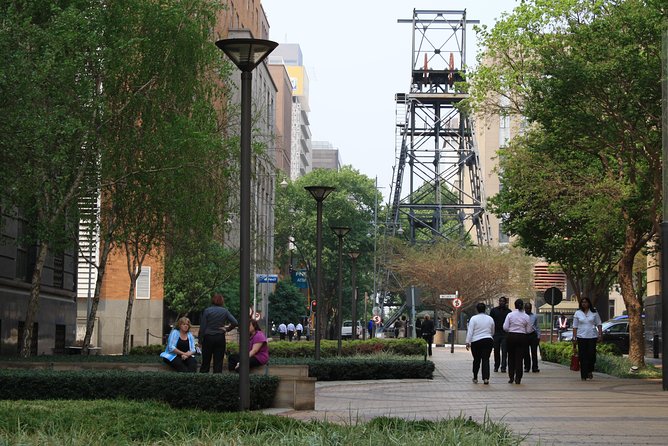
From Gandhi Square, the route moves through the pedestrianized section of Main Street in the corporate mining district. This is one of the strongest parts of the walk for anyone interested in architecture or business history.
The buildings reflect Johannesburg’s early wealth. The tour covers the gold-rush period, followed by the plush Edwardian era of the early 1900s. You can expect to hear how the mining boom shaped both the street plan and the grand style of the central district.
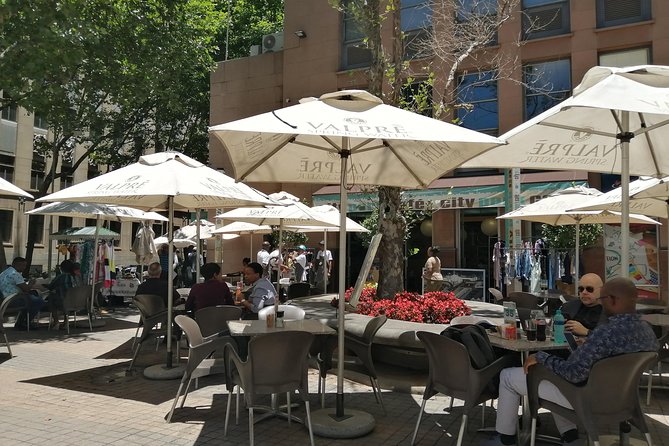
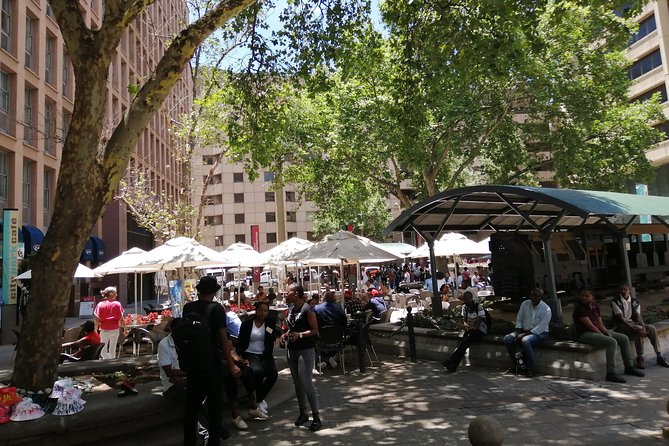
Main Street also shows how the city is changing. Coffee shops and eateries now sit among the older commercial buildings. That contrast is useful. You see not a preserved historic zone frozen in one period, but a working part of the city trying to make use of its older fabric.
The route has a clear visual rhythm. One moment, you are looking at the remains of corporate power. The next, you are noticing newer social life around cafés and food spots. The tour uses those contrasts to explain Johannesburg’s decline and regeneration without pretending that the past was perfect or the present is finished.
If you enjoy urban culture and architecture, this section should be especially rewarding. You will have more to look at than a row of old façades. The buildings become evidence of changing money, changing populations, and changing ideas about what the city center can be.
The former stock exchange and the drama of decay
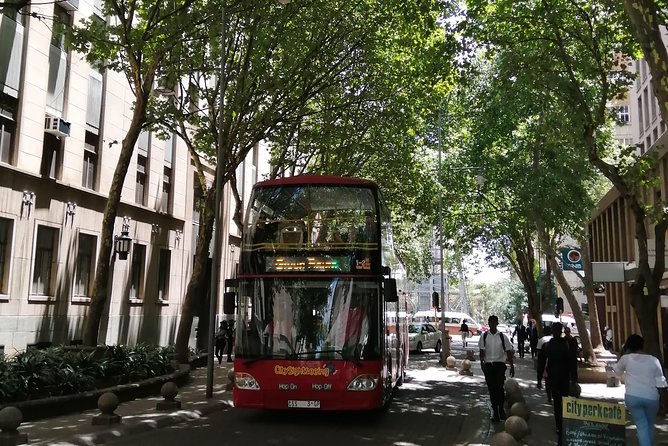
One of the most memorable details associated with the walk is entry into an abandoned stock exchange. Inside, stained-glass windows give the old financial space an almost theatrical quality.
This is where the tour’s theme of boom and decline becomes concrete. A stock exchange once represented commerce, ambition, and the power of Johannesburg’s financial district. Seeing it abandoned changes the meaning of the space. The stained glass hints at the importance and confidence of the earlier era, while the empty interior points to the years when the central business district lost much of its former role.
The stop is particularly strong because it combines architecture with atmosphere. You do not need to be an expert in finance to understand what has happened. The building itself tells part of the story.
Access to interior spaces can vary on walking tours, so you should think of the stock exchange as a notable feature rather than a guaranteed museum-style visit with a set display. Still, this is the kind of place that can stay with you long after the tour ends.
Same country, a completely different kind of day:
- From Johannesburg: Pilanesberg Nature Reserve Game Safari
★ 4.8 · 1,327 reviews - Johannesburg: Hop-On Hop-Off Bus with Optional Soweto Tour
★ 4.6 · 985 reviews - Soweto /Johannesburg and Apartheid Museum Guided Full Day Tour
★ 5.0 · 932 reviews - Johannesburg Hop-On Hop-Off City Tour with Soweto Option
★ 4.5 · 768 reviews
The Shadow Boxer and Johannesburg’s political memory
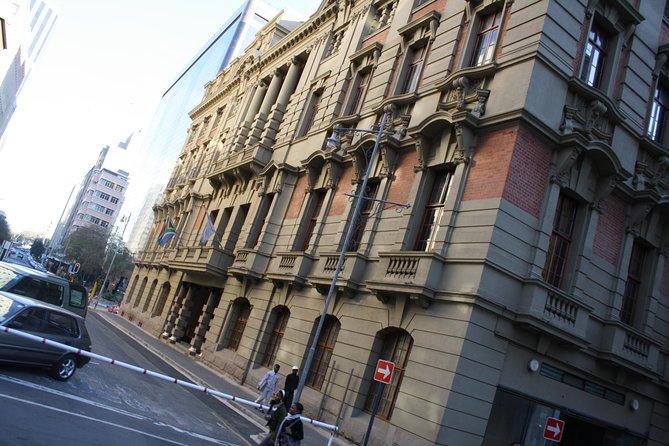
The route includes the Shadow Boxer sculpture, connected to the building where Nelson Mandela and Oliver Tambo once had offices. This is one of the tour’s most meaningful links between Johannesburg’s commercial center and its political past.
The sculpture shows a different side of Mandela’s early public life. Before he became president, he and Tambo worked as lawyers in the city. Their office was part of the same central district shaped by mining firms, courts, and business houses.
That connection is worth pausing over. Johannesburg’s political history was not made only in remote or symbolic places. It also unfolded in offices above city streets, in courtrooms, and among the daily business of the central district.
The Shadow Boxer gives you a visual marker for that history. It also helps keep the tour from becoming only an architecture walk. You are following the people who worked, argued, organized, and built lives in these buildings.
What four hours on foot feels like
The tour lasts about four hours, with the Marshalltown portion listed at roughly three hours and the Gandhi Square visit taking about 15 minutes. The remaining time allows for the opening storytelling, walking between points, and stops along the route.
That is a substantial amount of time for an introduction to one district. You get enough room for context, but the length also means you should be comfortable walking for several hours. Good walking shoes are a sensible choice, although no special equipment is listed.
The 9:00 am start is practical. It gives you a full morning and early afternoon afterward, and it means you can use the experience as your first serious orientation to central Johannesburg. Since the tour ends back at the meeting point, you do not have to arrange a second pickup at the finish.
The experience is private, so only your group participates. That can make a difference on a history-focused walk. You can ask questions as the story develops, and the guide can spend more time on the subjects that interest you most. Private touring also makes the $80.80 price easier to assess if you are sharing it with several people, especially since group discounts are available.
For one person, the cost is not a budget walking tour. I would see the price as paying for a private guide, a long introduction to the city, and access to a story that is difficult to assemble on your own in one morning. If you are mainly looking for a short orientation or a quick photo walk, it may feel expensive. If you want history, architecture, and urban change explained together, the value is stronger.
The tour is commonly booked about 15 days in advance. That suggests planning ahead, particularly if your dates are fixed. You receive confirmation at booking and can use a mobile ticket, which keeps the practical side straightforward.
Charlie’s storytelling and the tone of the walk

Charlie is specifically praised as a lively raconteur. That is important here because the tour depends on storytelling as much as sightseeing. Marshalltown’s buildings may catch your eye, but the guide’s explanation gives them meaning.
A dry list of dates would not do this route justice. You need the links between the gold rush, Edwardian confidence, financial decline, and present-day renewal. You also need the smaller personal details, such as Gandhi working as a young business lawyer and Mandela and Tambo having offices nearby.
The tour’s tone appears suited to people who like history, architecture, and urban culture. It is not presented as a shopping outing or a food tour, even though Main Street now has coffee shops and eateries. Those places help show the current character of the district, but the main subject remains Johannesburg itself.
I would book this with an open mind. The walk does not reduce the city to its glory days, and it does not hide the difficult period of urban decline. That balance is one of its strengths. You see both the beauty of the old buildings and the hard evidence of change.
Who should book this Johannesburg walk?
This experience fits you best if you want a first introduction to Johannesburg that explains how the city works. It suits history fans, architecture enthusiasts, students of urban change, and anyone who prefers streets and buildings to a standard sightseeing bus.
It is also a good choice if you are visiting Johannesburg for a short time and want one focused experience in the inner city. Four hours gives you a substantial foundation for understanding the central district before exploring other parts of the city.
Families and mixed-interest groups may also find the private format helpful. The story includes famous people, courtrooms, mining wealth, architecture, and contemporary renewal, so the subject is broader than a single historical theme.
You should think carefully if you dislike long walks or want only polished, restored sights. The route presents a city with visible contrasts. Some buildings may be worn, abandoned, or in transition. That is not a flaw in the concept, but it is part of what you are choosing.
LocalPlaces also notes that most people can participate, service animals are allowed, and the meeting point is near public transportation. The tour requires good weather, and a minimum number of participants may apply despite the private format. If weather or minimum numbers cause a cancellation, you are offered another date or a full refund. Free cancellation is available up to 24 hours before the 9:00 am start.
Is the Understanding Johannesburg Walking Tour worth it?
I would book this tour if you want to understand Johannesburg rather than simply pass through it. The combination of Marshalltown’s architecture, Gandhi Square, the former stock exchange, the Shadow Boxer sculpture, and Main Street’s new cafés gives you a strong four-hour introduction.
The best reason to choose it is the way it connects the city’s major chapters. You see the gold-rush beginning, the Edwardian boom, the financial center, the years of decline, and the current effort to bring life back into the inner city.
At $80.80 per person, it makes the most sense for a private group that values a guide and can use the group discount. Book it about two weeks ahead, arrive ready to walk, and expect an honest look at a complicated city. If that sounds like your kind of morning, this is a smart first step in Johannesburg.
FAQ
How long is the Understanding Johannesburg Walking Tour?
The experience lasts approximately four hours. The Marshalltown portion takes about three hours, and the Gandhi Square stop lasts around 15 minutes, with the remaining time used for the opening talk and walking between locations.
What time does the tour start?
The tour starts at 9:00 am.
Where does the tour begin?
The meeting point is 2 Pritchard Street, Johannesburg, 2113, South Africa.
Where does the tour end?
The activity ends back at the meeting point.
Is this a private tour?
Yes. Only your group participates in the activity.
What landmarks are included?
The walk includes Marshalltown, Gandhi Square, pedestrianized Main Street, the Shadow Boxer sculpture, the former Mandela and Tambo office location, and an abandoned stock exchange with stained-glass windows.
How much does the tour cost?
The listed price is $80.80 per person. Group discounts are available.
Can I cancel for a full refund?
Yes. You can cancel up to 24 hours before the experience starts for a full refund. Poor weather or failure to meet the minimum number of participants may also lead to another date or a full refund.
Just added around Johannesburg
- Private Soweto Tour 5 hours approximately from Johannesburg or Pretoria.★ 4.5 · 9 reviews
- bicycle tour soweto★ 4.5 · 20 reviews
- Taste of Africa★ 5.0 · 9 reviews
- Two day Kruger National Park Safari from Johannesburg★ 5.0 · 19 reviews
- Airport & Private Shuttle and Transfer Services in Johannesburg★ 5.0 · 9 reviews
- Sun City Day Tour From Johannesburg★ 4.5 · 6 reviews
- Pilanesberg National Park Safari, BIG 5 Full Day★ 5.0 · 4 reviews
- Full-day Johannesburg Bike Or Walking tour – With Transport★ 5.0 · 10 reviews
Walking Tours, compared.





Browse the lists this tour appears in