
Reviewed · WALKING TOURS
Johannesburg’s Downtown Walking Tour with lunch
Johannesburg’s downtown story is not a tidy sightseeing tale. It is a story of gold, apartheid, migration, business flight, renewal, and the people still shaping the city. This tour takes you through Braamfontein, Newtown, and Gandhi Square, with Constitution Hill, public art, bridges, and local streets filling in the gaps between the big historical events.
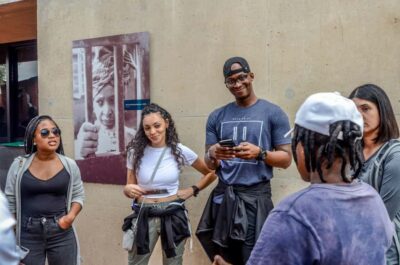
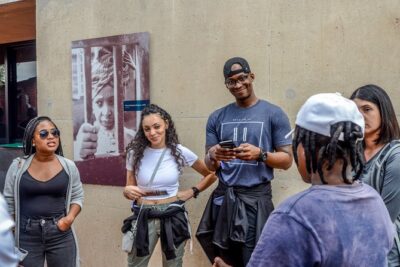
I like the way the tour explains not only what happened, but why Johannesburg changed. I also like the personal touch offered by guides such as Sean, Nkosi, Tigh, Romeo, and B.K., who bring local knowledge, humor, music, and an easy pace to the walk. The main consideration is safety and comfort: you may pass through areas that feel uneasy, so this is best done with an open mind and close attention to your guide.
Key points to know before booking
- Johannesburg beyond Sandton: You see the central city rather than only the polished northern suburbs.
- History tied to real streets: Braamfontein, Constitution Hill, Newtown, and Gandhi Square each explain a different part of Johannesburg’s past and present.
- Guides make the difference: Sean, Nkosi, Tigh, Romeo, B.K., Frank, and others are named by the operator as possible guides, but your guide is not guaranteed.
- Walking with some transport support: Pickup is offered, and an air-conditioned vehicle, bottled water, and lunch are included.
- A candid look at safety: The tour does not pretend that every block feels comfortable, but it keeps safety as a stated priority.
- Good value for a half-day: At $77.92 per person, the package is strongest if you use the pickup, lunch, transport, and historical interpretation.
Why this tour looks beyond Johannesburg’s polished side
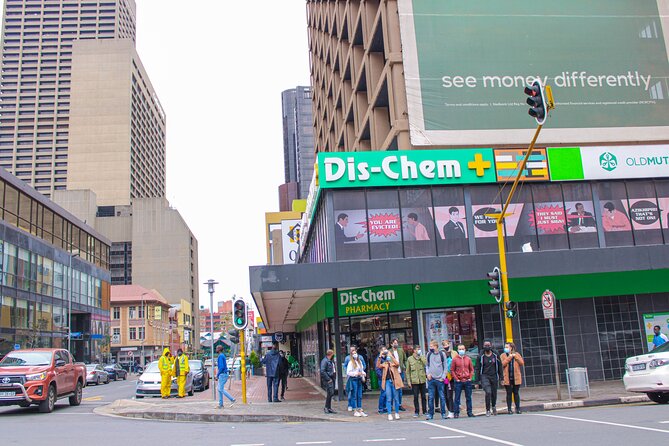
Many first-time visitors stay in Sandton, where hotels, offices, malls, and restaurants make the city feel easy to read. This tour takes you toward the central business district, where Johannesburg’s story is harder, less polished, and more revealing.
I like that the experience is built around causes rather than labels. Instead of simply telling you that downtown Johannesburg has areas with crime or decay, the guide explains how apartheid, population movement, business relocation, and changing investment shaped the city. That context matters. Without it, you see a neglected building. With it, you begin to understand the forces that put it there.
The experience lasts about three to five hours. That is enough time for a useful first look without turning the day into a long march. The walking pace appears to be manageable, and one guide, Tigh, is specifically praised for keeping things easy and clear. Still, you should expect real urban walking, not a quick hop between photo stops.
The maximum group size is 30. That is not a tiny private walk, so the experience will depend partly on the day’s attendance and the guide assigned to your group. Smaller groups should make it easier to ask questions and move through the streets, while a full group may feel less personal.
A few more Pretoria trips to weigh up
- Apartheid History of South Africa (Full day Experience with lunch
★ 4.5 · 24 reviews - Johannesburg and Soweto Private Guided Tour with Shebeen Lunch.
★ 5.0 · 5 reviews - From Cape Town: Big Five Game Reserve with Lunch
★ 4.6 · 2,409 reviews
Braamfontein: a city district that changed direction
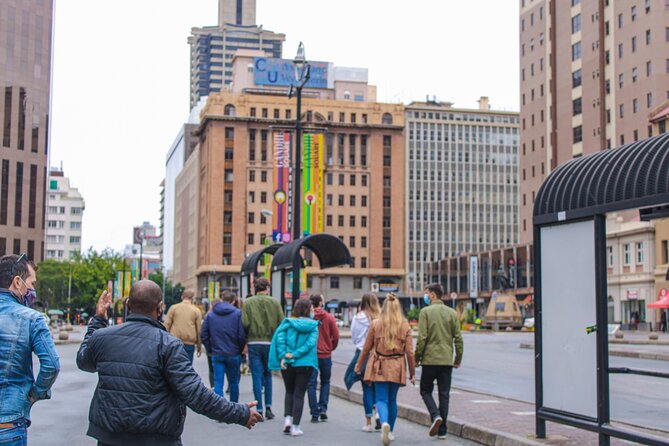
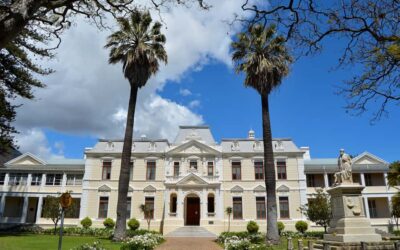
The tour begins in Braamfontein, just north of Johannesburg’s central business district. The area became part of Johannesburg in 1886, when the city was still tied closely to the gold rush and its rapid growth. It began as a farm, then became part of the wider business district.
Braamfontein later lost many businesses and institutions as activity moved toward Sandton and the northern suburbs. That departure could have left the area hollow. Instead, a less formal economy took root, and the district found a new role.
That is one reason I like starting here. You can see urban change in progress, not just historical buildings preserved behind glass. The guide uses streets, businesses, and public spaces to explain how the district moved from a formal commercial center toward a more mixed and informal way of life.
The section is scheduled for about an hour. You may find this the most useful part of the tour for understanding how Johannesburg works today. It is less about checking off landmarks and more about reading the city around you.
Constitution Hill and the weight of the past
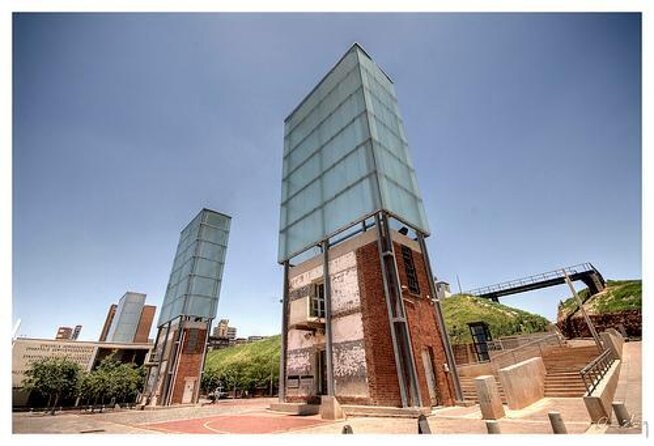
Constitution Hill is in Braamfontein at 11 Kotze Street, near the western edge of Hillbrow. It is home to South Africa’s Constitutional Court, making it an important place for understanding the country’s legal and political transformation.
The precinct is also tied to the darker side of South African history. The tour’s stated purpose is to connect the past, present, and future, and Constitution Hill gives that approach a firm starting point. You are not simply looking at a government building. You are standing in a place where questions about rights, justice, and the country’s earlier system of rule carry real weight.
The available information does not specify how long you spend inside Constitution Hill or which admission areas are covered separately, so I would not plan on a full museum visit unless the operator confirms it. Treat this portion as part of the walking route and historical explanation, not automatically as an extended self-guided visit.
African art and the city’s creative voice
Another stop is a museum with thousands of pieces of African artwork, from historic works to contemporary pieces. The supplied details do not give the museum’s name, so confirm that before booking if this stop is especially important to you.
Its inclusion adds welcome range to the route. Johannesburg is not only a place of political struggle and economic change. Art shows how people express identity, memory, place, and cultural continuity. A short museum visit can also give you a break from the pavement and a different way to read the city.
The exact time inside is not stated. If you want a serious art-museum visit, ask how much time is allocated. If you want a concise introduction alongside a broader downtown walk, the stop should fit the tour’s purpose well.
Same country, a completely different kind of day:
- Johannesburg and Soweto tour
★ 5.0 · 231 reviews - Soweto Half Day Tour
★ 5.0 · 231 reviews - Ultimate Johannesburg Tour
★ 5.0 · 200 reviews - Johannesburg: Pretoria and Cullinan Diamond Mine Tour
★ 4.7 · 165 reviews
The bridge over the railway lines
The route also includes the Nelson Mandela Bridge, which links Braamfontein and Newtown. It crosses the railway lines and sidings west of Johannesburg Park Station and was completed in 2003 at a cost of R38 million.
This is more than a useful crossing. It acts as a gateway between two parts of the city and gives you a clear sense of how rail infrastructure divides and connects Johannesburg. The bridge also represents a newer image of the city, looking forward after the older political and industrial forces that shaped it.
You should expect a good urban view rather than a quiet scenic overlook. Railway lines, roads, buildings, and street life are the point. Keep your camera ready, but listen closely to the guide’s explanation of how the bridge connects the districts.
Newtown: culture, redevelopment, and a new city entrance
Newtown sits in Johannesburg’s inner city between the railway lines and the M2 highway. West Street and Quinn Street form its outer boundaries. The area is now associated with regeneration and cultural activity, though the tour’s strength is that it does not present renewal as a simple success story.
The Nelson Mandela Bridge creates a northern gateway into Newtown and can carry around 3,000 cars an hour. That detail helps explain why the bridge matters beyond its design. It changed access and movement, linking Braamfontein to a district that was being reshaped.
Newtown is home to cultural facilities including the Market Theatre, which played an important role in South African theatre during apartheid. The theater’s presence gives the area a strong connection to performance, protest, and public conversation.
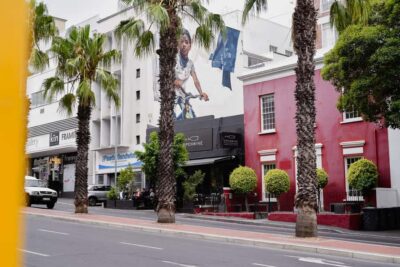
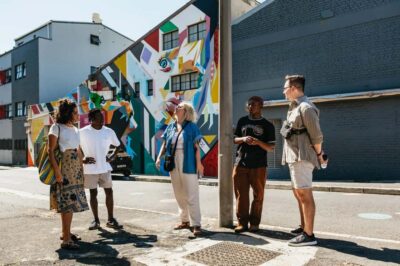
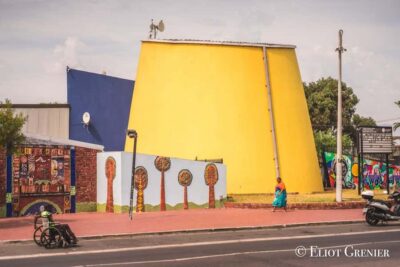
I would expect this stop to show the city’s attempt to reinvent itself. You may see art, older infrastructure, newer public projects, and signs of uneven investment close together. That contrast is useful. It keeps the tour from becoming a postcard version of urban renewal.
The planned time here is about an hour. It is enough for a guided introduction, but probably not enough for a full theater performance or a long museum visit. If you want to explore Newtown at length, use this tour as your orientation and return later.
Gandhi Square: a compact lesson in central Johannesburg
Gandhi Square is a plaza in Johannesburg’s central business district named after Mahatma Gandhi. It is a straightforward stop, but its location makes it useful. Here, the guide can connect a named public space with the wider story of Johannesburg’s changing center.
Expect about an hour in this part of the route. The value is less in the square alone and more in the explanation around it. A good guide can use the streets, buildings, movement of people, and nearby public spaces to show how the central district functions.
This is also where the tour’s promise of answering what happened to Johannesburg becomes most practical. The city center’s present condition cannot be explained by one event. Your guide may connect business migration, apartheid-era policies, population changes, and later efforts to bring activity back downtown.
The tour is strongest when you ask questions. Several guides are praised for answering everything from serious historical issues to small questions about the streets. You do not need to know the city beforehand. Bring curiosity and ask why a district changed, who uses it now, and what the city may become next.
The guides are the heart of the experience
The operator has eight years of experience, and the named guides give the tour a personal character. Sean is repeatedly associated with clear explanations of history, art, and local culture. He is also described as friendly and reassuring when the group passes through less comfortable areas.
Nkosi is praised for making central Johannesburg approachable and for explaining many aspects of the city in an engaging way. Tigh is noted for his communication and relaxed pace. Romeo is described as an interesting storyteller, especially around Newtown.
B.K. is presented as an experienced and lively guide who helps you feel at home in Johannesburg. Frank and a second guide are associated with a family-friendly walk that kept children engaged. Another guide is a musical performer, which suggests that the company’s guiding style may include more than dates and buildings.
You cannot choose your guide based on these names unless the company confirms it. That is worth remembering. The consistent theme is that the human guide matters greatly here, because the tour depends on interpretation rather than a long list of fixed attractions.
Safety, honesty, and the right mindset
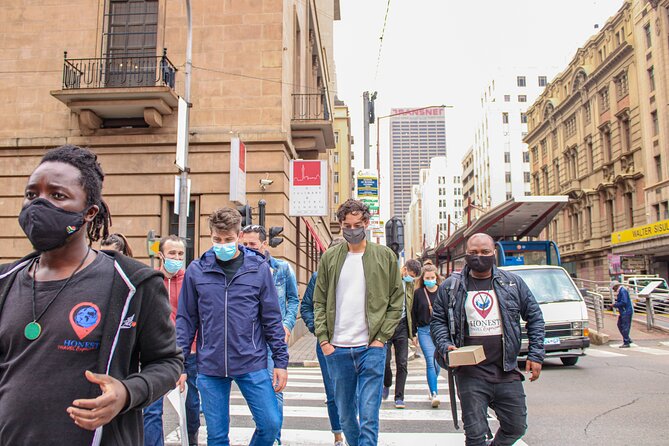
The tour openly addresses Johannesburg’s safety concerns. That is a strength. It does not ask you to ignore what you may see or how you may feel. It aims to explain why some parts of the city became associated with danger and how that reputation connects to wider social and economic changes.
You may walk through places that feel uncomfortable. Being with a guide can give you more confidence, but it does not turn the city into a risk-free zone. Stay with the group, listen to local instructions, avoid displaying valuables, and dress for walking rather than attention.
This is not the right experience if you want a sealed vehicle, a polished sightseeing loop, or only the city’s most photogenic corners. It is a better fit if you want direct contact with the central city and are willing to see both its problems and its creative energy.
The 94 percent recommendation rate and 4.7 rating from 17 recorded ratings indicate strong satisfaction, but the sample is small. One booking problem involved confusion about pickup and the tour not going ahead as expected. I would confirm the pickup point, timing, and drop-off details before the day, especially if you are staying outside central Johannesburg.
What the $77.92 price covers
At $77.92 per person, this is not the cheapest way to walk downtown. You are paying for more than a self-guided stroll, though. The package includes a guide, an air-conditioned vehicle, lunch, and bottled water. Pickup is offered, which may save you the trouble and cost of arranging transport to the starting point.
The value is strongest for someone who wants a half-day introduction and prefers a single booking to coordinate transport, walking, food, and interpretation. Lunch also breaks up the day and means you do not need to stop the tour to find a meal, though the type of food and restaurant are not specified.
Alcoholic drinks are not included. The tour also does not promise a private group, with up to 30 people possible. If you want a quiet, highly tailored experience, the price may feel less attractive. If you are comparing it with hiring separate transport and a private guide, the included features make the price easier to justify.
Who should book this downtown walk?
I would recommend it to first-time visitors who want to understand Johannesburg rather than simply pass through it. It suits people interested in apartheid, constitutional change, urban development, African art, street art, public spaces, and local culture.
It also works for visitors staying in Sandton who want to see a different side of the city. One guide can help you move from the safe, polished feel of the northern suburbs into the more complicated center without leaving you to make sense of the contrasts alone.
Families may enjoy it if children are curious and can manage several hours of walking. The guide’s storytelling style appears to keep younger participants involved, but the subject matter can be serious. The operator says most people can participate, and service animals are allowed.
I would hesitate if you dislike walking, want exact museum admission details, or need a guaranteed pickup arrangement without any follow-up. I would also avoid treating this as a complete Johannesburg tour. It focuses on the downtown area, with the supplied information also noting that some bookings have been adapted to include places such as the Apartheid Museum and Soweto, but those additions are not part of the standard route described here.
My call: book it for context, not comfort
I would book this tour if my goal were to understand central Johannesburg in a short period. The route gives you several useful lenses: Braamfontein shows urban change, Constitution Hill brings in law and political memory, the art museum adds cultural expression, Newtown shows regeneration, and Gandhi Square ties the story back to the central district.
The best reason to go is the guide. Sean, Nkosi, Tigh, Romeo, B.K., and the other named guides appear to bring warmth and detail to streets that can be difficult to read alone. The main caution is to confirm pickup arrangements and accept that some parts of the walk may feel uneasy.
For a visitor who wants only effortless sightseeing, choose another format. For you if you want a candid, human explanation of why Johannesburg looks and feels the way it does, the $77.92 price is reasonable, especially with lunch, water, vehicle support, and pickup included.
FAQ
Where does the tour take place?
The experience focuses on downtown Johannesburg, including Braamfontein, Newtown, and Gandhi Square. The supplied location field says Pretoria, so confirm the exact meeting and pickup location before booking.
How long does the tour last?
The stated duration is approximately three to five hours.
Is pickup available?
Yes, pickup is offered. Confirm the pickup area, time, and drop-off arrangement directly before the tour, since one booking issue involved confusion over these details.
Is lunch included?
Yes, lunch is included in the price. The type of meal and dining location are not specified.
Is bottled water provided?
Yes, bottled water is included.
Is transportation included?
An air-conditioned vehicle is included. The experience combines vehicle support with walking in the downtown districts.
What places are included in the route?
The route includes Braamfontein, Constitution Hill, an African art museum, the Nelson Mandela Bridge, Newtown, and Gandhi Square.
How many people can join the tour?
The maximum group size is 30 people.
Can service animals participate?
Yes, service animals are allowed.
What is the cancellation policy?
You can cancel at least 24 hours before the local start time for a full refund. Cancellations or changes made within 24 hours are not refunded, and poor weather may lead to a different date or a full refund.
Just added around Pretoria
- Lesedi Cultural Village Tour from Johannesburg★ 5.0 · 6 reviews
- 3 day Kruger National Park end with panaroma★ 5.0 · 3 reviews
- Lesedi Cultural Village and Sterkfontein Caves Day Tour★ 5.0 · 4 reviews
- All inclusive BIG 5 Kruger 2 Day Safari from Johannesburg★ 5.0 · 11 reviews
- BIG 5 Kruger 3 Days Safari from Johannesburg★ 4.5 · 7 reviews
- Kruger national park tour 4-days/3nights(Open safari truck)★ 5.0 · 3 reviews
- Johannesburg guided city tour★ 4.5 · 4 reviews
- Kruger National Park 2 Days 1 Night Magical Safari from Johannesburg Private★ 5.0 · 5 reviews
Walking Tours, compared.

Browse the lists this tour appears in