
Reviewed · HISTORICAL TOURS
Apartheid History of South Africa (Full day Experience with lunch
Johannesburg’s gold boom, segregated neighborhoods, political prisons, and Soweto’s student uprising all connect on this full-day history tour. You move from the city center to Maboneng, Constitution Hill, and Soweto before finishing at the Apartheid Museum, giving the day a clear before-and-after shape.
I like the way the tour links economic power to racial control, rather than treating apartheid as an isolated political chapter. I also like the practical package: transport, lunch, guide, and museum fees are included. The main caution is that the advertised location is Pretoria, while the day focuses on Johannesburg and Soweto, so confirm your pickup point and total driving time before booking.
Key points to know before booking

- Gold shaped Johannesburg: The opening city visit explains how mining wealth helped form the city and its unequal systems.
- Maboneng adds a modern counterpoint: Street art, galleries, restaurants, and renovated buildings show a different side of central Johannesburg.
- Constitution Hill brings the legal system into focus: The former political prison helps explain how state power was used.
- Soweto carries the emotional weight: Mandela House and the Hector Pieterson Museum connect national politics with personal lives.
- Lunch and museum entry are included: That makes the $106.78 price easier to assess, especially for first-time visitors.
- The provider’s feedback is mixed: Warm, caring guides receive strong praise, but some complaints concern poor communication and tours unrelated to this exact itinerary.
From Pretoria to Johannesburg: know what the day covers
This experience is marketed from Pretoria, but its main route runs through Johannesburg and Soweto. That matters because you are not booking a compact Pretoria sightseeing tour. You are signing up for a long day centered on apartheid, urban growth, resistance, and the after-effects still felt in South Africa.
The listed duration is about four to eight hours. That is a wide range, and the final length will depend on pickup arrangements, traffic, museum timing, and the pace of the group. Johannesburg can take time to cross, so I would keep the rest of your day free.
Pickup is offered, and transport is by air-conditioned vehicle. The maximum group size is listed as 50, which means the experience could feel quite different with a small group than with a full coach. If personal discussion matters to you, ask about the expected group size before you pay.
The tour suits you best if you want a structured introduction to a difficult subject. It is less suited to someone looking for a relaxed city highlights trip, a shopping day, or a quick photo stop at famous places.
A few more Pretoria trips to weigh up
- Johannesburg’s Downtown Walking Tour with lunch
★ 4.5 · 17 reviews - Johannesburg and Soweto Private Guided Tour with Shebeen Lunch.
★ 5.0 · 5 reviews - From Cape Town: Big Five Game Reserve with Lunch
★ 4.6 · 2,409 reviews
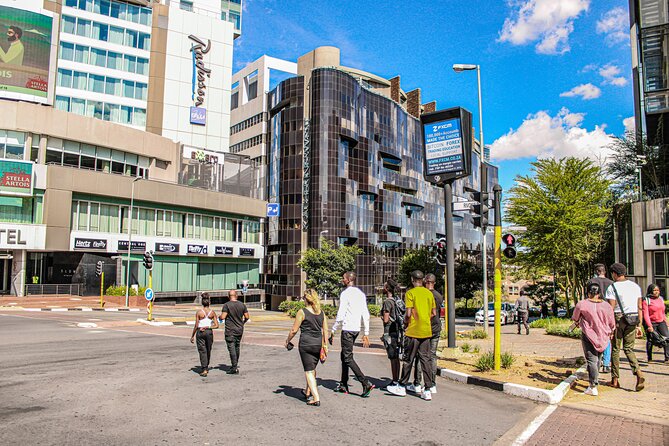
Johannesburg and the gold that built the city
The opening section begins with the discovery of gold. The point is not simply that Johannesburg became wealthy. The guide uses mining to explain why the city grew, why workers were controlled, and how the foundations of later racial separation took shape.
This is an important way to begin. Apartheid did not appear out of nowhere in 1948. Economic systems, labor needs, land control, and political decisions had already shaped daily life. Starting with Johannesburg’s mining headquarters gives you a framework for understanding the forces behind the city’s growth.
You should expect about two hours in Johannesburg for this first portion. The description does not specify every building or viewing point, so do not book it expecting a fixed list of landmark interiors. Its value lies in the explanation and the connection between urban development and social policy.
I would pay close attention to how your guide explains movement through the city. The most useful commentary should show not only where events happened, but who benefited from the city’s wealth and who paid the price.
Maboneng and Marshalltown: a changing city center
Maboneng provides a sharp change of mood. The area is known for street art, cultural spaces, galleries, restaurants, and boutiques. Formerly neglected buildings have been reused, and the precinct has gained international attention as one of Johannesburg’s fashionable districts.
You may hear about the Museum of African Design and Arts on Main during this portion. The description places the area within a story of renewal, creativity, and changing ownership. That makes Maboneng more than a quick stop for colorful walls. It lets you consider how Johannesburg presents itself today, only a short distance from sites tied to older systems of control.
The scheduled time here is brief, about 30 minutes. That is enough for an introduction and perhaps a short walk, but not enough for a full gallery visit, a leisurely meal, and detailed street photography. If you care about the art spaces, ask the guide what will actually be open during your visit.
The next walking section covers Marshalltown, followed by lunch at a downtown spot. Lunch is included, which saves you from having to find a suitable place during a busy sightseeing day. Still, no menu or dietary information is provided, so tell the provider about food needs in advance rather than assuming every preference will be covered.
Constitution Hill: where politics becomes personal
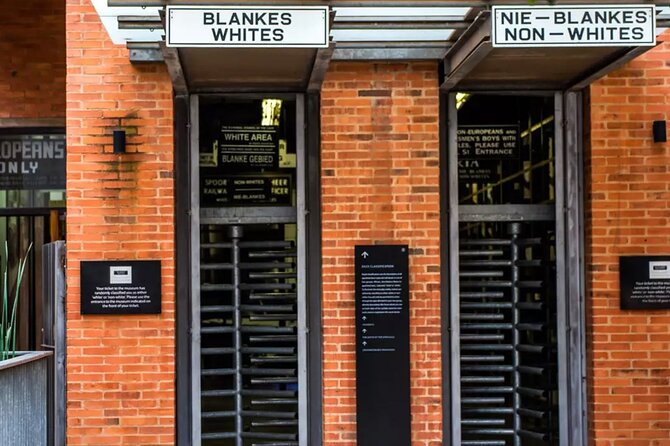
Constitution Hill is described as a former political prison that is now a museum. The stop is scheduled for about 30 minutes, and admission is not listed separately as included in the stop description, although the general inclusions say museum entrance is covered. That small wording difference is worth clarifying when you book.
This stop gives the tour a physical setting for the machinery of oppression. You are no longer dealing only with dates and laws. You are looking at a place built to confine people, and the guide can help connect that institution to the wider apartheid system.
Half an hour is short. You may get an overview rather than a complete museum visit. If Constitution Hill is your main reason for booking, confirm how much time the group will spend inside and whether the schedule allows a proper look at the exhibitions.
I like this stop because it can prevent the day from becoming too focused on famous names. Mandela matters, but so does the wider structure that imprisoned political opponents and enforced racial rule. Constitution Hill helps keep that larger picture in view.
Same country, a completely different kind of day:
- Johannesburg and Soweto tour
★ 5.0 · 231 reviews - Soweto Half Day Tour
★ 5.0 · 231 reviews - Ultimate Johannesburg Tour
★ 5.0 · 200 reviews - Johannesburg: Pretoria and Cullinan Diamond Mine Tour
★ 4.7 · 165 reviews
Hallmark House and the modern Johannesburg view
Hallmark House, including the Deuce Bar, offers a more contemporary pause. The building has been refurbished and includes residential apartments, a hotel, a bar, and the Marabi Club in the basement. The scheduled stop is about 30 minutes, with admission included.
The purpose here seems to be perspective and atmosphere. You can take in city views, have a coffee or another drink, and see how a once-changing part of central Johannesburg is being presented today. Coffee and tea are included in the overall package, while alcoholic drinks are not.
This is also the least directly connected stop on the history route. A bar and city view may feel like a welcome break, but if you want every minute devoted to apartheid history, you may see it as time taken from a museum or neighborhood walk.
I would treat Hallmark House as a breathing space, not a major historical site. The day covers heavy material, and a short pause can help you absorb it. Just remember that any cocktail or alcoholic drink will cost extra.
Soweto: understanding how separation worked
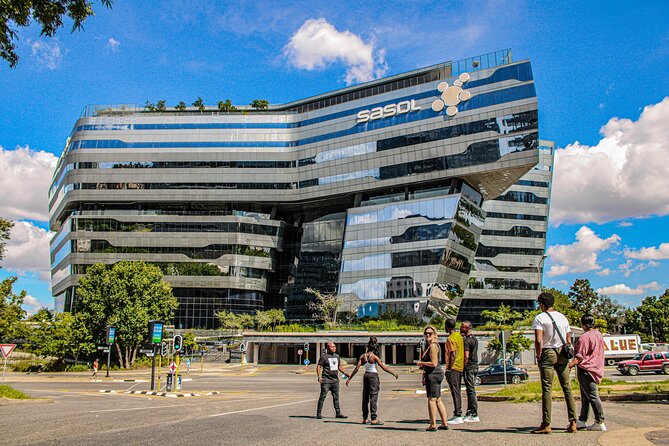
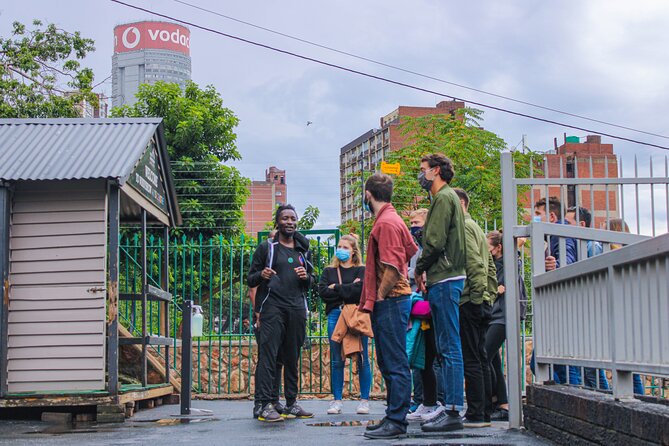
Soweto is the heart of the second half. The area is described as a symbolic part of South African history, and the tour gives you about two hours there. This is where the abstract idea of apartheid becomes easier to picture as a system that controlled where people lived and how they moved.
Your guide should explain how the township was used to keep much of the Black majority away from the economic and political center. That explanation is central to the tour. You are not simply checking off a famous neighborhood. You are looking at the spatial design of inequality and the ways residents resisted it.
The itinerary does not list every Soweto street or community stop, so the exact experience may vary. Some time may be spent driving between sites, while some may involve short walks. Wear comfortable shoes and expect the day to move at a steady pace.
Soweto also helps balance the city-center portion. Johannesburg’s central districts show how money and government shaped the city. Soweto shows how those decisions affected families, schools, work, and protest. I consider this connection one of the strongest reasons to choose the full-day format instead of visiting only a museum.
Mandela House and a life beyond the famous photographs
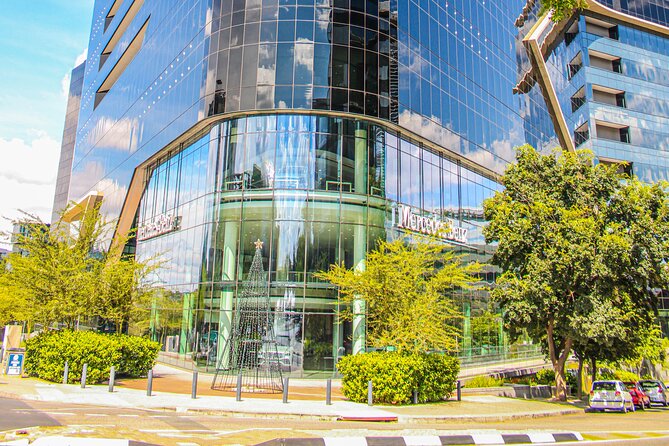
Mandela House is scheduled for about 30 minutes, with admission included. The stop provides more context about Nelson Mandela’s life and places his public career within a real home and neighborhood.
Thirty minutes will not cover every detail of Mandela’s life. It should give you a focused look at the house and a stronger sense of the person behind the political symbol. I would listen for the links between Mandela’s personal story, the struggle against apartheid, and the later work of building a democratic South Africa.
The stop is likely to be especially meaningful if you already know the broad outline of Mandela’s career but want a more grounded setting. If you know little about South African history, the guide’s explanation will matter as much as the building itself.
One practical point: the tour’s stated theme includes the past, present, and future effects of apartheid. Mandela House is most useful when the guide moves beyond biography and explains what changed after apartheid, as well as what remains unresolved.
Hector Pieterson Museum and the June 16 uprising

The Hector Pieterson Museum and Memorial focuses on June 16, the day young people in South Africa fought against the education system imposed on them. The stop lasts about 30 minutes and admission is included.
This is likely to be one of the most moving parts of the day. The museum connects political policy to student action, showing how a decision about schooling became a flashpoint for wider resistance. The memorial’s importance comes from the age of those involved and the way the events shook the country.
Again, half an hour is a tight schedule. You will probably receive an introduction and see key displays rather than study the entire museum at length. If you prefer to read every panel, this may feel rushed.
I like the inclusion of this site because it brings younger voices into the story. A tour about apartheid should not focus only on presidents, lawyers, and famous activists. The events remembered here show how ordinary students helped force the country’s crisis into the open.
The Apartheid Museum: the day’s central museum visit
The Apartheid Museum is listed for about one hour and is described as a must-see, though the amount of time depends on the day. It is the final major stop and gives the whole route a place to come together.
You can expect the museum to provide the broadest account of the system, from its design and enforcement to resistance and the transition that followed. Because the day has already introduced Johannesburg, Soweto, Mandela House, and June 16, the museum should feel less like a collection of disconnected facts.
One hour is useful but not generous. If the museum is crowded or you read slowly, you may need to choose which sections deserve your attention. The schedule may also change based on the day’s traffic and opening conditions, so consider returning independently if you want a longer visit.
The museum is also where the tour’s present-and-future theme matters most. Apartheid ended as a legal system, but its effects did not vanish overnight. Listen for explanations of how housing, income, location, and opportunity can remain tied to older policies.
What $106.78 buys you
At $106.78 per person, this is not the cheapest way to see Johannesburg. The price makes more sense when you count the included guide, air-conditioned transport, lunch, coffee or tea, museum entrance, and taxes.
The value depends heavily on the quality of the guiding. You are paying for connections between places, not just rides to buildings. A strong guide can explain why the gold economy matters, how Soweto was designed, and why June 16 changed the national conversation.
The cost is easier to justify if you are staying in Pretoria or another area where arranging transport to Johannesburg would be inconvenient. It is also useful if you prefer one organized day rather than managing several museum admissions and transfers yourself.
It is less good value if you want long, detailed visits at each museum. The itinerary includes many stops, and the shorter 30-minute visits can limit how much you see. A private or smaller-group option might offer more flexibility, but no such upgrade is specified here.
The guide can make or break the experience
The available feedback about Honest Travel Experience is generally warm about guide attitude. Tye is praised for being kind and passionate, and another account describes guides as friendly, caring, and willing to meet someone at the Gautrain station and ensure a safe drop-off.
Those details point to a provider that can offer a personal touch, but they should not be treated as a guarantee for every departure. The public feedback also includes serious complaints about communication, refunds, safety, and tours that did not match their advertised plans.
There is another caution: much of the published feedback concerns other activities, such as bicycle tours, scooter outings, silent discos, and nightlife. Those comments can tell you something about the company’s general style, but they do not give a clean picture of this specific apartheid itinerary.
I would confirm three things before departure: the pickup location, the expected group size, and how much time is planned inside each museum. Those questions are especially useful because the group may include up to 50 people and the overall timing can range from four to eight hours.
Who should book this history tour
I would recommend it to you if you want a guided first look at Johannesburg and Soweto, especially if apartheid history is your main interest. The route gives you economic context, political imprisonment, township history, Mandela’s home, the June 16 uprising, and a major museum in one day.
It also suits visitors who value convenience. Included transport and lunch remove several planning tasks, while pickup helps if you are based in Pretoria or do not want to navigate Johannesburg alone.
You may want a different plan if you have already visited the Apartheid Museum and Constitution Hill in depth. The schedule may feel too compressed for repeat museum visits, and Hallmark House may not appeal if you want only historical sites.
The experience is also a poor fit for anyone expecting a carefree sightseeing outing. The subject is painful, and the day asks you to think about law, forced separation, imprisonment, protest, and ongoing inequality. That seriousness is a strength, but it is not a light morning activity.
Practical verdict: book it with a few checks
This is a well-designed route on paper. It moves from the forces that built Johannesburg to the system that controlled people, then to the homes, protests, and museums that show resistance and memory. Soweto plus the two major museums gives the day real weight.
The best reasons to book are the included transport, lunch, admissions, and the chance to see several important sites without piecing together separate visits. The main reasons to hesitate are the uncertain duration, potentially large group, short museum times, and mixed company feedback.
I would book if you want an efficient introduction and can confirm the operational details first. Ask where pickup occurs in Pretoria, whether the day truly includes every listed stop, and how the schedule handles Constitution Hill and the Apartheid Museum.
Cancellation is free if you cancel at least 24 hours before the start time. Changes or cancellations made later are not accepted for a refund. With those checks made, this tour can give you a serious, useful first understanding of how apartheid developed, how people resisted it, and why its effects still matter.
FAQ
Where does the tour take place?
The experience is listed in Pretoria, but the itinerary focuses on Johannesburg and Soweto. Confirm the exact pickup point and route before booking.
How long does the experience last?
The stated duration is approximately four to eight hours.
Is pickup available?
Yes. Pickup is offered, though the provided information does not specify every pickup location.
Is transportation included?
Yes. The tour includes an air-conditioned vehicle.
Is lunch included?
Yes. Lunch is included in the price.
Are museum entrance fees included?
Museum entrance and all fees and taxes are listed as included. Constitution Hill is separately marked as not included in its stop description, so confirm this detail with the provider.
Are drinks included?
Coffee and tea are included. Alcoholic beverages are not included.
Which Johannesburg areas are visited?
The route includes Johannesburg city center, Maboneng, Marshalltown, and Soweto.
Which museums and historic homes are included?
The itinerary includes Constitution Hill, Mandela House, the Hector Pieterson Museum and Memorial, and the Apartheid Museum.
How large can the group be?
The activity can have a maximum of 50 participants.
Can I cancel for a full refund?
Yes, if you cancel at least 24 hours before the experience start time. Cancellations or changes made less than 24 hours before the start time are not accepted for a refund.
More Full-Day in Pretoria
- Johannesburg Full-Day Tour(Soweto/Jo-Burg & Apartheid Museum)
★ 5.0 · 110 reviews - Johannesburg Full Day
★ 5.0 · 10 reviews - Cradle of Human Kind & Lion & Rhino Park Tour Full day Tour Private
★ 5.0 · 8 reviews - Johannesburg,Soweto and Apartheid Museum full-day tour
★ 5.0 · 7 reviews
Just added around Pretoria
- Lesedi Cultural Village Tour from Johannesburg★ 5.0 · 6 reviews
- 3 day Kruger National Park end with panaroma★ 5.0 · 3 reviews
- Lesedi Cultural Village and Sterkfontein Caves Day Tour★ 5.0 · 4 reviews
- BIG 5 Kruger 3 Days Safari from Johannesburg★ 4.5 · 7 reviews
- Kruger national park tour 4-days/3nights(Open safari truck)★ 5.0 · 3 reviews
- All inclusive BIG 5 Kruger 2 Day Safari from Johannesburg★ 5.0 · 11 reviews
- Johannesburg guided city tour★ 4.5 · 4 reviews
- Kruger National Park 2 Days 1 Night Magical Safari from Johannesburg Private★ 5.0 · 5 reviews
Historical Tours, compared.

Soweto Township Cultural Tour incl Apartheid Museum and Nelson Mandela House
Read our review →
Cape Town Guided City Cycling Heritage Tour – Private Tour
Read our review →
Robben Island Tour; Pickup, Drop-off; Guided Tour Historic Prison
Read our review →
Browse the lists this tour appears in