

Reviewed · SOWETO TOURS
Half-Day Walking Tour in Soweto
Soweto is best understood on foot, one street and one conversation at a time. This five-hour walking tour moves from the Freedom Charter and the 1976 student uprising to soccer, local beer, small businesses, and community work. It gives you a look at daily life beyond Johannesburg’s gated suburbs.
I like the fact that your guide lives in Soweto, rather than simply arriving with a script. I also like the mix of major historic sites and ordinary local places, including a fruit market, original matchbox houses, a brewery, and a youth project. The main consideration is pace: eight stops in about five hours can feel full, especially for anyone who expects long museum visits or leisurely shopping.
Key points to know before booking
- Walter Sisulu Square introduces the 1955 Freedom Charter and includes a daily produce market.
- Hector Pieterson Memorial explains the 1976 Soweto uprising and its role in the collapse of apartheid.
- Vilakazi Street links the former homes of Nelson Mandela and Desmond Tutu.
- Orlando Towers brings a modern landmark, painted murals, and bungee jumping into the tour.
- Soweto Brewing Company includes a taste of local beer and a brewery visit.
- Mandela House admission costs extra, so budget separately for this final historic stop.
Why this Soweto walk feels different
The strength of this tour is its range. You are not spending five hours looking at monuments from a vehicle window. You are moving through places tied to politics, sport, protest, business, religion, food, and youth programs.
That matters in Soweto. The township is not only a chapter in South Africa’s apartheid story. It is also a living community, and the route tries to show both sides. You learn about the 1955 Freedom Charter, then see fruit and vegetable sellers. You hear about the 1976 uprising, then walk along a street filled with restaurants, crafts, musicians, and traditional dancers.
The guide’s local connection is important here. The tour is run by Nkuli Walking Tours, with a guide who lives in Soweto. That gives you a better chance to ask practical questions about local life and to understand the places as more than photo stops.
A published rating of 4.9 out of 5 from 38 ratings, with a 100 percent recommendation rate, reflects the tour’s strongest feature: the guide’s friendly and informative approach. The available feedback also points to the appeal for a solo participant who wanted to see local life beyond gated communities and suburbs while feeling comfortable on the walk.
More Soweto Tours in Johannesburg
- Johannesburg: Hop-On Hop-Off Bus with Optional Soweto Tour
★ 4.6 · 985 reviews - Soweto /Johannesburg and Apartheid Museum Guided Full Day Tour
★ 5.0 · 932 reviews - Johannesburg Hop-On Hop-Off City Tour with Soweto Option
★ 4.5 · 768 reviews
Starting at Walter Sisulu Square in Kliptown

The tour begins at the Soweto Hotel and Conference Centre on Union Avenue in Kliptown. The first stop is Walter Sisulu Square, also called Freedom Square, where you spend about 40 minutes.
This is the right place to begin because the square connects Soweto to the Freedom Charter. In 1955, the Congress of the People adopted a vision for a democratic South Africa there. Your guide can use the setting to explain how political demands were gathered and expressed long before the country held its first democratic election.
The square is not only a historic site. It also has a daily fruit and vegetable market, which gives the stop a practical, local feel. I like this combination. You get political context, then a chance to notice the everyday business of buying and selling food.
Do not expect a long formal museum visit here. The admission is free, and the value comes from the explanation and the chance to look around. If you enjoy markets, keep a little time for the produce stalls. If you prefer a quiet start, the market activity may make the opening feel lively.
Orlando Towers and the modern face of Soweto

About 40 minutes are set aside for Orlando Towers. These huge towers are part of the old Orlando power station and are now among Soweto’s most recognizable landmarks.
Their painted murals show daily life in Soweto and carry advertising for major companies. That mix tells you something about the area today: old industrial structures can take on new uses, and public art can become part of a community’s visual identity.
The towers are also linked with extreme sports, including bungee jumping and free fall. You are not told that you must take part, so treat those activities as a feature of the site rather than a required part of the walk. For most people, the main attraction will be the towers themselves and the guide’s explanation of what they mean to Soweto.
This stop adds visual variety after the political weight of Walter Sisulu Square. It is also one of the places where you can take memorable photographs. Keep in mind that a painted industrial landmark is not the same as a conventional historic monument. If your main interest is apartheid-era history, the next stops carry more direct historical detail.
Orlando East, matchbox homes, and soccer pride
The walk continues into Orlando East for about 30 minutes. This area is known for its early brick homes, often called matchbox houses because of their simple, compact form.
These houses help make township history concrete. Instead of hearing only about housing policy in the abstract, you can see the modest homes that shaped daily life for generations. The stop is brief, but it helps connect the political story to the streets where people actually lived.
Orlando East also has strong soccer ties. Orlando Pirates, one of Soweto’s best-known soccer clubs, is central to the area’s sporting identity. If you follow South African football, this part of the route will have special interest. Even if you do not, soccer offers a useful way to understand local pride and community identity outside the usual political narrative.
The tour does not promise entry to a soccer stadium or a match, so think of this as a neighborhood visit, not a sporting event. The appeal is seeing the setting and hearing how football fits into Soweto life.
Same country, a completely different kind of day:
- From Johannesburg: Pilanesberg Nature Reserve Game Safari
★ 4.8 · 1,327 reviews - Full Day Ultimate Pilanesberg National Park Safari from Johannesburg or Pretoria
★ 4.5 · 718 reviews - Half-Day Tour of Soweto Tour
★ 4.5 · 712 reviews - Soweto: Walking Tour with a Local Guide and Lunch
★ 4.9 · 648 reviews
Hector Pieterson Memorial and the 1976 uprising
The Hector Pieterson Memorial receives about 40 minutes, and this is one of the most important stops on the route.
The memorial explains the Soweto uprising of 1976, when students protested the forced introduction of Afrikaans as a language of instruction. The protest became a major turning point in the struggle against apartheid. The image of Hector Pieterson, a young student killed during the uprising, became one of the most powerful symbols of the period.
A local guide can help you place the protest in its wider setting. The issue was not simply which language students preferred. It was also about control, unequal education, and the refusal of young people to accept rules imposed without their consent.
This stop is emotionally serious. Allow yourself time to listen rather than treating it as a quick photograph. The admission is listed as free, but the meaning of the place is not light. Families with older children and anyone interested in South African history will likely find this one of the most valuable parts of the day.
The itinerary is full, so the 40-minute visit may not allow every possible exhibit or detail. If this subject is your main reason for coming to Soweto, ask the guide questions and consider returning later for more time.
Vilakazi Street, Mandela House, and a break in the action
Vilakazi Street is given about an hour, making it the longest stop. That extra time is useful because the street combines history with food, shopping, and entertainment.
Vilakazi Street is famous for having been home to two Nobel Peace Prize winners: Nelson Mandela and Archbishop Desmond Tutu. It is also a roughly one-kilometer stretch with restaurants, arts and crafts stalls, musicians, and traditional dancers.
This is where the tour shifts from memorials to social life. You can look for a local refreshment, browse handmade items, and watch the street activity without rushing through. Snacks are included on the tour, but additional food and shopping are not, so bring some spending money if you want to sample more.
Mandela House is a separate stop within the same general area and receives about 30 minutes. The house is tied to Mandela’s years in the struggle against apartheid and offers a more personal setting than a large public memorial.
Admission to Mandela House is not included in the $32 tour price. This is the clearest extra cost to plan for. Check the amount at booking or before the visit, since the supplied tour details do not state the current admission fee.
The time allocation is fairly short for a place with such importance. You can see it as a focused visit, not a full museum study. If Mandela’s life is your main interest, you may want to arrange a separate return visit if the schedule allows.
A taste of Soweto at the local brewery
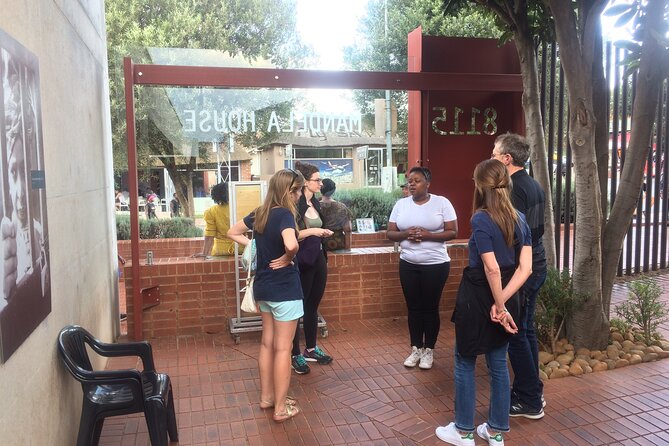
The Soweto Brewing Company receives about 30 minutes. You get to taste local Soweto beer and take a special tour of the brewery.
This stop gives the day a welcome change of rhythm. After the political sites and memorials, you see a local business producing something for the present-day community. It also lets you consider how Soweto’s identity is expressed through food and drink, not only through struggle-era landmarks.
The tasting is part of the visit, but the details are limited. The supplied information does not specify the number of samples, the beer styles, or whether nonalcoholic options are available. If you do not drink beer, ask ahead about alternatives.
Thirty minutes is enough for a short introduction and tasting, but not for a long brewery session. I would treat it as a small cultural stop rather than the main reason to book the tour.
The Shalk community project in Kliptown
The final community stop is at 58 Beacon Road, where you visit The Shalk, a project serving children and young people in Kliptown.
The project provides daycare and afternoon programs. You can learn about work carried out by local community members and interact with children as part of the visit.
This stop brings the tour back to Kliptown and adds an important present-day focus. It shows that Soweto’s story is not frozen in 1955 or 1976. Community members are also working on practical needs now.
I appreciate that the route includes this kind of project. It can help you see local initiative rather than viewing Soweto only through poverty, protest, or famous names. Still, interaction with children should be handled respectfully. Follow the guide’s instructions, ask before taking photographs, and remember that this is a working community program, not a staged performance.
The visit lasts about 30 minutes. That gives you an introduction, but not enough time to understand every part of the project. Its value lies in meeting the people involved and hearing what the program does.
Is $32 good value for five hours?
At $32 per person, this is a strong value if you want a guided introduction to several parts of Soweto. The price includes the guide, snacks, and a route that covers eight stops. Most listed stops have no admission charge, while Mandela House is the exception.
The real value is the local guide. Without explanation, Walter Sisulu Square, Orlando East, and the Hector Pieterson Memorial could become a series of disconnected locations. The guide links them through politics, housing, language, sport, and community life.
The tradeoff is that the schedule is busy. The listed stop times add up to about four hours and 40 minutes, leaving little spare time within the advertised five-hour duration. Walking between sites, meeting the guide, and handling short pauses must fit into the remaining time.
The maximum group size is 60 people. That is a generous limit for a walking tour. A group that large may make personal questions or close conversation harder, even though the published rating suggests the guiding is a strong part of the experience. If you prefer a small, quiet walk, ask Nkuli Walking Tours about the expected group size on your chosen date.
The tour uses a mobile ticket, and WiFi on board is not included. Since this is a walking experience rather than a bus tour, the lack of onboard WiFi is not a major concern, but you should have your ticket ready on your phone.
Who will enjoy this walking tour most?
I would recommend it to first-time visitors to Johannesburg who want a direct introduction to Soweto. It suits people who care about history but also want to see shops, markets, houses, a brewery, and community work.
It is also a good fit for solo participants. The route gives you a structured way to explore an area that may feel unfamiliar, and the guide’s local knowledge adds context and reassurance. The published feedback specifically highlights the friendly, informative guide and the chance to see local life beyond suburban and gated settings.
Families can take part, since the tour is described as suitable for all ages. The serious material at Hector Pieterson Memorial and Mandela House may be best for children old enough to discuss apartheid, protest, and inequality.
You should think twice if you dislike walking, prefer slow museum visits, or need a very small group. The tour covers a lot in half a day, and its strongest moments come from the overall route rather than extended time at any one site.
Good weather is required. If poor weather cancels the tour, you can choose another date or receive a full refund. You can cancel for a full refund up to 24 hours before the start time. Changes or cancellations inside that 24-hour period are not refunded.
Should you book the Half-Day Walking Tour in Soweto?
Book it if you want history and present-day community life in the same outing. For $32, you get a local guide, a broad route, snacks, and a clear introduction to places that are difficult to understand from a passing drive.
The strongest reasons to choose it are the local guide, the Hector Pieterson Memorial, the Freedom Charter setting, and the time on Vilakazi Street. Orlando Towers, Orlando East, the brewery, and The Shalk project keep the day from becoming a string of solemn memorials.
Skip it if you want an in-depth museum tour, a guaranteed intimate group, or a relaxed day with long stops. Otherwise, this is a practical and fairly priced way to meet Soweto on its own streets, with enough historical background to make the visit meaningful.
FAQ
Where does the Soweto walking tour start?
The tour starts at the Soweto Hotel and Conference Centre on Union Avenue in Kliptown, Soweto, 1808, South Africa.
Where does the tour end?
The activity ends back at the meeting point at the Soweto Hotel and Conference Centre.
How long does the tour last?
The tour lasts approximately five hours.
What is included in the tour price?
Snacks are included. The tour uses a mobile ticket.
Is admission to Mandela House included?
No. Admission to Mandela House is not included in the tour price.
What places does the tour visit?
The route includes Walter Sisulu Square, Orlando Towers, Orlando East, Hector Pieterson Memorial, Vilakazi Street, Soweto Brewing Company, The Shalk community project at 58 Beacon Road, and Mandela House.
How many people can join the tour?
The activity has a maximum capacity of 60 people.
What happens if the weather is poor?
The tour requires good weather. If it is canceled because of poor weather, you will be offered another date or a full refund.
More Half-Day in Johannesburg
- Johannesburg and Soweto: Half-Day Tour
★ 4.8 · 439 reviews - From Johannesburg: Lion & Safari Park Half-Day Tour
★ 4.6 · 384 reviews - Johannesburg: Soweto Half-Day Tour
★ 4.7 · 196 reviews - Johannesburg: Half-Day Soweto Tour with a Local Guide
★ 4.8 · 110 reviews
More Walking Tours in Johannesburg
- Soweto Walking Tour with Lunch
★ 5.0 · 288 reviews - Johannesburg: Local Food Tasting Guided Walking Tour
★ 4.7 · 192 reviews - Johannesburg: City Centre Walking Tour
★ 4.8 · 152 reviews - Johannesburg City Centre Walking Tour
★ 5.0 · 80 reviews
Just added around Johannesburg
- Private Soweto Tour 5 hours approximately from Johannesburg or Pretoria.★ 4.5 · 9 reviews
- bicycle tour soweto★ 4.5 · 20 reviews
- Taste of Africa★ 5.0 · 9 reviews
- Two day Kruger National Park Safari from Johannesburg★ 5.0 · 19 reviews
- Airport & Private Shuttle and Transfer Services in Johannesburg★ 5.0 · 9 reviews
- Full-day Johannesburg Bike Or Walking tour – With Transport★ 5.0 · 10 reviews
- Sun City Day Tour From Johannesburg★ 4.5 · 6 reviews
- Pilanesberg National Park Safari, BIG 5 Full Day★ 5.0 · 4 reviews
Soweto Tours, compared.

Soweto /Johannesburg and Apartheid Museum Guided Full Day Tour
Read our review →
Johannesburg Hop-On Hop-Off City Tour with Soweto Option
Read our review →

Jo’berg in 1 Day: Soweto, Apartheid Museum & City Tour
Read our review →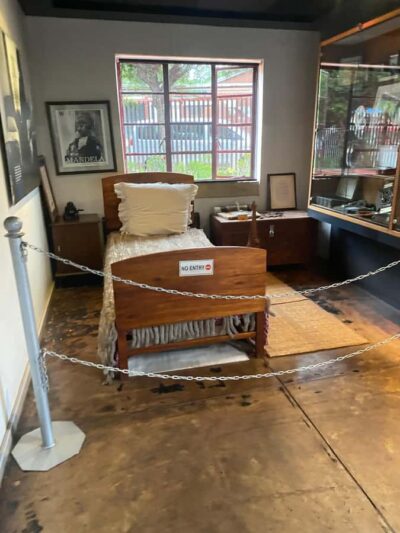
Full-Day Tour with Soweto and Apartheid Museum
Read our review →
Browse the lists this tour appears in