
Reviewed · HISTORICAL TOURS
Johannesburg’s Migration History with a local lunch
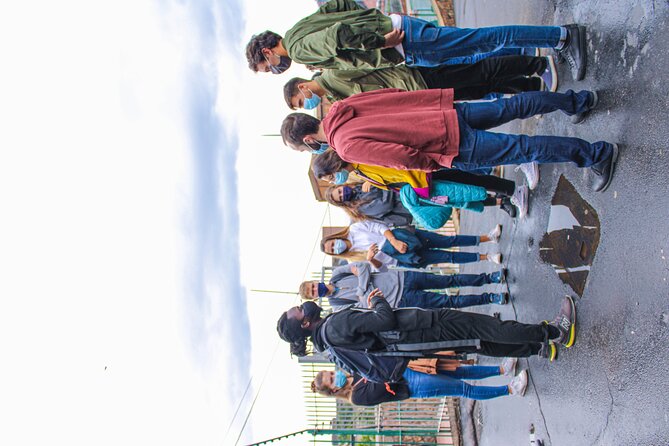
Hillbrow’s story is Johannesburg’s story in miniature: gold drew people from across the world, apartment blocks rose quickly, and a district once reserved for white residents became one of the city’s most mixed neighborhoods. This tour brings that past into the present through a walk with local guide Franck, a visit to 1896 Windybrow House, and a meal tied to the local arts scene.
I like the combination of urban history and personal storytelling, and I like that the experience does not stop at monuments. You move through streets, see vendors and parks, and enter a Victorian house now used as an arts center. The main caution is that the description refers to both lunch and a hearty dinner with local wine, so you should confirm exactly what meal is served before booking.
Key points to know
- Hillbrow tells a complicated migration story: Gold brought people from many parts of the world, and the district remains strongly Afro-cosmopolitan.
- Windybrow House dates from 1896: The Victorian home and theater provide a striking setting for local art and performance.
- Franck is the named guide: His style centers on vivid stories, city knowledge, and helping you feel at ease while walking through Hillbrow.
- The experience includes lunch and bottled water: The description also mentions dinner and local wine, so clarify the meal details in advance.
- It lasts about three hours: The Windybrow portion is listed at two hours, with the remaining time used for walking and the meal.
- It begins and ends in Maboneng: You must arrange your own transportation to 20 Kruger Street, and no private vehicle is included.
Why Hillbrow is the right place for this story
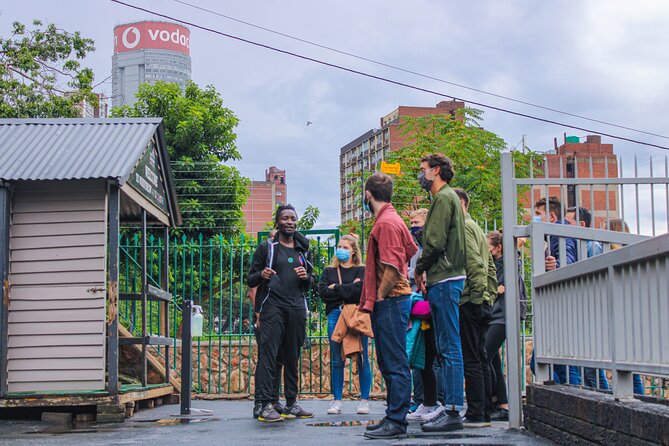
Hillbrow was laid out as a residential suburb in 1894 and 1895, when Richard Currie auctioned building stands. In 1897, it became part of Johannesburg’s Sanitary Board. After World War Two, developers bought up plots at high prices and replaced many of the original homes with blocks of flats.
That change matters because Hillbrow became a place where people could live close to work, transport, and the opportunities created by Johannesburg’s gold economy. People arrived from different parts of South Africa and from abroad. The neighborhood’s apartment buildings gave the city a dense, urban character unlike the quieter suburban districts nearby.
The political story is harder. Under the Group Areas Act, Hillbrow was designated as a white area, even though its social reality was never as simple as that label suggested. The district had long welcomed people from many backgrounds, and its identity continued to change as South Africa’s laws shifted.
You get more from this tour if you arrive ready for that complexity. Hillbrow is not presented as a polished historic quarter. It is a working neighborhood with busy streets, street vendors, apartment blocks, parks, and signs of many communities living close together. The value lies in understanding how those layers formed.
A few more Johannesburg trips to weigh up
- Soweto: Walking Tour with a Local Guide and Lunch
★ 4.9 · 648 reviews - Full-Day Soweto, Apartheid Museum and Lunch Tour
★ 5.0 · 410 reviews - Soweto: Guided Bicycle Tour with Lunch
★ 4.9 · 292 reviews
Meeting Franck in Maboneng

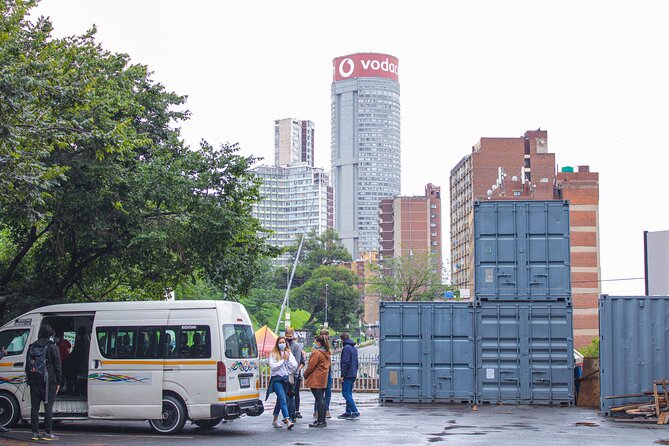
The tour starts at Honest Corporate Travel, 20 Kruger Street, in Maboneng, at 10:00 a.m. Maboneng is a useful starting point because it gives you a clear address and places the experience within Johannesburg’s inner-city zone, rather than sending you to a distant suburban pickup point.
You need to make your own way there. Private transportation is not included, although the meeting point is near public transportation. The tour finishes back at the same address, which makes it easier to plan the rest of your day.
Franck is the named guide for this experience. His strength is the spoken story. He connects buildings and streets to the people who used them, and he brings local artists into the visit rather than treating culture as something you only observe from outside.
The group can contain up to 30 people. That is a reasonable maximum for an urban walk, but it is not an intimate private tour. If the group reaches capacity, you should expect to stay close to the guide and listen carefully around street noise. The group size may also affect how easily everyone can fit into rooms at Windybrow.
Walking through Hillbrow’s changing streets
The walking portion gives you the setting that a museum cannot. You see the district as a lived-in place, not only as a chapter in a city guidebook.
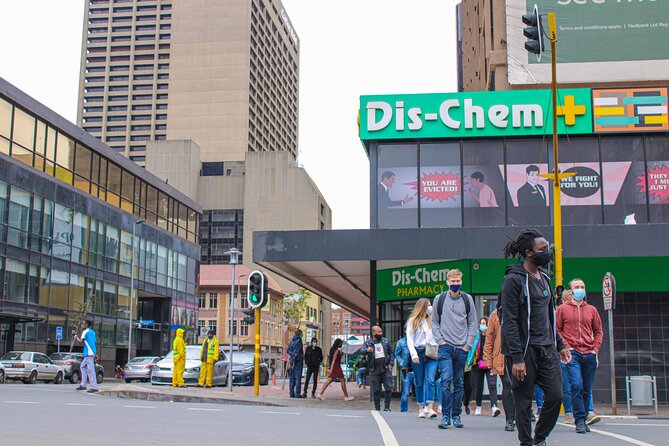
The route reflects Hillbrow’s mixed character. The supplied details point to street vendors, peaceful parks, apartment blocks, and two of Johannesburg’s iconic towers within less than three kilometers on foot. That makes the area especially useful for understanding how close together the city’s old and new landmarks can be.
I like this part because migration is easier to grasp when you are looking at the streets where people settled, worked, traded, and built communities. Franck can use ordinary details to explain why the neighborhood developed as it did. You are not simply hearing that Hillbrow was cosmopolitan. You are walking through a place where that mixture remains visible.
The practical issue is that this is a walking experience in an urban district, not a coach tour with constant air conditioning and a protected viewing platform. Wear sensible shoes, keep your belongings secure, and stay with the group. The information says most people can participate, but it does not give a route length, surface details, or a specific mobility plan, so anyone with access needs should ask before booking.
One useful feature is the contrast between the busy street activity and the quieter parks mentioned in the tour description. That shift helps you see that Hillbrow is not one single mood. It can feel hectic on one block and calm on the next.
Entering 1896 Windybrow House
Windybrow is the main set piece. Built in 1896, this Victorian house is now home to the Windybrow Theatre and Arts Centre. The visit lasts about two hours according to the itinerary, so this is not a quick photo stop.
The house gives the tour a physical anchor. Johannesburg’s early wealth came from gold, and a Victorian residence such as Windybrow helps you picture the city’s upper-class beginnings before Hillbrow became known for dense apartment living and international migration.
Expect a room-by-room look at the house, with local South African artists taking part through poetry, fashion, and song. That detail makes the visit different from a standard heritage-house tour. Instead of seeing only old rooms and architectural features, you encounter current creative work in a historic setting.
I especially like that the arts center is part of the experience rather than a decorative footnote. Local performance turns the building into a working cultural place. It also gives you a direct connection between Johannesburg’s past and its present.
The practical drawback is time. Two hours inside one venue is a substantial portion of a three-hour experience. If you want a fast overview of Hillbrow with many separate stops, this may feel focused on Windybrow. If you enjoy architecture, performance, and stories told at a measured pace, the longer visit is a benefit.
Same country, a completely different kind of day:
- From Johannesburg: Pilanesberg Nature Reserve Game Safari
★ 4.8 · 1,327 reviews - Johannesburg: Hop-On Hop-Off Bus with Optional Soweto Tour
★ 4.6 · 985 reviews - Soweto /Johannesburg and Apartheid Museum Guided Full Day Tour
★ 5.0 · 932 reviews - Johannesburg Hop-On Hop-Off City Tour with Soweto Option
★ 4.5 · 768 reviews
Meeting artists instead of just seeing old rooms
The arts element is one of the strongest reasons to choose this tour. The description includes poetry, fashion, and song, so the visit can involve several forms of expression rather than one formal performance style.
That variety matters in a district shaped by movement. Migration is not only a matter of dates, laws, and population figures. It also appears in language, music, clothing, food, and the ways people tell their own stories. The Windybrow visit gives those subjects a human face.
You should not expect a large theater production or a full evening concert. The information describes artists waiting room by room to perform or present their work. Think of it as a cultural encounter woven into a heritage visit.
This is also where Franck’s storytelling seems most useful. His role is not limited to pointing at a building. He helps connect the house, the neighborhood, and the creative work taking place there. For you, that can make the visit feel less like a passive tour and more like a conversation about the city.
The meal and the question of lunch versus dinner
Lunch and bottled water are included. The tour title also specifies a local lunch, which suggests the meal is intended to be part of the neighborhood experience rather than an unrelated restaurant stop.
However, the itinerary wording refers to a hearty dinner paired with local wine. That conflicts with the stated start time of 10:00 a.m. and the inclusion of lunch. I would not assume that wine is included, and I would confirm whether the meal is lunch, an early meal, or a dinner-style menu before paying.
Even with that uncertainty, the meal adds value. A food stop can help you understand migration in a more direct way, since Johannesburg’s cooking reflects many communities and movements. The provided information does not name the dishes or restaurant, so you should not book this expecting a particular cuisine.
At $25.63 per person, the price is low for a three-hour guided experience that includes admission to Windybrow, lunch, and bottled water. The value is strongest if you plan to explore Johannesburg’s inner city anyway and want a guide to supply context that would be difficult to gather on your own.
The price does not include private transportation. You also need to get to Maboneng at your own expense. That is not a major issue if you are already staying nearby or using public transportation, but it matters if you are comparing this with a tour that includes hotel pickup.
How the safety question fits into the experience
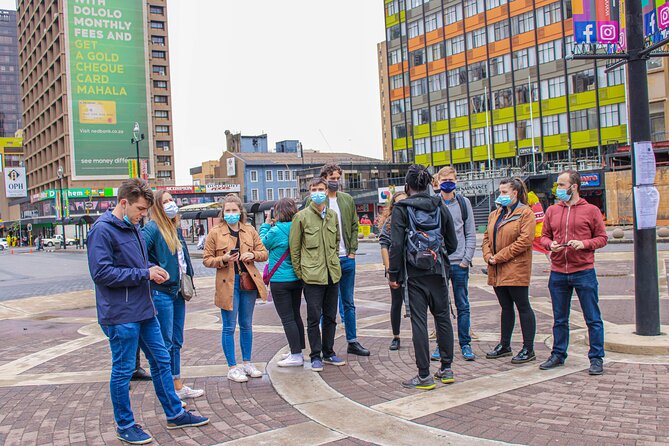
Johannesburg’s inner city can feel edgy, particularly if you are unfamiliar with it. The experience is designed as a guided walk, and the available details indicate that Franck helps people feel safe while moving through the streets.
That does not mean you should switch off your normal city awareness. Keep valuables out of sight, follow the guide’s instructions, and avoid separating from the group. The tour’s maximum of 30 people provides a visible group presence, but it can also make it harder to hear or stay close if the streets are crowded.
I would choose this experience for someone who wants a guided introduction rather than a solo first walk through Hillbrow. It can work well for visitors who are curious about Johannesburg beyond the usual major sights and who are comfortable with an active urban setting.
You should be comfortable with the fact that the neighborhood is presented honestly. This is not a sanitized heritage district. Its appeal comes from seeing a real part of the city and learning how its identity has shifted over time.
Timing, group size, and what to bring
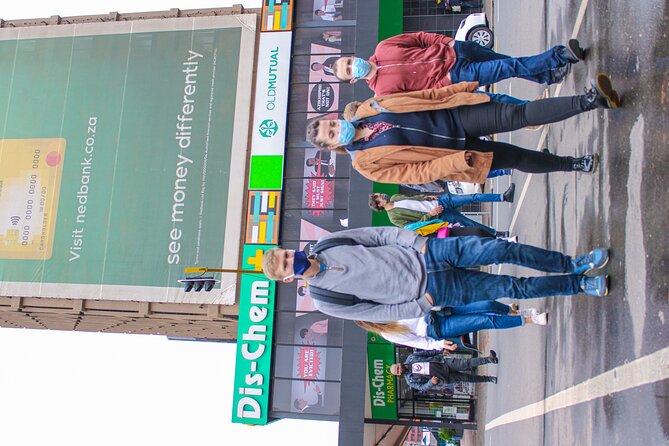
The start time is 10:00 a.m., and the total duration is about three hours. The Windybrow visit accounts for roughly two hours, leaving approximately one hour for the walking element and meal, although the exact order is not stated.
Because the tour has a fixed meeting point and ends there, plan your morning around the full time window. Avoid scheduling an airport transfer, museum reservation, or long-distance excursion immediately afterward.
Bring:
- Comfortable walking shoes
- Water, even though bottled water is included
- A phone with the mobile ticket available
- Minimal valuables
- Sun protection suited to the day
The ticket is mobile, and booking confirmation is provided at the time of purchase. The experience needs a minimum number of participants. If that minimum is not reached, the provider offers another date, another experience, or a full refund.
The cancellation rule is strict. Once booked, the experience is non-refundable and cannot be changed for any reason. That makes it important to confirm your schedule, meeting point, and meal expectations before booking rather than treating the reservation as flexible.
Who will get the most from this Hillbrow walk
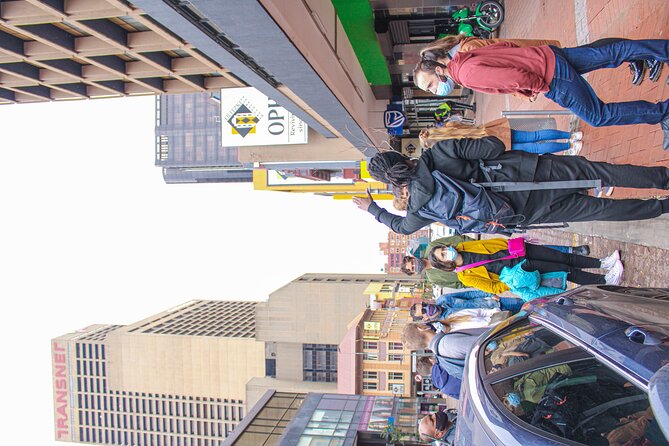
I would recommend it most strongly to you if you enjoy city stories, social history, architecture, and local art. It suits someone who wants to understand how Johannesburg was shaped by migration and apartheid-era planning, not just photograph its skyline.
It is also a good choice if you prefer a human guide to a recorded audio tour. Franck’s role is central, and the experience depends on his storytelling, explanations, and ability to connect the streets with the people who live and create there.
Families with older children may find the subject matter useful, though the tour information does not specify a child age range. The statement that most people can participate suggests it is broadly accessible, but the walking conditions and group format still make it sensible to ask about individual mobility needs.
I would be less likely to choose it if you want a private vehicle, hotel pickup, a short sightseeing loop, or a precise food itinerary. It also may not suit you if you prefer major landmarks without difficult political and social context.
Should you book Johannesburg’s Migration History with a local lunch?
Book it if you want a grounded introduction to Johannesburg’s inner city, especially Hillbrow. The best parts are the combination of Franck’s storytelling, the 1896 Windybrow house, local poetry, fashion and song, and the chance to see how migration shaped an actual neighborhood.
At $25.63, the package offers solid value for a three-hour experience with lunch, bottled water, and included admission. Just confirm the lunch and dinner wording, ask about the walking route if needed, and remember that transportation to Maboneng is your responsibility.
Skip it if you need a flexible booking, private transport, or a polished sightseeing experience with little walking. For an open-minded visitor who wants to meet Johannesburg through its people and changing streets, this is a thoughtful and unusually personal choice.
FAQ
Where does the tour begin?
It begins at Honest Corporate Travel, 20 Kruger Street, Maboneng, Johannesburg, 2094, South Africa.
What time does the experience start?
The stated start time is 10:00 a.m.
Where does the tour finish?
The activity ends back at the same meeting point in Maboneng.
How long does the experience last?
The total duration is approximately three hours. The Windybrow portion is listed as two hours.
Is lunch included?
Yes. Lunch and bottled water are included. The description also mentions a hearty dinner with local wine, so confirm the exact meal arrangement before booking.
Is private transportation included?
No. Private transportation is not included. The meeting point is near public transportation.
How many people can join the tour?
The maximum group size is 30 people.
Can the booking be canceled or changed?
No. The experience is non-refundable and cannot be changed for any reason. If the minimum number of participants is not reached and the provider cancels, you will be offered another date or experience, or a full refund.
Just added around Johannesburg
- Private Soweto Tour 5 hours approximately from Johannesburg or Pretoria.★ 4.5 · 9 reviews
- bicycle tour soweto★ 4.5 · 20 reviews
- Airport & Private Shuttle and Transfer Services in Johannesburg★ 5.0 · 9 reviews
- Taste of Africa★ 5.0 · 9 reviews
- Two day Kruger National Park Safari from Johannesburg★ 5.0 · 19 reviews
- Sun City Day Tour From Johannesburg★ 4.5 · 6 reviews
- Pilanesberg National Park Safari, BIG 5 Full Day★ 5.0 · 4 reviews
- Full-day Johannesburg Bike Or Walking tour – With Transport★ 5.0 · 10 reviews
Historical Tours, compared.
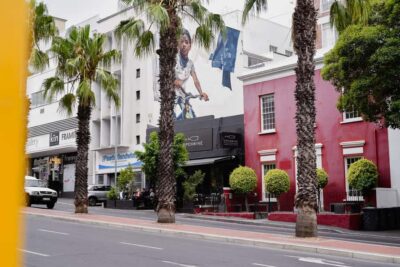
Soweto Township Cultural Tour incl Apartheid Museum and Nelson Mandela House
Read our review →
Cape Town Guided City Cycling Heritage Tour – Private Tour
Read our review →
Robben Island Tour; Pickup, Drop-off; Guided Tour Historic Prison
Read our review →
Browse the lists this tour appears in