
Reviewed · SOWETO TOURS
Johannesburg Historical, Apartheid Museum & Soweto
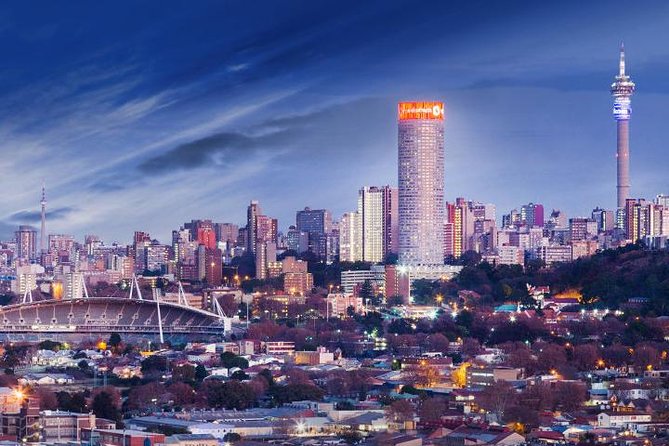
Johannesburg’s story comes into sharp focus when you connect the old gold mines, former prisons, Soweto streets, and the homes of Nelson Mandela and Desmond Tutu in one day. This private tour does exactly that, ending at the Apartheid Museum, the essential stop for understanding modern South Africa.
I like the private vehicle, which saves time between far-flung sights, and I like the chance to see both polished city districts and working Soweto neighborhoods. Guide Lesiba is noted for being flexible, keeping in touch before pickup, and adjusting the day to fit your interests. The drawback is that this is a fast-moving tour, and the Apartheid Museum ticket and lunch are extra.
Key points at a glance
- A private air-conditioned vehicle: Move between central Johannesburg and Soweto without figuring out several local connections.
- Constitution Hill included: Spend about 90 minutes at a former prison complex now linked to South Africa’s Constitutional Court.
- Maboneng and Newtown: See two very different sides of Johannesburg’s urban renewal and arts scene.
- Soweto’s major landmarks: Visit Vilakazi Street, Mandela House, the Hector Pieterson Memorial, Orlando Towers, and Diepkloof.
- A strong history focus: Gold mining, migrant labor, protest, prison life, and apartheid all appear during the day.
- Flexible private guiding: Lesiba can adjust the route toward the sights that matter most to you, time permitting.
Why this Johannesburg tour works well in one day
Johannesburg is spread out, and its major sights do not line up neatly along one sightseeing route. Constitution Hill sits near the city center, Maboneng lies to the east, and Soweto is well beyond the central districts. A private air-conditioned vehicle matters here because you spend less of your limited time waiting or changing transport.
The tour is designed as a broad introduction rather than a slow visit to one neighborhood. You get old mining history, modern city culture, apartheid-era sites, and important Soweto landmarks. If you have only one free day in Johannesburg, that range is the main reason to consider it.
The listed price is $107.48 per person. For a private group, that can be fair value, especially if you want door-to-door transport and a guide who can shape the day around your interests. Still, you need to budget for the Apartheid Museum admission and lunch if you add one. The exact timing also deserves attention: the experience is described as lasting from one to seven hours, while the full route clearly requires a substantial portion of a day.
More Apartheid Museum Tours in Johannesburg
- Soweto /Johannesburg and Apartheid Museum Guided Full Day Tour
★ 5.0 · 932 reviews - Jo’berg in 1 Day: Soweto, Apartheid Museum & City Tour
★ 4.8 · 524 reviews - Johannesburg: Full-Day Tour with Soweto and Apartheid Museum
★ 4.8 · 478 reviews
Starting with Johannesburg’s gold-mining roots
One early point of interest is the preserved Ferreira Mine Stope beneath the Standard Bank headquarters in central Johannesburg. During construction in the 1980s, workers found the entrance to an old mine passage dating from the city’s earliest gold-mining period.
The stope takes its name from Ignatius Phillip Ferreira, a farmer, soldier, and prospector who came from Grahamstown during the 1886 gold rush. He founded one of the first mining camps in the area and found gold just three months later.
This stop gives the city a useful starting point. Johannesburg was not simply built as a modern business center. Its beginnings are tied directly to the rush for gold, the workers drawn to the mines, and the economic forces that shaped the region for generations.
The stop may be brief, so do not expect a full mining museum visit. Its value is as a piece of physical evidence beneath the newer city, a reminder that Johannesburg’s past is literally underfoot.
Constitution Hill: prison walls and a democratic court
Allow about 90 minutes at Constitution Hill. This is one of the most worthwhile stops because it brings together two sharply different chapters of South African history: notorious prisons and the Constitutional Court, a symbol of the country’s post-apartheid democracy.
The precinct includes the Old Fort, a high-security prison built in the 1890s, along with other former prison buildings. These museums deal with confinement, political struggle, and the harsh systems that affected prisoners under colonial rule and apartheid.
I like this stop because it avoids presenting democracy as an abstract idea. You see the old prison complex, then the institution created to protect constitutional rights. The contrast gives the rest of the day more meaning, especially before you reach Soweto and the Apartheid Museum.
Admission to Constitution Hill is included. The planned visit is long enough to make the stop worthwhile, though you should listen carefully to the guide and keep an eye on the schedule. With so many places ahead, you will not have unlimited time to read every display.
Maboneng and Newtown show another side of the city
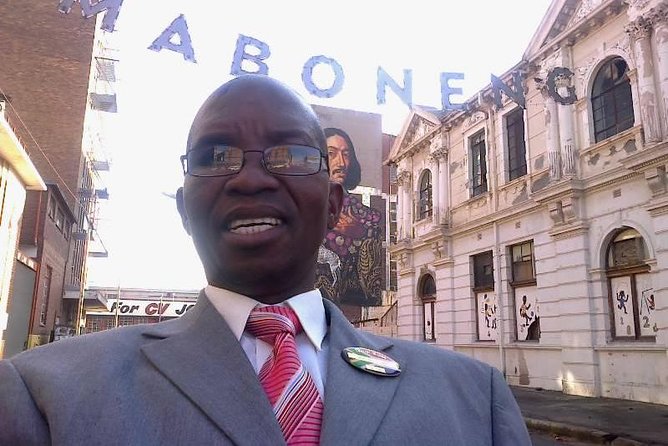
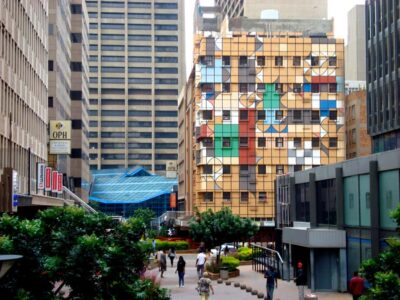
Maboneng means place of light in Sotho. It grew from the redevelopment of old warehouses and factories on the eastern edge of the inner city. The area was reshaped into a district for living, working, art, food, and entertainment.
Your visit here is about an hour, with admission listed as free. The stop gives you a look at Johannesburg’s effort to reuse neglected industrial buildings and create a new urban identity. It is a useful counterpoint to Constitution Hill, since the focus shifts from political history to city life and renewal.
Newtown adds another layer. It is a cultural area with artists of different backgrounds, residential spaces, and regeneration projects. The bridge linking Newtown and Braamfontein crosses the railway tracks and took 18 months to build. Completed in 2003, it is described as the largest cable-stayed bridge in southern Africa.
These stops are likely to appeal most if you enjoy architecture, street scenes, and the way cities change over time. The limitation is that the visit is mainly a look around rather than a long, guided neighborhood walk. If Maboneng is a top priority for you, tell Lesiba early so you can make the most of the available time.
More Soweto Tours in Johannesburg
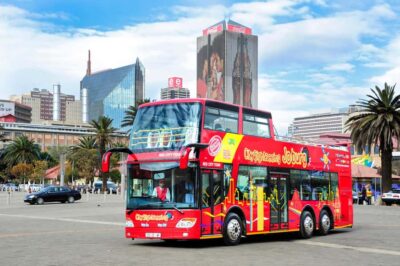
- Johannesburg: Hop-On Hop-Off Bus with Optional Soweto Tour
★ 4.6 · 985 reviews - Johannesburg Hop-On Hop-Off City Tour with Soweto Option
★ 4.5 · 768 reviews - Half-Day Tour of Soweto Tour
★ 4.5 · 712 reviews - Soweto: Walking Tour with a Local Guide and Lunch
★ 4.9 · 648 reviews
The Apartheid Museum needs real time
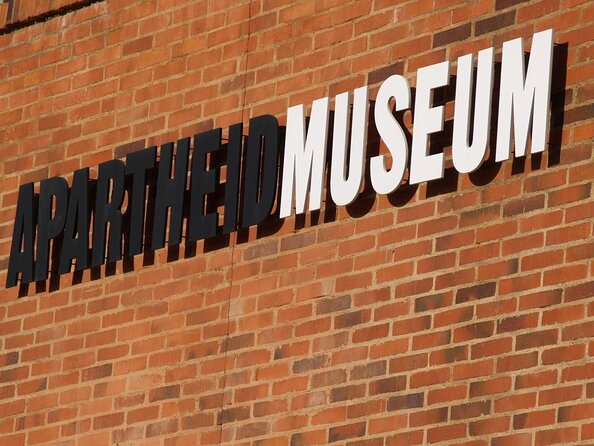
The Apartheid Museum is scheduled for about two hours, and that is sensible. This is not a quick photo stop. The museum explains the rise and fall of apartheid through exhibits that require attention, reading, and time to process.
The museum is not included in the ticket price, so confirm the current admission cost before booking. Since it is one of the central reasons many people choose this tour, an extra entrance fee is worth planning for rather than discovering it on the day.
I would treat the Apartheid Museum as the anchor of the city portion. The earlier stops provide background: gold mining, prison systems, the city center, and social change. The museum then brings those threads together in a structured account of apartheid.
The itinerary places the museum before the Soweto stops. That order can work well because you reach Soweto with a clearer sense of the laws and systems that shaped its communities. It also means the day contains a lot of serious material. You may want a little quiet time afterward as you continue through Soweto.
Old gold equipment and Johannesburg’s industrial past

Another short stop introduces a stamp battery, also called a stamp mill. This machinery crushed gold-bearing rock from underground mines.
The planned visit lasts about 20 minutes and admission is free. It is a small stop, but it supports the larger story of Johannesburg’s origins. After seeing a preserved mine stope, you get a sense of the machinery used to process the ore.
Do not expect a long technical demonstration. Think of this as a compact visual lesson that helps explain why the city grew so quickly and why mining shaped its economy.
Entering Soweto through Diepkloof

The Soweto portion begins with Diepkloof, including Diepkloof Extension and the area’s former hostels. These hostels were built to house large numbers of single male migrant workers.
That detail matters. Apartheid-era urban planning did not simply divide people by neighborhood. It also controlled where workers could live and how families were separated from employment centers. A short drive through Diepkloof can therefore add social context that a list of famous landmarks might miss.
The route also passes Chris Hani Baragwanath Hospital, described as the largest hospital in Africa and the third-largest in the world. The tour does not list an admission or interior visit, so expect this to be a passing point of interest rather than a hospital tour.
The Diepkloof section helps you see Soweto as a living collection of communities, not just a set of historical monuments. That is one of the better features of the route.
Orlando Towers and the visual character of Soweto

The Orlando Towers are former cooling towers, now known for one of the world’s most dramatic bungee-jump settings. The tour allows about 15 minutes here, and admission is not included.
You are not promised a jump, so this is mainly a sightseeing stop. The towers make a memorable photograph and show how industrial structures can take on a new role. They also add some lightness after the more difficult material at the museum and memorials.
Because the stop is brief, check in advance if you hope to take part in an activity. The supplied details do not say that a bungee jump is part of the tour price or schedule.
Vilakazi Street and Mandela House
Vilakazi Street is one of the most important addresses in Soweto. It is associated with both Nelson Mandela and Archbishop Desmond Tutu, giving it the unusual distinction of being linked to two Nobel Peace Prize winners who lived on the same street.
The street is not only a historical display. People live and work there today, and the area has its own local character beyond the famous names. Your 15-minute stop gives you a quick look at the street, while the next stop provides more time indoors.
Mandela House is at 8115 Vilakazi Street. The small face-brick home was where the Mandela family lived from 1946 into the 1990s. It is now a museum focused on his life, with artwork and personal context.
Admission to Mandela House is included, and the planned visit lasts about 30 minutes. That is enough for a focused visit, though not a slow examination of every item. I consider this one of the strongest stops for first-time visitors because the modest size of the house makes Mandela’s story feel more personal than a large formal museum might.
Hector Pieterson Memorial and the meaning of June 16
The Hector Pieterson Memorial commemorates the 12-year-old student killed by police during the June 16, 1976 uprising. Hector became the first child to die by a police bullet during the protest, and his death came to symbolize the violence used against students.
The visit is scheduled for about 30 minutes, and admission is not included. The memorial is closely tied to the story of Soweto’s school protests and to the many people affected by apartheid’s policies.
You should expect this to be a serious stop, not a casual sightseeing break. The location asks you to think about young people, education, state power, and the cost of protest. The detail that Hector is buried at Avalon Cemetery, where many apartheid victims are buried, adds another link to Soweto’s wider memorial story.
Passing Mzimhlophe and the lesser-seen neighborhoods
The route passes Mzimhlophe station, associated with demonstrations during the Treason Trial period. It also includes references to distinctive local features such as the Elephant Houses and the colored township commonly called Bulte, or Hills, by residents and neighbors.
These points are not described as long admissions or extended walks. Their value is in broadening the picture. You see more than the most famous addresses and get a sense of the different communities and local stories that make up Soweto.
This is where a private guide can be especially useful. A guide who knows the neighborhoods can explain what you are seeing while the vehicle moves between major stops. Lesiba’s reported flexibility is useful here, particularly if you want to spend more time on local context rather than collecting quick photographs.
Guide style, pace, and private transport
The guide is a key part of this experience. Lesiba is identified as the guide in the supplied details, and he is described as flexible about pickup, interests, and timing. He also called ahead to confirm a convenient pickup time and location.
That sort of communication matters in Johannesburg, where a late start or a missed connection can reduce the day sharply. One account also describes the guide helping a visitor focus on preferred locations and return in time for a flight. You should still state your flight schedule clearly and allow a safe buffer, but the experience appears suited to tight itineraries.
The vehicle is air-conditioned, and bottled water is included. Since you move between central Johannesburg and Soweto, this is more than a comfort feature. It keeps the day practical and helps you cover ground without relying on crowded local buses.
The tour is private, so only your group participates. That gives you room to ask questions, request emphasis on certain neighborhoods, or adjust the pace when possible. It does not remove the basic time limits of museum hours and traffic, so the full route may feel quick.
Who should book this experience?
I would recommend this tour to first-time visitors with one free day, families who want private transport, and people who want a broad introduction to Johannesburg and Soweto without handling the route alone.
It also suits anyone with a fixed departure, since the guide can work around a pickup plan and help you keep track of time. The private format is useful for mixed-interest groups because you can balance museums, city sights, and Soweto landmarks.
I would think twice if you want a slow, highly focused museum visit or a long walking tour of one neighborhood. The route covers a lot, and some stops last only 15 or 20 minutes. You may need to accept quick visits in exchange for seeing more.
The price becomes more attractive for a small private group, particularly when you value transport, bottled water, and a guide who can explain the links between the sites. For a solo visitor, the cost is harder to judge because lunch and some admissions are still extra.
Practical details before you reserve
Confirmation is provided at booking. Pickup is offered, and the experience is near public transportation, though the tour itself uses a private vehicle. Service animals are allowed, and the supplied information says most people can participate.
The listed operating window shows Monday and Tuesday from 8:30 AM to 1:30 PM, while the advertised duration ranges from one to seven hours. Those details do not fully explain every possible departure pattern, so confirm the start time and expected route directly before you commit to a flight connection or another fixed appointment.
Free cancellation is available up to 24 hours before the local start time. Changes or cancellations inside that window are not accepted for a refund. Book early if your schedule is firm, since the experience is commonly reserved well ahead of time, with an average booking lead of 69 days.
Should you book this Johannesburg and Soweto tour?
Book it if you want maximum coverage in limited time, private transport, and a guide who can connect Johannesburg’s gold-mining past with apartheid history and present-day Soweto.
The strongest plan is to treat Constitution Hill, the Apartheid Museum, Mandela House, and the Hector Pieterson Memorial as the main stops. Maboneng, Newtown, the mine remnants, Orlando Towers, and the neighborhood drives then fill out the city’s wider story.
Before booking, confirm the start time, total duration, museum admission, and lunch plan. If those details fit your schedule, this is a useful and serious introduction to Johannesburg, with enough local texture to be more than a checklist of famous sights.
FAQ
How much does the tour cost?
The listed price is $107.48 per person.
Is this a private tour?
Yes. Only your group participates in the activity.
Is pickup available?
Yes, pickup is offered. A guide also contacts you to confirm a convenient pickup time and location.
What transportation is used?
You travel between the sites in a private air-conditioned vehicle.
Is lunch included?
No. Lunch is not included, but it can be added. Snacks and alcoholic drinks are also not included.
Is the Apartheid Museum admission included?
No. The Apartheid Museum admission ticket is not included in the price.
Which admissions are included?
Admission to Constitution Hill and Mandela House is included. Maboneng, the stamp battery, and some other listed points have free admission. The Apartheid Museum, Diepkloof, Orlando Towers, Vilakazi Street, and the Hector Pieterson Memorial are listed without included admission.
Can I cancel for a full refund?
Yes, if you cancel at least 24 hours before the experience start time. Cancellations or changes made less than 24 hours before the local start time are not refunded or accepted.
More Historical Tours in Johannesburg
- Soweto Township Cultural Tour incl Apartheid Museum and Nelson Mandela House
★ 5.0 · 30 reviews - Cradle of Humankind World Heritage Site
★ 5.0 · 15 reviews - Johannesburg: Soweto History Tour with Hotel Pickup
★ 4.8 · 14 reviews - Historical and Cultural Interactive Experience of Soweto
★ 5.0 · 7 reviews
More Museums in Johannesburg
- Full-Day Soweto, Apartheid Museum and Lunch Tour
★ 5.0 · 410 reviews - Half Guided Day Tour of Soweto And Apartheid Museum
★ 5.0 · 356 reviews - Ultimate Johannesburg Soweto Experience with Apartheid Museum
★ 5.0 · 313 reviews - Soweto: Hop-On Hop-Off Bus, City Tour and Apartheid Museum
★ 4.5 · 250 reviews
Just added around Johannesburg
- Private Soweto Tour 5 hours approximately from Johannesburg or Pretoria.★ 4.5 · 9 reviews
- bicycle tour soweto★ 4.5 · 20 reviews
- Taste of Africa★ 5.0 · 9 reviews
- Two day Kruger National Park Safari from Johannesburg★ 5.0 · 19 reviews
- Airport & Private Shuttle and Transfer Services in Johannesburg★ 5.0 · 9 reviews
- Sun City Day Tour From Johannesburg★ 4.5 · 6 reviews
- Pilanesberg National Park Safari, BIG 5 Full Day★ 5.0 · 4 reviews
- Full-day Johannesburg Bike Or Walking tour – With Transport★ 5.0 · 10 reviews
Soweto Tours, compared.

Soweto /Johannesburg and Apartheid Museum Guided Full Day Tour
Read our review →
Johannesburg Hop-On Hop-Off City Tour with Soweto Option
Read our review →

Jo’berg in 1 Day: Soweto, Apartheid Museum & City Tour
Read our review →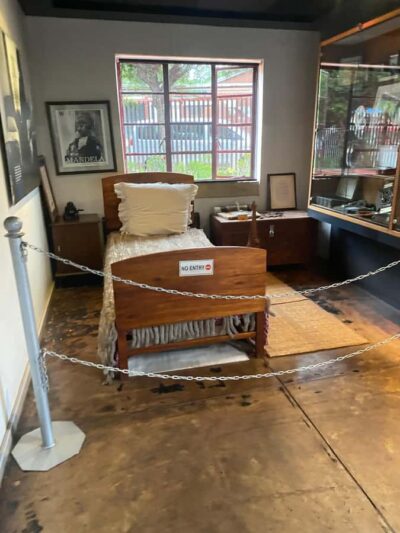
Full-Day Tour with Soweto and Apartheid Museum
Read our review →
Browse the lists this tour appears in