
Reviewed · SOWETO TOURS
Ultimate Johannesburg Soweto Experience with Apartheid Museum
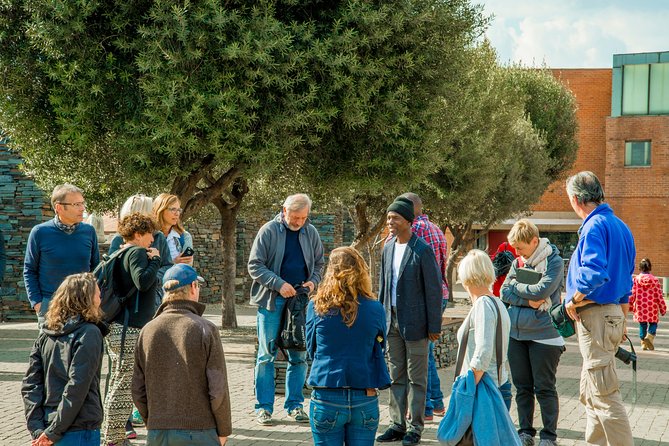
Soweto is not just a stop on a city tour. It is where South Africa’s political struggle, daily life, music, faith, and enormous social contrasts meet. This full-day outing takes you from Constitution Hill and the Apartheid Museum into Soweto, including Vilakazi Street, Hector Pieterson Museum, and an informal settlement with a local guide.
I like the personal side of the tour, especially the chance to walk through Motsoaledi informal settlement with a guide connected to Soweto. I also like the mix of major sights and ordinary streets, from Nelson Mandela’s former home to street cafés, craft stalls, Soweto Towers, and Baragwanath Hospital.
The main caution is the packed schedule. With Constitution Hill, the Apartheid Museum, Johannesburg’s bridges and squares, and several Soweto stops in one day, you may feel hurried. Carlton Centre is also advertised in some descriptions but has been closed, so do not book this trip specifically for the observation deck.
Key points to know before booking
- Constitution Hill opens the day with prison cells, a fort, and South Africa’s Constitutional Court.
- A guide with local Soweto experience gives the township portion more context than a drive-by visit.
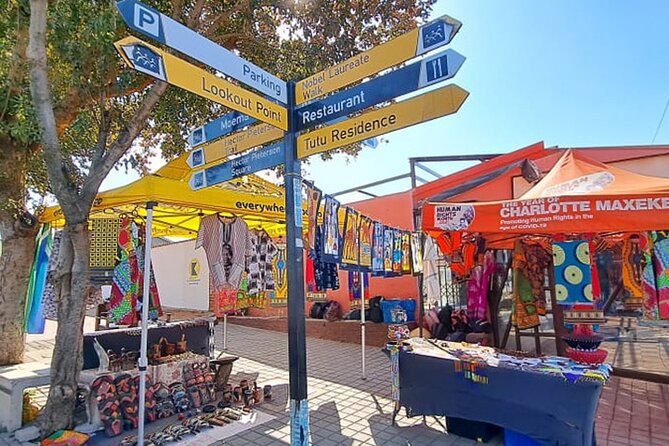
- Vilakazi Street links the former homes of Nelson Mandela and Archbishop Desmond Tutu.
- Hector Pieterson Museum explains the 1976 Soweto Uprising through one of the country’s most painful stories.
- The Apartheid Museum deserves focused attention, but two hours may not satisfy visitors who read every display.
- Hotel pickup, an air-conditioned minivan, and onboard uncapped WiFi are included, while food and Mandela House admission cost extra.
Why this Johannesburg and Soweto day matters
At $108.70 per person, this is priced as a full-day orientation to Johannesburg rather than a simple township drive. You get transport, hotel pickup and drop-off, a driver-guide, several included admissions, and roughly nine hours on the road.
I see the value in the range of places covered. You are not spending the whole day in one museum or only looking at famous names. The route connects imprisonment, apartheid, democracy, public protest, township life, and modern Johannesburg.
The strongest guides add a human layer to that route. Guides named in the tour feedback include Cpho, Tapelo, Sello, Patience, Cipoo, Sunny, Marcy, Bobo, and Nick. The exact guide is not guaranteed, but the best part of the experience depends heavily on the person leading your group.
You should also set your expectations correctly. This is an overview, not a slow, specialist tour of every museum. The day may run eight to ten hours, depending on traffic, pickups, and the time spent at Constitution Hill. Some groups have found the van crowded, and long pickup rounds have caused delays on certain days.
More Apartheid Museum Tours in Johannesburg
- Soweto /Johannesburg and Apartheid Museum Guided Full Day Tour
★ 5.0 · 932 reviews - Jo’berg in 1 Day: Soweto, Apartheid Museum & City Tour
★ 4.8 · 524 reviews - Johannesburg: Full-Day Tour with Soweto and Apartheid Museum
★ 4.8 · 478 reviews
Constitution Hill: start with the prison and court
The published route begins at Constitution Hill in Braamfontein, where you spend about two hours with admission included. This is a powerful place to begin because the site brings together an old prison, a military fort, and South Africa’s Constitutional Court.
The former prison is connected with the detention of political prisoners under apartheid. Nelson Mandela and Mahatma Gandhi were both imprisoned here at different times, though in very different periods and circumstances. The court now represents the democratic order that replaced the system the prison once helped enforce.
I like this stop because it gives the rest of the day a clear frame. When you later see Mandela’s home, the Hector Pieterson memorial, and the streets of Soweto, you already have a sense of the laws and institutions that shaped those lives.
The two-hour visit is substantial, but it can also affect the rest of the schedule. If your guide is trying to keep the day moving, you may have limited time at later museums. This is one reason to ask at the start how long you will have at each stop.
Mandela Bridge and Mary Fitzgerald Square
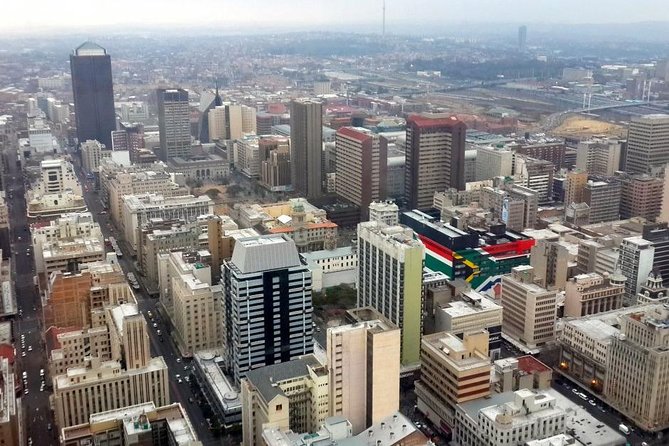
The minivan crosses the 284-metre Nelson Mandela Bridge on the way toward Johannesburg’s Newtown district. The bridge links two business areas and offers a quick reminder that the city is both a historic center and a modern working metropolis.
The stop at Mary Fitzgerald Square lasts about 15 minutes. It is a public space named after Mary Fitzgerald, regarded as South Africa’s first female trade unionist. You will not have time for a long exploration, but the square helps introduce Johannesburg’s labor and civic story.
This portion is short and mostly about orientation. If you prefer long museum visits or neighborhood walks, it may feel like a quick pause between larger stops. I still find it useful because the tour does not treat Johannesburg as a backdrop for Soweto. You see some of the city’s urban core before heading southwest.
The Apartheid Museum in two intense hours
The Apartheid Museum is the day’s central historical stop. You receive admission and about two hours inside, with the option to buy something at Truth Café at your own expense.
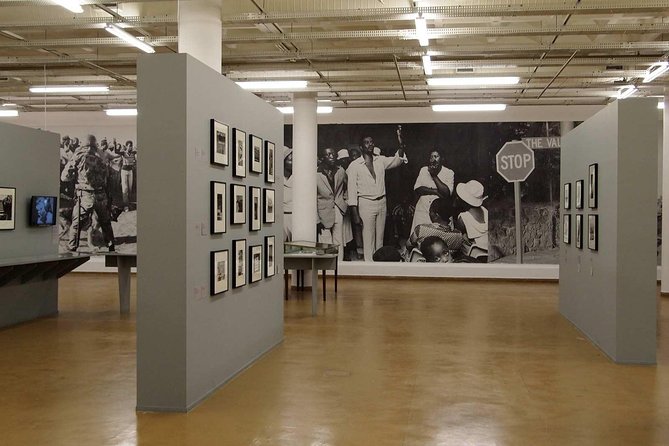
The museum follows the rise and fall of apartheid through 22 exhibitions. Its story moves from racial classification and enforced separation to resistance, imprisonment, violence, negotiations, and Nelson Mandela’s election as South Africa’s first Black president.
Give this visit your full attention. The subject is painful, and the museum is not designed as light sightseeing. It can leave you quiet for a while, especially before the tour turns toward the personal stories of Soweto.
Two hours gives you a solid introduction, but not enough time for every display if you like to read carefully. One useful approach is to decide what matters most to you before entering. You can focus on the main sequence and return another day if the museum becomes a major interest.
Lunch is not included. The schedule mentions food and drinks at Truth Café, but the break may not feel like a full sit-down meal. Bring a plan for eating, and do not assume the admission price covers anything beyond entry.
More Soweto Tours in Johannesburg
- Johannesburg: Hop-On Hop-Off Bus with Optional Soweto Tour
★ 4.6 · 985 reviews - Johannesburg Hop-On Hop-Off City Tour with Soweto Option
★ 4.5 · 768 reviews - Half-Day Tour of Soweto Tour
★ 4.5 · 712 reviews - Soweto: Walking Tour with a Local Guide and Lunch
★ 4.9 · 648 reviews
The road into Soweto and the scale of Baragwanath
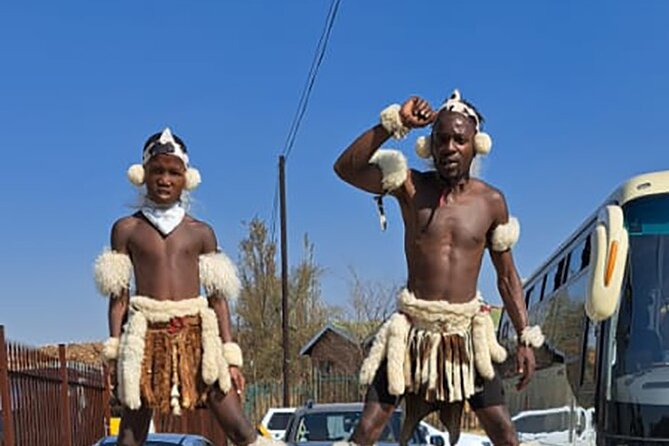
After the museum, the route heads into Soweto. Along the way, you pass the stadium complex associated with the 2010 World Cup, including FNB Stadium, which hosted major tournament events. You also pass Baragwanath Hospital and the large Soweto Towers.
The Baragwanath stop lasts about 15 minutes. Chris Hani Baragwanath Hospital is described as the world’s largest hospital, making it an important symbol of Soweto’s size and public services. You are mainly seeing it from the route rather than taking an extended hospital tour.
This drive is valuable because Soweto is too large and varied to understand from one famous street. The minivan gives you a sense of distance between districts and lets your guide explain what you are seeing as the scenery changes.
Motsoaledi informal settlement and meeting local residents
At Elias Motsoaledi Road, you visit Motsoaledi informal settlement for about 20 minutes. You walk past street cafés and craft markets toward a community center supported by MoAfrika Tours.
This is one of the more direct parts of the day. You see how people live in an area with limited resources, greet residents, and hear more about everyday life. The stop is brief, so you should not expect a full social or economic study. Its value comes from seeing a part of Soweto that is easy to miss if you only visit monuments.
Approach this visit with care. You are entering a living community, not a staged museum. Listen to your guide, follow instructions about photographs, and treat residents as people rather than as scenery. The tour’s strength is its local contact, but that also makes respectful behavior especially important.
The emotional tone can change here. Some people find it eye-opening and warm, while others feel sadness at the poverty on view. Both reactions are understandable. The tour does not hide the economic gap between South Africa and wealthier countries, but it also does not reduce Soweto to hardship alone.
Hector Pieterson Museum and the 1976 uprising

The Hector Pieterson Museum in Orlando West is about two blocks from the place where Hector Pieterson was shot and killed on June 16, 1976. The scheduled visit lasts around 30 minutes, with admission included.
The museum explains the Soweto Uprising, when students protested against the forced use of Afrikaans in education. A photograph of the fatally wounded Hector Pieterson, carried by another student, became one of the most recognized images of the struggle against apartheid.
Half an hour is enough to understand the basic story, but it is short for a museum with such heavy material. If you want to read every panel, you may need to move quickly. The visit works best when your guide gives the background first, allowing you to use the limited time inside for the displays that speak most strongly to you.
This is not a cheerful attraction. I would not plan the day as if it were a string of entertainment stops. The museum asks you to think about children, state violence, and the long cost of political change.
Vilakazi Street, Mandela House, and Tutu’s former home
Vilakazi Street is one of Soweto’s best-known addresses. It is notable for being associated with two Nobel Peace Prize winners, Nelson Mandela and Archbishop Desmond Tutu.
The tour spends about an hour in the area, passing the former homes of Mandela and Winnie Mandela and Tutu’s home. You can walk along the street, see monuments, browse craft stalls, and take in the cafés and local activity.
Mandela House admission is not included. The itinerary offers it as an optional visit, so check with your guide how the timing works on your date. If you enter, you may have less time elsewhere, which matters on an already full schedule.
I like Vilakazi Street because it connects national history to an ordinary residential setting. Mandela’s name is known around the world, but his former home is still part of a neighborhood with shops, homes, and pedestrians. That contrast makes the story feel less distant.
The tour also gives you time to read about the June 16 uprising and Hector Pieterson’s death. This creates a direct link between the street, the museum, and the wider liberation struggle.
What happened to the Carlton Centre stop
Some versions of the tour description include an elevator ride to the top of the Carlton Centre, once the tallest building in Africa, along with views over Johannesburg. The same material also refers to the Telkom Tower and the Nelson Mandela Bridge.
The Carlton Centre has been closed for some time. Do not count on the observation deck, and do not choose this experience mainly for the city view. This is an important point because one person specifically booked the outing for that stop and found it missing.
The route can also vary. The overview describes a Soweto-first sequence before the Apartheid Museum, while the detailed route begins with Constitution Hill and Newtown, then visits the museum before Soweto. Traffic, museum hours, and the operating plan may affect the order.
Guides, transport, and the pace of the day
You travel in an air-conditioned minivan with hotel pickup and drop-off. Onboard uncapped WiFi is included, which is handy during a long day, though the important benefit is not needing to arrange several separate rides around Johannesburg and Soweto.
A maximum group size of 100 is stated, but the actual vehicle groups described in the feedback were much smaller. One group included ten people and felt cramped, especially when someone needed extra medical accommodation. If you value space, ask about the expected vehicle size before booking.
The guides are the reason this tour can feel personal rather than mechanical. Bobo was praised for teaching while driving and sharing useful facts between stops. Sunny brought humor and energy. Marcy added family experience to the wider story, while Mo, a local guide and artist, led part of the Soweto visit.
Do not expect every guide to give the same presentation. A guide born and raised in Soweto can explain local places in a way a generic city guide cannot, but the quality of the day still depends on timing, traffic, and group size.
Pickup logistics deserve attention. Some departures have spent a long time collecting people, including failed attempts to find passengers who were no longer at the meeting point. Confirm your pickup details and allow patience at the beginning of the morning.
Is $108.70 good value?
I consider the price fair if you want a broad first look at Johannesburg and Soweto in one day. Included transport, hotel pickup, the driver-guide, Constitution Hill admission, Apartheid Museum admission, and Hector Pieterson Museum admission add up quickly when arranged separately.
The price is less attractive if you want a slow museum day or a private experience. Food, drinks, and Mandela House are extra, and the Carlton Centre should not be treated as an included benefit while it remains closed.
The best value comes from using the tour as an introduction. You can learn which places deserve a return visit, then spend more time at the Apartheid Museum, Constitution Hill, or Mandela House on your own if your schedule allows.
Who should book this experience?
I would choose this tour if you have one day in Johannesburg and want historical context before exploring independently. It suits first-time visitors, people interested in apartheid and the liberation struggle, and anyone who prefers a guide while moving between districts.
It also works well if you want to see both famous landmarks and less polished parts of the city. The informal settlement visit, local commentary, and drive through Soweto give you more than a list of monuments.
I would hesitate if you dislike tightly timed group outings, need a lot of legroom, or want to study each museum at a slow pace. Families should also note that the child rate applies only when sharing with two paying adults.
Book at least 24 hours ahead if you need the option of a full refund. Cancellations within 24 hours are not refunded, and changes in that window are not accepted.
My call: a strong first day, with realistic expectations
I recommend this experience for a first visit to Johannesburg, especially if your priority is understanding the city’s political past and Soweto’s place in modern South Africa. The most meaningful parts are Constitution Hill, the Apartheid Museum, Hector Pieterson Museum, and the local walk through Motsoaledi.
Go in ready for a serious day. You will see poverty, hear difficult stories, and spend plenty of time in a vehicle. In return, you get a useful, human introduction to Johannesburg that joins the court, prison, museum, township, and Mandela story into one long day.
FAQ
How long does the tour last?
The advertised duration is about nine hours, with a 9:00 am start. The day can vary in length because of hotel pickups, traffic, and the time spent at Constitution Hill and the museums.
Is hotel pickup included?
Yes. Hotel pickup and drop-off in Johannesburg are included.
What is included in the price?
The price includes a driver-guide, transport in an air-conditioned minivan, hotel pickup and drop-off, onboard uncapped WiFi, and admission to Constitution Hill, the Apartheid Museum, and Hector Pieterson Museum.
Is lunch included?
No. Food and drinks are not included. You can buy food and drinks at Truth Café at the Apartheid Museum, at your own expense.
Is Mandela House included?
No. Mandela House is an optional visit, and admission is not included in the tour price.
Does the tour visit the Carlton Centre?
The Carlton Centre appears in some descriptions, but it has been closed for some time. You should not book the tour expecting to ride to its top.
Can I cancel for a full refund?
Yes, if you cancel at least 24 hours before the local start time. Cancellations or changes made within 24 hours are not accepted for a refund.
More Museums in Johannesburg
- Full-Day Soweto, Apartheid Museum and Lunch Tour
★ 5.0 · 410 reviews - Half Guided Day Tour of Soweto And Apartheid Museum
★ 5.0 · 356 reviews - Soweto: Hop-On Hop-Off Bus, City Tour and Apartheid Museum
★ 4.5 · 250 reviews - Maropeng Cradle of Humankind Museum &Sterkfontein Cave Experience
★ 4.5 · 155 reviews
Just added around Johannesburg
- Lion park★ 4.5 · 5 reviews
- Lesedi cultural village:★ 5.0 · 6 reviews
- Lesedi Cultural Village with lunch or dinner cultural food★ 4.6 · 9 reviews
- Lesedi Cultural Village Half-Day Tour★ 4.7 · 9 reviews
- Lesedi Cultural Village★ 4.9 · 4 reviews
- Kruger National Park – 5 Day Safari Tour★ 4.7 · 4 reviews
- From Johannesburg: Kruger National Park 4-Day Luxury Safari★ 4.8 · 9 reviews
- Kruger National Park – 4 Day Safari Tour★ 4.8 · 19 reviews
Soweto Tours, compared.
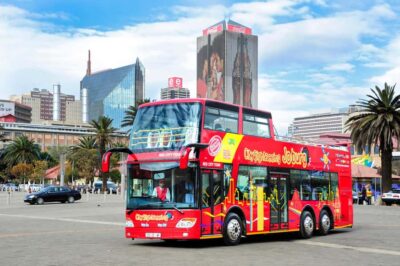

Soweto /Johannesburg and Apartheid Museum Guided Full Day Tour
Read our review →
Johannesburg Hop-On Hop-Off City Tour with Soweto Option
Read our review →

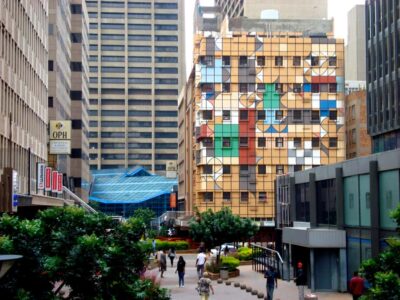
Jo’berg in 1 Day: Soweto, Apartheid Museum & City Tour
Read our review →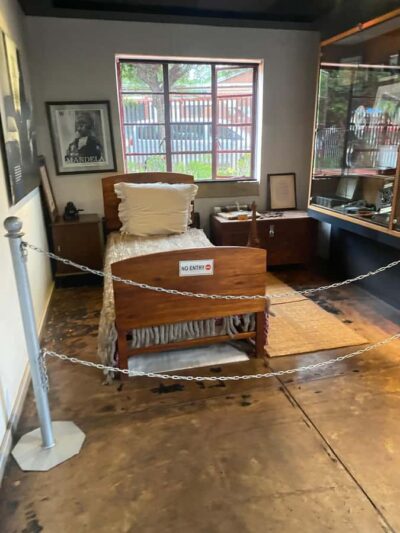
Full-Day Tour with Soweto and Apartheid Museum
Read our review →
Browse the lists this tour appears in