
Reviewed · SOWETO TOURS
Full-Day Apartheid Museum and Soweto Tour
Johannesburg’s past comes into sharp focus on this full-day route from the Apartheid Museum to Soweto. I like the way the tour links the country’s apartheid years with the 1994 democratic transition, and I especially like the personal touch a guide such as KG can bring. The small group limit of 12 people should also make it easier to ask questions.
The main drawback is the pace. Almost eight hours is a substantial commitment, and the subject matter is often painful. Lunch costs extra, too, and the exact balance between driving, museum time, and conversation may vary depending on the group.
Key points to know before booking
- The Apartheid Museum gives the day its historical backbone, with two hours devoted to the apartheid system, its abuses, its collapse, and South Africa’s democratic future.
- Soweto takes up the largest part of the afternoon, giving you time to learn about township life and social conditions rather than simply stopping for a photograph.
- Mandela House remains in its original state, offering a direct connection to Nelson Mandela’s family life in Soweto.
- Hector Pieterson Museum and Memorial explains the 1976 student protest, including the deaths caused by apartheid police during resistance to the compulsory use of Afrikaans.
- The price includes an air-conditioned vehicle and Apartheid Museum entry, while lunch is paid separately.
- The tour starts and ends in Sandton, with pickup offered and a maximum group size of 12.
Why this Johannesburg tour matters
Many Johannesburg sightseeing trips give you a quick look at a landmark, then move on. This one is built around a historical sequence. You begin with the formal machinery of apartheid, then move into Soweto, where the policy shaped daily life, political resistance, family neighborhoods, and public memory.
That structure is useful because South African history can feel large and difficult to organize. Here, the museum provides the broad framework, while Soweto gives the story a physical setting. By the end, you are not just hearing about apartheid as a system of laws. You are considering how it affected homes, schools, language, movement, and the city itself.
The day also reaches beyond the worst years. The tour covers the end of apartheid, the birth of democratic South Africa in 1994, and the country’s effort to avoid a destructive civil war. That wider view matters. You are asked to understand both the suffering and the political achievement that followed it.
I would choose this experience early in a Johannesburg stay if you want context for the rest of your visit. It is not a light sightseeing outing, but it can help you understand the city far better than a collection of unrelated attractions.
More Apartheid Museum Tours in Johannesburg
- Soweto /Johannesburg and Apartheid Museum Guided Full Day Tour
★ 5.0 · 932 reviews - Jo’berg in 1 Day: Soweto, Apartheid Museum & City Tour
★ 4.8 · 524 reviews - Johannesburg: Full-Day Tour with Soweto and Apartheid Museum
★ 4.8 · 478 reviews
Beginning at the Apartheid Museum
The Apartheid Museum receives about two hours, and that is a sensible amount of time for the visit. The museum is the most structured part of the day, taking you through the apartheid system, the abuses committed under it, the resistance to it, and the changes that followed.
You should expect a serious experience rather than a quick introduction. The tour description makes clear that the museum addresses the dark years directly, then turns toward the achievements that brought the system down and the country’s future. That balance is important, since stopping only at the brutality would leave you with an incomplete picture of modern South Africa.
The museum entrance is included in the tour price. That makes the overall cost easier to assess, since you are not paying separately for one of Johannesburg’s key historical attractions.
Two hours may feel short if you like to read every display carefully. It is also long enough for the material to become emotionally tiring. I would pace yourself, take in the major displays, and save some questions for the guide during the drive and the Soweto portion.
The museum also gives the guide a shared starting point. Instead of spending the whole day explaining basic dates and terms from scratch, the discussion can connect what you have seen indoors with the places you visit later.
Seeing Soweto beyond a quick photo stop
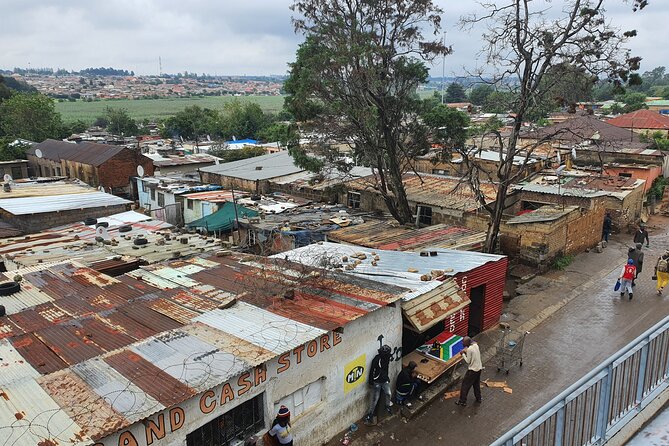
The tour spends about three hours in Soweto, making this the longest part of the day. That tells you something about its purpose. Soweto is not treated as a brief add-on to the museum. You have time to discuss township history, social conditions, and the way these areas developed under South Africa’s former political system.
The word township can sound abstract when you only encounter it in a textbook. Walking or driving through Soweto, while listening to the guide explain its past and present, gives the term a human and urban setting. You can ask how the area was formed, how people lived under apartheid, and how life has changed since 1994.
The supplied details do not promise a fixed list of streets, homes, or businesses during the Soweto portion. That is worth keeping in mind. The strength of the stop is the guide’s interpretation and the time set aside for the area, not a guaranteed checklist of photo points.
This is also where a good guide matters most. KG, also known as Kilogram, is named as one guide associated with the experience. His approach, based on the available feedback, includes clear explanations, humor, and a willingness to research an answer when he does not have it immediately. That is exactly the kind of attitude that helps on a history-heavy day. You can ask direct questions without feeling that you must already know the subject.
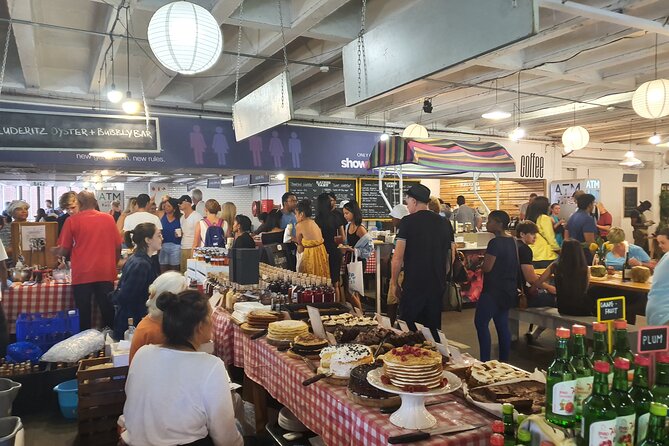
One especially useful detail is that the tour may include food options in Soweto after the museum visit. Lunch is not included, but you can choose from local restaurants or a meal in the township area. Because the exact restaurant is not specified, you should treat this as an opportunity rather than a guaranteed dining stop.
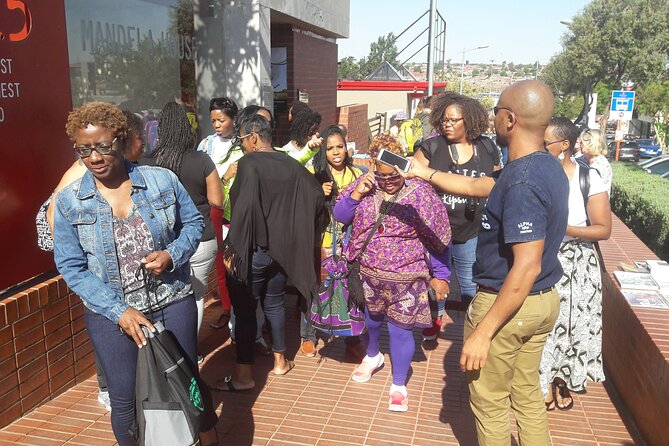
Entering Mandela House in Vilakazi Street
Mandela House receives about 40 minutes. This is a shorter stop, but it brings the political story down to the scale of a family home.
The house is presented as the place where Nelson Mandela lived with his family in Soweto. Its original state has been preserved, so the visit is less about a grand monument and more about seeing the domestic setting connected to one of the country’s central figures.
Forty minutes will not allow a slow, detailed visit to every part of the home. It does, however, give you a focused look at the place and time to understand why it matters. The contrast with the Apartheid Museum is helpful. The museum explains the system; Mandela House connects that national story with one household and one major political figure.
The surrounding area is also where you may have the chance to eat. If you want a local meal, this is the point in the schedule where you can ask the guide about available options. Bring the understanding that lunch is an extra expense and that the tour does not state a set menu or restaurant.
More Soweto Tours in Johannesburg
- Johannesburg: Hop-On Hop-Off Bus with Optional Soweto Tour
★ 4.6 · 985 reviews - Johannesburg Hop-On Hop-Off City Tour with Soweto Option
★ 4.5 · 768 reviews - Half-Day Tour of Soweto Tour
★ 4.5 · 712 reviews - Soweto: Walking Tour with a Local Guide and Lunch
★ 4.9 · 648 reviews
Remembering the students at Hector Pieterson Museum
The final listed stop is Hector Pieterson Museum and Memorial, with about 45 minutes set aside. It commemorates students who were shot and killed by apartheid police while protesting the forced use of Afrikaans in schools.
This stop adds a crucial chapter to the day. Language was not a minor issue under apartheid. The protest shows how education, identity, and state power could collide, and why students became central to resistance.
The museum is named for Hector Pieterson, one of the young people killed during the protest. The memorial keeps the focus on the human cost of that event, while the museum provides the historical setting.
Forty-five minutes is enough for a meaningful visit, though again, readers who prefer to examine every display may want more time. The short schedule means you should listen closely to the guide and use the visit to tie together the themes already introduced at the Apartheid Museum and in Soweto.
I find the order of the stops effective. By this point, you have learned the broad structure of apartheid, seen the township setting, and visited Mandela’s home. Hector Pieterson Museum then shows how resistance reached the schools and how young people paid an enormous price.
What the guide adds to the experience
A historical tour succeeds or fails partly on the guide’s ability to make facts understandable without flattening them. The strongest feedback attached to this experience points to concise presentations, relevant information, humor, and careful answers.
KG is the only guide name supplied, so he may not lead every departure. If you are assigned to him, you can expect a guide who knows Johannesburg well and can speak about both the city and the country. The experience has also included a private-feeling day when only one person booked, though you should not assume that will happen on your date.
The maximum group size is 12. That is small enough to keep questions practical and conversation possible, while still being a shared tour rather than a fully private outing. A smaller group can also make the day easier at emotionally serious sites, where a quiet explanation often works better than a large crowd.
The guide’s role is particularly important during the three hours in Soweto, where the value comes from understanding the area rather than merely passing through it. Ask questions as they occur to you. The feedback indicates that questions are welcomed, and that answers are checked if the guide does not know them immediately.
Is the $86.72 price good value?
At $86.72 per person, this is not the cheapest way to see Johannesburg, but the value is reasonable if you want an organized history day. The price includes air-conditioned transport and admission to the Apartheid Museum, while the tour also takes you to Soweto, Mandela House, and Hector Pieterson Museum.
The vehicle matters. Sandton and Soweto are different parts of the Johannesburg area, and a full-day route with several stops is easier when transport is arranged. You are also spared the work of coordinating museum tickets and finding your way between sites.
Lunch is not included, so set aside extra money for food. The tour provides options after the Apartheid Museum, ranging from local restaurants to a meal in Soweto, but the exact choice is not specified.
You are paying for nearly eight hours, though the named stops account for about six hours and 25 minutes. The remaining time allows for transport, pickup, transitions, and the normal rhythm of a full-day outing. If you only want a quick museum visit, the price and duration may feel excessive. If you want the city’s apartheid story explained in one organized day, it is a fair package.
Timing, pickup, and practical details
The experience lasts approximately seven hours and 55 minutes. It starts in Sandton and ends back at the meeting point, with pickup offered. Confirmation is provided when you book, and the tour is available with a mobile ticket.
The group can include no more than 12 people. Most people can participate, and service animals are allowed. The tour is also near public transportation, although the supplied details do not specify particular routes or stations.
Because the day is tightly scheduled, arrive ready for a full outing. Wear something comfortable and expect a mix of vehicle time, museum visits, and time in Soweto. The subject matter deserves attention, so I would avoid booking this immediately before another major activity.
Free cancellation is available if you cancel at least 24 hours before the local start time. Changes or cancellations inside that window are not accepted for a refund. The experience also requires a minimum number of participants, so if the operator cancels for that reason, you are offered another date or experience, or a full refund.
Who should book this tour?
I would recommend it to you if this is your first visit to Johannesburg and you want a firm grounding in South Africa’s recent past. It suits anyone interested in politics, civil rights, museums, urban history, or the connection between national events and ordinary homes.
It also works well for people who prefer an organized day. You do not need to arrange separate transport, museum entry, and a Soweto visit. The guide gives you someone to question as the story develops.
Families with older children may find the route useful, provided they are ready for difficult material. The museums deal with violence, oppression, and deaths, so this is not a carefree sightseeing trip.
You might choose something shorter if you have limited time, dislike museums, or want to focus mainly on food and neighborhood life. The day is serious and information-heavy. Its rewards come from context, not from a long list of entertainment stops.
Should you book the Apartheid Museum and Soweto Tour?
Book it if you want Johannesburg’s major apartheid sites connected into one clear day. The combination of the Apartheid Museum, three hours in Soweto, Mandela House, and Hector Pieterson Museum gives you both national context and personal places.
The best reason to choose it is the guide-led interpretation, especially if KG is leading your departure. The strongest features are the concise explanations, open questions, and mix of formal museums with township visits.
Skip it if lunch included, a private itinerary, or a relaxed pace is essential. For everyone else, $86.72 is a sensible price for transport, museum admission, and nearly eight hours focused on the history that shaped modern South Africa.
FAQ
How long does the Apartheid Museum and Soweto Tour last?
The tour lasts approximately seven hours and 55 minutes.
Where does the tour start?
The tour starts in Sandton, South Africa.
Where does the tour end?
The activity ends back at the meeting point in Sandton.
Is pickup offered?
Yes, pickup is offered.
What is included in the tour price?
The price includes an air-conditioned vehicle and admission to the Apartheid Museum.
Is lunch included?
No. Lunch is not included, but options are available after the Apartheid Museum, including local restaurants and food in the Soweto area.
How many people can join the tour?
The maximum group size is 12 people.
Can I cancel for a full refund?
Yes, if you cancel at least 24 hours before the experience start time. Cancellations made less than 24 hours before the start time are not refunded.
More Full-Day in Johannesburg
- Full Day Ultimate Pilanesberg National Park Safari from Johannesburg or Pretoria
★ 4.5 · 718 reviews - Full Day Pilanesberg Experience in Open Vehicle
★ 4.5 · 414 reviews - Johannesburg and Soweto Apartheid Full Day Tour w/Lunch
★ 4.9 · 219 reviews - Soweto and Johannesburg Exclusive Full Day Guided Tour
★ 5.0 · 209 reviews
More Museums in Johannesburg
- Full-Day Soweto, Apartheid Museum and Lunch Tour
★ 5.0 · 410 reviews - Half Guided Day Tour of Soweto And Apartheid Museum
★ 5.0 · 356 reviews - Ultimate Johannesburg Soweto Experience with Apartheid Museum
★ 5.0 · 313 reviews - Soweto: Hop-On Hop-Off Bus, City Tour and Apartheid Museum
★ 4.5 · 250 reviews
Just added around Johannesburg
- Private Soweto Tour 5 hours approximately from Johannesburg or Pretoria.★ 4.5 · 9 reviews
- bicycle tour soweto★ 4.5 · 20 reviews
- Taste of Africa★ 5.0 · 9 reviews
- Two day Kruger National Park Safari from Johannesburg★ 5.0 · 19 reviews
- Airport & Private Shuttle and Transfer Services in Johannesburg★ 5.0 · 9 reviews
- Sun City Day Tour From Johannesburg★ 4.5 · 6 reviews
- Pilanesberg National Park Safari, BIG 5 Full Day★ 5.0 · 4 reviews
- Full-day Johannesburg Bike Or Walking tour – With Transport★ 5.0 · 10 reviews
Soweto Tours, compared.
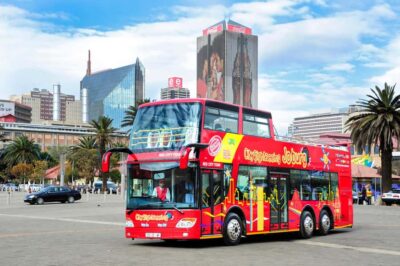

Soweto /Johannesburg and Apartheid Museum Guided Full Day Tour
Read our review →
Johannesburg Hop-On Hop-Off City Tour with Soweto Option
Read our review →

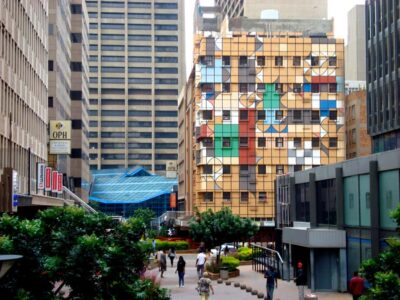
Jo’berg in 1 Day: Soweto, Apartheid Museum & City Tour
Read our review →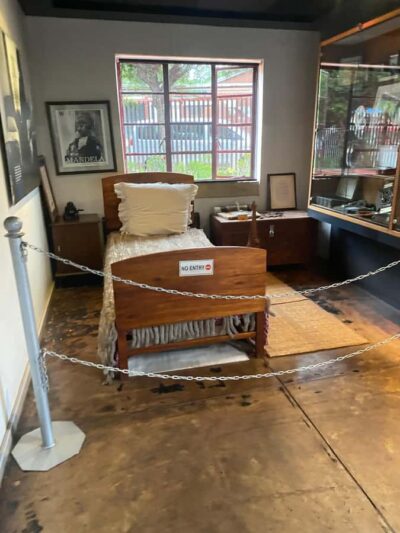
Full-Day Tour with Soweto and Apartheid Museum
Read our review →
Browse the lists this tour appears in