
Reviewed · WALKING TOURS
LocalPlaces Understanding Cape Town Walking Tour
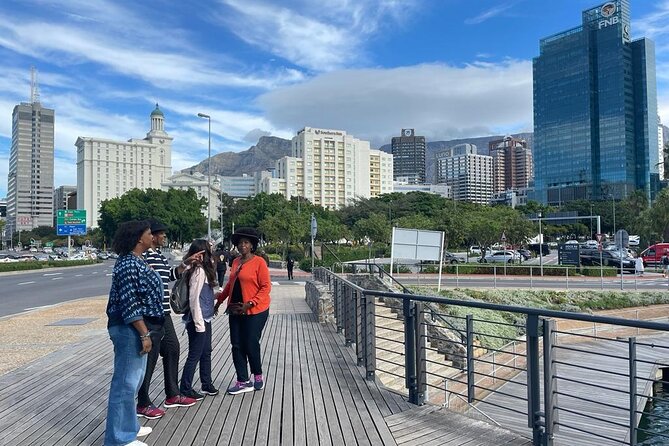
Cape Town makes more sense when you understand how its harbour, trade, colonial rule, segregation, and modern city life fit together. This four-hour walk with Gerald connects those threads while taking you from the V&A Waterfront through the Foreshore and old city to Company’s Gardens.
I like the story-led approach, which gives you more than a quick list of buildings. I also like the route’s variety: harbour views, rooftop photography, public squares, handsome streets, and time for a drink or local snack.
The main consideration is pace. You cover about 3.5 kilometres in four hours, but the walking is broken up by frequent talks and sightseeing stops. Food and drinks are not included, and the tour needs good weather.
Key points to know before booking

- A four-hour introduction to Cape Town: The route links the Waterfront, Foreshore, central city, and Company’s Gardens.
- Gerald’s storytelling is the main attraction: He explains South African history in a clear, connected way rather than giving isolated facts.
- Only 3.5 kilometres of walking: The tour is designed for most people who can take part in a normal city walk.
- 14Stories offers the best photo stop: You can see Table Mountain, the harbour, the Waterfront, Green Point Stadium, Blouberg, and Bo-Kaap from above.
- Private groups only: Your booking is for your own group, with group discounts available.
- Drinks and snacks cost extra: The guiding is included, but anything purchased along the way is paid for separately.
Why this walk helps you understand Cape Town
Many city tours show you Cape Town’s attractive surfaces: Table Mountain, colourful streets, old buildings, and the harbour. This one tries to explain how the city came to be shaped by trade, empire, migration, racial policy, and political change.
The route begins with the Industrial Revolution of the 1870s and the Scramble for Africa, then returns to the city’s pre-colonial past before moving through later developments into the 20th century. That may sound like a large amount of material for four hours, but the walking route gives each subject a physical setting.
I like that structure. You hear about the forces that changed South Africa, then see the harbour, reclaimed land, old commercial streets, and civic buildings connected to those changes. The aim is not simply to collect dates. It is to help you read the city as you continue sightseeing on your own.
Gerald is the guide named in the available tour information. His style is built around storytelling, questions, and conversation. That matters here because Cape Town’s past can be hard to absorb when presented as a long lecture. You can ask questions as the story unfolds and connect broad national events with the places around you.
A few more Cape Town trips to weigh up
- Cape Town: Nathi Langa Township Walking Tour
★ 4.9 · 493 reviews - Cape Town: Art, Culture & History Walking Tour
★ 4.9 · 392 reviews - Cape Town: Street Art Walking Tour in Woodstock
★ 4.8 · 293 reviews
Starting beside Table Mountain at the V&A Waterfront

The tour begins at GINJA Restaurant at the Victoria & Alfred Hotel in the V&A Waterfront at 9:00 a.m. This gives you an immediate visual introduction to Cape Town. From the waterfront, you have views toward Table Mountain, the harbour, and the surrounding city.
The setting also opens the door to the story of the port. The harbour was originally excavated under the supervision of Prince Alfred, Queen Victoria’s son, during the period of British expansion into Africa. That detail helps explain why the Waterfront is more than a shopping and dining district. Its modern public spaces sit on a working port shaped by imperial trade.
You spend about 30 minutes here. Bring a camera, but pay attention to the orientation talk too. Knowing where the harbour, city centre, mountain, and later stops sit in relation to one another makes the rest of the walk easier to follow.
The meeting point is at a restaurant inside the Waterfront, so allow enough time to find the Victoria & Alfred Hotel. The tour starts promptly at 9:00 a.m., and the mobile ticket should be ready on your phone.
Battery Park and the Canal District
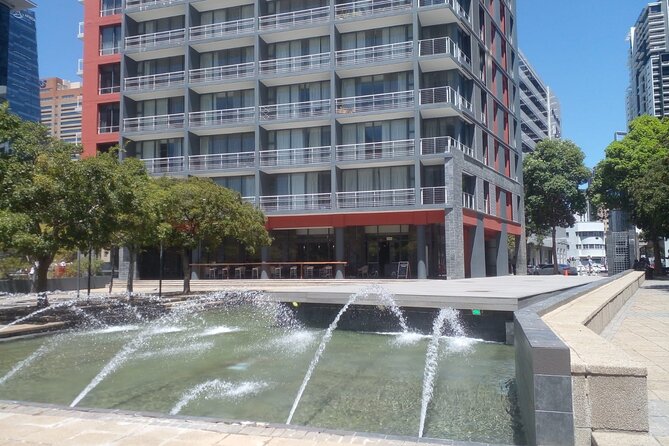
From the Waterfront, the group ambles along the Canal District walkways to Battery Park. This section takes about 30 minutes and adds a more contemporary public-space view of the city.
Battery Park includes a skate park, basketball courts, and a green rooftop area. The stop gives you a chance to see how former commercial and harbour land has been reshaped for recreation. It also breaks up the historical discussion with open space and city views.
This is a useful part of the route for anyone who wants more than old buildings. Cape Town’s story is still being written in its parks, housing, offices, leisure areas, and public spaces. You get a look at that present-day side before moving into the Foreshore and older central districts.
The tour is not a hard hike. You walk a moderate urban distance, with time to stop and listen. Still, wear comfortable shoes. Four hours on city streets can feel longer than the 3.5-kilometre distance suggests, especially if you are not used to walking tours.
The Foreshore and land reclaimed from the sea
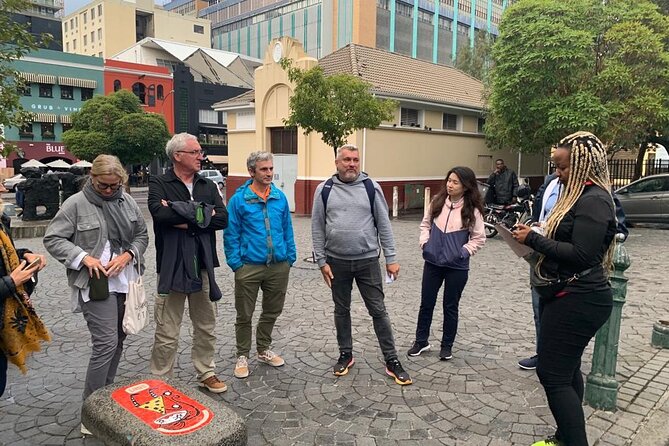
The next section moves from the Waterfront into the Foreshore, an area built on 194 hectares of land reclaimed from the sea. It is now marked by modernist buildings and broad urban development, but its existence is tied directly to the growth of the port and the changing needs of the city.
You spend roughly 30 minutes here before continuing toward the older centre. This part of the walk is valuable because it shows a sharp contrast. The Waterfront presents a polished harbour district, while the Foreshore shows a large-scale urban project built by extending the city into the bay.
I would pay close attention to the transition between these areas. The changing streets and buildings make the city’s growth visible. Instead of treating Cape Town as one unchanging historic centre, the route shows you several layers of development.
The Foreshore can feel less intimate than the older streets later in the walk. That is not a flaw, but it is worth knowing. The interest here comes from scale, planning, and context rather than from a single picturesque building.
Same country, a completely different kind of day:
- Wine Tour: Paarl, Franschhoek & Stellenbosch incl 3 wineries
★ 5.0 · 3,940 reviews - Cape Town: Hop-On Hop-Off Bus Tour with Optional Cruise
★ 4.8 · 3,929 reviews - Cape Town: Cape of Good Hope & Penguins Day Tour with Pickup
★ 4.7 · 3,362 reviews - Zipline Cape Town – From Foot of Table Mountain Reserve
★ 5.0 · 3,179 reviews
14Stories rooftop views and the Bo-Kaap
The 14Stories Rooftop Bar is the tour’s longest stop, at about 45 minutes. You stop for drinks, storytelling, and a wide view across Cape Town.
From this height, you can see Green Point Stadium, the V&A Waterfront, Table Bay, Blouberg, the Foreshore, the old city centre, and Table Mountain. The elevated view helps you place the districts you have already visited and the streets still ahead.
This is also described as a particularly good place to photograph the Bo-Kaap, the colourful and historically important district on the slopes below Signal Hill. You do not walk through the Bo-Kaap on this route, so the rooftop stop gives you a way to see it from a different angle while Gerald explains its place in Cape Town’s story.
Drinks are not included in the tour price. Plan to pay for anything you order at the bar, and remember that the stop is part of the experience rather than a free refreshment break.
I like the decision to include this pause. A long walking tour benefits from a proper sit-down moment, and the view gives the historical talk a strong visual setting. If your main goal is a fast checklist of sights, the 45-minute stop may feel long. If you want time to ask questions and take photographs, it is one of the most useful sections.
Heritage Square and an old city courtyard
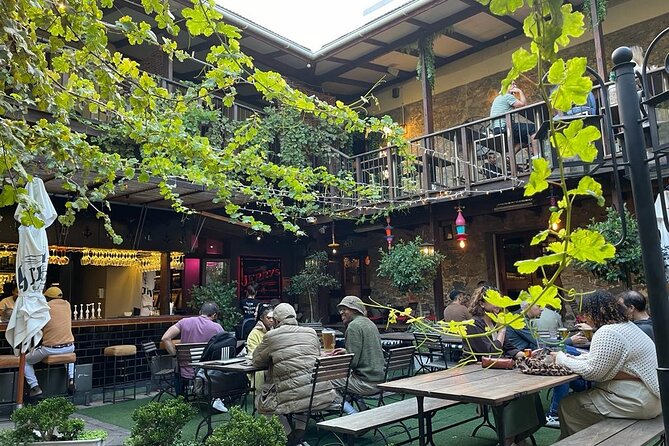
The route continues to Heritage Square, a historic complex of buildings dating from the 1750s. The stop lasts about 15 minutes.
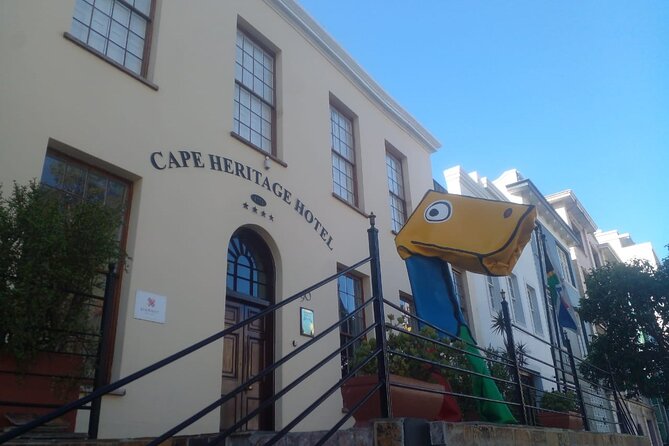
Today, the complex contains a boutique hotel, eateries, restaurants, bars, and shops. Its courtyard also has the oldest grapevine in the city. That small detail adds character to a place that could otherwise be easy to pass without noticing.
Heritage Square works well as a bridge between Cape Town’s older commercial life and its current dining and cultural scene. You can see how historic buildings are being used today, though the short stop means you should not expect a long interior visit.
The tour ends in the Company’s Gardens, not at Heritage Square. The itinerary information describes this section as an important stop on the route, but the final destination is further along Queen Victoria Street.
Greenmarket Square and the old city streets
At Greenmarket Square, you spend about 15 minutes looking at the Art Deco buildings around the square and browsing the curio market. This is a short stop, so think of it as an introduction rather than a full shopping session.
The square provides another useful contrast with the Waterfront. Here, you are in the older city centre, surrounded by historic façades and a market atmosphere. If you want to buy something, keep an eye on the time and remember that purchases are not part of the tour cost.
Next comes St George’s Mall, a pedestrianized street explored for about 25 minutes. The focus is on architecture and history. The route slows down here, allowing you to look upward and notice details that are easy to miss when moving through the city on your own.
This part of Cape Town is especially suited to visitors who enjoy urban history. You are not just stopping for a photograph. You are hearing how the city developed around its public streets, commercial spaces, and civic buildings.
Company’s Gardens and the end of the walk

The final major stop is Company’s Gardens, where you spend about 20 minutes. The gardens began as a vegetable garden for the Dutch East India Company and later became a Victorian park.
Today, they form a large public green space in the centre of Cape Town. The setting offers a calmer finish after the traffic, rooftops, markets, and architecture of the earlier route. It also brings the story back to the city’s beginnings as a settlement tied to shipping and food supply.
The walk ends at The Company’s Garden Restaurant, 15 Queen Victoria Street, in Cape Town City Centre. That is useful for planning the rest of your day. You finish in a central area rather than returning to the Waterfront, so you can continue exploring nearby sights or arrange transport from the city centre.
What the $80.80 price includes
The price is $80.80 per person, and the fee covers guiding and storytelling. Food, snacks, and drinks along the way are paid for separately.
The value depends on what you want from a city tour. You are not paying for museum admissions or a meal. You are paying for a private four-hour interpretation of Cape Town, with a guide who can connect the places you see to South Africa’s larger story.
That makes the price easier to justify for a first visit, especially if you want context before taking other tours around the country. Several parts of South Africa’s past can seem confusing when encountered separately. A strong opening walk can help you understand later visits to museums, historic districts, and other cities.
The private format is another factor. Only your group participates, so you can ask questions without trying to catch a guide’s voice in a large crowd. Group discounts may make the price more attractive for families or friends booking together.
If you prefer a short orientation walk with many quick photo stops, this may not be the best value. The guide’s explanations are central, and the route spends real time on interpretation. You should book it because you want to understand Cape Town, not simply tick off landmarks.
Who will enjoy this Cape Town walk?
I would choose this tour early in a Cape Town visit. It gives you a framework for the city before you spend time exploring independently, and the 9:00 a.m. start leaves much of the afternoon free.
It suits you best if you:
- Enjoy history, politics, architecture, and local context
- Like asking questions during a walking tour
- Want a private experience for your own group
- Prefer a moderate urban walk over a strenuous hike
- Want a clear introduction to Cape Town and South Africa
- Appreciate time for photographs and a drink stop
It may suit families and mixed-age groups because the walking distance is modest and the route includes regular pauses. Service animals are allowed, and most people who can take part in a normal city walk should be able to participate.
You should also prepare for the weather. The experience requires good conditions, and poor weather can lead to a changed date or a full refund. Comfortable shoes, sun protection, and a phone with the mobile ticket are sensible choices.
Booking advice and cancellation terms
This experience is often booked about 45 days in advance, so reserve ahead if your dates are fixed. Confirmation is sent within 48 hours, subject to availability.
You can cancel free of charge up to 24 hours before the start time for a full refund. Changes or cancellations made less than 24 hours before the 9:00 a.m. start are not accepted for a refund.
The tour also requires a minimum number of participants. If that minimum is not reached, or if poor weather forces cancellation, you can choose another date or experience, or receive a full refund.
Should you book the Understanding Cape Town tour?
Book it if you want Cape Town to make sense, not just look attractive. The combination of Gerald’s storytelling, a manageable 3.5-kilometre route, the 14Stories rooftop view, and the shift from the Waterfront to the old centre gives you a useful first chapter for the rest of your trip.
Skip it if you want a rapid sightseeing circuit, included food, or a tour built around major admission-ticket attractions. This is a private history and city walk, and its value rests on the guide’s ability to explain connections.
For most first-time visitors with four hours to spare, I would put this near the start of the itinerary. Bring questions, allow extra money for a drink or snack, and let the city’s streets do part of the teaching.
FAQ
Where does the Understanding Cape Town tour start?
The tour starts at GINJA Restaurant at the Victoria & Alfred Hotel, on the Waterfront Pierhead at the V&A Waterfront in Cape Town.
What time does the tour begin?
The start time is 9:00 a.m.
Where does the tour end?
The tour ends at The Company’s Garden Restaurant, 15 Queen Victoria Street, Cape Town City Centre.
How long is the walking tour?
The experience lasts approximately four hours and covers about 3.5 kilometres.
Is this a private tour?
Yes. Only your own group participates in the activity.
What is included in the price?
The fee includes guiding and storytelling.
Are food and drinks included?
No. Snacks, food, and drinks purchased during the tour are paid for by you separately.
Is the tour suitable for most people?
Yes. Most people can participate, and service animals are allowed. The route is described as an easy walk.
Can I cancel for a full refund?
You can cancel at least 24 hours before the start time for a full refund. Poor weather or failure to meet the minimum number of participants may also result in a different date or a full refund.
Just added around Cape Town
- Sunset Safari Big 5 Aquila with Snacks and Wine Tasting★ 5.0 · 12 reviews
- Private Tour to 20 Wine Tasting in Stellenbosch and Franschhoek★ 5.0 · 11 reviews
- Robben Island, Kirstenbosch wine tasting Tour★ 5.0 · 10 reviews
- Zip Line and Wine from Cape Town★ 5.0 · 14 reviews
- Explore Atlantis Sand Dunes with a 1hour 30mins sandboarding tour★ 5.0 · 5 reviews
- Private Group Photoshoot in Cape Town★ 5.0 · 21 reviews
- Private Transfer from Cape Town International Airport★ 5.0 · 4 reviews
- 1 Hour Cape Town City Center Photoshoot Experience★ 5.0 · 19 reviews
Walking Tours, compared.








Browse the lists this tour appears in