
Reviewed · STREET ART
Johannesburg: Street Art and Culture in Maboneng!
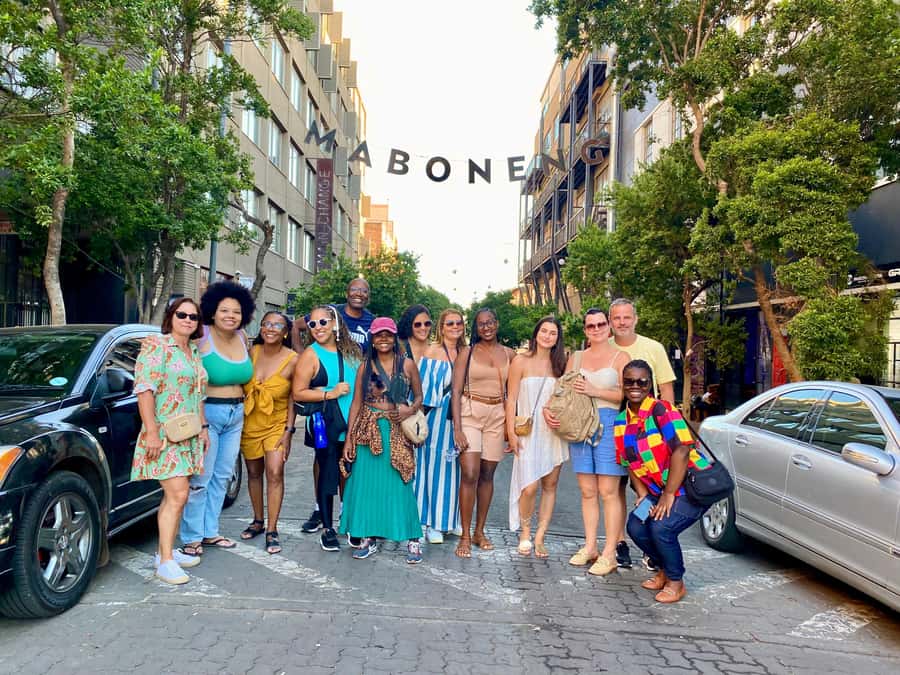
Maboneng’s street art is more than colorful decoration. Murals by artists such as ESPO Powers and DBongz open a door into Johannesburg’s politics, creativity, and changing identity. This two-hour walk also takes you into the Maboneng Arts Village and the Hideout Bar, an alleged meeting place for Mandela and other anti-apartheid activists.
I like the personal angle. Guides such as Ayanda know the neighborhood well and, according to many bookings, explain it with humor, warmth, and firsthand experience. I also like the simple route: coffee first, art and history next, then a scenic viewpoint before returning to the café.
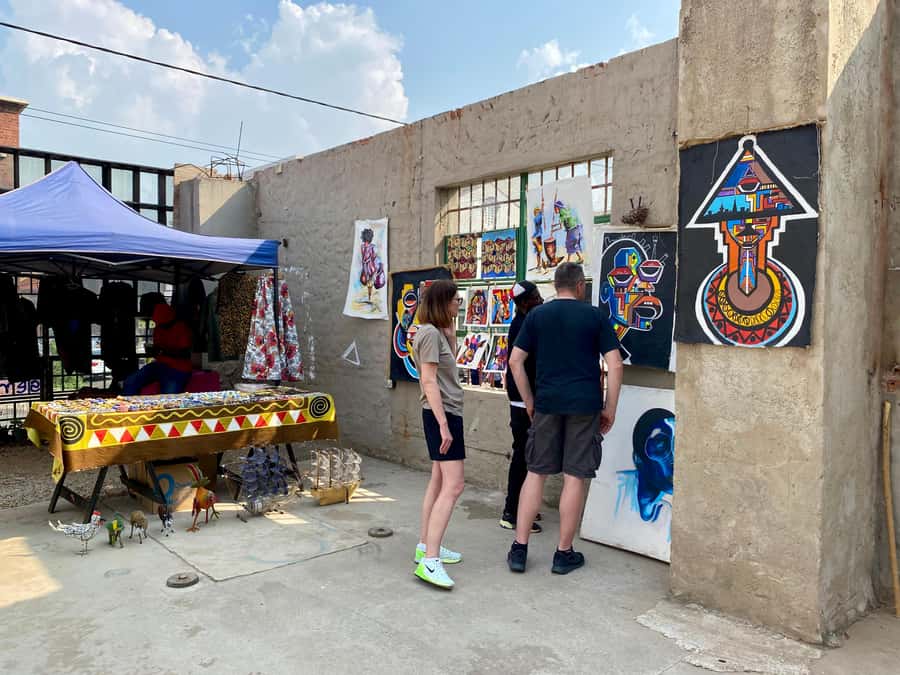
The main consideration is pace. Two hours passes quickly, and this is a walking tour rather than a long stop at each gallery or restaurant. Street artists and informal traders work along the route, so bring money if you want to buy something, but remember food and drinks are not included.
Key points before you book
- Coffee starts the walk: Meet inside Home of the Bean at Fox and Berea Streets, beneath the bridge, and begin with a local café stop and safety briefing.
- Art comes with context: You learn about selected murals, the artists behind them, and the ideas they express, not just where to take photos.
- Maboneng’s past is part of the route: The walk explains how an old industrial and mining-linked area changed after 2009.
- The Hideout Bar adds a curious story: This space at Curiocity Backpackers is associated with an alleged anti-apartheid hideout.
- Local life remains visible: Galleries, curio shops, restaurants, informal traders, and residents all form part of the neighborhood you see.
- The guide makes the difference: Ayanda is frequently praised for local insight, while Bonny, Kaiser, and Michael have also led the experience.
Why Maboneng works best with a guide
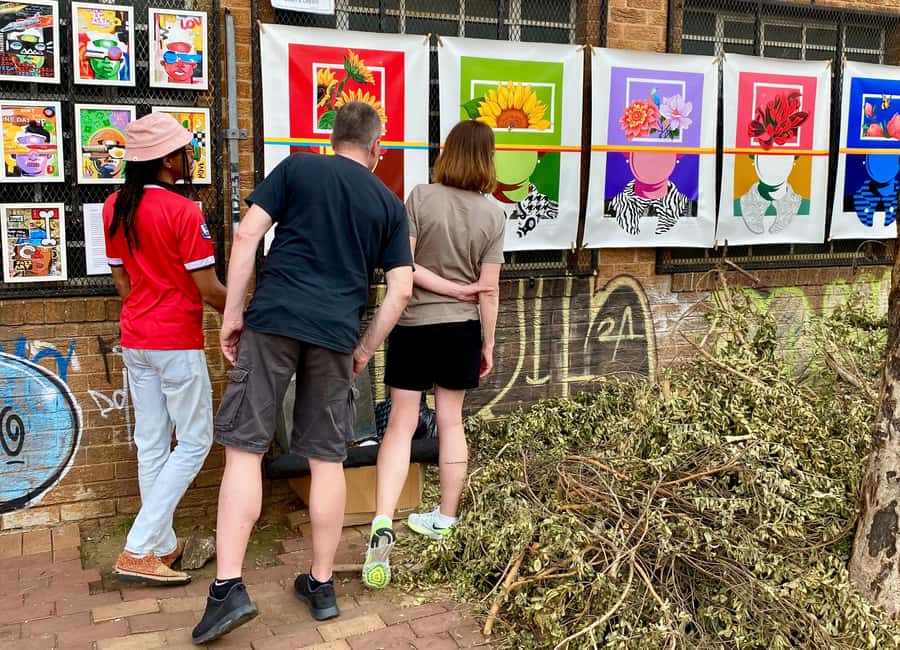
Maboneng, meaning Place of Light, is one of Johannesburg’s best areas for seeing how a city can change block by block. The district grew from an old industrial zone into a fashionable inner-city quarter with art spaces, food spots, shops, and creative businesses.
That change is not a simple success story. It brings new investment and public art, but it also raises questions about gentrification, ownership, and who gets to remain in a neighborhood as property values and visitor interest increase. I like that this tour does not treat Maboneng as a polished theme park. It presents the area as a place where old industry, new design, local residents, informal trade, and outside investment sit side by side.
You could walk through the district alone and see plenty of striking walls. You would probably miss the links between the artwork and the broader story of Johannesburg. The guide supplies that connection, explaining artists, local culture, redevelopment, and the city’s past in plain terms.
Ayanda receives the strongest praise across the supplied feedback. The descriptions of his guiding style are consistent: friendly, articulate, deeply familiar with Maboneng, and willing to answer questions. Several people also describe him as someone with personal experience of the area’s regeneration. That matters here because Maboneng is changing quickly, and a local guide can explain what a visitor cannot learn from a mural alone.
A few more Johannesburg trips to weigh up
- Johannesburg: Maboneng Street Art & Culture Tour
★ 4.9 · 257 reviews - Johannesburg: Maboneng Street Art & Culture Tour
★ 5.0 · 140 reviews - Colours of Johannesburg: A Graffiti & Street Art Tour
★ 5.0 · 21 reviews
Starting under the bridge at Home of the Bean
The meeting point is Home of the Bean, at the corner of Fox and Berea Streets, under the bridge. From outside, the building can look like an old industrial structure, so I would not wait on the pavement if you arrive early. Go inside the coffee shop and wait there.
The tour begins with time at the café and a 15-minute safety briefing. You can buy a coffee before setting off, but drinks and food are at your own expense. This is a useful opening rather than wasted time. It gives you a place to gather, meet the guide, ask practical questions, and get a sense of the group before heading into the streets.
The operator contacts you by WhatsApp or message around 30 minutes before the start time if there is a change. I would make sure your phone is working and that the tour company has the correct number. The meeting point is central to the route, and returning there at the end keeps the experience easy to manage.
Reading the murals across Maboneng
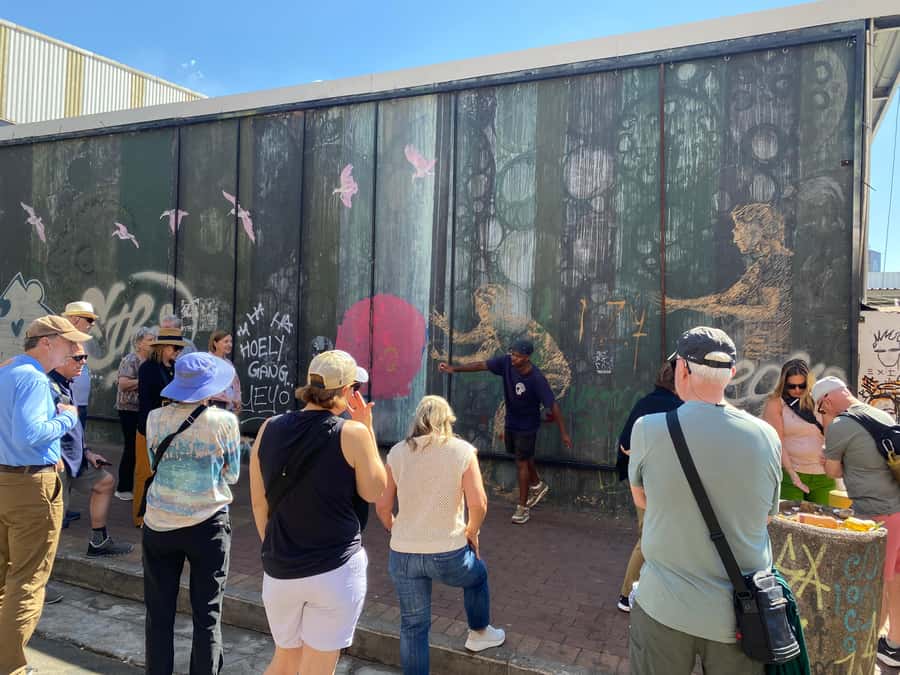
The main portion of the walk takes place outdoors, with about 30 minutes of initial sightseeing followed by more walking and stops later in the route. The exact order may shift, since street art and local businesses are part of a living neighborhood rather than a museum with fixed rooms.
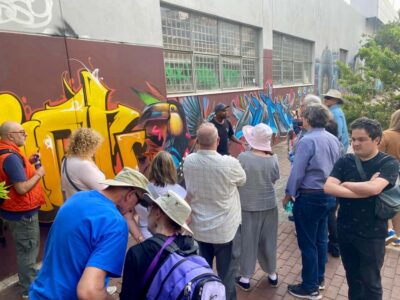
The murals are the heart of the experience. You see work connected to both international and South African artists, including ESPO Powers and DBongz. The useful part is hearing about the person behind each piece and the meaning attached to it. That turns a quick photo stop into a lesson in style, identity, social commentary, and place.
I would expect the guide to focus on selected works rather than explain every painted wall. That is a sensible approach. Maboneng has enough artwork to fill a much longer walk, and a good guide needs to choose pieces that help explain the area.
The art also gives you a way to think about modern South Africa without sitting in a classroom. Some pieces may speak to race, city life, identity, or public space. The supplied information does not assign a fixed meaning to every mural, so I would treat the guide’s explanations as part of a conversation and ask questions when a work catches your eye.
Bring a phone or camera if you enjoy street photography, but do not let the pictures become the whole point. Look up at the buildings, notice the older industrial character, and watch how painted walls sit beside shops, cafés, galleries, and ordinary residential life.
Maboneng Arts Village and the creative economy
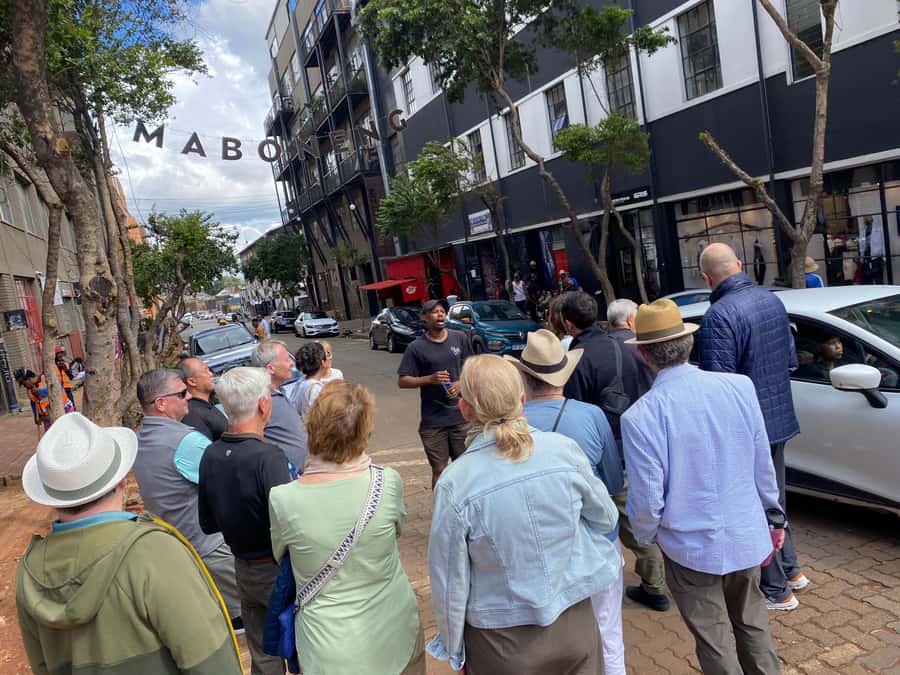
One stop takes you into Maboneng Arts Village, a space where artists and creative workers sell their work. This gives the tour a useful change of rhythm. Instead of seeing art only on walls, you get a closer look at how creative activity can support shops, studios, makers, and small businesses.
I like this stop because it helps explain why Maboneng attracts attention. The district is not only a collection of murals. It has an ecosystem of galleries, curio and gift stores, restaurants, and spaces where people make or sell things.
Still, keep your expectations realistic. The experience lasts two hours, and the tour does not include purchases. If you see something you want, carry some cash or a card. Buying from local artists or informal traders can be part of the experience, but you should budget separately and allow enough time if shopping matters to you.
The Arts Village also helps you see the mixed character of Maboneng. One moment you are looking at a major mural; the next, you are in a small creative space with products made for local and visiting customers. That mix is more revealing than a carefully staged cultural attraction.
Same country, a completely different kind of day:
- From Johannesburg: Pilanesberg Nature Reserve Game Safari
★ 4.8 · 1,327 reviews - Johannesburg: Hop-On Hop-Off Bus with Optional Soweto Tour
★ 4.6 · 985 reviews - Soweto /Johannesburg and Apartheid Museum Guided Full Day Tour
★ 5.0 · 932 reviews - Johannesburg Hop-On Hop-Off City Tour with Soweto Option
★ 4.5 · 768 reviews
The Hideout Bar and an uncertain chapter of the past
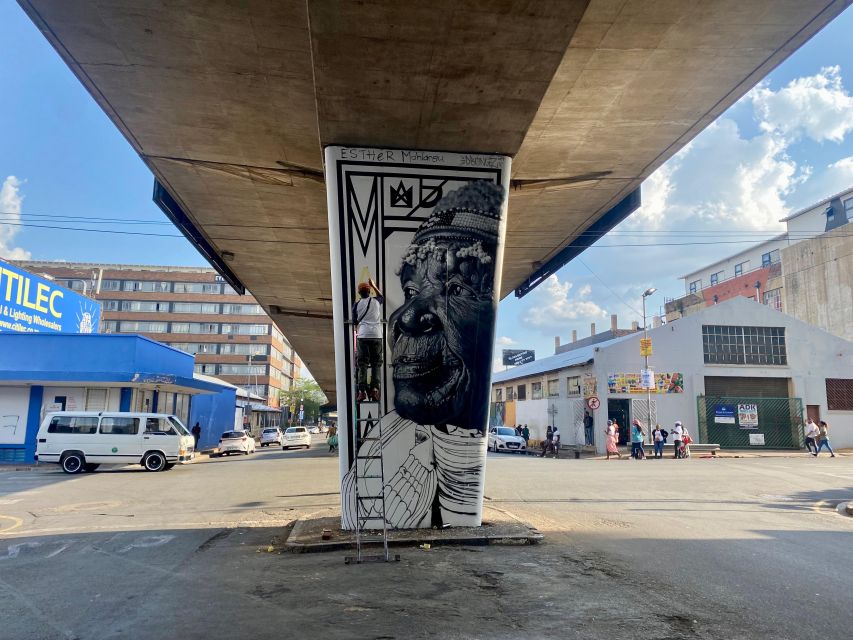
The visit to the Hideout Bar at Curiocity Backpackers is one of the tour’s most unusual stops. It is described as an alleged hideout for Nelson Mandela and other anti-apartheid activists during apartheid.
The word alleged matters. This is a story connected to local memory and historical claims, not a promise that you are entering a formally preserved national monument. The value lies in hearing how the place is understood and how it fits into Johannesburg’s difficult political past.
I would ask the guide to explain what is known, what is local tradition, and how the site has been used over time. That kind of question can make the stop more worthwhile. The tour presents the bar as a historical curiosity, while the wider discussion links Maboneng to the city’s changing social and political life.
This is also a reminder that Johannesburg’s history is often found in working buildings, cafés, lanes, and reused industrial spaces. You will not spend long here, about 15 minutes, but it breaks up the mural walk and adds a human story to the route.
From mining industry to inner-city reinvention
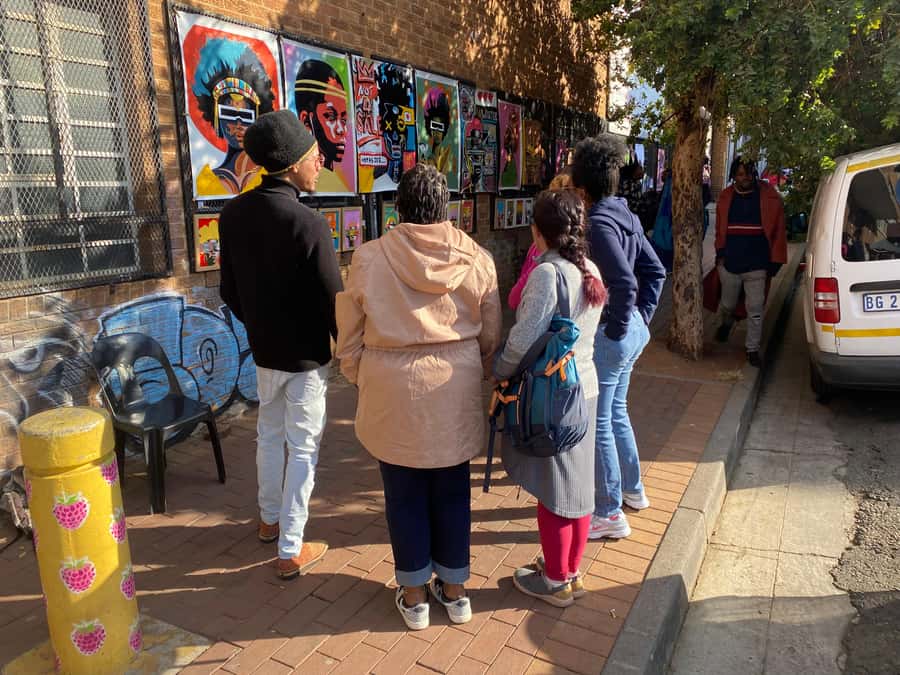
The tour’s most useful theme is Maboneng’s evolution from 2009 to today. The area has strong links to Johannesburg’s mining past, and its older industrial buildings help you see that earlier layer beneath the current cafés, studios, and painted walls.
The redevelopment story is worth hearing from a local guide. One booking described Ayanda as especially good at explaining how regeneration was funded and what its vision was. That is the sort of detail that helps you understand why Maboneng looks the way it does, rather than simply labeling it a trendy district.
You also get a chance to consider the costs of change. New restaurants, galleries, and public art can make an area more appealing, but development does not affect every resident in the same way. The guide can help you understand the relationship between investment, gentrification, local community life, and the image Maboneng presents to outsiders.
I appreciate that the experience connects the past with a possible future for Johannesburg. The district suggests how neglected industrial areas might be reused, but it also leaves you with questions about access, affordability, and whose culture gets the most attention.
A short viewpoint stop above the streets
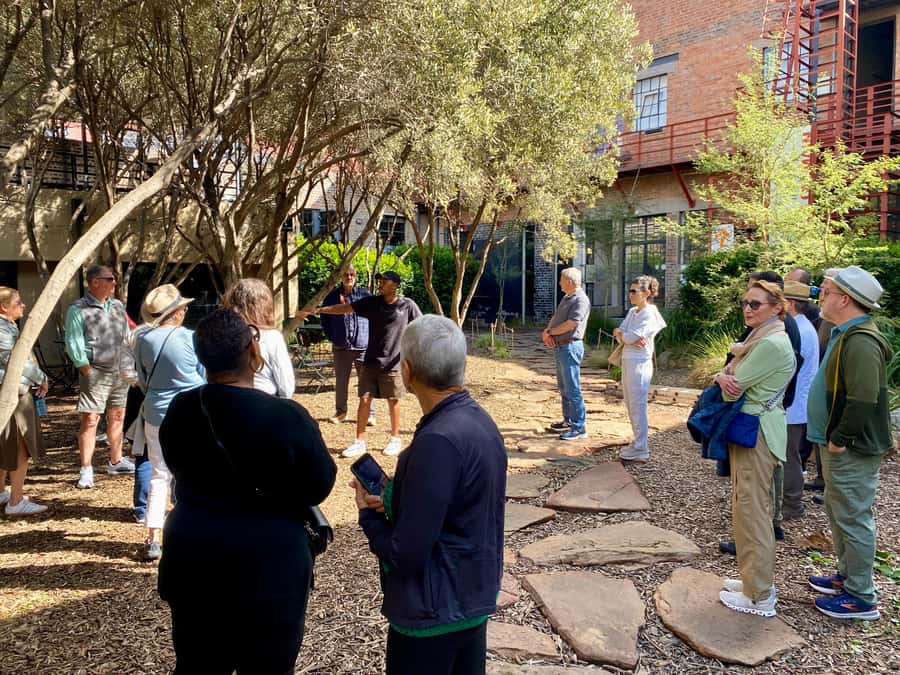
The route includes a 15-minute viewpoint stop, with scenic views along the way. It is not presented as a long rooftop meal or a separate attraction, so I would think of it as a brief pause to see the neighborhood from a different angle.
This stop matters because the street-level experience can feel fragmented. From above, you can better read the old industrial blocks, newer creative spaces, and the broader inner-city setting. The viewpoint gives the walk a visual reset before the final section.
One person specifically enjoyed the view from a rooftop bar. The exact venue may vary, and food or drinks are not included, so do not book this expecting a full rooftop experience. Instead, use the pause to take photographs and ask how Maboneng fits into Johannesburg’s wider downtown area.
The final streets and return to the café
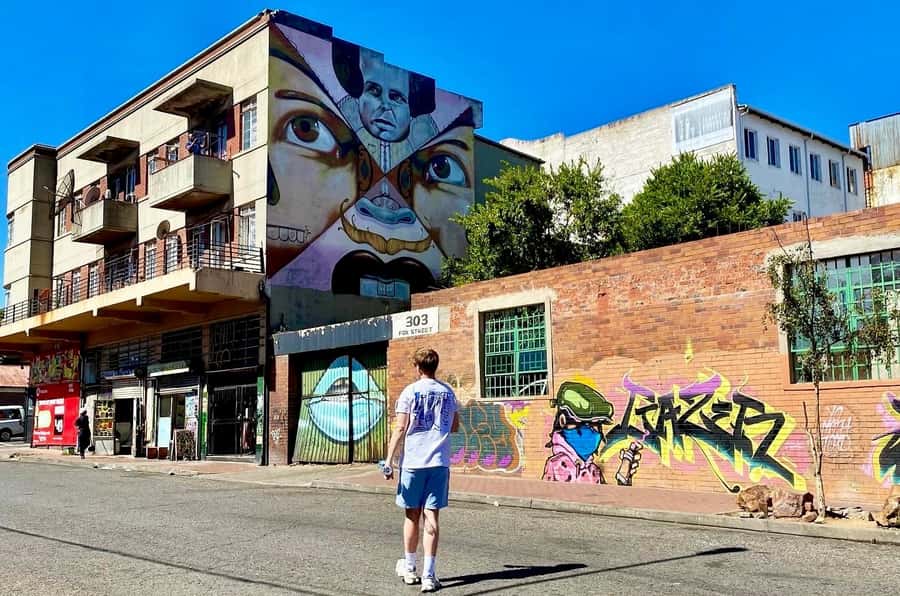
After the viewpoint, you spend roughly another 15 minutes walking through Maboneng before returning to Home of the Bean. This final section is likely less about a single major sight and more about seeing the district as a place where people live and work.
That ordinary side is important. The tour highlights cultural diversity through galleries, shops, restaurants, artists, informal traders, and local residents. You are not simply moving between attractions. You are watching a neighborhood function.
Several bookings describe the guide as being greeted by people on the street and as knowing the area and its community well. I would value that local connection, while remembering that a two-hour visit can only offer an introduction. It gives you a framework, not a complete portrait of Maboneng.
If you have extra time afterward, the guide may be a useful source of suggestions for the rest of your Johannesburg stay. The tour is also short enough to fit into a busy day. One booking came from someone rushing toward the airport, who still managed to see the main sights and get the area explained.
Safety, comfort, and walking demands
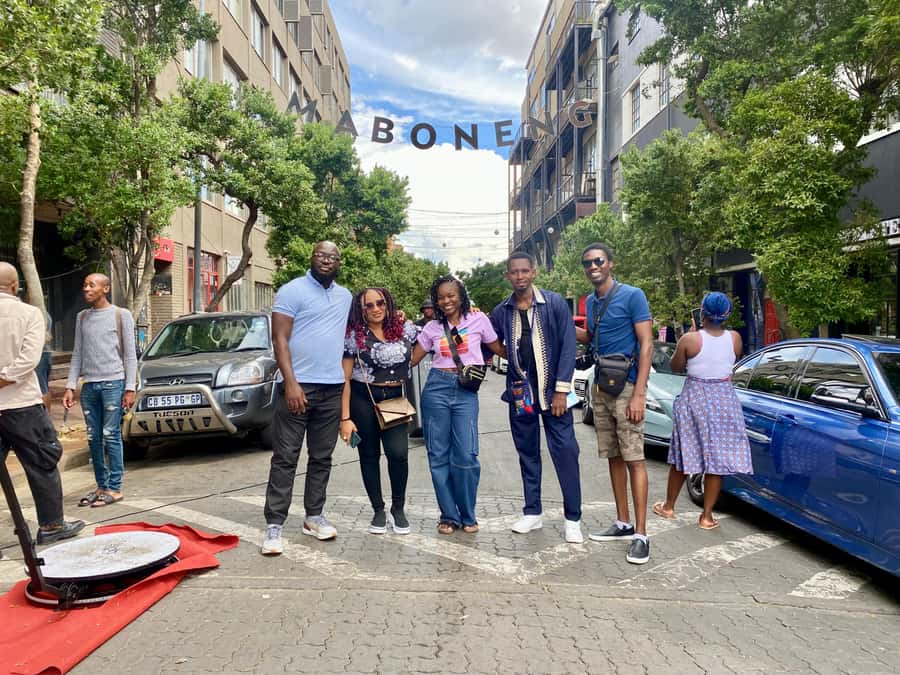
Safety is a practical concern for many people visiting Johannesburg’s inner city. The supplied experience is wheelchair accessible, conducted in English, and led by a local guide. Several people specifically described feeling safe while walking with the guide, including those who had been unsure about visiting Maboneng alone.
That does not mean you should switch off your judgment. Stay with the guide, follow the meeting instructions, and use common sense with phones, cameras, cash, and purchases. The tour takes place on public streets, where artists and informal traders are active, so you should remain aware of your surroundings.
The walk lasts two hours and includes several outdoor sections. Comfortable shoes and weather-appropriate clothing make sense. The information provided does not specify the walking distance, restroom access, or exact route conditions, so I would contact the operator if you need detailed mobility planning.
The tour is offered in English only. That makes it a good match for English speakers who want conversation and questions, but it may not suit you if you need another language.
Is the $40 price fair?
At $40 per person, this is not the cheapest way to see a neighborhood, but the price is reasonable if you want interpretation rather than a self-guided stroll. Entry to the sites visited is included, while food, drinks, coffee, shopping, and any bar purchases cost extra.
The value rests mainly with the guide. Maboneng’s public art is free to view, but the meaning behind it, the stories about artists, and the explanation of redevelopment are what you are paying for. The experience also saves you from having to work out which streets and spaces are worth your limited time.
It offers particularly good value for a first visit to Johannesburg. You get art, history, local culture, a viewpoint, and practical orientation in two hours. If you already know Maboneng well or prefer spending an afternoon in galleries at your own speed, the fixed route may feel too brief.
The free cancellation policy allows cancellation up to 24 hours before the start for a full refund, and you can reserve now and pay later. Those terms are useful when your Johannesburg schedule is still shifting.
Who should book this walk?
I would recommend it to you if you want an introduction to Johannesburg through public art and local stories rather than a standard sightseeing loop. It suits first-time visitors, art lovers, photographers, students, and anyone curious about how redevelopment changes an inner-city neighborhood.
It also works well for people who want a short activity. At two hours, it can fit before another appointment or on a day when you do not want a full-day excursion. Families and older visitors may appreciate the manageable duration, though the walking conditions and route should be checked if mobility is a concern.
I would be less likely to recommend it if you want a quiet gallery tour, a food-focused outing, or a long historical lecture. You will be outdoors, moving between several stops, and the neighborhood itself is part of the experience. The tour is informative, but one person found some explanations repetitive, so visitors who prefer a tightly edited presentation should keep that in mind.
Should you book the Maboneng Street Art and Culture Tour?
Book it if you want to understand the connection between street art, social change, and Johannesburg’s inner city. The strongest reason to go is the guide’s local perspective, especially when Ayanda leads the walk. His personal connection to Maboneng and clear explanations have made a strong impression, while Bonny, Kaiser, and Michael have also guided the experience.
The art is excellent, but it is the surrounding story that gives the walk its value. You see how a former industrial area became a creative district, visit spaces tied to local culture, hear the story of an alleged activist hideout, and get a short view across the city.
I would book this as an early Johannesburg activity, then use what you learn to decide where to return on your own. Bring comfortable shoes, keep some money available for art or local goods, and arrive inside Home of the Bean rather than waiting beneath the bridge. For a compact, thoughtful introduction to Maboneng, the $40 price is fair.
FAQ
Where does the Maboneng tour meet?
The meeting point is Home of the Bean coffee shop at the corner of Fox and Berea Streets, under the bridge. If you arrive early, wait inside the coffee shop. The building can look like an old industrial structure from outside.
How long does the experience last?
The walking tour lasts two hours, including the café meeting and safety briefing, sightseeing stops, the Hideout Bar, a viewpoint, and the return to Home of the Bean.
What language is the tour offered in?
The tour is offered in English only and includes a live English-speaking guide.
Is coffee included in the price?
No. You can enjoy coffee at Home of the Bean before the walk, but all food and drinks are paid for separately.
Is entry to the places visited included?
Yes. Entry to all sites visited during the experience is included in the $40 price.
Can I buy art or local goods during the walk?
Yes. Street artists and informal traders operate along the route, so bring cash or a card if you may want to buy artwork, crafts, or other goods.
Is the tour wheelchair accessible?
Yes, the activity is listed as wheelchair accessible. If you need specific information about the route or walking surfaces, contact the operator before booking.
Can I cancel the booking?
You can cancel up to 24 hours before the start time for a full refund. You can also reserve now and pay later.
Just added around Johannesburg
- Lion park★ 4.5 · 5 reviews
- Lesedi cultural village:★ 5.0 · 6 reviews
- Lesedi Cultural Village with lunch or dinner cultural food★ 4.6 · 9 reviews
- Lesedi Cultural Village Half-Day Tour★ 4.7 · 9 reviews
- Lesedi Cultural Village★ 4.9 · 4 reviews
- Kruger National Park – 5 Day Safari Tour★ 4.7 · 4 reviews
- From Johannesburg: Kruger National Park 4-Day Luxury Safari★ 4.8 · 9 reviews
- Kruger National Park – 4 Day Safari Tour★ 4.8 · 19 reviews
Street Art, compared.


Colours of Johannesburg: A Graffiti & Street Art Tour
Read our review →
Browse the lists this tour appears in