
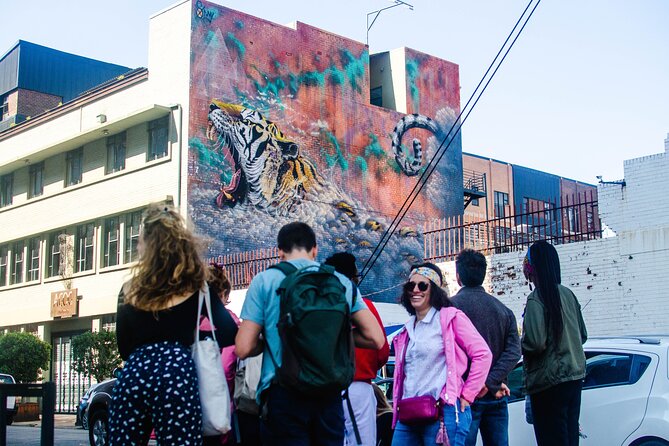
Reviewed · STREET ART
Johannesburg: Maboneng Street Art & Culture Tour
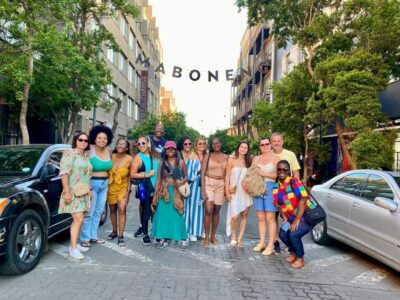
Johannesburg’s Maboneng Precinct is best understood on foot, with someone who can explain what you are seeing. This two-hour walk links murals, galleries, craft spaces, and urban renewal projects while placing the art in the hard, complicated story of Johannesburg.
I like the personal guide commentary, especially the way guides such as Refiloe, Mulalo, and Clement explain the artists and the meaning behind individual works. I also like the rooftop start at Hallmark House, which gives you a useful city view before you begin walking.
The main consideration is the setting. This is an inner-city walk, not a polished sightseeing district, and some visitors may feel uneasy exploring alone. The guide’s local ties help, but you should still follow the meeting instructions and stay with the group.
Key points to know before booking
- Two hours on foot: The route covers Maboneng, Jewel City, Hallmark House, Access City, Artisan Lofts, and 264 Fox Street.
- Street art with context: You will discuss identity, resistance, hope, and the personal stories behind the murals.
- A strong local guide matters: Refiloe, Mulalo, and Clement have led this experience, with a warm, engaging style and plenty of local insight.
- Good city views first: The walk begins at Hallmark House, a useful place to see Johannesburg from above and get your bearings.
- Art and shopping are part of the route: Galleries, vendors, artists, and arts-and-crafts spaces add variety beyond wall murals.
- $37 is fair for a small cultural experience: The price includes the guide, but not food, drinks, transport, or hotel pickup.
Why Maboneng works best with a guide
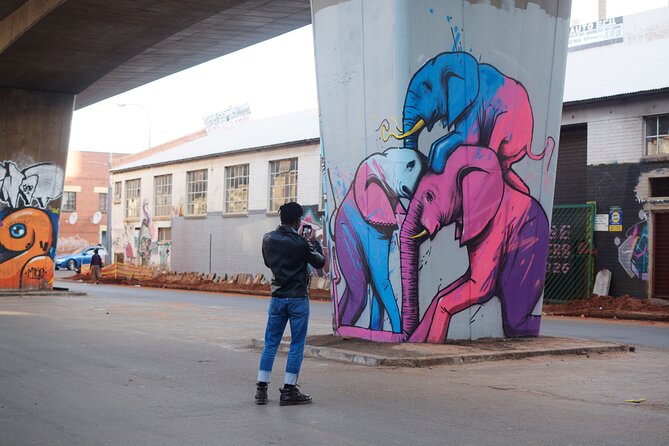
Maboneng is not simply a district covered in attractive paint. Its street art reflects a city trying to reshape itself after apartheid, economic change, and years of inner-city decline. A mural may look striking in a photograph, but the story behind it gives the image weight.
That is where this tour earns its place. You are not only shown walls. You are told who made the work, what techniques appear in it, and how the art fits into the changing identity of Johannesburg. The focus stays on local creatives rather than on a quick procession of postcard views.
I especially like the way the walk connects art with everyday life. You may meet vendors, see artists at work, step into galleries, and hear about restaurants or creative spaces to visit later. The experience gives you a starting point for exploring Maboneng after the guide has gone.
The tone also seems to be a major strength. Refiloe is repeatedly described as friendly, funny, passionate, and attentive. Mulalo has been praised for explaining both the art and the districts around it, while Clement has been noted for bringing energy and personal insight to the walk.
That personal approach matters in Johannesburg. The city can be difficult to read at first. Its districts change quickly, its past is not always visible, and the difference between a place that feels welcoming and one that feels uncertain may not be obvious to a first-time visitor. A guide who knows the people and streets gives you a clearer sense of place.
A few more Johannesburg trips to weigh up
- Johannesburg: Maboneng Street Art & Culture Tour
★ 5.0 · 140 reviews - Johannesburg: Street Art and Culture in Maboneng!
★ 4.8 · 107 reviews - Colours of Johannesburg: A Graffiti & Street Art Tour
★ 5.0 · 21 reviews
Starting above the city at Hallmark House
The official starting point is 54 Siemert Road, inside Hallmark House. If you arrive early, wait at the coffee shop inside the building. This is a practical meeting point, and it is much better than waiting outside while trying to locate a guide in a busy inner-city area.
The tour begins with the Hallmark House rooftop. This is one of the most useful parts of the experience because it lets you see Johannesburg before you start interpreting it at street level. The view gives you a sense of the city’s scale and helps frame the old mining city as a place still being remade.
You spend about 10 minutes at Hallmark House, with time for photos, sightseeing, walking, and possibly browsing. It is a short stop, not a long rooftop visit, so arrive ready to begin rather than expecting a leisurely meal or extended sunset session.
The rooftop also sets the mood. You get the broad view first, then move into the details: painted walls, shopfronts, artists, and local streets. I find that order helpful. Without it, Maboneng can feel like a collection of separate creative venues. With it, the area begins to make more sense as part of a larger city.
Reading the murals in Maboneng
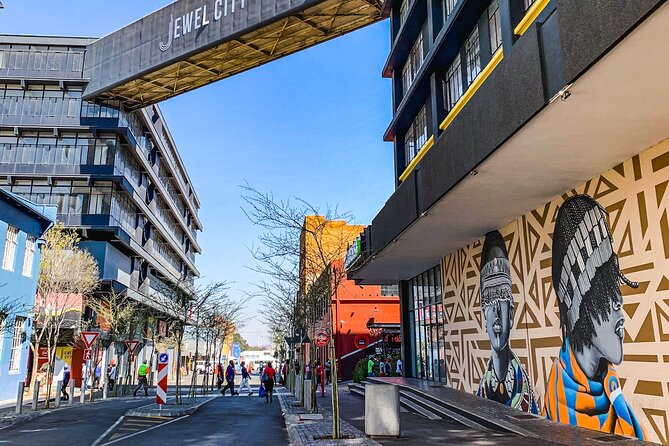
The Maboneng Precinct is the heart of the walk. The listed stop allows about 15 minutes, though the route includes repeated pauses at artworks and nearby spaces. You should expect a walking tour rather than a single photo stop.
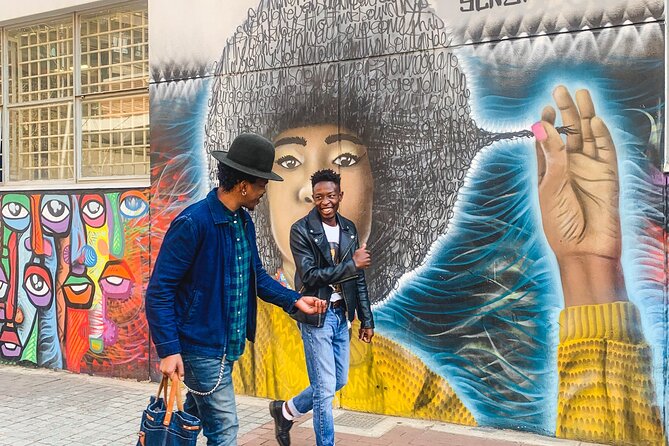
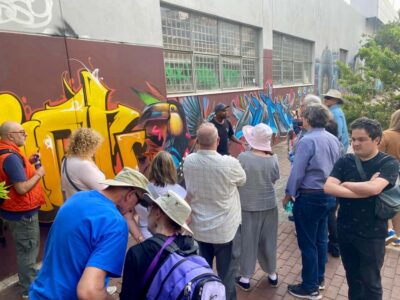
The murals are presented as statements about identity, resistance, and hope. That does not mean every wall will receive a long lecture, but the guide’s role is to help you notice what a casual passerby might miss. You may learn about the artist, the subject, the visual method, and the reason the work matters in that particular location.
This is where Refiloe’s style has received especially strong praise. He has been described as able to explain artists and their work in a way that is both detailed and easy to follow. Several experiences also included photographs taken by the guide, a thoughtful bonus if you are traveling alone or want a few good pictures without constantly holding up your phone.
The art itself is likely to be the visual high point. You can expect different styles and mediums, not one fixed look repeated from block to block. The district’s appeal comes from that mix: large murals, smaller interventions, shop displays, galleries, and handmade work.
The drawback is that street art changes. Paint fades, walls are altered, businesses close, and new work appears. The exact selection may shift over time. That is normal for this kind of tour, and it is part of the point, but you should not book it expecting a fixed museum collection.
The Cosmopolitan Lounge and short neighborhood stops
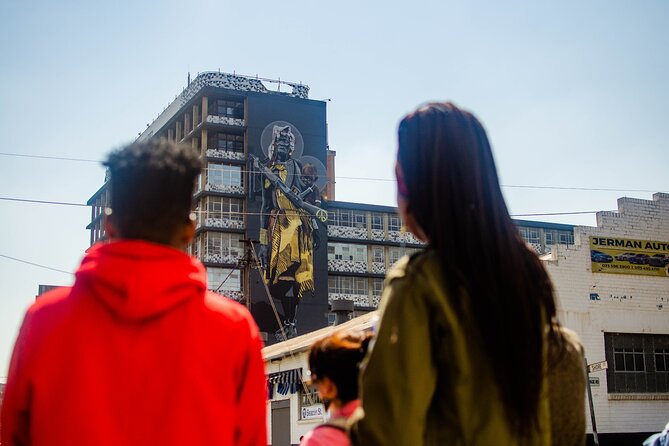
The Cosmopolitan Lounge is included as a brief five-minute stop for photos, sightseeing, and commentary. Since the visit is short, treat it as a marker along the route rather than a major attraction in its own right.
Stops like this help show how Maboneng’s creative life sits alongside ordinary city activity. The tour is not sealed off from Johannesburg. You move through a working neighborhood, passing places used by local people and creative businesses rather than moving only between formal attractions.
The short timing also tells you something about the pace. You will not spend long at every venue. The guide keeps you moving, with enough time to hear the story and take a photo before continuing. If you prefer slow gallery browsing, you may want to return to some places later.
That is easy to do. The tour is useful partly because it points out places you might otherwise walk past. One guide even recommended restaurants and artists for a later visit, which is exactly the sort of practical local advice that can turn a two-hour tour into a fuller afternoon.
Same country, a completely different kind of day:
- From Johannesburg: Pilanesberg Nature Reserve Game Safari
★ 4.8 · 1,327 reviews - Johannesburg: Hop-On Hop-Off Bus with Optional Soweto Tour
★ 4.6 · 985 reviews - Soweto /Johannesburg and Apartheid Museum Guided Full Day Tour
★ 5.0 · 932 reviews - Johannesburg Hop-On Hop-Off City Tour with Soweto Option
★ 4.5 · 768 reviews
Access City and Artisan Lofts
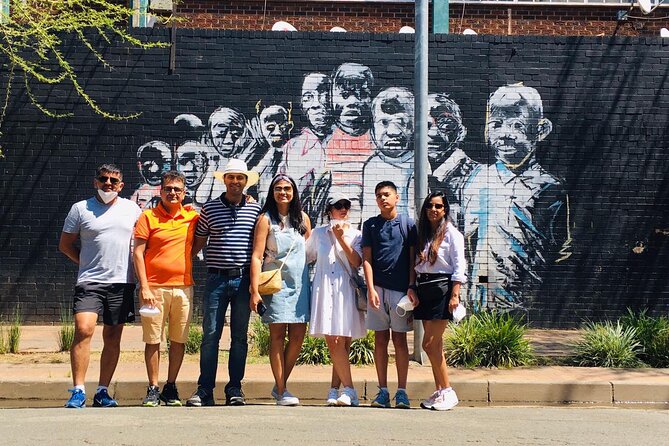
Access City adds an arts-and-crafts market element. The stop includes shopping, sightseeing, walking, and a guided visit, with roughly 10 minutes listed for the area.
This is a good change of pace after the murals. Street art can feel large and public, while market stalls and handmade work bring you closer to the people making and selling things. You can look for locally produced items, but do not treat the stop as a guaranteed shopping session. Ten minutes is enough for a look around, not a long negotiation over several purchases.
Artisan Lofts follows with another short visit focused on arts and crafts. Together, these locations show the economic side of creative culture. Artists are not only painting walls for public attention. They are also making objects, selling work, building audiences, and trying to make a living in a changing district.
I would keep some room in your bag if you like locally made goods, but the main value is cultural rather than retail. You are seeing how art functions as part of neighborhood life, not just as decoration for visitors.
Jewel City and 264 Fox Street
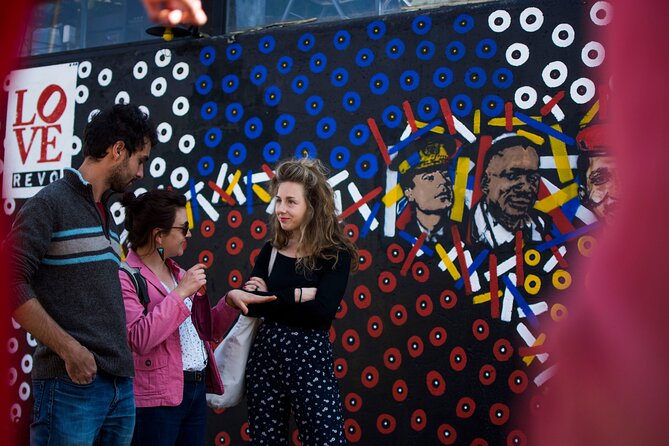
Jewel City gives the tour another look at urban renewal and contemporary art. You can expect a guided walk, photo opportunities, galleries, local vendors, and more arts-and-crafts activity.
The name points to Johannesburg’s long connection with precious metals and the mining economy. The tour uses the district to connect that older identity with current creative work. The result is a useful contrast: the city’s wealth began with mining, while today’s cultural energy is also being built through studios, galleries, murals, and independent makers.
At Jewel City, the guide may explain emerging artists and the ways they tell stories for local and international audiences. This is one reason the tour suits people who want more than attractive photographs. You are given some vocabulary for understanding the work, even if you do not already know much about contemporary art.
The route then reaches 264 Fox Street, with about 10 minutes set aside for photos, sightseeing, and a guided visit, followed by more walking. The address is connected with the district’s social and creative scene, and it helps round out the route with another look at how old urban spaces can be put to new use.
You should not expect a long gallery tour at each address. The experience is broad rather than slow and highly focused. It introduces you to several places, then leaves you free to return to the ones that catch your interest.
What the tour says about Johannesburg
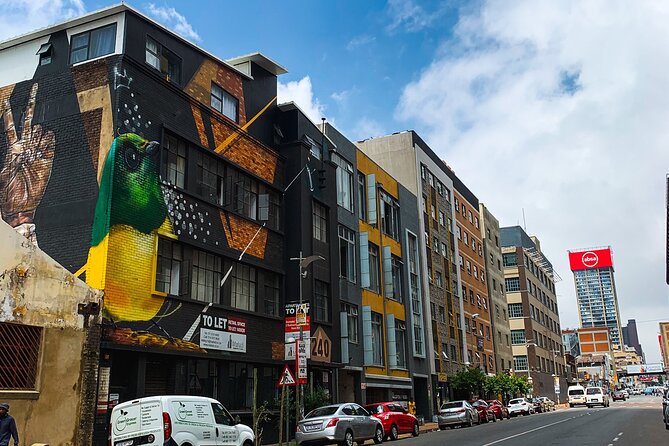
The most valuable part of this experience is the way it avoids presenting Johannesburg as only a place of struggle or only a place of renewal. You see both pressures at once.
The city’s mining origins remain important. They help explain its growth, wealth, and built environment. But the tour also deals with apartheid and the painful social divisions that shaped Johannesburg. The art becomes a way to discuss those issues without turning the walk into a dry history lesson.
Several guides have been praised for making the difficult parts understandable and human. You may hear about the artists’ lives, the area’s changing fortunes, and the hopes attached to new creative projects. The guide’s personal comments and connections with people in the district give the tour a more direct feel.
That does not make the past simple. Johannesburg’s renewal has limits, and a few murals cannot solve wider problems. A good tour should leave you with curiosity and questions rather than the idea that one redeveloped precinct tells the whole story of the city.
For me, that balance is important. You get art, but you also get a candid look at how a neighborhood is trying to change. The tour is at its best when it treats Maboneng as a living place, not an outdoor gallery designed solely for sightseeing.
Safety, pace, and practical comfort
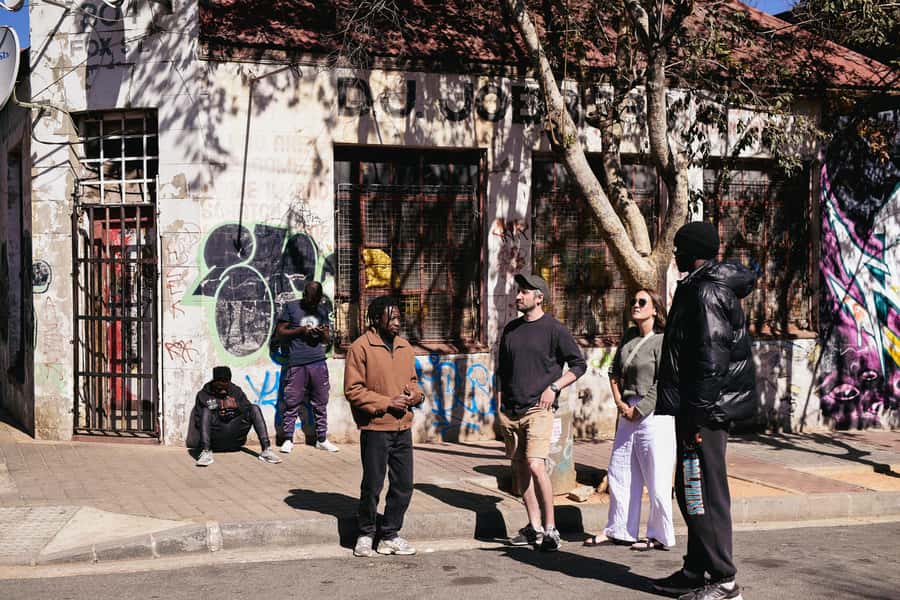
Safety is a central consideration for this walk. Some visitors have described the wider neighborhood as an area where nonlocals should not wander without guidance, while also saying they felt safe with the tour leader. Guides such as Refiloe and Mulalo are known locally, and that connection helps the group move with more confidence.
Still, use common sense. Stay with the guide, keep your belongings secure, and do not assume that feeling comfortable on the organized route means every nearby street is suitable for independent exploring. If you want to spend more time in Maboneng, ask the guide for specific suggestions before separating.
The walk lasts two hours and includes regular stops. You should be comfortable walking through city streets and standing while the guide explains artworks. The tour is conducted in English, so you will get the most from it if you can follow spoken explanations about art, local culture, and Johannesburg’s past.
There is no hotel pickup or drop-off. Plan your own way to Hallmark House and arrive early enough to wait inside at the coffee shop if needed. Food and drinks are also not included, so plan a meal or coffee separately.
The route includes shopping and market visits, but purchases are extra. If you see something you like, the guide may help you understand the setting, but the listed price covers the guided experience only.
Is $37 good value?
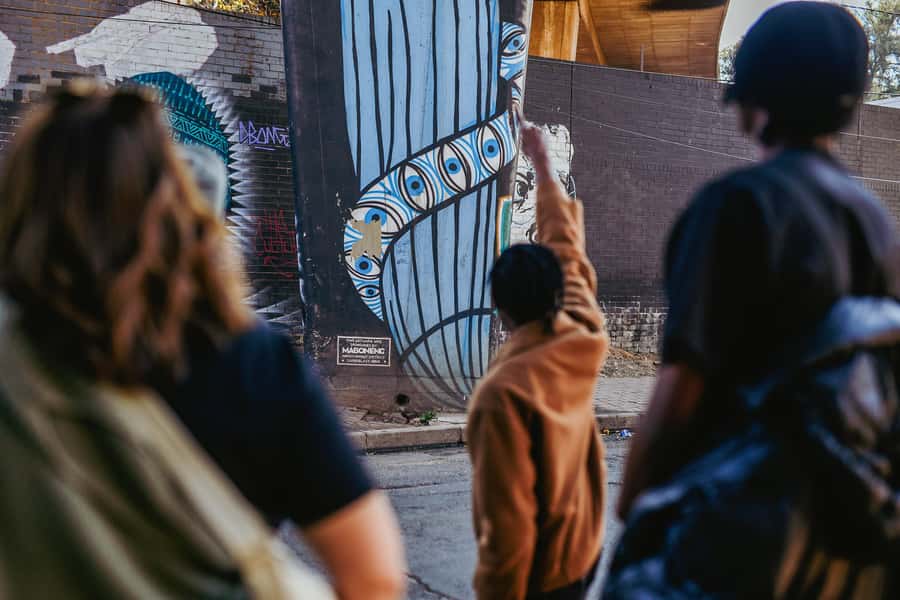
At $37 per person, this is not the cheapest way to take a walk through Johannesburg, but it offers more than a self-guided mural hunt. The cost pays for local interpretation, route planning, access to a range of creative spaces, and help navigating an area that can be difficult to read on your own.
The value is strongest if you care about street art, local makers, photography, or urban change. It is also a sensible choice early in your Johannesburg stay because the guide can point you toward restaurants, galleries, and artists to visit later.
The value is weaker if you want a long gallery visit, a food tour, or transport included. It is also not designed as a full Johannesburg history tour. You receive a focused look at Maboneng and nearby creative districts, with history used to explain what you see.
Flexible booking helps. You can cancel up to 24 hours before the start for a full refund, and you can reserve now and pay later. Those terms are useful if your South Africa plans may shift.
Who should book this walk?
I would recommend it to first-time visitors who want a more personal introduction to Johannesburg. It suits art lovers, photographers, curious walkers, and anyone who prefers meeting local creatives to ticking off large formal attractions.
Families can also consider it. One group completed the two-hour walk with an 11-year-old, and the mix of murals, markets, short stops, and stories gives younger visitors more to look at than a standard history talk.
Solo visitors may find the guided format especially useful. The guide can help with the route, photos, and local orientation, while the group setting feels more comfortable than exploring an unfamiliar inner-city district alone.
You should skip it if you dislike walking, want guaranteed access to every shop or gallery, or need a tour with hotel transport. You should also allow extra time afterward if you want to browse properly, eat, or revisit the artworks that interest you most.
Should you book the Maboneng Street Art and Culture Tour?
Yes, if you want to see a creative side of Johannesburg while learning how art connects to the city’s difficult past and uncertain future. The guides are the real reason to book. Refiloe, Mulalo, and Clement have each brought warmth, humor, and strong local insight to the route.
The best plan is to take the tour early in your stay, bring water and a camera, wear comfortable shoes, and keep your afternoon open afterward. You will see the main places in a brisk two hours, then have the option to return to the galleries, markets, or restaurants that catch your eye.
At $37, it offers solid value for a focused, guide-led experience. It will not show you all of Johannesburg, but it can help you understand one of its most creative districts without pretending the city’s problems have disappeared.
FAQ
Where does the Maboneng Street Art and Culture Tour start?
The tour starts at 54 Siemert Road, at Hallmark House. If you arrive before the tour begins, wait inside Hallmark House at the coffee shop.
How long does the tour last?
The walking experience lasts two hours.
How much does the tour cost?
The listed price is $37 per person.
What language is the tour conducted in?
The live tour guide speaks English.
Is a guide included?
Yes. A guide is included in the tour price.
Does the tour include hotel pickup and drop-off?
No. Hotel pickup and drop-off are not included.
Are food and drinks included?
No. You need to pay separately for any food and drinks.
Which areas does the route visit?
The route includes Maboneng Precinct, The Cosmopolitan Lounge, Hallmark House, Access City, Artisan Lofts, Jewel City, and 264 Fox Street.
Can I cancel for a refund?
Yes. You can cancel up to 24 hours in advance for a full refund.
Do I have to pay when I book?
No. The reserve-now-and-pay-later option lets you hold your place without paying immediately.
Just added around Johannesburg
- Lion park★ 4.5 · 5 reviews
- Lesedi cultural village:★ 5.0 · 6 reviews
- Lesedi Cultural Village with lunch or dinner cultural food★ 4.6 · 9 reviews
- Lesedi Cultural Village Half-Day Tour★ 4.7 · 9 reviews
- Lesedi Cultural Village★ 4.9 · 4 reviews
- Kruger National Park – 5 Day Safari Tour★ 4.7 · 4 reviews
- From Johannesburg: Kruger National Park 4-Day Luxury Safari★ 4.8 · 9 reviews
- Kruger National Park – 4 Day Safari Tour★ 4.8 · 19 reviews
Street Art, compared.


Colours of Johannesburg: A Graffiti & Street Art Tour
Read our review →
Browse the lists this tour appears in