
Reviewed · SOWETO TOURS
Johannesburg: Soweto Tour by Tuk Tuk
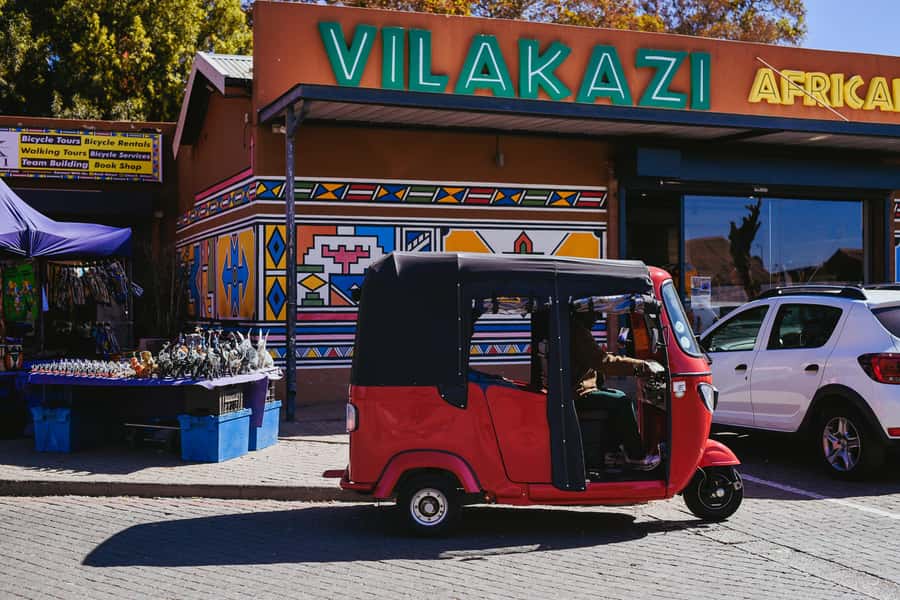
Soweto is too large to understand on foot in a short visit, and this small-group tuk-tuk tour solves that neatly. You travel from Orlando West to Orlando East and beyond, reaching places that a walking tour would miss while hearing local context from guides such as Mulalo and Thabo.
I like the personal angle and the useful range of stops. You see famous sites tied to Nelson Mandela and the 1976 uprising, but also ordinary neighborhoods, a former women’s hostel, and an informal settlement. I also like that a local Kota sandwich is included. The main consideration is that 150 minutes moves quickly, so museum time and conversations at some stops may feel brief.
Key points at a glance
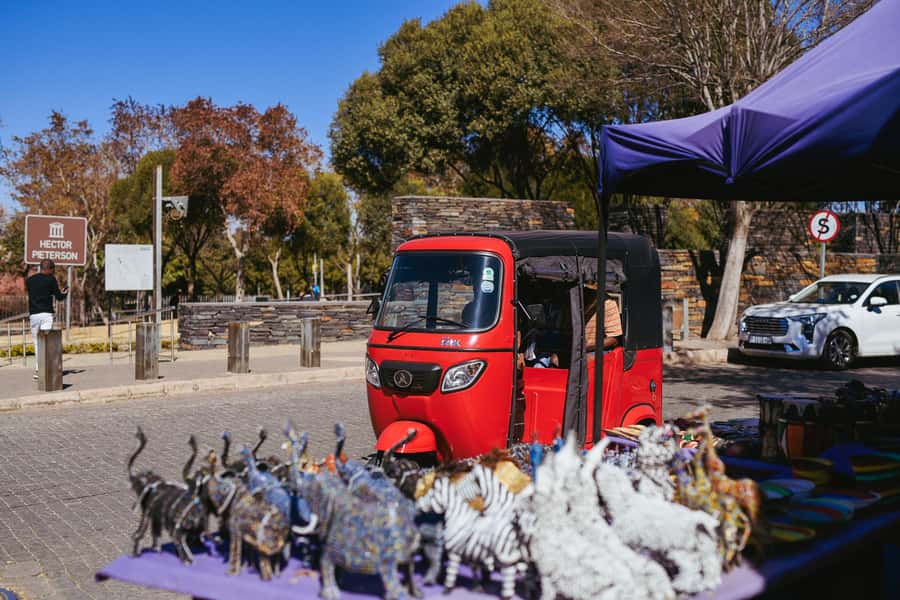
- A tuk-tuk covers more of Soweto: You can reach Orlando East, local residential areas, and other parts of the township without spending the whole tour walking.
- Local guides shape the experience: Guides including Mulalo and Thabo explain Soweto through its past and present, with time for questions.
- Major landmarks are built into the route: Expect Hector Pieterson Museum, Vilakazi Street, Mandela House, Soweto Towers, and Regina Mundi Catholic Church.
- The tour goes beyond the tourist core: An informal settlement visit and a former women’s hostel add difficult but important context.
- Food is part of the $59 price: You finish with a Kota, a popular local sandwich, plus drinks.
- Five people maximum: The small group makes it easier to ask questions and adjust the pace when possible.
Why a tuk-tuk makes sense in Soweto

Soweto is not a single compact sight. It is a large collection of neighborhoods with different origins, housing types, and stories. A walking tour can give you a close look at one area, but it cannot cover much ground in two and a half hours.
The tuk-tuk lets you ride between districts while keeping the experience open to the street. You are not sealed behind a bus window. You can look around, stop for photos, and hear your guide point out places as you move through them.
The vehicle also helps if you are traveling with children or simply do not want to walk for hours. One family chose it for that reason, and the 2 to 3 hour format worked well for them. The ride is also useful on hot days, when covering Soweto by bicycle or on foot can become tiring.
You should expect a moving tour rather than a long, quiet museum visit. The group limit is five people, which is a real advantage here. You can ask about a street, building, or political figure without needing to compete with a full coachload.
More Soweto Tours in Johannesburg
- Johannesburg: Hop-On Hop-Off Bus with Optional Soweto Tour
★ 4.6 · 985 reviews - Soweto /Johannesburg and Apartheid Museum Guided Full Day Tour
★ 5.0 · 932 reviews - Johannesburg Hop-On Hop-Off City Tour with Soweto Option
★ 4.5 · 768 reviews
Starting in Orlando West
The tour begins at One Day Africa, at the corner of Rampa and Moema Street in Orlando West. This area is central to Soweto’s visitor circuit, but it is not the whole story. The guide first places Orlando West within the township’s larger past, including its development from 1886 and its connection to Johannesburg.
That opening matters because Soweto can be reduced too easily to a few famous names. A good orientation helps you understand that the township has changed over many decades and includes established neighborhoods, newer housing, informal settlements, commercial areas, and important civic buildings.
Guides such as Mulalo and Thabo have been praised for explaining the places they know personally. Mulalo, in particular, is associated with taking visitors beyond the best-known route and pointing out the neighborhood where he grew up. That local connection gives the tour a more direct tone than a standard sightseeing drive.
Hector Pieterson Museum and the 1976 uprising

The first major stop is Hector Pieterson Museum, with about 30 minutes for a guided visit. The museum focuses on the Soweto uprising, one of the key events in the struggle against apartheid.
The museum is not just another landmark to tick off. It gives you the political and human background needed to understand why Soweto became such a powerful symbol in South African history. The uprising began in 1976, when students protested against the forced use of Afrikaans in education. The events that followed helped expose apartheid’s violence to the world and became a major turning point in resistance to the system.
Thirty minutes is enough for an introduction, but it is not a full museum study visit. If you want to read every display closely, you may wish for more time. On this tour, the museum works as part of a wider story, with your guide linking what you see inside to streets and institutions visited later.
Vilakazi Street and two Nobel Peace Prize homes
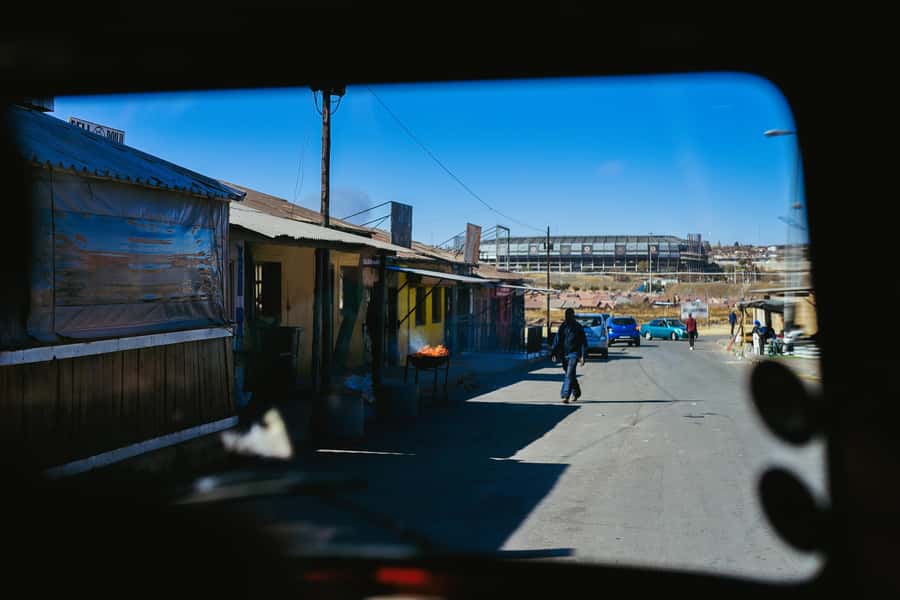
Vilakazi Street is one of Soweto’s best-known addresses. It is closely linked with Nelson Mandela and Archbishop Desmond Tutu, and the tour gives you about 30 minutes to explore the area with your guide.
This is a good place to discuss the people and political work connected to Soweto’s role in ending apartheid. The street can feel more visitor-focused than other parts of the tour, but its importance is genuine. Few streets are associated with two Nobel Peace Prize winners, and seeing the setting helps place their public lives in a physical neighborhood.
The guide can also help you look beyond the famous house fronts. Ask questions about how the street fits into present-day Soweto, not only its connection to Mandela and Tutu. That is one of the benefits of a local guide: you get a chance to connect a famous address with the wider community around it.
Same country, a completely different kind of day:
- From Johannesburg: Pilanesberg Nature Reserve Game Safari
★ 4.8 · 1,327 reviews - Full Day Ultimate Pilanesberg National Park Safari from Johannesburg or Pretoria
★ 4.5 · 718 reviews - Half-Day Tour of Soweto Tour
★ 4.5 · 712 reviews - Soweto: Walking Tour with a Local Guide and Lunch
★ 4.9 · 648 reviews
Mandela House: what to expect
Mandela’s former home is listed as a 30-minute guided visit and photo stop. The house is one of the tour’s headline attractions, so it is a natural focus for anyone booking a first visit to Soweto.
The supplied details do not make clear whether an interior admission fee is included in the $59 price. Some visitors describe the Mandela House visit as optional, so check the exact arrangement when you book or meet your guide. The tour does include the stop and the chance to see and photograph the site, but you should not assume that every museum-style entry is covered unless the operator confirms it.
That small uncertainty is worth noting because it affects the value calculation. The tour already includes transport, a guide and driver, food, and drinks, but optional admission can add to the final cost. If Mandela House is your main reason for going, ask about entry before the tour begins.
Orlando East and the township beyond the postcards
The route continues to Orlando East, described as the site of Soweto’s first formal houses. This short stop lasts about 10 minutes, with sightseeing, explanation, and time for photos.
It may be brief, but it helps show that Soweto has layers. You are not only looking at places associated with famous leaders or major protests. You are also seeing how the township developed as a place where people built homes, families, and community life under severe restrictions.
The route also includes different neighborhoods and an informal settlement visit with a local guide. This is among the most important parts of the experience, but it needs a respectful approach. You are looking at real homes and real challenges, not a staged attraction.
A gratuity of R20 to R50, or more if you choose, is welcomed during or after the informal settlement visit. That is not included in the advertised price. Carry some South African rand if you want to offer one, and follow your guide’s lead about photography and conversation. The point is to listen and learn, not treat the area as a photo set.
Soweto Towers and Regina Mundi
The brightly painted Soweto Towers provide a strong photo stop and about 20 minutes of guided sightseeing. The towers are among the most recognizable modern sights in the township and give the tuk-tuk route a change of pace after the museums and historical houses.
You will have time to take pictures and hear why the towers matter to Soweto’s identity today. The supplied information does not promise an activity such as bungee jumping, so book this as a viewing and explanation stop rather than an adventure-sports visit.
Regina Mundi Catholic Church receives about 30 minutes. The church played an important role during apartheid and is tied to community and political life in Soweto. It is a useful counterpoint to the individual stories of Mandela and Tutu because it shifts attention to a major institution that served many people.
The church also helps explain how religious and civic spaces became important places for organizing, debate, refuge, and public expression. Your guide’s explanation is especially valuable here, since the building’s significance is not always obvious from its exterior.
The people behind the guiding
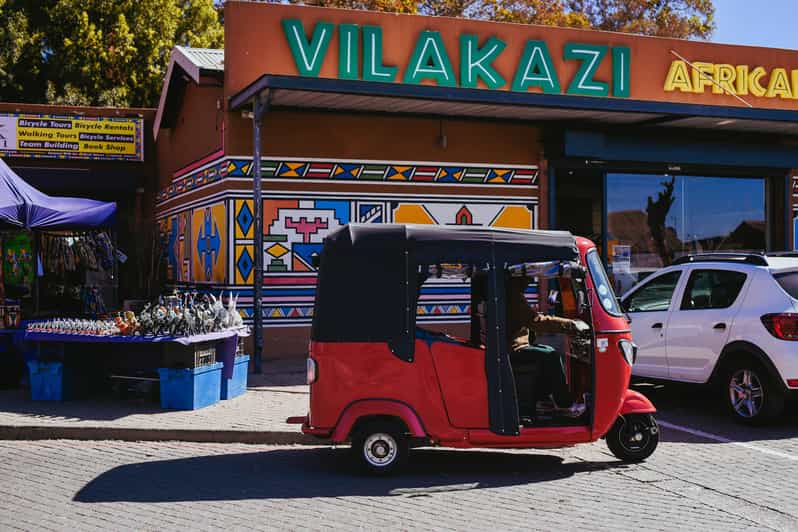
The strongest part of this tour is the guide-led interpretation. Mulalo appears frequently as a guide, while Thabo is also praised for his warmth, clear explanations, and local perspective. One booking also identifies Teboho as the driver, with Mulalo providing the Soweto guiding.
Names and assignments may vary by date, but you can reasonably expect an English-speaking local guide and driver. The best guides on this route do more than recite dates. They explain how the township developed, answer direct questions, and point out details as you pass through different neighborhoods.
Several people appreciated the sense of safety and the calm way the guides handled the route. That does not mean you should stop paying attention to your belongings or ignore local advice. It does mean the guide is there to help you move through the area with better context and judgment.
The small group helps. With no more than five participants, it is easier to ask for a photo stop, clarify a point about apartheid, or explain what interests you most. One couple also had the route adjusted around time limits, although you should treat that as a possible courtesy rather than a guaranteed custom itinerary.
Finishing with a Kota sandwich

Food and drinks are included, with the tour ending in a Kota sandwich. A Kota is a popular local sandwich, and it gives the experience a practical finish rather than leaving you to find lunch on your own.
This is not a fine-dining meal. Think of it as filling local street food that adds another small piece of daily Soweto life to the tour. People who enjoyed the meal describe it as a satisfying end to the ride, and it can be especially welcome after several stops.
If you have dietary restrictions, ask ahead of time. The available information confirms that food and drinks are included, but it does not specify ingredients or alternatives.
Is $59 a fair price?
At $59 per person, the tour is not the cheapest way to see one Soweto landmark. It becomes better value when you consider what is bundled into the 150 minutes: a tuk-tuk, a local guide and driver, several neighborhoods, major historical sites, food, and drinks.
You are paying for coverage and interpretation. A taxi could move you between places, but it would not provide the same connected explanation. A walking tour might offer closer street-level contact, but it would cover less ground and require more effort.
The five-person limit also matters. You are not paying for a large bus circuit where questions get lost. You are paying for a compact format that reaches beyond Vilakazi Street and gives the guide room to respond to your interests.
The value is weaker if you want long museum visits, lots of unstructured time, or a slow photographic study of each location. It is stronger if you have one afternoon in Johannesburg and want a broad introduction to Soweto without arranging several separate rides.
Practical details before you book
Set aside 150 minutes, or two and a half hours. Starting times vary, so check availability for your chosen date.
The meeting point is One Day Africa at the corner of Rampa and Moema Street in Orlando West. The tour returns there at the end. The activity is offered in English, and the group is limited to five participants.
The advertised price is $59 per person and includes food and drinks, along with the local guide and driver. Confirm the treatment of Mandela House admission if entering the interior is important to you.
You can cancel up to 24 hours in advance for a full refund, and the reserve-now, pay-later option lets you hold a place without paying on the day of booking. An informal settlement gratuity is separate and discretionary.
Who should choose this Soweto tuk-tuk tour?
I would choose it for a first visit to Johannesburg, especially if you want both major landmarks and a look at less polished parts of Soweto. It suits families who want to avoid hours of walking, couples seeking a private-feeling small group, and curious visitors who prefer conversation over a fixed audio script.
It is also a good fit if your time is limited. In 150 minutes, you can see the main historical sites, cross into different districts, and finish with local food.
I would look elsewhere if your priority is a long interior visit at every museum or a relaxed day with no schedule. The route is full, and some stops are short. You should also be comfortable with an informal settlement visit that asks for sensitivity, attention, and respect.
Should you book it?
Yes, if you want a fast but thoughtful introduction to Soweto. The tuk-tuk reaches more ground than a walking tour, the five-person limit keeps the outing personal, and guides such as Mulalo and Thabo add local detail to places that can otherwise feel like disconnected sights.
Book with realistic expectations. You are getting a broad overview, not a full-day research visit. Ask about Mandela House entry, bring a little cash for a possible informal settlement gratuity, and leave room for the Kota at the end. For $59, the combination of transport, local guiding, landmark visits, neighborhood context, and food is a strong choice for many first-time visitors to Johannesburg.
FAQ
How long does the Soweto tuk-tuk tour last?
The tour lasts 150 minutes, or two and a half hours.
How much does the tour cost?
The price is $59 per person.
Where does the tour start and finish?
It starts and finishes at One Day Africa, at the corner of Rampa and Moema Street in Orlando West, Soweto.
What language is the tour offered in?
The live tour guide speaks English.
How many people can join the group?
The group is limited to five participants.
What is included in the tour?
Food and drinks are included, along with a local guide and driver.
Can I cancel the booking?
Yes. You can cancel up to 24 hours in advance for a full refund. You can also reserve now and pay later.
Just added around Johannesburg
- Lion park★ 4.5 · 5 reviews
- Lesedi cultural village:★ 5.0 · 6 reviews
- Lesedi Cultural Village with lunch or dinner cultural food★ 4.6 · 9 reviews
- Lesedi Cultural Village Half-Day Tour★ 4.7 · 9 reviews
- Lesedi Cultural Village★ 4.9 · 4 reviews
- Kruger National Park – 5 Day Safari Tour★ 4.7 · 4 reviews
- From Johannesburg: Kruger National Park 4-Day Luxury Safari★ 4.8 · 9 reviews
- Kruger National Park – 4 Day Safari Tour★ 4.8 · 19 reviews
Soweto Tours, compared.

Soweto /Johannesburg and Apartheid Museum Guided Full Day Tour
Read our review →
Johannesburg Hop-On Hop-Off City Tour with Soweto Option
Read our review →

Jo’berg in 1 Day: Soweto, Apartheid Museum & City Tour
Read our review →
Full-Day Tour with Soweto and Apartheid Museum
Read our review →
Browse the lists this tour appears in