
Reviewed · SOWETO TOURS
Johannesburg and Soweto Tour in French
Johannesburg’s past is not tucked into one museum. It is spread across Soweto streets, a church that sheltered students, former prisons, and the home where Nelson Mandela lived. This private French-language tour connects those places in one long day, with a guide explaining the links as you go.
I like the door-to-door private transport, since Soweto and central Johannesburg are too spread out for a sensible walking tour. I also like the French commentary, especially for a subject with difficult political terms and many important names. The main drawback is pace: seven or eight hours is enough for a strong overview, but the short stops at some sites leave little time for lingering.
Key points to know before booking

- Hector Pieterson Museum puts the 1976 student uprising first, giving the day an emotional starting point.
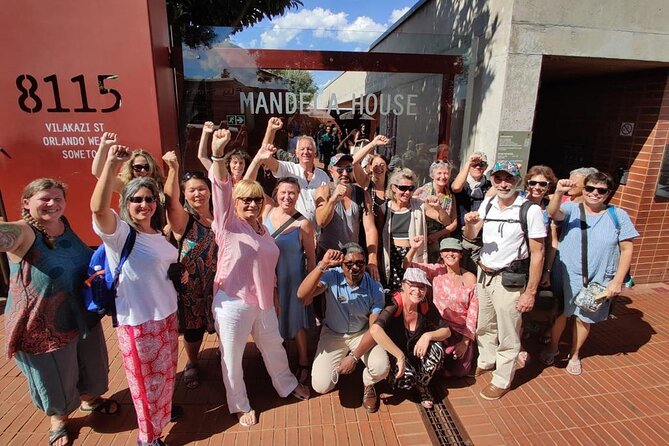
- Mandela House on Vilakazi Street offers a personal look at the family life behind a famous political figure.
- A private French-speaking guide can adjust the schedule, as guides U and Ibrahim have done for guests with traffic and crowd concerns.
- The Apartheid Museum receives about two hours, making it the fullest museum visit of the day.
- Private transport covers a large area, from Soweto to Constitution Hill and the Apartheid Museum.
- The $92.35 price includes private transportation, plus admission to Mandela House and the Apartheid Museum, but not lunch or every entrance fee.
Why this Soweto and Johannesburg day works
Soweto is often treated as a quick add-on to a Johannesburg visit. That is a mistake. The township is central to understanding South Africa’s political struggle, and this outing gives you several different ways to see it: through student protest, religious refuge, democratic ideals, famous homes, football, and the machinery of apartheid.
The private format matters. You are not tied to a large coach group or a fixed public schedule. Your guide can explain a point in French, answer follow-up questions, and adjust parts of the day when traffic or crowds make the original order less sensible.
That flexibility came through strongly in the service provided by guides U and Ibrahim, with Basil handling driving on one reported outing. Ibrahim was described as patient and attentive, while U was noted for humor and the ability to adapt the program. Those details matter because this is not a light sightseeing loop. You will spend much of the day discussing protest, imprisonment, segregation, and political violence.
The day lasts around seven to eight hours. That is a useful length for fitting both Soweto and central Johannesburg into one booking, though you should expect a full schedule rather than a relaxed afternoon.
More Soweto Tours in Johannesburg
- Johannesburg: Hop-On Hop-Off Bus with Optional Soweto Tour
★ 4.6 · 985 reviews - Soweto /Johannesburg and Apartheid Museum Guided Full Day Tour
★ 5.0 · 932 reviews - Johannesburg Hop-On Hop-Off City Tour with Soweto Option
★ 4.5 · 768 reviews
Hector Pieterson Museum and the 1976 uprising
The first major stop is the Hector Pieterson Memorial and Museum, where you begin with the 1976 student uprising in Soweto. The memorial honors Hector Pieterson, whose death became one of the defining images of resistance to apartheid-era education policies.
You receive about 30 minutes here, and the entrance fee is not included. That short allocation is enough for an introduction and a focused explanation, but it may feel brief if you want to study the museum in detail. Ask your guide to explain the events in sequence, since the significance of this stop becomes clearer when you understand how a local student protest spread across South Africa.
I find this an effective first stop because it gives the rest of the day a clear frame. Later, when you see Regina Mundi or Constitution Hill, you already have a reference point for how young people challenged the state and how communities responded.
Mandela House on Vilakazi Street
Mandela House is one of the most personal stops. Nelson Mandela lived here with his first wife, Evelyn, and later with Winnie Mandela. The house contains family photographs and objects connected with his time there.
The visit lasts about 45 minutes, and admission is included. That makes it one of the easier stops to fit into the price, with no extra entrance charge to plan for.
You should not expect a grand presidential residence. The interest is precisely in its domestic scale. The house helps you picture Mandela as a husband and father, not only as the political leader seen in textbooks and memorials. It also gives your guide a chance to discuss the different phases of his life and the role of Vilakazi Street in Soweto’s public memory.
I would pay close attention to the guide here. The objects themselves are modest, so the quality of the explanation shapes the visit. A French-speaking guide can also help you ask the small questions that often make a house museum worthwhile.
Regina Mundi, Soweto’s place of refuge
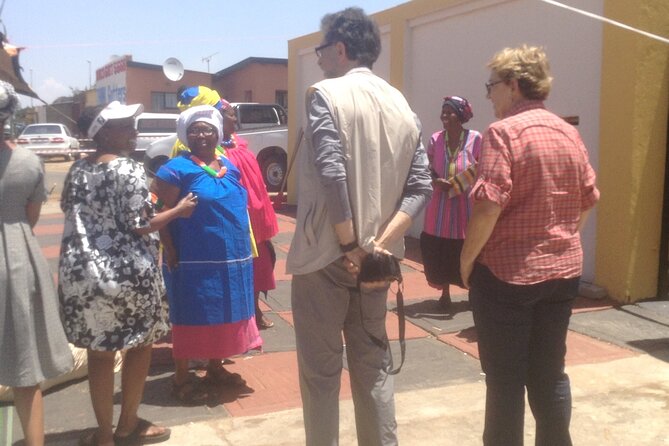
Regina Mundi is described as the largest Catholic church in South Africa and is often called the parliament of Soweto. During the 1976 uprising, students sought shelter there from police.
You have about 30 minutes at the church, and admission is not included. This is another short stop, but it adds an important angle to the day. You are no longer looking only at protests or political leaders. You are seeing how a religious building could become a meeting place, refuge, and voice for a community under pressure.
The church’s importance is not just architectural. Its story shows how institutions outside formal politics could offer protection and support. Your guide’s commentary is especially useful here, since a quick look inside cannot explain the full role Regina Mundi played.
Keep some cash or a payment method available for admissions, since not all entrances are covered by the tour price. The supplied details do not state the exact charge at this stop.
Same country, a completely different kind of day:
- From Johannesburg: Pilanesberg Nature Reserve Game Safari
★ 4.8 · 1,327 reviews - Full Day Ultimate Pilanesberg National Park Safari from Johannesburg or Pretoria
★ 4.5 · 718 reviews - Half-Day Tour of Soweto Tour
★ 4.5 · 712 reviews - Soweto: Walking Tour with a Local Guide and Lunch
★ 4.9 · 648 reviews
Walter Sisulu Square and the Freedom Charter
In Kliptown, Walter Sisulu Square marks the place where the Freedom Charter was adopted in 1955. The area is identified as Johannesburg’s oldest multicultural district, and the square connects the day’s earlier protest stories with the wider democratic program that followed.
The scheduled visit is about 30 minutes, with admission not included. This is a place where a guide adds real value. A square can be easy to glance at and leave, but the meaning lies in what was agreed there and why the document mattered to people who opposed apartheid.
I like the way this stop broadens the story beyond Soweto’s famous individuals. Mandela House gives you one household. Hector Pieterson gives you a student movement. Walter Sisulu Square points toward a national political vision.
FNB Stadium and the Soweto cooling towers
The FNB Stadium, also known as Soccer City, was the home of the 2010 FIFA World Cup. The stop lasts about 10 minutes and is free.
Do not expect a stadium tour or extended interior visit based on the stated schedule. This is a photo and orientation stop, useful for seeing one of Johannesburg’s best-known sports sites and connecting Soweto with the world event that brought the city international attention.
The cooling towers provide another brief landmark stop. Built in 1951 to supply electricity to Johannesburg, the two towers are now also used for bungee jumping from a platform between them. The schedule does not give a separate duration or state that bungee jumping is included, so treat this as a sightseeing stop, not an adventure activity.
These short visits help break up the heavier museum and memorial content. Still, if stadiums or industrial landmarks are your main interests, ask in advance how much time can be devoted to them.
Constitution Hill and the stories behind its walls
Constitution Hill Human Rights Precinct brings the focus back to imprisonment and state power. The site includes the Old Fort, the Women’s Jail, and Number Four. Over its long operating history, it held political figures, ordinary people, women, men, and children from different backgrounds.
Names associated with the prison include Nelson Mandela, Mahatma Gandhi, Joe Slovo, Albertina Sisulu, Winnie Madikizela-Mandela, and Fatima Meer. The important point is that the site does not tell only the story of famous people. It also records the many ordinary South Africans confined there.
The scheduled time is 30 minutes, and admission is not included. That is the clearest weakness in the timing. Constitution Hill can reward a longer visit, especially if you want to see more than one section or read the displays carefully. In half an hour, you will mainly receive an introduction and selected highlights.
Still, the stop earns its place. It shows that apartheid was not simply a set of laws printed in government offices. It was enforced through police, courts, prisons, and daily control. The precinct’s human rights focus also connects the old prison system with the principles South Africa later placed in its Constitution.
Two hours at the Apartheid Museum

The Apartheid Museum receives the longest single visit, about two hours, and admission is included. It was the first museum of its kind and presents the rise and fall of apartheid through exhibitions, architecture, space, and outdoor design.
This is the most demanding part of the day. You will be reading, looking, and trying to place events in order after several hours of discussion. Two hours gives you enough time for a serious visit, though not enough to study every display.
I appreciate that the tour does not reduce apartheid to one memorial or one famous name. The museum gives you a broader national framework after Soweto has supplied the local detail. You can better understand why the 1976 uprising mattered, how state policy shaped daily life, and why the eventual political change was so significant.
The admission included here improves the tour’s value. If you are choosing where to spend your limited Johannesburg time, this museum is a strong reason to book a guided day that includes it. You should also expect the subject matter to be emotionally heavy. This is not a casual stop to squeeze between shopping and lunch.
Transport, timing, and the private format
Private transportation is included, which is vital for this itinerary. The stops are spread across Soweto and Johannesburg, and the day would be awkward to manage independently if you wanted to cover all of them in sequence.
Pickup is offered, but the supplied details do not specify the exact pickup zone or time. Confirm those details when booking. The listed operating hours are 9 a.m. to 5 p.m., Monday through Sunday, for the stated booking period.
Traffic can affect the order and length of stops. That is where a private tour has a practical edge. The program has been adjusted for congestion and crowd levels, and the guide can make those decisions without waiting for a large group.
The experience is private, so only your party participates. Most people can take part, and the tour is near public transportation, although private transport remains the main way the itinerary works. Bring a phone with the mobile ticket ready, and plan for a full day out rather than a series of quick independent visits.
What the $92.35 price really covers
At $92.35 per person, this is not the cheapest way to see Soweto. It can still be a fair price if you value a private French-speaking guide and transport across several widely separated sites.
The price includes private transportation, admission to Mandela House, and admission to the Apartheid Museum. It does not include lunch, personal expenses, or the entrance fees listed separately for Hector Pieterson Museum, Regina Mundi, Walter Sisulu Square, and Constitution Hill.
For me, the value rests on three things:
- You avoid arranging transport between Soweto and central Johannesburg.
- You receive live explanation in French throughout a complicated subject.
- You combine major sites in one day instead of paying for separate transfers or tours.
The value is weaker if you want long, independent museum visits. Hector Pieterson Museum and Constitution Hill each receive only about 30 minutes, and the FNB Stadium stop is only 10 minutes. You are paying for breadth, convenience, and interpretation more than for slow exploration.
Lunch is not included, so plan for that cost separately. The details do not specify a restaurant or lunch break, so ask how the day is usually paced before you set your expectations.
Who will get the most from this tour
I would recommend this outing to French-speaking visitors who want a first, structured introduction to Johannesburg and Soweto. It suits you especially well if you prefer asking questions as you go rather than reading every background detail alone.
It is also a good match for families or mixed-age groups, since private transport reduces the need to walk between distant places. The mix of memorials, a home, a church, a square, a stadium, a prison site, and a major museum keeps the day varied.
You may want another plan if your priority is shopping, food, nightlife, or a slow neighborhood stroll. This is a serious historical tour. Even the lighter landmarks are tied to political or social context.
French-speaking groups should pay attention to the guide assignment. Ibrahim, U, and driver Basil are names associated with especially attentive and flexible service, but a specific guide is not guaranteed in the supplied details. If having French commentary is essential, confirm it directly before paying.
Reliability and booking caution
The experience has a 4.8 rating from 17 reviews, with 94 percent recommending it. The strongest service points are clear: French explanations, patience, humor, and the ability to adjust the itinerary around traffic and crowds.
There is also one serious warning about an operator failing to arrive or answer calls on a confirmed booking. One missed pickup can spoil your final day in Johannesburg, so confirm the booking and pickup arrangements ahead of time. This single report does not define the whole experience, but it is too important to ignore.
Free cancellation is available until 24 hours before the start time for a full refund. Changes or cancellations inside that window are not refunded, and poor weather or failure to meet the minimum number of participants can lead to a rescheduled date or full refund.
Should you book it?
Book this tour if you want a private French-speaking overview of Johannesburg and Soweto, with transport, Mandela House, and the Apartheid Museum handled in one day. The guide’s role is central, and the best version of this experience will help you connect places that otherwise feel scattered.
Think twice if you want to explore museums at length. The day covers a lot, but Hector Pieterson Museum, Regina Mundi, and Constitution Hill have short scheduled visits, while extra entrance fees and lunch cost more.
My practical advice is to confirm the pickup time, French-language guide, entrance-fee details, and lunch plan before departure. If those points are clear, the $92.35 cost is reasonable for a private day that covers the essential historical sites without making you organize Johannesburg’s transport yourself.
FAQ
How long does the Johannesburg and Soweto tour last?
The tour lasts approximately seven to eight hours.
Is this a private tour?
Yes. Only your group participates in the private activity.
Is transportation included?
Yes. Private transportation is included, and pickup is offered.
Is the tour conducted in French?
Yes. The tour is led by a private French-speaking guide.
Which admissions are included?
Admission to Mandela House and the Apartheid Museum is included. Admission to Hector Pieterson Museum, Regina Mundi, Walter Sisulu Square, and Constitution Hill is not included. The FNB Stadium stop is free.
Can I cancel for a full refund?
Yes, if you cancel at least 24 hours before the experience start time. Cancellations made less than 24 hours in advance are not refunded.
Just added around Johannesburg
- Private Soweto Tour 5 hours approximately from Johannesburg or Pretoria.★ 4.5 · 9 reviews
- bicycle tour soweto★ 4.5 · 20 reviews
- Taste of Africa★ 5.0 · 9 reviews
- Two day Kruger National Park Safari from Johannesburg★ 5.0 · 19 reviews
- Airport & Private Shuttle and Transfer Services in Johannesburg★ 5.0 · 9 reviews
- Pilanesberg National Park Safari, BIG 5 Full Day★ 5.0 · 4 reviews
- Full-day Johannesburg Bike Or Walking tour – With Transport★ 5.0 · 10 reviews
- Sun City Day Tour From Johannesburg★ 4.5 · 6 reviews
Soweto Tours, compared.
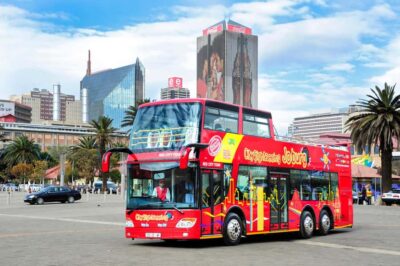

Soweto /Johannesburg and Apartheid Museum Guided Full Day Tour
Read our review →
Johannesburg Hop-On Hop-Off City Tour with Soweto Option
Read our review →
Jo’berg in 1 Day: Soweto, Apartheid Museum & City Tour
Read our review →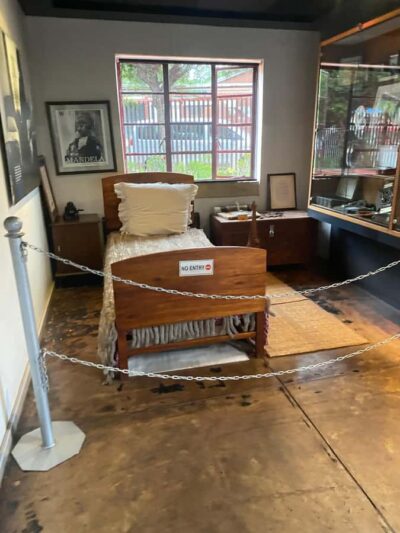
Full-Day Tour with Soweto and Apartheid Museum
Read our review →
Browse the lists this tour appears in