

Reviewed · SOWETO TOURS
Half Day Soweto Guided Tour
Soweto’s story comes into sharp focus on this small-group tour, which links Nelson Mandela’s former home, the 1976 student uprising, South Africa’s biggest stadium, and daily life in an informal settlement. With a maximum of three people, you get a more personal look at a place often reduced to a few history-book headlines.
I like the way the tour puts major sights beside ordinary community life. I also like the compact format: four to five hours is enough for a meaningful first visit without swallowing your whole day. Guide Thabang earned special praise for his friendly manner and strong grasp of the area.
The main consideration is that Mandela House admission costs extra, and the visit to a day-care center may not suit everyone. You should also expect an honest look at hardship, not a polished sightseeing circuit.
Key points at a glance

- Vilakazi Street has two Nobel Peace Prize winners’ homes: Mandela House and the former home of Desmond Tutu sit on the same famous street.
- The group is capped at three people: This is a useful choice if you prefer direct conversation over a large coach tour.
- The Hector Pieterson Museum ticket is included: The museum gives the tour its clearest account of the June 16, 1976 student protest.
- You visit FNB Stadium: The 94,000-seat stadium hosted the 2010 FIFA World Cup.
- Community contact is part of the plan: You walk and talk with residents, visit an informal settlement, and spend time at a day-care center.
- Pickup and group discounts are available: These can improve the value, especially if you are arranging a short Johannesburg stay.
Why Soweto deserves more than a quick photo stop
Soweto is closely tied to South Africa’s struggle against apartheid. It became a major center of political action and was home to figures such as Nelson Mandela and Desmond Tutu. A good tour here should do more than point at famous addresses. It should help you connect political history with the streets and communities where that history unfolded.
This half-day visit does that by moving between private memory, public protest, national sport, and present-day life. The subjects are serious, but the format is not overloaded. You spend roughly 30 to 45 minutes at the most important historical stops, then move on before the day becomes tiring.
I see this as a useful introduction if you have limited time in Johannesburg. It will not cover every part of Soweto, and it is not meant to. Instead, it gives you several strong reference points for understanding the township and its place in South Africa.
More Soweto Tours in Johannesburg
- Johannesburg: Hop-On Hop-Off Bus with Optional Soweto Tour
★ 4.6 · 985 reviews - Soweto /Johannesburg and Apartheid Museum Guided Full Day Tour
★ 5.0 · 932 reviews - Johannesburg Hop-On Hop-Off City Tour with Soweto Option
★ 4.5 · 768 reviews
Mandela House and the walk along Vilakazi Street

Mandela House is the tour’s most recognizable address. The house is open to the public and sits on Vilakazi Street, known for having the homes of two Nobel Peace Prize winners, Nelson Mandela and Desmond Tutu. That fact alone makes the street an unusual stop, but the value is not only in taking a picture outside.
The visit lasts about 30 minutes. You can expect time to see the house and hear about Mandela’s connection to Soweto. Admission is not included in the tour price, so factor that extra cost into your budget before booking. The provided information does not give the separate ticket price, so you should check it at the time of reservation.
The walk and talk with local residents adds an important human element. You are not simply driven from one famous building to another. You have a chance to ask questions and hear about the area from people connected to it today. The exact length and shape of this conversation may vary, but the plan clearly gives it a place in the tour.
Vilakazi Street can also help you understand how history and ordinary life overlap in Soweto. A world-famous political figure’s former home is not isolated in a museum district. It is part of a lived-in neighborhood, which makes the stop feel more grounded.
Hector Pieterson Museum and the events of June 16, 1976
The Hector Pieterson Museum is the strongest historical stop on the schedule. The visit lasts about 45 minutes, and admission is included. That makes it both the longest museum visit and the clearest value within the ticketed part of the tour.
The museum focuses on June 16, 1976, when Soweto students protested the use of Afrikaans as a language of instruction in South African schools. The protest became a major moment in the fight against apartheid. Learning about it at the museum gives you the political background needed to understand why Soweto carries such importance in South African history.
You should allow yourself time to take in the material rather than treating this as a quick indoor stop. The subject is difficult, and the museum is not simply a collection of decorative displays. It connects young people, education, language, state power, and resistance.
The 45-minute visit is long enough for an introduction, but it will not cover every detail of the uprising or the wider apartheid era. If you already know a great deal about South African history, you may want additional time elsewhere in Johannesburg. For a first visit, though, this stop gives the tour its essential historical center.
FNB Stadium and the 2010 World Cup connection

The stop at FNB Stadium is brief, lasting about 15 minutes, and there is no admission charge. The stadium seats about 94,000 people, making it the largest stadium in Africa according to the tour details. It hosted the 2010 FIFA World Cup in South Africa.
This is a change of pace after Mandela House and the Hector Pieterson Museum. Instead of focusing on political struggle, the stop brings you into the country’s sporting life and its international image. Fans of football will likely find the connection especially meaningful, though you do not need to follow the sport closely to understand why the stadium matters.
Do not expect a stadium tour or a long indoor visit. The schedule gives you a short look, not a full behind-the-scenes experience. That is reasonable on a half-day route, but you should keep your expectations in check. This is a photo and context stop rather than a major attraction by itself.
The stadium also helps show how Soweto is linked to events known around the world. The 2010 World Cup placed South Africa in the global spotlight, and FNB Stadium was one of its key venues.
Same country, a completely different kind of day:
- From Johannesburg: Pilanesberg Nature Reserve Game Safari
★ 4.8 · 1,327 reviews - Full Day Ultimate Pilanesberg National Park Safari from Johannesburg or Pretoria
★ 4.5 · 718 reviews - Half-Day Tour of Soweto Tour
★ 4.5 · 712 reviews - Soweto: Walking Tour with a Local Guide and Lunch
★ 4.9 · 648 reviews
Walking through an informal settlement and visiting a day-care center

The community portion is the most distinctive and also the part that requires the most sensitivity. You walk and talk with local residents in an informal settlement, then visit a day-care center and spend time with children aged one to five. The planned visit lasts about 30 minutes, and there is no admission charge.
This is not a standard sightseeing stop. You will see a side of Soweto that is less polished and more direct than the famous addresses. That can make the experience more useful, since it shows that Soweto is not only a historical symbol. It is also a place where people live, work, raise children, and face practical challenges.
You are welcome to bring a small gift for the children. The suggested age range is one to five years old. Keep any contribution modest and appropriate, and do not assume that gifts are required for the visit. The important thing is to follow the guide’s lead and treat the center and its children with care.
Some people will value this contact greatly. Others may feel uneasy about visiting a day-care center as part of a tour, especially if the setting feels too personal or if the visit seems designed mainly for sightseeing. I would think about your comfort level before booking. Ask the operator for current details if this part matters to your decision.
Because the visit is short, it is best understood as an introduction rather than a full community program. The opportunity to speak with residents is valuable, but half an hour cannot explain every part of daily life in an informal settlement.
A small group changes the feel of the visit

The maximum group size is three people. That is one of the clearest advantages of this experience. In a large group, questions can get lost, and conversations with local people can feel staged or rushed. With only a few participants, you have a better chance to speak directly with the guide and adjust the conversation to your interests.
A small group can also make the timing more flexible, though the published duration remains about four to five hours. You may find the format easier if you are traveling alone, as a couple, or with one companion. Group discounts are offered, but the exact discount is not stated, so check the rate for your party before paying.
Pickup is available, which can simplify the start of the day. The tour is also near public transportation. The information does not specify the pickup area or whether hotel pickup applies everywhere, so confirm those details when you book.
The activity is listed as suitable for most people, and service animals are allowed. No special physical demands are described. Still, walking and outdoor stops are part of the plan, so wear practical shoes and be ready for changing conditions.
What the $55.50 price really covers
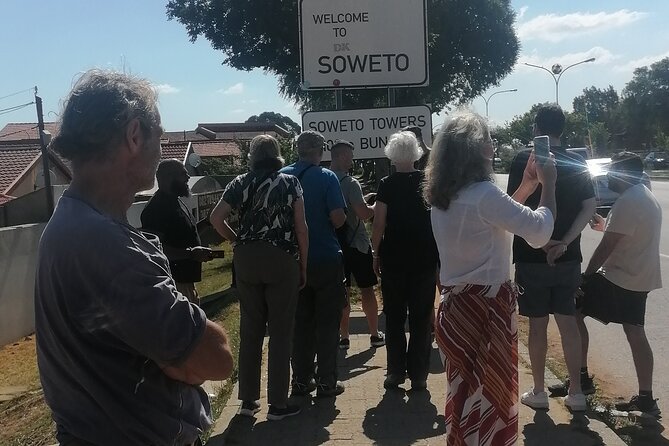
At $55.50 per person, the tour sits in a reasonable range for a private-feeling, half-day Johannesburg experience, particularly with a group limit of three. The price includes the guide-led route and admission to the Hector Pieterson Museum. It does not include entry to Mandela House.
The strongest value comes from the range of subjects covered in one outing. You get a major political history site, a second historic address, a World Cup stadium, local conversation, and a community visit. If you are in Johannesburg for a short time, combining these stops can save you the effort of arranging separate transport and research.
The price is less compelling if you mainly want a long museum visit or a formal heritage tour. Mandela House admission is extra, and the stadium stop is only 15 minutes. The tour earns its price through the guide, transport convenience, small group, and variety rather than through a large number of included tickets.
The current rating is 5 out of 5 from 14 reviews, with 100 percent recommending it. That is a small sample, so I would treat it as encouraging rather than final proof. The most useful detail comes from the praise for Thabang, who was described as friendly and well informed. One December 24, 2024 booking still completed the tour during storms and hail, suggesting the guide made a strong effort to keep the day going in difficult weather. Weather can change, however, so do not assume every stop will run exactly as planned in severe conditions.
The right audience for this Soweto tour
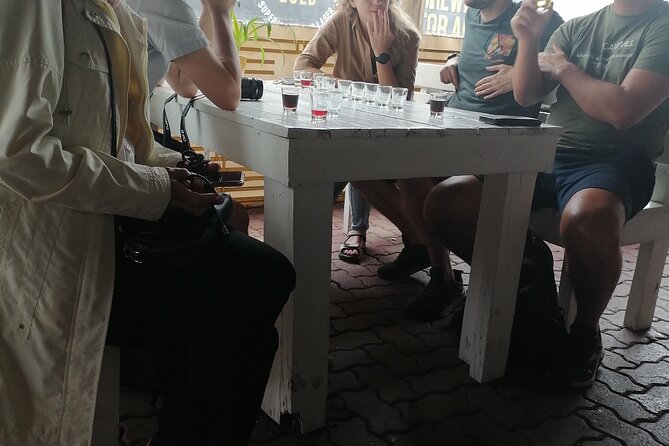
I would recommend this experience to you if you want a first look at Soweto that combines major history with present-day community life. It suits visitors with only half a day available, people interested in apartheid-era history, football fans curious about the 2010 World Cup, and anyone who prefers a very small group.
It is also a good match if you value conversation. The walk with local residents and the time with the guide are central to the experience. You should not book it expecting a quiet sequence of monuments with no personal contact.
Families may want to consider the day-care visit carefully. Children are part of that stop, and the setting may raise questions about privacy and appropriate behavior. The tour welcomes small gifts for children aged one to five, but the visit should be approached as a community encounter, not as entertainment.
You may want a different option if you prefer a broad city tour, a detailed architectural survey, or a full-day history program. This route gives you selected highlights, not an exhaustive account of Soweto.
Timing, cancellation, and practical planning
The tour lasts approximately four to five hours. The individual stops add up to two hours, leaving the rest of the time for pickup, driving, walking, and conversation. Exact timing may change, especially if weather affects the route.
Confirmation is provided when you book. Free cancellation is available if you cancel at least 24 hours before the local start time. Cancellations made within 24 hours are not refunded, and changes within that period are not accepted.
The experience is booked, on average, 24 days ahead. That lead time is useful to know if your Johannesburg dates are fixed, especially because the group limit is only three people. I would reserve early rather than wait until the final day of your trip.
Bring a small gift only if you wish to support the day-care visit, and keep it suited to children aged one to five. Since one admission fee is not included, carry a little extra budget for Mandela House. The available details do not state the pickup zone, meal arrangements, or exact entrance price, so check those points before final payment.
Should you book the Half Day Soweto Guided Tour?
Book it if you want a small-group introduction to Soweto that connects Mandela’s home, the 1976 student uprising, football history, and everyday community life. The limited group size and the personal style associated with guide Thabang add real value, while the included Hector Pieterson Museum ticket helps balance the extra cost of Mandela House.
Skip it if you want a long, formal museum experience or feel uncomfortable with a day-care and informal-settlement visit. Those parts are not side details. They shape the tour’s character.
For most short-stay visitors who want context rather than a quick drive past famous places, this is a well-focused choice. Allow for the extra museum admission, book at least a day ahead if plans change, and approach the community visit with respect. You will come away with a more complete picture of Soweto than a landmark-only outing can provide.
FAQ
Where does the Half Day Soweto Guided Tour take place?
The tour takes place in Soweto, Johannesburg, South Africa.
How long does the tour last?
The experience lasts approximately four to five hours.
How much does the tour cost?
The listed price is $55.50 per person.
Is pickup available?
Yes. Pickup is offered, though the supplied details do not specify the pickup area.
How many people can join the tour?
The tour has a maximum of three participants.
Is the Hector Pieterson Museum ticket included?
Yes. Admission to the Hector Pieterson Museum is included.
Is admission to Mandela House included?
No. Admission to Mandela House is not included in the tour price.
What is the FNB Stadium stop?
FNB Stadium is a 94,000-seat national stadium in South Africa. It hosted matches during the 2010 FIFA World Cup.
Can I bring a gift for the children at the day-care center?
Yes. You are welcome to bring a small gift for children aged one to five.
What is the cancellation policy?
You can cancel at least 24 hours before the local start time for a full refund. Cancellations and changes made within 24 hours are not accepted for a refund.
Just added around Johannesburg
- Private Soweto Tour 5 hours approximately from Johannesburg or Pretoria.★ 4.5 · 9 reviews
- bicycle tour soweto★ 4.5 · 20 reviews
- Taste of Africa★ 5.0 · 9 reviews
- Two day Kruger National Park Safari from Johannesburg★ 5.0 · 19 reviews
- Airport & Private Shuttle and Transfer Services in Johannesburg★ 5.0 · 9 reviews
- Pilanesberg National Park Safari, BIG 5 Full Day★ 5.0 · 4 reviews
- Full-day Johannesburg Bike Or Walking tour – With Transport★ 5.0 · 10 reviews
- Sun City Day Tour From Johannesburg★ 4.5 · 6 reviews
Soweto Tours, compared.

Soweto /Johannesburg and Apartheid Museum Guided Full Day Tour
Read our review →
Johannesburg Hop-On Hop-Off City Tour with Soweto Option
Read our review →

Jo’berg in 1 Day: Soweto, Apartheid Museum & City Tour
Read our review →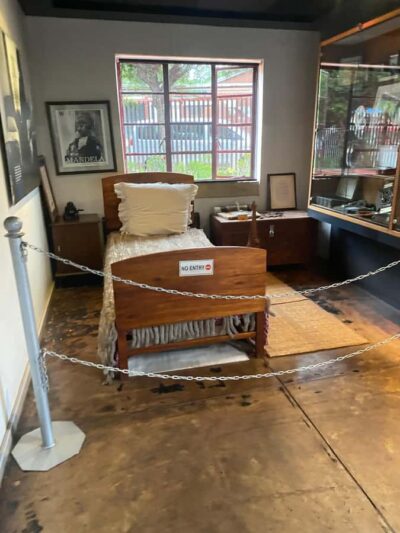
Full-Day Tour with Soweto and Apartheid Museum
Read our review →
Browse the lists this tour appears in