
Reviewed · SOWETO TOURS
Half Day Soweto and Apartheid Museum Guided Tour
Soweto and the Apartheid Museum tell South Africa’s story from two useful angles. The museum gives you the national picture, while Soweto brings that story into streets, homes, memorials, and working communities. The strongest part is the contrast between the museum’s careful exhibits and the township’s living culture.
I like the private format, which lets your guide adjust the pace and spend more time explaining places that catch your interest. I also like the chance to visit Mandela House and Vilakazi Street, then pass the Hector Pieterson Memorial area and other landmarks tied to the struggle against apartheid. The main consideration is time: five hours is enough for a strong introduction, but not enough for a leisurely exploration of every stop.
Key points at a glance
- Two hours inside the Apartheid Museum: This is the central historical experience, with film footage, photographs, text panels, and artifacts across 22 exhibition areas.
- Private transport and hotel pickup: Your group rides in an air-conditioned vehicle with bottled water, without sharing the vehicle with other groups.
- Mandela House and Vilakazi Street: You see the former home of Nelson Mandela and visit one of Soweto’s best-known streets, also associated with Archbishop Desmond Tutu.
- A guide-led view of Soweto: The route includes Diepkloof, Chris Hani Baragwanath Academic Hospital, FNB Stadium, the cooling towers, and other key places.
- Guides who add context: Past guides named Lucky, Abe, Nhlanhla, and Lekki have been praised for their explanations, communication, language skills, and attention to safety.
- A useful half-day choice: At $85.06 per person, the value improves for a small private group that wants transport, admission tickets, and a focused introduction in one outing.
Why this pairing works so well
The Apartheid Museum can feel heavy. It deals with forced separation, racial classification, political violence, protest, imprisonment, and the long fight for democracy. Soweto then gives you a physical setting for those events.
That sequence matters. You first see the broad machinery of apartheid inside the museum. Afterward, you move through Soweto, where those policies shaped housing, education, transport, work, and family life. The experience is not only about famous names. It is also about how political decisions affected ordinary households.
The tour is called a half-day experience, and the five-hour timing is realistic for an overview. You should expect a mixture of driving, short roadside explanations, a substantial museum visit, and a few guided stops. You are not signing up for a long walking tour through Soweto.
The private arrangement is especially useful here. A guide can explain what you are seeing without forcing your group into a fixed public schedule. It also removes the need to arrange separate transport between Johannesburg, the museum, and Soweto.
More Apartheid Museum Tours in Pretoria
- Johannesburg Full-Day Tour(Soweto/Jo-Burg & Apartheid Museum)
★ 5.0 · 110 reviews - Soweto and Apartheid Museum Guided Tour
★ 5.0 · 38 reviews - Soweto & Apartheid Museum Tour
★ 5.0 · 20 reviews
Starting in Johannesburg and passing through Houghton
Pickup is offered from your hotel or accommodation in Johannesburg. The day begins with a general introduction and a briefing about the route, which helps you understand how the city, its northern suburbs, the museum, and Soweto fit together.
One point needs attention when you book: the experience is listed in Pretoria, but the detailed route begins with pickup in Johannesburg and ends back in Johannesburg. Confirm your pickup area before paying, especially if you are staying in Pretoria or using the tour on the day of a flight.
The first notable area is Houghton Estate, one of Johannesburg’s affluent suburbs. Nelson Mandela lived here during his presidency and died at his Houghton home in December 2013. You do not receive a full house visit at this point, but the stop adds a personal detail to the national story.
Mandela is often presented through speeches, statues, and official sites. Seeing the neighborhood connected with his later life gives you a quieter detail: after years of prison, leadership, and public ceremony, he also had a home in an ordinary residential setting.
The stop lasts about 20 minutes and admission is free. Keep your expectations in check. This is a short orientation stop, not a detailed tour of Houghton.
Munro Drive and the northern city view
The route continues to Munro Drive, a national monument built by Italian prisoners of war during the Second World War. The road overlooks Johannesburg’s northern suburbs and the large man-made subtropical forest that spreads across this part of the city.
This is one of the tour’s brief scenic pauses. At roughly 10 minutes, you will not have time for a long walk or extended photography session, but it breaks up the historical material and gives you a sense of Johannesburg’s size.
I find this kind of stop useful because it prevents the day from becoming a string of indoor exhibits. You get a quick city view before turning toward the museum and Soweto.
Two hours inside the Apartheid Museum
The Apartheid Museum is the tour’s main anchor. You receive admission and have about two hours to explore the building, generally at your own pace until it is time to leave.
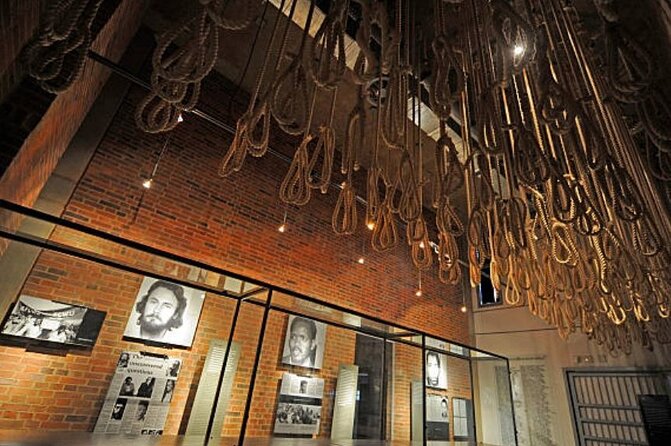
The museum presents the rise and fall of apartheid through 22 exhibition areas. Expect photographs, objects, written panels, and film footage. The material is direct and often disturbing, so allow yourself time to stop and read rather than racing from room to room.
At the entrance, the museum uses separate racial classification experiences to introduce the system of segregation. From there, the displays trace the laws and institutions that controlled where people lived, worked, studied, and traveled. The exhibits also show organized resistance, state repression, and the negotiations that led to democracy.
Two hours is a sensible amount of time for a first visit. You can see the main sequence and focus on the sections that matter most to you. If you read every panel in detail, you may wish for longer, but the fixed tour schedule means you need to watch the clock.
This is not a cheerful museum, and it should not be. Give yourself a few quiet minutes afterward. The tour description openly allows time to process what you have seen, and that is good advice. The museum’s purpose is not simply to give you facts. It asks you to consider how law, bureaucracy, propaganda, and force were used to deny basic rights.
The quality of the visit depends heavily on your guide’s timing and explanations. Lucky has been singled out for giving a clear account of apartheid and arranging a private museum tour. Abe has been praised for allowing enough time inside the museum and at the Hector Pieterson Memorial area. Nhlanhla has also led the route with an efficient style suited to groups with limited time.
More Soweto Tours in Pretoria
- Johannesburg and Soweto tour
★ 5.0 · 231 reviews - Soweto Half Day Tour
★ 5.0 · 231 reviews - Soweto & Apartheid Museum Guided Tour
★ 5.0 · 18 reviews - Soweto Tour with a Local Guide
★ 5.0 · 14 reviews
FNB Stadium and the changing face of Soweto
After the museum, the vehicle heads toward Soweto. You pass FNB Stadium, Africa’s largest football stadium, which hosted the opening ceremony, matches, and final of the 2010 FIFA World Cup.
You do not enter the stadium on this tour. The stop is a drive-by, usually lasting about 20 minutes, but it helps connect Soweto with modern South Africa. The stadium is both a sports landmark and a reminder of the country’s ability to present a united national image on the world stage.
Next comes Diepkloof Park, an area divided into several sections. Diepkloof Extension is known for larger, formally built homes owned by Black lower and upper-middle-class residents. The area has higher house prices than many other Soweto suburbs.
This part of the route is valuable because it pushes back against the idea that Soweto is one uniform place. You see a community with different income levels, housing types, and local identities. The stop is brief, so your guide’s explanation matters more than the amount of time spent outside the vehicle.
Chris Hani Baragwanath Academic Hospital
The vehicle passes Chris Hani Baragwanath Academic Hospital, a huge public hospital occupying about 173 acres, with roughly 3,200 beds and around 6,760 staff members. It is often described as the third-largest hospital in the world.
You mainly see the hospital from the road while your guide explains its size and role. This is not a hospital visit, and there is no admission activity listed. Still, it is a revealing stop because public institutions in Soweto reflect the scale of the community and the demands placed on it.
The visit lasts around 10 minutes. It is another example of how this tour uses short views and explanations to build a larger picture rather than treating Soweto as a set of photo stops.
The cooling towers and Soweto from above

Soweto’s two cooling towers are hard to miss. These former industrial structures are now used as an entertainment center, with a bungee jump and barbecue restaurant. The towers are about 100 meters tall and offer wide views over the township.
The schedule includes a chance to see the township from the top, but the exact amount of time for this part is not clearly stated. Ask your guide early in the day if going up the towers is important to you. The bungee jump is an optional attraction, not a required part of the tour.
Even from ground level, the towers carry a strong visual link to Soweto’s industrial past. From above, the view can help you understand the scale and variety of the township. Do not assume that this is a long activity session, though. The tour has several stops still to cover.
Vilakazi Street, food, and two Nobel laureates
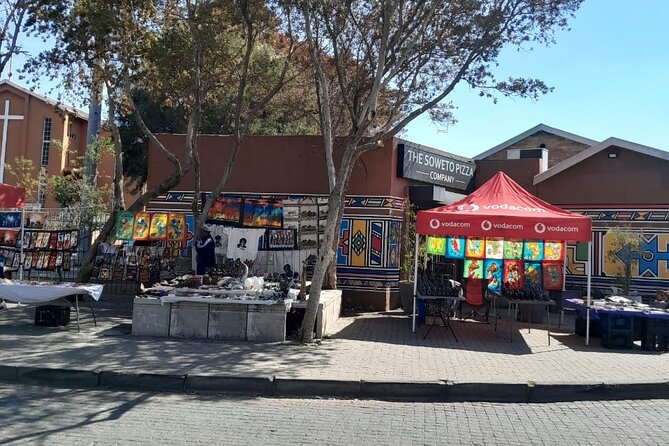
Vilakazi Street is the social and historical heart of the route. It is famous for having been home to Nelson Mandela and Archbishop Desmond Tutu, two Nobel Peace Prize recipients.
The street is more than a memorial corridor. It is also a working neighborhood with restaurants, shops, and residents. Sakhumzi Restaurant is near Mandela House and serves a Soweto-style buffet with traditional South African dishes such as umngqusho, made with samp and beans, and mogodu, or tripe.
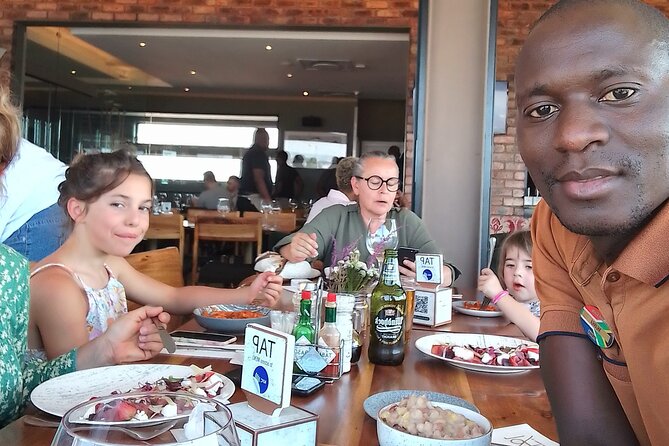
Lunch is not included, and the scheduled time here is about 30 minutes. That is enough for a quick look and perhaps a meal if the timing works, but not always enough for a relaxed restaurant visit. If you want to eat, check with your guide before ordering so you know how it fits the remaining schedule.
I like this stop because it adds ordinary social life to a day otherwise filled with painful political history. You can look around, take photographs, and consider how a street tied to national figures continues as a lived-in place.
Mandela House and the Hector Pieterson story
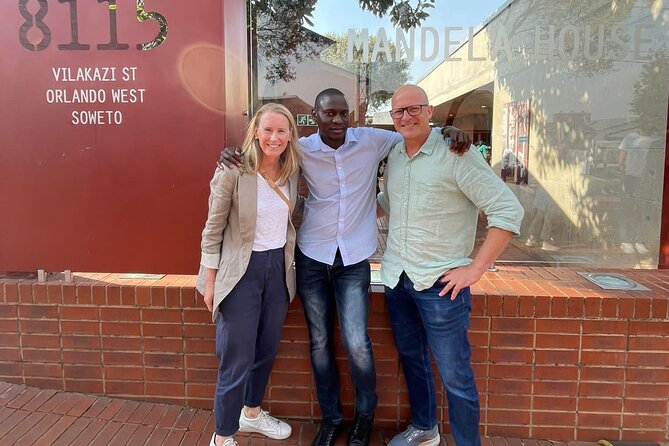
Mandela House is a major stop, with admission included and about 30 minutes set aside for the visit. A site guide gives a short introduction and leads you through the former home.
The house contains photographs, interpretive panels, sound, film, and objects linked to Mandela’s life. The scale is intimate. You are looking at a home rather than a grand presidential building, which makes the personal side of his story easier to grasp.
Thirty minutes is enough for a focused visit, but you will need to keep moving. You can take photographs inside and outside, but this is not a long museum session. The tour’s strength is that it gives you both Mandela House and the much larger Apartheid Museum in the same morning or afternoon.
The route also passes the Hector Pieterson Memorial area. The memorial is named for a 13-year-old boy killed during the 1976 Soweto student uprising. The guide explains the uprising as you drive past, but the itinerary does not list a full interior visit.
That distinction matters. If the Hector Pieterson Museum is a priority, ask before booking how much time the current schedule allows. The experience gives you the story and the location, but its main museum visit is the Apartheid Museum.
Guide quality and the private-tour difference
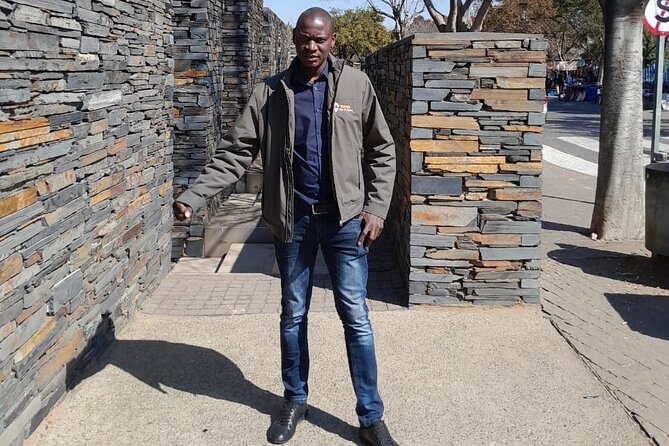
The guide can make or break this experience. The strongest reports describe Lucky, Abe, Nhlanhla, and Lekki as engaging, well informed, friendly, safety-conscious, and able to explain Johannesburg, Soweto, apartheid, and local culture in clear terms.
Lekki has also been praised for taking photographs, speaking several languages, and communicating well before the tour. Those details matter when you have only five hours and want the day to feel organized rather than hurried.
There is one serious warning in the feedback: one person received a driver who offered little explanation and made inappropriate jokes. The operator disputed whether that complaint belonged to its company, but the practical lesson is simple. Confirm that you are receiving a proper guided tour, not transport only, and make sure your booking communication clearly identifies the guide and company.
Because this is a private activity, only your group participates. That can mean a more flexible pace and fewer delays at hotel pickups. It can also mean a higher cost per person than a large shared bus, depending on your group size.
Is $85.06 per person fair value?
At $85.06 per person, the price is reasonable for a small group that wants private transport, an air-conditioned vehicle, bottled water, and admission to both the Apartheid Museum and Mandela House.
You are paying for a tightly arranged route rather than a single museum ticket. The tour links Johannesburg’s northern suburbs, the museum, FNB Stadium, several Soweto districts, the cooling towers, Vilakazi Street, Mandela House, and the Hector Pieterson area. Arranging that route independently would require transport planning and local knowledge.
The value drops if you want a slow museum visit, a full meal, or extended time at every Soweto landmark. Lunch, coffee, tea, and personal purchases are extra. The five-hour duration also includes driving, so the actual time on foot is limited.
I would consider it particularly useful for a first visit, a short stay in Johannesburg, or a departure day when you want a structured cultural outing before an evening flight. One group used the private format on a day with a 10 p.m. departure and appreciated avoiding the delays that can come with multiple hotel pickups.
Practical details before you book
Most bookings are made about 29 days ahead, so reserving in advance is sensible if your schedule is fixed. Confirmation is provided at booking, and most people can participate.
The tour offers pickup, but clarify the exact hotel area because the route begins and ends in Johannesburg even though Pretoria is shown as the location. Wear comfortable clothes and shoes for short walks and standing, though the experience is mainly vehicle based.
The schedule can be affected by Johannesburg traffic. A private tour gives you a better chance of discussing timing with the guide, but it cannot turn a five-hour tour into a full-day visit.
Free cancellation is available up to 24 hours before the start time for a full refund. Changes or cancellations made less than 24 hours before departure are not accepted for a refund.
Should you book the Soweto and Apartheid Museum tour?
Book it if you want a focused introduction to apartheid and Soweto without arranging several separate visits. The combination of two hours at the Apartheid Museum, Mandela House, Vilakazi Street, and a guided drive through important township areas gives you a strong foundation in half a day.
I would choose the private option for couples, families, or small groups who value direct explanations and a little control over the pace. Ask in advance about the exact pickup point, the guide assigned to your group, the cooling tower visit, and how much time is planned for the Hector Pieterson area.
Skip it if your main goal is a slow, detailed museum study or a full day in Soweto. For everyone else, especially those with limited time, the tour offers a serious, practical, and human introduction to Johannesburg’s most important historical story.
FAQ
How long does the tour last?
The tour lasts approximately five hours, including pickup, driving, museum visits, Soweto stops, and return transport.
Is hotel pickup available?
Yes. Pickup is offered, and the detailed route begins and ends in Johannesburg. If you are staying in Pretoria, confirm the pickup location before booking.
Is this a private tour?
Yes. Only your group participates in the activity, and private transportation is provided in an air-conditioned vehicle.
Which admissions are included?
Admission to the Apartheid Museum and Mandela House is included. The other listed stops are viewed without an admission charge.
Is lunch included?
No. Lunch, coffee, tea, and personal purchases are not included. Sakhumzi Restaurant on Vilakazi Street is mentioned as a nearby option.
What is the cancellation policy?
You can cancel up to 24 hours before the experience begins for a full refund. Cancellations or changes made less than 24 hours before the start time are not accepted for a refund.
More Museums in Pretoria
- Soweto and Apartheid Museum Tour
★ 4.5 · 7 reviews - Full-Day Guided Tour of Soweto, Johannesburg and Apartheid Museum
★ 5.0 · 5 reviews - Constitutional Hill,Johannesburg City and Apartheid Museum with Soweto Day Tour
★ 5.0 · 5 reviews - Apartheid Museum and Soweto Tour in Johannesburg
★ 5.0 · 5 reviews
Just added around Pretoria
- Soweto and Apartheid Museum Tour★ 4.5 · 7 reviews
- Full-Day Guided Tour of Soweto, Johannesburg and Apartheid Museum★ 5.0 · 5 reviews
- Full Day Safari from Johannesburg – Pilanesberg Nature Reserve★ 5.0 · 5 reviews
- Full-Day Pilanesberg National Park from Johannesburg and Pretoria★ 4.0 · 4 reviews
- Full-Day Cradle of Humankind Guided Tour from Johannesburg or Pretoria★ 4.5 · 6 reviews
- Cradle of Humankind Tour – Sterkfontein Caves with Maropeng Tour★ 4.5 · 39 reviews
- Soweto & Apartheid Museum, Cultural Village, Wildlife and Safari★ 5.0 · 3 reviews
- Elephant Sanctuary Tour from Johannesburg or Pretoria★ 5.0 · 14 reviews
Soweto Tours, compared.
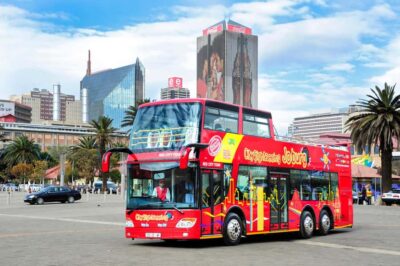

Soweto /Johannesburg and Apartheid Museum Guided Full Day Tour
Read our review →
Johannesburg Hop-On Hop-Off City Tour with Soweto Option
Read our review →
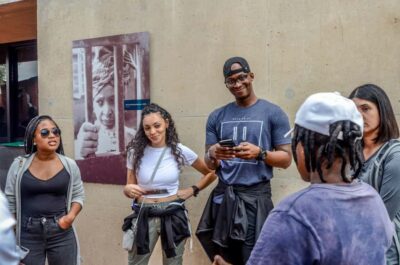
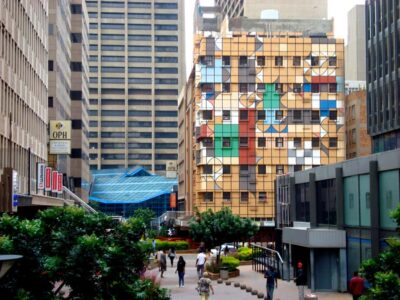
Jo’berg in 1 Day: Soweto, Apartheid Museum & City Tour
Read our review →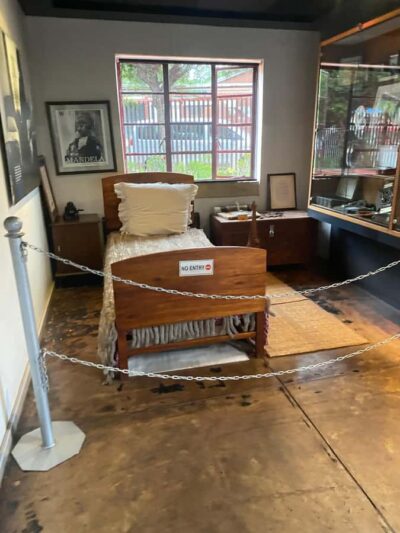
Full-Day Tour with Soweto and Apartheid Museum
Read our review →
Browse the lists this tour appears in