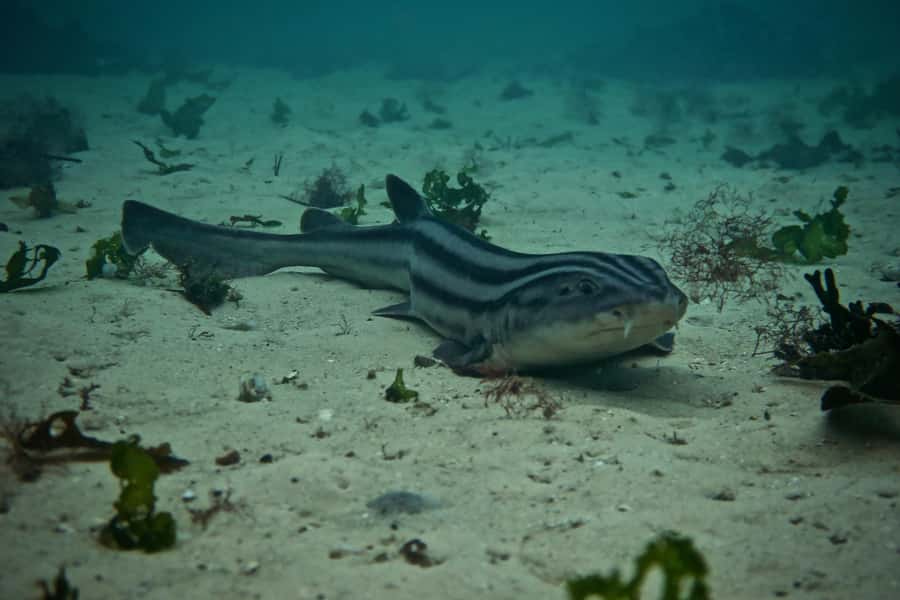
Reviewed · GUIDED
Cape Town: Great African Sea Forest Guided Snorkel
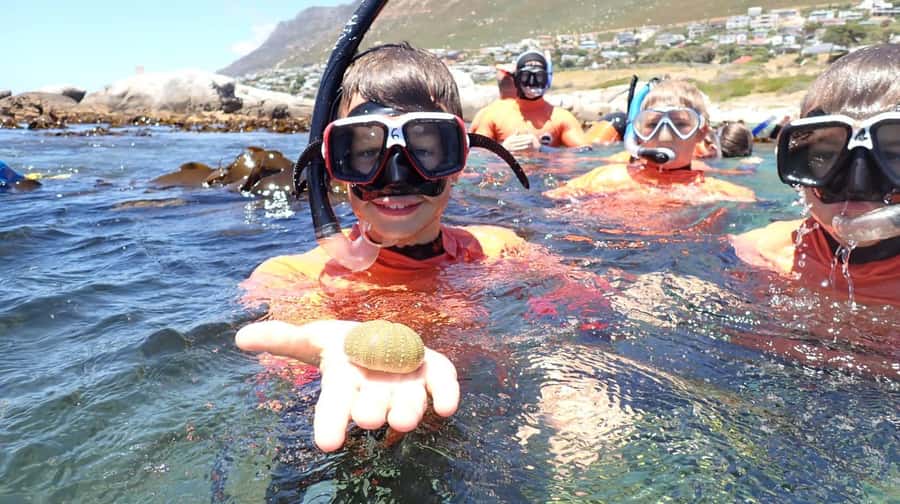
Cape Town’s Great African Sea Forest is not a coral reef with bright tropical fish. It is a cool-water world of swaying kelp, rocky hiding places, sea urchins, octopus, starfish, abalone, and small endemic sharks. With a marine biologist beside you, the snorkeling becomes a lesson in how this unusual underwater forest works.
I like two things especially: you can help with real shark photo-identification research, and the small groups, limited to eight people, make it easier for your guide to spot animals and keep an eye on you. The main consideration is the water itself. Surface snorkeling may show less than you expect, and seeing the best life can require you to be comfortable moving through kelp and looking below the surface.
Key points to know before you book
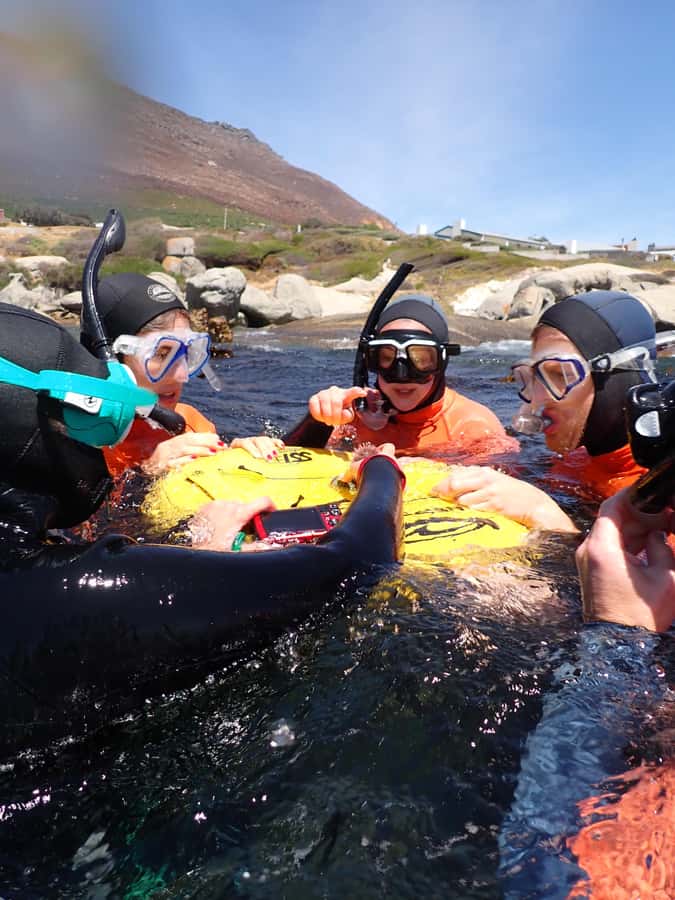
- Shark research is part of the outing: You help collect identification photos of a local shark species.
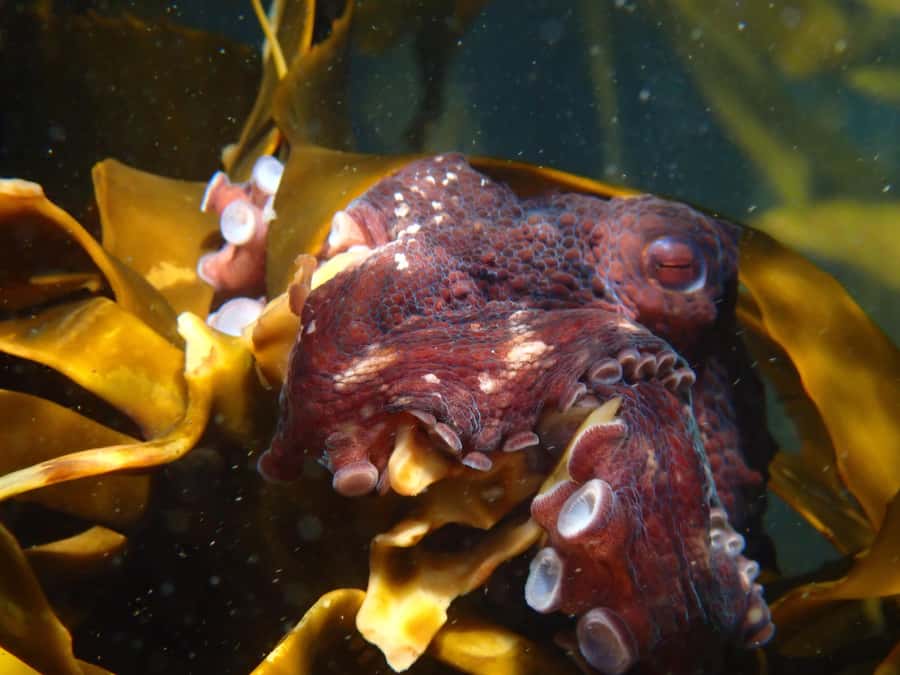
- The kelp forest is the star: Expect sea urchins, octopus, starfish, abalone, and shysharks rather than coral.
- Marine biologists lead the session: Guides including Mark, Danni, and Megan have been praised for clear explanations and careful supervision.
- You get photos afterward: Underwater pictures give you a useful souvenir, especially when the water is busy with kelp.
- Small groups matter: A maximum of eight participants allows for more personal help in the water.
- Two hours includes education and snorkeling: The briefing is a major part of the experience, not a quick formality.
Meeting the Sea Forest at False Bay
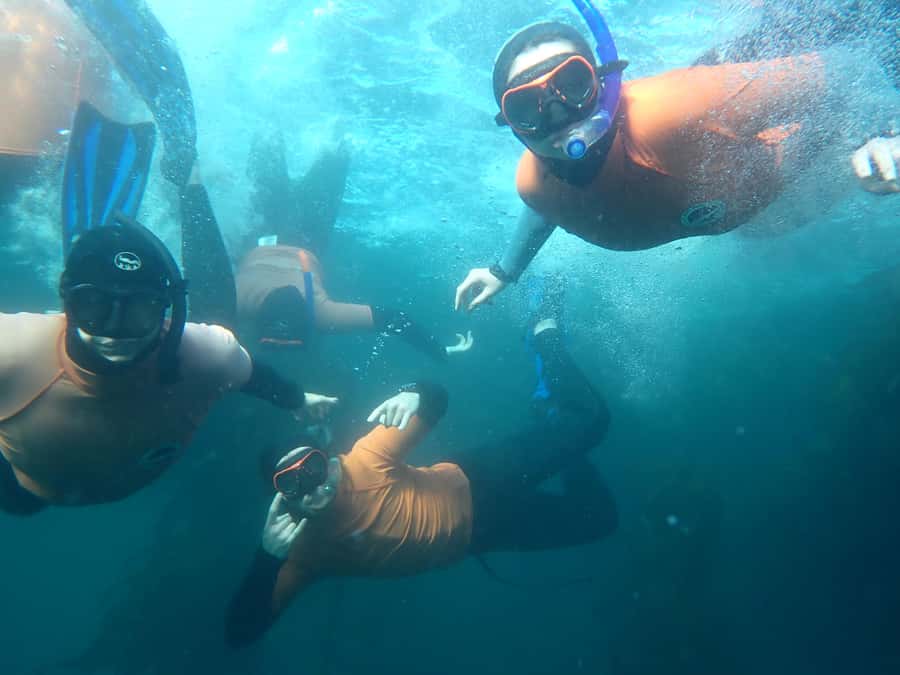
You meet inside the Cape RADD Dive Center on the shore of False Bay. This is a practical starting point because the center is directly connected with the marine work behind the activity, rather than treating the ocean as a simple backdrop for a swim.
Before entering the water, your marine biologist gives you an in-depth briefing about the area, the kelp ecosystem, safety, and the research task. This opening matters. Kelp can look like a wall of brown-green stems if you do not know what to look for. Once your guide explains where shysharks hide, how octopus hunt, and why sea urchins sometimes wear bits of shell or debris on their backs, the forest starts to make sense.
The briefing also helps set realistic expectations. This is not a tropical snorkeling trip. There is no coral reef, and the ocean can feel more demanding than calm water in Indonesia or the Caribbean. The kelp moves around you, visibility may vary, and staying on the surface may limit what you see on the seabed.
A few more Cape Town trips to weigh up
- Cape Town: Robben Island Ferry Ticket and Guided Prison Tour
★ 4.1 · 1,792 reviews - Cape Town: Table Mountain Hike with an Expert Guide
★ 4.9 · 666 reviews - Cape Town: Lion’s Head Sunrise or Sunset Guided Hike
★ 5.0 · 642 reviews
Getting fitted with a wetsuit and mask
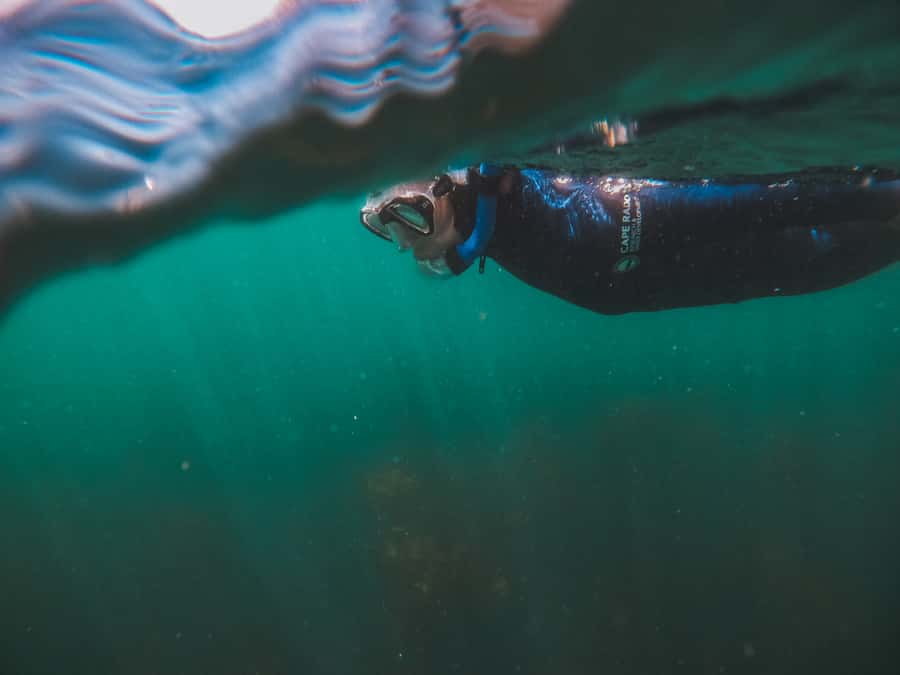
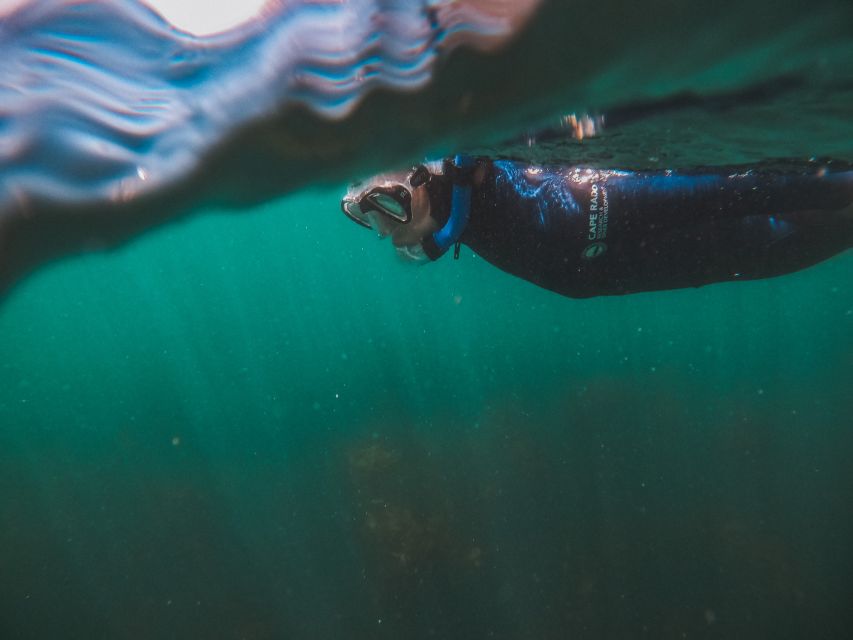
Cape RADD provides the main equipment: mask, snorkel, fins, and wetsuit. Bring your own swimwear and towel. The supplied equipment has earned strong praise, which is important in cold-water snorkeling, where a well-fitting wetsuit can make the difference between enjoying the session and counting the minutes until it ends.
You do not need a high level of fitness, but you do need to swim or feel comfortable in the water. The activity is not suitable for children under 10, pregnant women, people with mobility impairments, or anyone over 95. Those limits are worth reading carefully, especially because moving through kelp requires comfort rather than athletic ability.
The guides focus on helping you settle in. One visitor specifically described the safety measures as reassuring and said the session helped build confidence for later snorkeling independently in kelp. That is a useful clue about the tone of the outing: you are not simply sent into the water and left to work things out.
Following your guide into the kelp
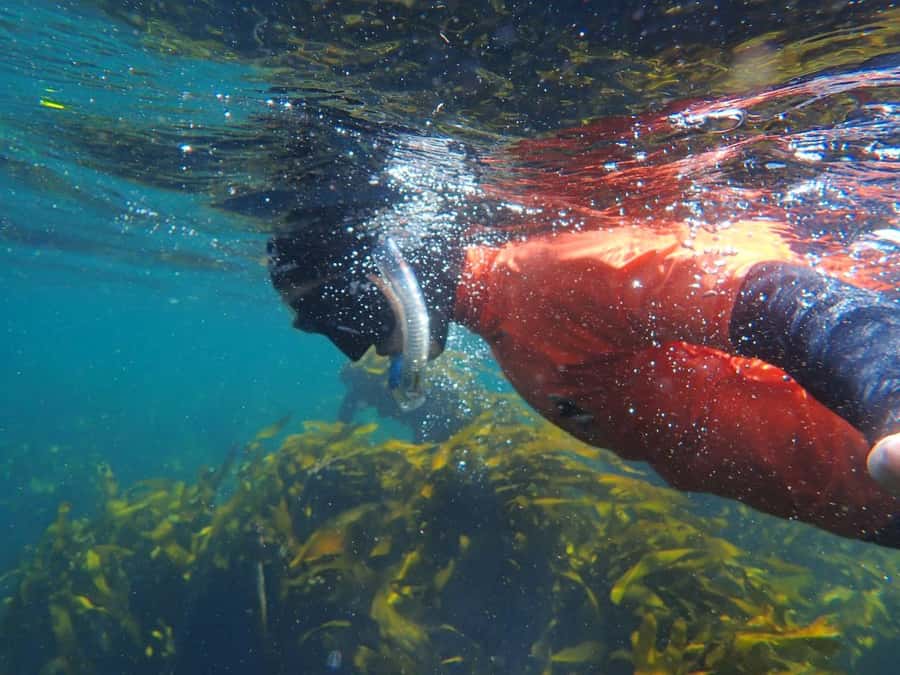
Once you enter the water, your guide leads the group through the Sea Forest at a pace suited to the conditions and the group. The kelp itself is the attraction. Tall strands sway overhead and around you, creating a three-dimensional habitat that feels very different from open-water snorkeling.
In shallower water, you get time to adjust to the temperature, fins, and movement of the kelp. This part can feel slow if you are eager to see larger animals, but it gives less confident swimmers a sensible start. One detailed account found the shallow section useful for settling in, then found the experience more exciting in water around five or six metres deep, where the kelp offered more to explore below the surface.
That deeper section is not automatically better for everyone. If you are not comfortable looking below the surface or holding your breath briefly, you may see less of the seabed. You should not feel pressured to descend. The guide’s job is to help you observe safely, and the forest still has plenty to offer from the surface.
The session takes place rain or shine, so pack with changing coastal weather in mind. The real variable is the ocean, not the sky. Conditions affect how comfortable you feel, how far the group can go, and which animals appear.
Looking for octopus, urchins, and shysharks
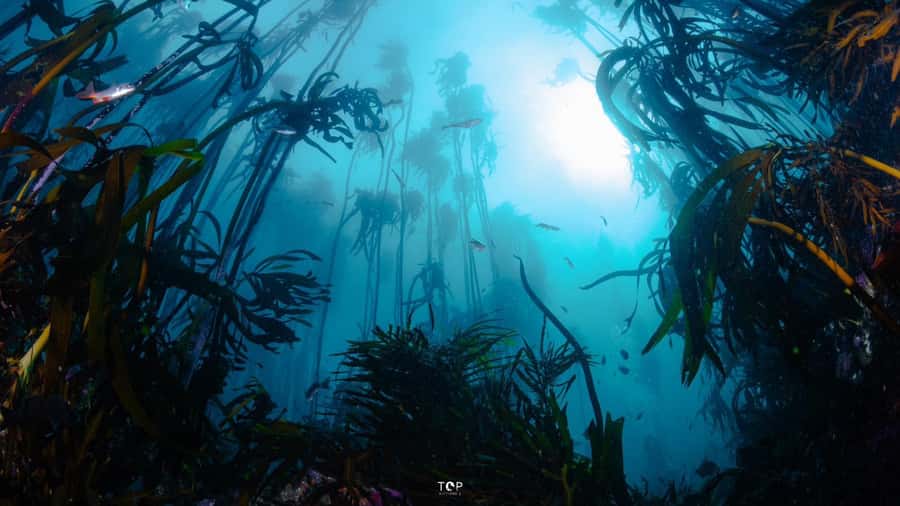
A good marine guide changes the way you see small animals. Instead of swimming past a patch of rock, you learn to look for the places a shyshark might rest. Instead of treating an urchin as a purple or black ball, you learn why it may carry a shell, leaf, or other object as cover.
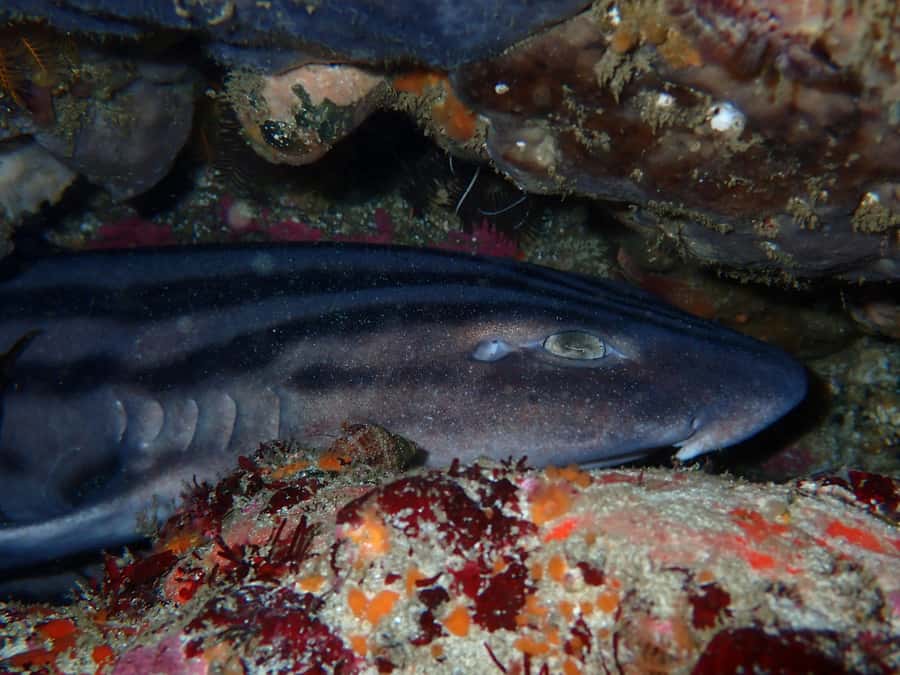
Octopus are one of the most rewarding finds. Your guide may point out how they hunt and where they tuck themselves into the reef or kelp. They are easy to miss without trained eyes, so the guide adds real value here. The same is true of shysharks, which are not large dramatic predators but are special to this part of the coast and central to the research project.
You might also see sea stars, colourful urchins, abalone, and other small creatures among the kelp. The experience rewards patience more than speed. If you arrive expecting a constant parade of large animals, you may find the pace quiet. If you enjoy noticing small details and learning how an ecosystem fits together, the forest is full of interest.
Sharks are not guaranteed. Some sessions have produced sightings of several small sharks, while another outing found plenty of marine life but no sharks. That is normal for wildlife work. The research element improves the purpose of the search, but it cannot promise a particular animal on a particular morning.
Same country, a completely different kind of day:
- Wine Tour: Paarl, Franschhoek & Stellenbosch incl 3 wineries
★ 5.0 · 3,940 reviews - Cape Town: Hop-On Hop-Off Bus Tour with Optional Cruise
★ 4.8 · 3,929 reviews - Cape Town: Cape of Good Hope & Penguins Day Tour with Pickup
★ 4.7 · 3,362 reviews - Zipline Cape Town – From Foot of Table Mountain Reserve
★ 5.0 · 3,179 reviews
Helping with shark photo-identification
The most unusual part of the activity is your role in shark research. When the group finds the local endemic shark species, you help locate it and collect photographs that can be used for identification.
This is not a staged encounter and not a promise that you will handle an animal. Your contribution is observation and photography, guided by the marine biology team. Individual sharks can be recognized by their markings, so a clear image may add to the team’s records and help with ongoing conservation work.
That gives the snorkeling a practical edge. You are not only learning names for the creatures around you. You are helping gather information about a species in its own habitat. At the end, you are honored as an Ocean Ambassador, and you receive access to the FinSpotter app so you can keep up with your shark sightings.
The app is a nice touch for anyone who wants the experience to continue after leaving Cape Town. It also makes the research feel less abstract. You can connect the animal you saw with an ongoing record rather than treating the encounter as a one-off photograph.
Why the marine biology briefing matters
The strongest part of this outing is the quality of the explanation. Guides such as Mark, Danni, Megan, and others have been singled out for their warmth, patience, and command of the local ecosystem. Mark, nicknamed Mark the Shark, has led a clear introductory presentation and taken particular care of people in the water. Danni has been praised for explaining the area in a way that made the snorkeling more rewarding, while Megan has been described as an excellent guide who also helped provide underwater photos.
The education continues after the water session. That matters because cold-water snorkeling can be a quick blur of kelp and fins if nobody explains what you saw. The pre- and post-water discussions give the animals a context: why the kelp forest matters, how marine preservation works in the area, and what the shark research is trying to achieve.
I like that the conservation message is tied to a specific task. You are not just hearing that the ocean needs help. You are taking part in photo identification and learning how records can support research.
Photos that capture more than a souvenir
Underwater photographs are included in the price. This is a useful benefit because taking good pictures while managing a mask, snorkel, fins, and moving kelp is not easy.
The photos can also show details you missed in the moment. A shark or octopus may appear briefly, and a picture gives you time to look again later. Some pictures have been described as unusually atmospheric, with the kelp creating a film-like setting around the animals.
Do not treat the photos as the main reason to book. Their quality and number can vary with visibility, animal movement, and the day’s conditions. Still, having images included adds value to a two-hour activity and saves you from trying to bring or manage your own underwater camera.
Two hours, eight people, and a $74 price
At $74 per person, the experience is not the cheapest way to get into the water in Cape Town. It is also not simply a rental of snorkeling equipment. The price includes a marine biologist, a full equipment set, the area briefing, research participation, and photos.
That package makes the cost easier to justify if you want interpretation and conservation involvement. A self-guided swim may give you more freedom, but you would lose the trained eye that finds shysharks and octopus, the structured safety support, and the explanation of what the kelp is doing.
The two-hour duration is enough for a focused introduction, but do not expect a half-day expedition. One person would have preferred about 15 more minutes in the water, while also noting that colder conditions might have made a longer session less appealing. This is a fair point. Wetsuits help, but ocean temperature still affects comfort.
The group limit of eight is a major advantage. In a larger group, it would be harder for a guide to point out a camouflaged animal or monitor different comfort levels. Here, you have a better chance of getting a clear explanation and personal assistance.
Small practical details that affect the day
The activity runs rain or shine, so bring a towel and swimwear and expect the weather to be only part of the equation. You should be comfortable with the possibility that the ocean, rather than the forecast, determines how much you see.
One note concerns the shore access. A ride in the back of a truck may be included as part of getting to the water, and one person found the black surface uncomfortable when it became hot and participants were barefoot. It is a small point, but sandals or shoes for the approach may be useful if the staff permits them. The supplied information specifically asks you to bring swimwear and a towel, so keep your packing simple.
The activity is conducted in English. You can cancel up to 24 hours before the start for a full refund, and you can reserve now and pay later. Those policies are useful if your Cape Town schedule depends on weather or other coastal plans.
Who will enjoy this most
I would choose this outing if you like wildlife, science, and a guide who can turn a short swim into a lesson. It is especially suitable for first-time cold-water snorkelers who want help getting comfortable, as well as experienced snorkelers who are curious about Cape Town’s unusual kelp habitat.
It also suits people who care about responsible wildlife encounters. The shark work is observational, and your role supports identification rather than chasing or handling animals. That gives the encounter a more respectful purpose.
You may want to reconsider if you expect tropical reef colors, guaranteed sharks, or a long session in deep water. Surface snorkeling may feel limited, and the kelp can make movement less straightforward than in open water. You should also be honest about your comfort level. No high fitness level is required, but swimming confidence is.
Should you book the Great African Sea Forest Snorkel?
Yes, if you want Cape Town snorkeling with substance. The best reasons to book are the small group, the marine biologist guide, the chance to help with shark research, and the included photos. The animal sightings can never be promised, but the learning and the kelp forest itself remain worthwhile even on a shark-free session.
I would not book it as a substitute for a tropical coral reef trip. I would book it because False Bay offers something different: a cool, moving forest where an expert helps you notice the animals hiding in plain sight. At $74, it is good value for a guided conservation experience, provided you accept the conditions and see the price as paying for expertise, equipment, research support, and a carefully managed introduction to the sea.
FAQ
Where does the snorkel tour meet?
You meet inside the Cape RADD Dive Center on the shore of False Bay in the Western Cape, South Africa.
How long does the activity last?
The guided snorkeling experience lasts two hours.
What equipment is included?
Cape RADD provides a mask, snorkel, fins, and wetsuit. Photos and an in-depth briefing from a marine biologist are also included.
Do I need to be an experienced swimmer?
You do not need a high fitness level, but you must be able to swim or feel comfortable in the water. The guide provides support and safety guidance during the session.
Are sharks guaranteed?
No. The outing includes a search for an endemic shark species and supports photo-identification research, but sightings depend on conditions and animal behavior.
What should I bring?
Bring swimwear and a towel. The activity runs rain or shine.
Just added around Cape Town
- Lion’s Head Hike: Cape Town – Sunrise or Sunset Hike★ 5.0 · 29 reviews
- Lion’s Head Sunrise or Sunset Hike + Hotel Pick-Up★ 5.0 · 24 reviews
- Lion’s Head: Hike with a registered hiking guide★ 5.0 · 3 reviews
- Kruger National Park 3 Days Best Ever Safari from Cape Town★ 4.1 · 11 reviews
- Koeksister and Samoosa Class by the Malay Cook Up★ 4.8 · 9 reviews
- Kirstenbosch Garden, Bo-Kaap-Penguins & Cape Peninsula Tour★ 3.9 · 7 reviews
- Khayelitsha: 3-Hour Township Walking Tour★ 5.0 · 6 reviews
- Cape Town: Constantia Half-Day Wine Tour & Tastings★ 4.9 · 15 reviews
Guided, compared.
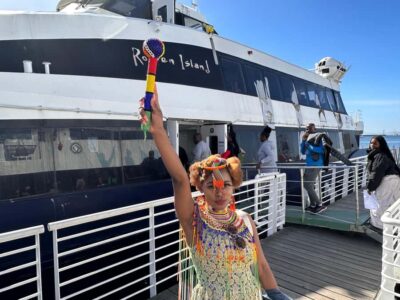
Robben Island Ferry Ticket and Guided Prison Tour
Read our review →
Soweto /Johannesburg and Apartheid Museum Guided Full Day Tour
Read our review →