Reviewed · JOHANNESBURG TOURS
Ann van Dyk Cheetah Centre
The Ann van Dyk Cheetah Centre offers something more useful than a quick animal photo stop: a close look at the work involved in protecting cheetahs and African wild dogs. From Johannesburg or Pretoria, a guide takes care of the long drive, then explains the center’s conservation, breeding, research, and education work.
I like two things here. First, the visit has a clear purpose, so you learn why these animals are endangered instead of simply looking at them behind a fence. Second, the small group limit of 12 people and included pickup make this an easy half-day outing, especially if you do not have a car.
The main caution is timing. The advertised experience lasts about four to five hours, but the animal viewing itself may be much shorter, and sightings can vary. You may see several cheetahs up close, or only a few during the center visit.
Key points to know before booking
- Cheetah and wild dog conservation: Learn about efforts to protect two endangered African species and support research into their survival.
- Pickup from Johannesburg or Pretoria: Transport is included from hotels in either city in an air-conditioned vehicle.
- Small-group format: The tour accepts a maximum of 12 people, which should allow more room for questions and a calmer outing.
- Guides can shape the day: Guides such as Ali, Steve, Samuel, Benale, Steven, Mo, and Richard have been praised for local insight and animal knowledge.
- A bush-like setting: The center gives you a more natural-feeling setting than a standard city zoo, with cheetahs and wild dogs as the main draw.
- Plan for a variable visit: The full duration includes driving and the guided outing, not necessarily four hours of animal viewing.
Why this center matters beyond the photographs
Cheetahs are famous for speed, but speed alone does not protect them. Their survival depends on habitat, breeding programs, research, education, and public support. The Ann van Dyk Cheetah Centre was created to help preserve cheetahs and African wild dogs, support scientific investigations, and explain conservation to the public.
That mission gives the visit some weight. You are not just being shown an attractive animal. You are being introduced to the problems that make these species vulnerable and to the work aimed at keeping them alive.
The center also focuses on education and public awareness. That matters because conservation is easier to understand when you are standing near the animals themselves. You can connect the quiet, alert cheetah in front of you with the larger question of how wild populations survive.
I also appreciate the center’s reported refusal to sell animals to private buyers. That policy fits the conservation purpose and offers a useful distinction between a facility focused on wildlife protection and one built mainly around animal entertainment.
Other Johannesburg days people book alongside this one:
- From Johannesburg: Pilanesberg Nature Reserve Game Safari
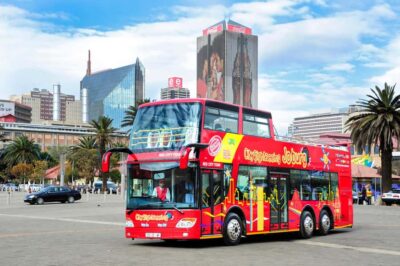
★ 4.8 · 1,327 reviews - Johannesburg: Hop-On Hop-Off Bus with Optional Soweto Tour
★ 4.6 · 985 reviews - Soweto /Johannesburg and Apartheid Museum Guided Full Day Tour
★ 5.0 · 932 reviews
From Johannesburg or Pretoria to Brits
The Ann van Dyk Cheetah Centre is in Brits, outside Johannesburg. Pickup and drop-off are offered from hotels around Johannesburg or Pretoria, so you do not need to arrange a rental car or work out the route yourself.
This is one of the tour’s strongest practical features. The drive is part of the day, and an air-conditioned vehicle makes the trip more comfortable. Guides also add value before you reach the center. Ali, Steve, Benale, Steven, and Richard were each singled out for useful conversation, local knowledge, or a friendly manner. Richard, for example, was praised for sharing information about South African cities and townships as well as the animals.
The exact pickup time is not provided in the tour details, so you should confirm it when booking. Hotel pickup is convenient, but it can also make the morning longer if several people are collected at different addresses.
The maximum group size is 12. That is not a private tour, but it is small enough to feel more personal than a large coach excursion. A small group also makes it easier to hear the guide and ask questions during the drive.
What the four to five hours really includes
The stated duration is about four to five hours. Think of that as the full experience, including transport from Johannesburg or Pretoria, the visit at the center, and the return drive.
The center itself may occupy a much shorter part of the day than the total advertised time. One disappointing account described an outing of less than an hour at the animal facility, while other accounts describe around two hours on a truck tour and a much fuller half-day experience.
That difference is important when you set expectations. The tour is not a guaranteed four-hour animal encounter. It is a guided half-day trip whose length depends on the transport schedule and how the visit is operated that day.
I would ask for the planned time at the center before departure, especially if you are booking around another activity. This is also a good reason to choose the tour for its conservation education and convenience, not only for the number of cheetahs you hope to see.
Arriving at the Ann van Dyk Cheetah Centre
The center is designed to give you a view of endangered animals while explaining the work behind their protection. The setting can feel more like the bush than a city zoo, which helps the visit feel connected to South Africa’s wider wildlife story.
Cheetahs are the star attraction, but African wild dogs are just as important to the center’s mission. You may also encounter other animals and birds during the visit, although the details of those sightings are not fixed.
The center’s focus is conservation rather than spectacle. That means the experience may feel plain compared with a polished theme-park attraction. One person described it as educational but not glitzy, which is a fair way to frame the trade-off.
For me, that is mostly a positive. The value lies in seeing animals in a setting built around protection and learning. Still, if you expect a tightly staged show with constant animal action, you may find the pace quiet.
Same country, a completely different kind of day:
- Johannesburg Hop-On Hop-Off City Tour with Soweto Option
★ 4.5 · 768 reviews - Full Day Ultimate Pilanesberg National Park Safari from Johannesburg or Pretoria
★ 4.5 · 718 reviews - Half-Day Tour of Soweto Tour
★ 4.5 · 712 reviews - Soweto: Walking Tour with a Local Guide and Lunch
★ 4.9 · 648 reviews
Seeing cheetahs at close range
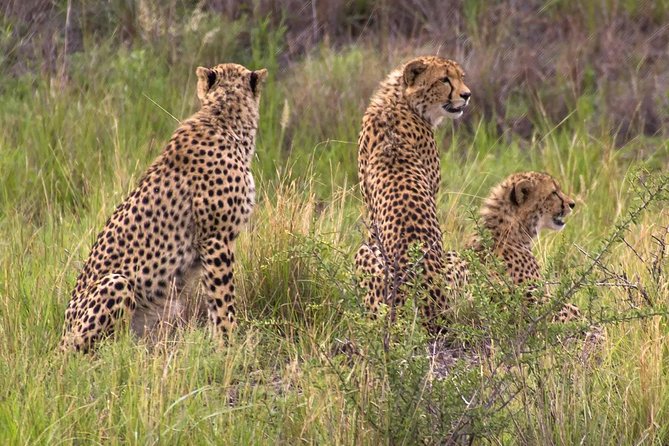
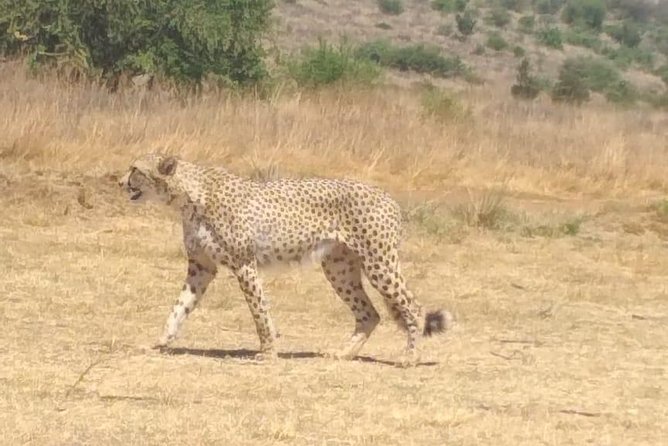
The most memorable part is the possibility of seeing cheetahs near the vehicle or viewing area. One account described around 10 cheetahs appearing very close, while another saw only four despite the center’s much larger overall population.
This variation is normal for an animal facility that has to manage where animals are, how they are cared for, and what can be shown at a given time. You should not measure the visit only by the number of cheetahs visible.
You may also hear the cats make soft sounds rather than the roar associated with lions. That detail can make the encounter feel surprisingly intimate. A king cheetah, a rare coat pattern, may also be visible, but there is no guarantee you will see one.
The chance to watch a cheetah run adds another possible highlight. It is a useful reminder that these animals are built for short bursts of speed, not for constant movement. Bring patience. The best moments may come when the animals are still, alert, and close enough for you to study their behavior.
Learning about research, breeding, and returning animals to the wild
Your guide should explain the center’s scientific and conservation work throughout the visit. The stated aims include research into endangered species, public education, and efforts to preserve both cheetahs and wild dogs.
The center is also associated with work to improve the chance of cheetahs and African wild dogs avoiding extinction. Information from the visit indicates that some of the broader goal involves returning animals to the wild. That makes the center more than a holding facility, though you should not assume that every animal you see is destined for release.
The quality of explanation depends partly on your guide. Samuel was praised for making the outing fun while explaining the animals. Steve was valued for history and local insight. The different comments point to a real benefit of booking with a guide rather than visiting independently: you get context during the drive and someone who can answer questions as you go.
Ask about the center’s research, how it supports wild populations, and how it decides which animals can take part in conservation programs. Those questions will make the visit more useful than simply waiting for a close photograph.
A closer look at the guided truck experience
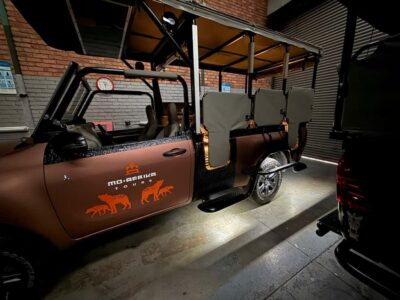
A truck tour may form part of the center visit. One account described two excellent hours on a truck, with cheetahs close to the vehicle. The elevated seating and open view can give you a better angle than a standard walkway, though the exact format and timing can vary.
The truck ride is also where patience pays off. Animals may be spread out, resting, or out of sight. You might see only a few cats during one circuit, then find that those few remain in view long enough for a proper look.
The guide and assistant can make a difference here. George was specifically praised for interacting with the animals, while Mo received strong marks for a respectful approach. The word respectful matters. Good wildlife experiences allow animals to behave like animals rather than forcing a performance.
You should follow all instructions about noise, movement, and distance. The purpose is not to provoke a reaction. It is to watch the animals with as little disturbance as possible.
What is included, and what you should bring
The tour includes:
- Pickup and drop-off from hotels around Johannesburg or Pretoria
- An air-conditioned vehicle
- A qualified guide throughout the trip
- Snacks
- Bottled water
Breakfast, lunch, alcohol, and soft drinks are not included. The provided snacks and water should cover a basic need, but they are not a full meal. If you are likely to be hungry during a half-day trip, eat breakfast before pickup and ask whether you may bring extra food.
Comfortable clothing and practical shoes make sense, since the day involves transport and time at an animal center. A camera with a useful zoom can help, as animal positions are not guaranteed. Do not count on every cheetah being right beside the vehicle.
Confirmation is received at the time of booking. Most people can participate, and the group is capped at 12. The supplied information does not give detailed accessibility notes, so you should ask the operator about vehicle access or mobility needs before paying.
Is $96.11 a fair price?
At $96.11 per person, this is not the cheapest way to see animals near Johannesburg. The cost covers more than admission: you are paying for hotel pickup and return, an air-conditioned vehicle, a guide, snacks, bottled water, and the convenience of a planned half-day trip from two major cities.
For a solo visitor, the value can be strong. One person particularly appreciated the comfortable drive and feeling safe while exploring alone. Hiring a car, navigating unfamiliar roads, and arranging the center independently may not save much once fuel and time are counted.
For two or more people, compare the total against a private vehicle or a simpler self-drive visit. The tour earns its price when you want the guide, transport, and conservation explanation. It feels less convincing if your only goal is a long animal-viewing session and the center visit happens to be brief.
Group discounts are offered, though no discount amount is provided. Ask about the final price for your party before booking.
How this compares with a standard zoo visit
The center may feel less polished than a city zoo, but that is part of its appeal. Its work is aimed at endangered species, research, education, and conservation awareness. The setting can feel more open and bush-like, and the focus stays on cheetahs and wild dogs.
The trade-off is less certainty. A zoo usually gives you a predictable route and a good chance of seeing several species. At this center, animal visibility and the length of the active viewing period may vary.
I would choose this outing if you want your animal visit to have a conservation purpose and you are comfortable with a quieter, less staged format. I would choose a conventional zoo if you want a large range of species, fixed viewing areas, and a full day of exhibits.
Who should book this experience?
This outing suits animal lovers, first-time visitors to Johannesburg, solo visitors who prefer organized transport, and anyone interested in conservation. Families may also find the cheetahs memorable, though the educational focus and possible quiet periods mean it is not designed as a nonstop entertainment show.
It is a good fit if you are staying in Johannesburg or Pretoria and want a half-day activity outside the city. It also works well when you want a guide who can add local context before and after the animal visit.
You may want to reconsider if you need a tightly timed four-hour program, expect guaranteed sightings of a large number of cheetahs, or want lunch included. The tour’s strengths are purpose, transport, and guidance, not guaranteed animal activity.
Booking, cancellation, and final advice
You can cancel for a full refund up to 24 hours before the experience begins. Cancellations or changes made within 24 hours are not accepted for a refund, and the cut-off uses local time.
I would book this tour if you value conservation, want a guide, and prefer not to drive from Johannesburg or Pretoria. The strongest parts are the center’s clear mission, the chance to see cheetahs and wild dogs in a bush-like setting, and the practical pickup service.
I would book with realistic expectations about timing. Ask how long you will spend inside the center, treat the animal count as unpredictable, and have breakfast before pickup. With those points in mind, the Ann van Dyk Cheetah Centre is a worthwhile half-day choice for an animal-focused visit that aims to teach as much as it shows.
FAQ
Where is the Ann van Dyk Cheetah Centre?
The center is in Brits, South Africa, outside Johannesburg.
Does the tour include pickup?
Yes. Pickup and drop-off are offered from hotels around Johannesburg or Pretoria.
How long does the experience last?
The stated duration is approximately four to five hours, including transport and the center visit.
What animals will I learn about?
The tour focuses on cheetahs and African wild dogs, with conservation and research as major themes.
Is a guide included?
Yes. A qualified guide accompanies you throughout the trip.
How many people can join the tour?
The maximum group size is 12 people.
Is transportation included?
Yes. Transport is provided in an air-conditioned vehicle.
Are snacks and drinks provided?
Snacks and bottled water are included.
Is lunch included?
No. Breakfast, lunch, alcohol, and soft drinks are not included.
Can I cancel for a full refund?
Yes. You can receive a full refund if you cancel at least 24 hours before the experience start time. Cancellations within 24 hours are not refundable.
Just added around Johannesburg
- Private Soweto Tour 5 hours approximately from Johannesburg or Pretoria.★ 4.5 · 9 reviews
- bicycle tour soweto★ 4.5 · 20 reviews
- Taste of Africa★ 5.0 · 9 reviews
- Two day Kruger National Park Safari from Johannesburg★ 5.0 · 19 reviews
- Airport & Private Shuttle and Transfer Services in Johannesburg★ 5.0 · 9 reviews
- Sun City Day Tour From Johannesburg★ 4.5 · 6 reviews
- Pilanesberg National Park Safari, BIG 5 Full Day★ 5.0 · 4 reviews
- Full-day Johannesburg Bike Or Walking tour – With Transport★ 5.0 · 10 reviews
Johannesburg Tours, compared.
Soweto /Johannesburg and Apartheid Museum Guided Full Day Tour
Read our review →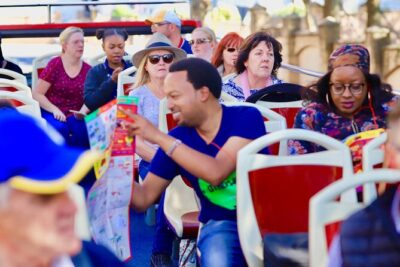
Johannesburg Hop-On Hop-Off City Tour with Soweto Option
Read our review →
Jo’berg in 1 Day: Soweto, Apartheid Museum & City Tour
Read our review →