
Reviewed · SOWETO TOURS
Johannesburg and Soweto tour
Johannesburg and Soweto make the most sense when you see their stories side by side. This private five-hour tour links Constitution Hill, Mandela’s former home, Hector Pieterson Memorial, informal settlements, and the Orlando Towers, giving you a brisk but meaningful introduction to the city.
I like the private vehicle, which means you are not waiting for strangers or following a fixed group pace. I also like the mix of serious history and everyday city life, from the Constitutional Court and Chancellors House to Maboneng and the streets of Soweto.
The main drawback is time. Five hours is enough for highlights, not a slow, museum-by-museum visit. The subject matter can also be painful, especially at the prison sites and in Soweto, so this is a thoughtful history tour rather than a light sightseeing ride.
Key points to know
- Private sightseeing: Only your own group takes part, with no delays for other passengers.
- Wide-ranging route: Cover Johannesburg, Soweto, apartheid-era landmarks, Mandela sites, Maboneng, and Orlando Towers in one half-day.
- Strong guide focus: Guides such as KG, Lindela, Pastor, and Sello are praised for clear explanations and friendly service.
- Useful extras: Air-conditioning, bottled water, Wi-Fi, and taxes are included.
- Mandela House admission: The entrance fee to Mandela House is included in the price.
- Good for limited time: At $77.64 per person, the tour can be good value if you want a private overview rather than several separate excursions.
Seeing Johannesburg and Soweto in one carefully packed morning
This tour is built for a first look at Johannesburg and Soweto, especially if you have only half a day available. It does not treat the two places as separate worlds. Instead, it connects courtrooms, prisons, family homes, memorials, townships, and modern city districts into one broad story.
You travel in an air-conditioned vehicle with a private driver for your group. Wi-Fi is provided, and bottled water is included, which matters in a warm city when the schedule keeps moving. Pickup is offered, and confirmation arrives when you book.
The route is ambitious. You may spend more time listening and looking from the vehicle than walking through every stop. That is not a flaw if your aim is to get your bearings fast. If you want long museum visits or extended time at each memorial, you will need a slower, more focused tour.
More Soweto Tours in Pretoria
- Soweto Half Day Tour
★ 5.0 · 231 reviews - Johannesburg Full-Day Tour(Soweto/Jo-Burg & Apartheid Museum)
★ 5.0 · 110 reviews - Soweto and Apartheid Museum Guided Tour
★ 5.0 · 38 reviews
Constitution Hill brings the past into sharp focus
Constitution Hill is likely to be the most sobering stop. The site connects South Africa’s former prison system with its modern constitutional democracy, and the Constitutional Court gives the visit a forward-looking counterpoint.
I would give this stop your full attention. The buildings and court complex are not simply photo opportunities. They help explain how law, imprisonment, protest, and political change shaped Johannesburg and South Africa.
The visit can be emotionally heavy. One four-star assessment described the prison and Soweto history as difficult to confront, and that is fair warning. You will hear about harsh prison conditions and the lives of people held there, including figures connected with the struggle against apartheid and Mahatma Gandhi’s time in South Africa.
Your guide’s explanation makes a real difference here. Lindela, Pastor, KG, and Sello have all been praised for making complicated events understandable without rushing through them. Still, the exact guide can vary, so book this tour because of the route and format, not because you are guaranteed one particular person.
Chancellors House connects Mandela with legal action
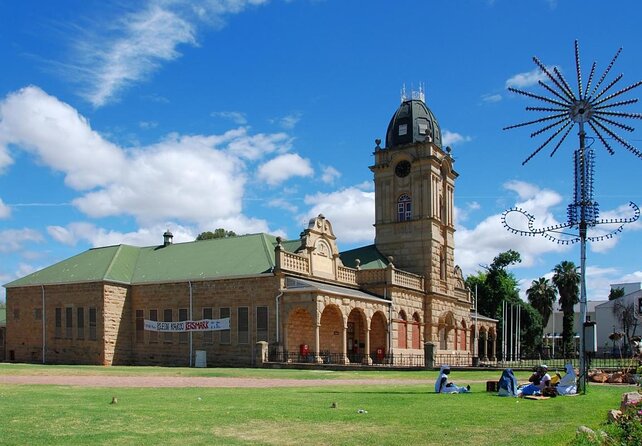
Chancellors House adds a more personal and professional chapter to the story. It is associated with Nelson Mandela and Oliver Tambo, who worked there as attorneys.
This stop helps you see Mandela not only as a political icon, but also as a working lawyer dealing with the daily pressures faced by Black South Africans under apartheid. That practical angle is valuable. You move from prisons and courts to the place where legal work was carried out.
The tour does not appear to offer a long stay at every location, so expect your guide to provide much of the context. Ask questions if this part interests you. A private tour gives you a better chance to shape the conversation than a large coach trip.
Maboneng shows a different side of Johannesburg
Maboneng Precinct changes the mood. After the weight of Constitution Hill and Chancellors House, you see a Johannesburg district associated with creative projects, restaurants, shops, and urban renewal.
It is useful here to keep your expectations measured. The tour gives you a taste of Maboneng rather than a full day to browse, eat, and explore independently. Lunch is not included, and the schedule is too tight to assume a long meal stop.
I like the contrast. Johannesburg is not presented only through its political past or social problems. Maboneng shows a more recent attempt to reshape part of the inner city. You may find this stop especially useful if you want to compare central Johannesburg with Soweto instead of treating the city as one single experience.
Same country, a completely different kind of day:
- Ultimate Johannesburg Tour
★ 5.0 · 200 reviews - Johannesburg: Pretoria and Cullinan Diamond Mine Tour
★ 4.7 · 165 reviews - Taste of Africa Food tasting Experience
★ 4.5 · 138 reviews - Harties Cableway Experience Ticket
★ 4.5 · 119 reviews
Mandela House makes Soweto personal
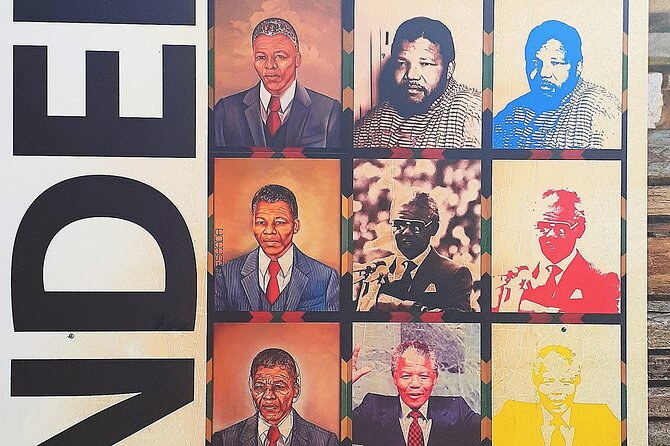
Mandela House in Orlando, Soweto, is the clearest personal link in the route. The museum entrance fee is included, so you can enter without arranging a separate ticket.
The house brings Mandela’s public story down to the scale of family life. You see a place connected with his time in Soweto and gain a more intimate sense of the man behind the speeches and photographs. For many people, this is the emotional center of the day.
The tour also includes Tutu House. Its presence broadens the story beyond one famous name and connects Soweto with Archbishop Desmond Tutu, another major figure in South Africa’s political and religious life.
Because Mandela House is a museum stop, it may feel more structured than the street-based parts of Soweto. I would pay attention to the details inside, then use the drive between sites to ask your guide about the people and events that shaped the neighborhood.
Hector Pieterson explains the cost of protest
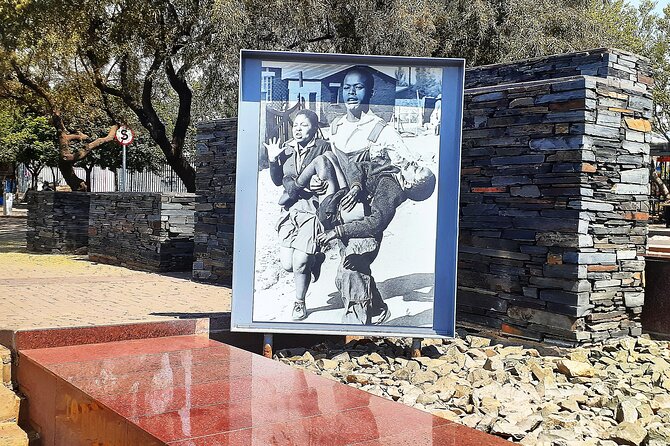
The Hector Pieterson stop adds another essential piece of Soweto’s story. The memorial and museum are linked to the 1976 student uprising, a turning point in opposition to apartheid.
This is not a cheerful stop, but it is an important one. The site helps you understand how young people became central to political protest and why Soweto holds such a powerful place in South African memory.
Give yourself a little quiet time here. A guide can explain dates and events, but the memorial works best when you also pause and take in what happened. The five-hour schedule may keep the visit moving, yet the private format lets you ask for clarification or spend a little longer if the day allows.
The emotional tone is similar to Constitution Hill, but the focus is different. There, the story centers on imprisonment and law. Here, it centers on students, public protest, and the consequences of state violence.
Informal settlements and Baragwanath add present-day context
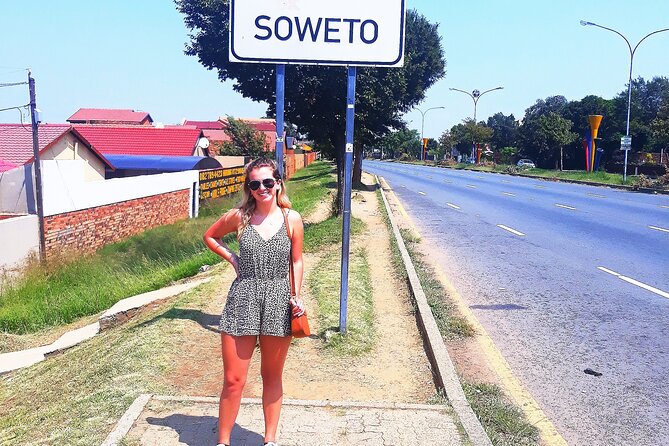
The drive through informal settlements and past Baragwanath Hospital widens the picture again. These parts of the route are not conventional attractions, and that is precisely why they matter.
You see parts of Soweto and its surrounding communities that are easy to miss if you visit only memorials and famous houses. The guide can explain how the area functions as a living community rather than a collection of historical sites.
At the same time, this section calls for respect. Do not treat homes or residents as scenery. Listen to your guide, follow instructions, and keep photography appropriate. The provided information does not promise a walking visit inside an informal settlement, so expect this to be primarily a guided drive or a brief viewing point.
Baragwanath Hospital gives the route another everyday reference point. Along with the settlements, it helps balance the famous names with the institutions and neighborhoods that affect ordinary life.
Orlando Towers finish the route with a bold visual landmark
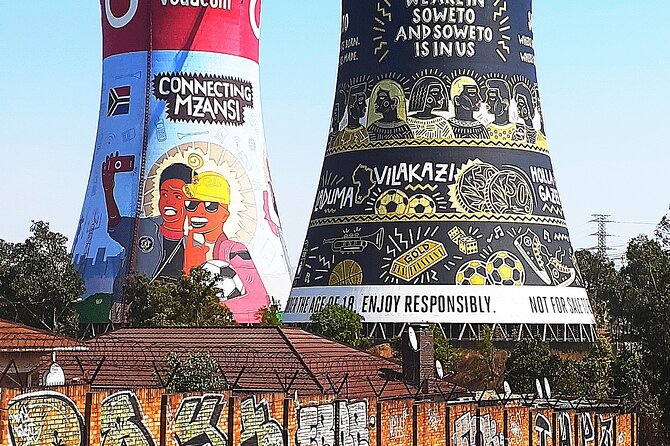
The Orlando Towers are a dramatic final stop and a sharp change from the memorials and museums. Their painted structures have become one of Soweto’s most recognizable visual markers.
This is a good place for photographs, but the towers also show how industrial structures can become part of a neighborhood’s identity. After a morning of legal history, political struggle, and personal stories, the stop gives the tour a more visual finish.
Do not assume this means an adventure activity or a long stop inside the towers. The supplied details describe Orlando Towers as part of the sightseeing route, not as an included activity. Think of it as a landmark visit and photo opportunity unless your guide explains otherwise.
The guides are the heart of the experience
The strongest feature of this tour is not a single building. It is the quality of the guiding.
KG is described as professional, friendly, flexible, and especially clear when explaining the history of each area. Lindela is praised for being prompt, thorough, and willing to answer questions without pressuring people into extra activities. Pastor is noted for warmth, humor, and strong explanations. Sello is also praised for making Johannesburg and Soweto easy to understand.
Those details matter because the itinerary covers difficult subjects in a short period. You need a guide who can explain apartheid, Mandela, Soweto, constitutional law, and modern Johannesburg without turning the day into a list of dates.
The tour also seems to allow some flexibility. One account describes the guide adjusting the day to suit what the group wanted to see, while another notes that the guide did not push additional activities in Soweto. That is a good sign for anyone who prefers a calm, informative visit over a sales-oriented outing.
Service is another recurring strength. Pickup has been described as timely, and the vehicle as clean and comfortable. One guide even arranged to return a forgotten handkerchief to a hotel. That does not change the route, but it suggests the kind of practical care that can make a private day easier.
What the $77.64 price really covers
At $77.64 per person, the price is not just paying for a ride between landmarks. You are paying for a private driver, a five-hour route, guiding, an air-conditioned vehicle, bottled water, onboard Wi-Fi, taxes, and Mandela House admission.
For a single person, the cost may feel high compared with a basic shared sightseeing bus. For two or more people, the private format becomes easier to justify, especially if you value a flexible pace and direct access to your guide.
The value is strongest when you have limited time in Johannesburg. Booking several separate rides to Constitution Hill, Soweto, Mandela House, Hector Pieterson, and Orlando Towers would take planning and could create gaps between visits. This tour handles the transport and puts the sites into one connected story.
Lunch and alcoholic drinks are not included. Since the tour lasts about five hours, plan around the food question rather than expecting a full meal as part of the day. Group discounts may also improve the per-person price for larger bookings.
Practical limits, comfort, and planning
Most people can take part, and the private vehicle makes the day more comfortable than a large group outing. One guide was also praised for kindly supporting a person with mobility issues, but the supplied details do not promise full accessibility at every stop.
That distinction matters. Historic buildings, memorials, and museum areas may have different walking conditions. If you have mobility concerns, tell the operator before booking and ask which stops involve walking, stairs, or uneven surfaces.
The tour requires good weather and a minimum number of participants. If poor weather cancels the experience, you are offered another date or a full refund. The same applies if the minimum number is not reached.
You can cancel for a full refund up to 24 hours before the start time. Changes or cancellations inside 24 hours are not accepted for a refund. Keep the local cut-off time in mind.
A small extra-cost point is worth noting: site-specific guides may expect tips in addition to the main guide. Carry some cash if you want to recognize especially helpful explanations at individual sites.
Who should book this Johannesburg and Soweto tour?
I would choose this tour if you have one free half-day and want both major history sites and a broad look at the city. It suits first-time visitors, couples, families, and small groups who prefer a private car to a large coach.
It is also a good match for people who want conversation. You can ask about Mandela, Tutu, Soweto, constitutional law, informal settlements, or modern Johannesburg as the questions occur to you.
I would think twice if your priority is long, quiet museum visits. The route covers many places in about five hours, so the pace is necessarily brisk. You should also prepare for serious subject matter. Constitution Hill, Hector Pieterson, and the Soweto sections deal with injustice, protest, imprisonment, and loss.
The tour is not designed around lunch, nightlife, or extensive shopping. It is a history and highlights outing with a private vehicle, not a relaxed full-day cultural program.
Should you book it?
Book it if you want a well-packed introduction to Johannesburg and Soweto with your own driver and a guide who can explain the connections between the sites. The inclusion of Mandela House admission, water, Wi-Fi, and transport keeps the arrangement simple, while the private format gives you more comfort and room for questions.
Skip it if you want to explore Maboneng at length, spend hours inside every museum, or move at a very slow pace. For most people with limited time, though, the route offers strong value: it is efficient, serious, personal, and broad enough to make the city easier to understand.
FAQ
How long does the Johannesburg and Soweto tour last?
The tour lasts approximately five hours.
Is this a private tour?
Yes. Only your group takes part, and a private driver is provided.
Is pickup available?
Yes, pickup is offered.
What is included in the price?
The price includes bottled water, an air-conditioned vehicle, Wi-Fi onboard, all fees and taxes, and the entrance fee to Mandela House.
Is lunch included?
No. Lunch and alcoholic beverages are not included.
What happens if I cancel?
You can receive a full refund if you cancel at least 24 hours before the experience starts. Cancellations or changes made within 24 hours are not accepted for a refund.
Just added around Pretoria
- Half day Pretoria city tour★ 4.5 · 4 reviews
- From Pretoria: E-Bike in the wild with game near Jo’burg★ 5.0 · 6 reviews
- From South Africa Joburg: Pretoria City Half Day Tour★ 4.3 · 4 reviews
- From Johannesburg: Pretoria Guided City Tour★ 4.5 · 3 reviews
- From Johannesburg: Horse-Riding Safari and Cable Car Tour★ 5.0 · 3 reviews
- Pilanesberg Game Reserve Guided Day Tour from Johannesburg or Pretoria★ 4.5 · 21 reviews
- Pilanesberg Nature Reserve★ 5.0 · 36 reviews
- 3 Day Kruger Safari with Panorama Tour from Johannesburg★ 5.0 · 11 reviews
Soweto Tours, compared.

Soweto /Johannesburg and Apartheid Museum Guided Full Day Tour
Read our review →
Johannesburg Hop-On Hop-Off City Tour with Soweto Option
Read our review →

Jo’berg in 1 Day: Soweto, Apartheid Museum & City Tour
Read our review →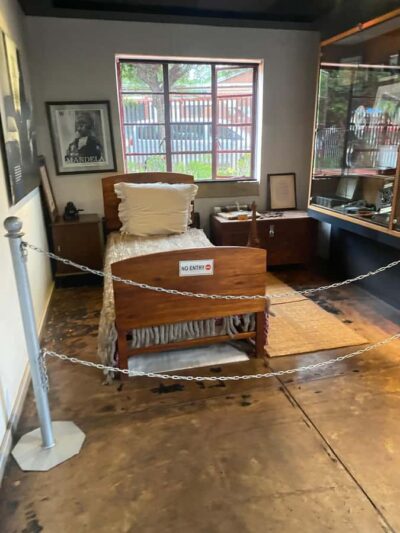
Full-Day Tour with Soweto and Apartheid Museum
Read our review →
Browse the lists this tour appears in