
Reviewed · MUSEUMS
Johannesburg City Evolution, Arts and Museums Walking Tour
Johannesburg’s story is not locked inside a museum. It runs from the old prison cells of Constitution Hill through student life, labor politics, public art, shopping streets, and the stages of Newtown. This three-hour tour links those pieces with walking and local transport, so you get a city lesson and a feel for daily Johannesburg at the same time.
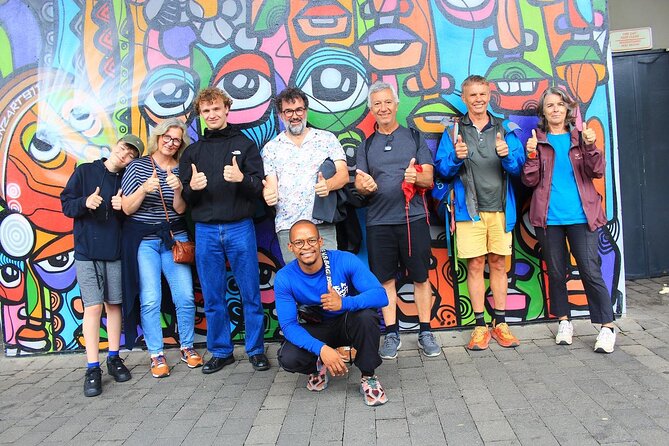
I like two things right away: the small maximum of seven people, which gives you room to ask questions, and the mix of serious history with art and street life. Guides such as Sean and K bring local context to places you might pass without understanding. The main consideration is pace. Eight stops in three hours means some visits are brief, especially if you prefer to study museum displays at length.
Key points to know before booking
- Constitution Hill opens the story: Visit a former prison complex now home to South Africa’s Constitutional Court.
- Art is part of the route: Wits Art Museum, street art, Museum Africa, and the Market Theatre give the tour a strong cultural angle.
- You use local transportation: This is not a sealed-off sightseeing ride, which makes the route feel more connected to present-day Johannesburg.
- The group is capped at seven: That suits anyone who wants conversation and direct access to the guide.
- The route ends at the Market Theatre: You finish in Newtown, near a major center of South African performance and protest art.
- The price is moderate: At $37.02 per person, the value rests on the guide’s knowledge, included museum entries, and the number of neighborhoods covered.
From prison cells to a constitutional democracy
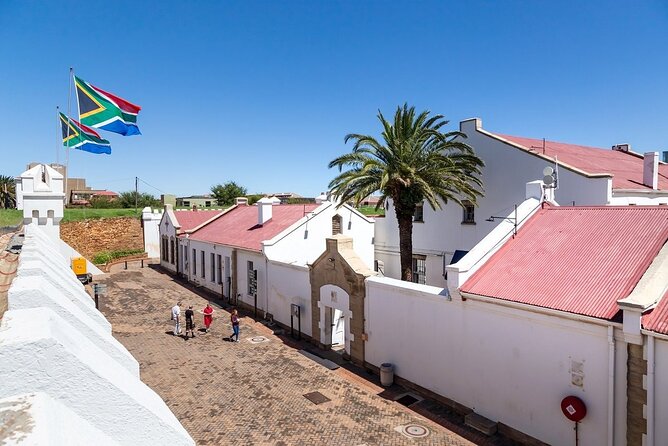
The morning begins at 10:00 a.m. at Constitution Hill Human Rights Precinct on Kotze Street. This is the right place to start. The former prison complex gives the tour a physical entry point into South Africa’s past, while the Constitutional Court represents the country’s effort to build a democracy based on human rights.
You have about 25 minutes here, with admission included. That is enough to understand why the site matters and to hear the basic story of the precinct. It is not enough for a slow, detailed museum visit, so I would treat this stop as a powerful introduction rather than a complete tour of every display.
The contrast is the point. You are not simply looking at an old building. You are seeing a prison complex transformed into a public place tied to law, rights, and national change. A good guide can help you connect the walls and courtrooms to the larger questions the tour keeps asking: Who was allowed power, who was denied it, and how does a city try to repair that damage?
The tour information says the route’s locations have been renovated for visitor comfort and access. Still, you should expect a walking experience, changes of setting, and some time outdoors. Wear practical shoes and keep your schedule after the tour flexible.
A few more Johannesburg trips to weigh up
- Soweto /Johannesburg and Apartheid Museum Guided Full Day Tour
★ 5.0 · 932 reviews - Jo’berg in 1 Day: Soweto, Apartheid Museum & City Tour
★ 4.8 · 524 reviews - Johannesburg: Full-Day Tour with Soweto and Apartheid Museum
★ 4.8 · 478 reviews
COSATU House and the working city
The next stop is COSATU House in Braamfontein. The visit lasts about five minutes and is free. That sounds short, but the building matters because it is the headquarters of the Congress of South African Trade Unions, one of South Africa’s major labor federations.
This is a quick orientation stop, not a full interior tour. Its value comes from the connection it adds to the morning. Constitution Hill introduces courts, incarceration, and rights. COSATU House brings organized labor into the picture. Together, they show that South Africa’s political story was shaped not only by famous leaders, but also by workers and civic groups.
I appreciate this kind of stop because it prevents the tour from becoming a parade of famous names. You get a broader view of how change happens. The drawback is simple: five minutes will not satisfy anyone hoping to explore the building in depth. Think of it as a sharp piece of context during the walk.
Wits University and the art museum
The route then reaches the University of the Witwatersrand, usually called Wits. The university is known for work in science, engineering, and the humanities, and its campus adds a different mood to the tour. After the political weight of Constitution Hill and COSATU House, Wits lets you see Johannesburg as a center of education and debate.
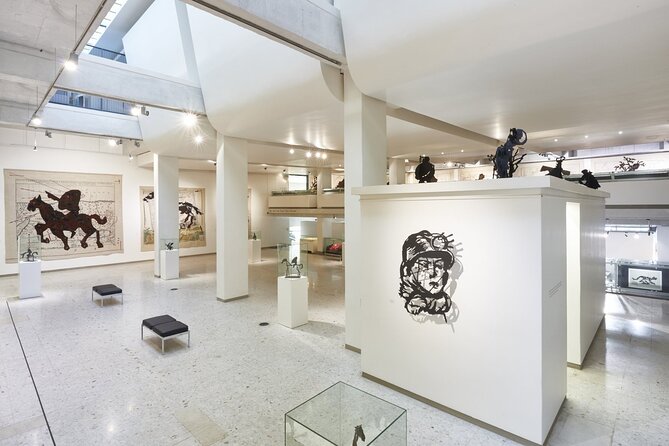
The main attraction here is Wits Art Museum, with about 25 minutes and admission included. The museum holds South African and international art, giving the tour a visual language alongside its political one. You may see how artists address identity, power, memory, and daily life, though the exact displays can change.
Twenty-five minutes is a useful sample. It gives you enough time to see selected works and understand why the museum belongs on this route. It will not allow a slow examination of a large collection. If art is your top priority, note the museum’s name and consider returning independently if your schedule allows.
This is also where a small group helps. Sean is described as offering strong background on Johannesburg’s history and arts, and a guide who can explain why a work matters may add more value than extra time spent wandering alone. K is also named among the guides associated with the experience. Ask questions as you go, since the tour is built around explanation rather than silent museum browsing.
Braamfontein Square and the city in motion
Braamfontein Square is the next stop, with about 15 minutes and no admission charge. The square has undergone major renewal and offers a public view of a part of Johannesburg that is changing fast.
I would not treat this as a grand monument stop. Its purpose is to help you read the city around you. Public squares reveal how people move, meet, work, and spend time. The tour’s wider theme is evolution, and Braamfontein makes that theme visible in the way an urban district is reshaped.
The route uses local transportation, which is one of its best features. You are not kept inside a private vehicle from one attraction to the next. That means you get a more direct sense of the city’s connections and rhythms, though it also means the experience may feel less controlled than a standard bus tour.
Same country, a completely different kind of day:
- From Johannesburg: Pilanesberg Nature Reserve Game Safari
★ 4.8 · 1,327 reviews - Johannesburg: Hop-On Hop-Off Bus with Optional Soweto Tour
★ 4.6 · 985 reviews - Johannesburg Hop-On Hop-Off City Tour with Soweto Option
★ 4.5 · 768 reviews - Full Day Ultimate Pilanesberg National Park Safari from Johannesburg or Pretoria
★ 4.5 · 718 reviews
Crossing Nelson Mandela Bridge
The group crosses Nelson Mandela Bridge on the way to Newtown, allowing around ten minutes for the stop. The bridge is more than a useful crossing. It connects parts of Johannesburg physically and carries the name of the country’s best-known democratic leader.
This is a short outdoor segment, but it breaks up the museum visits and gives you a chance to see the city from a different angle. I like the way the route uses the bridge as part of the story instead of treating it as a separate photo stop.
Do not expect a long sightseeing pause here. The bridge is part of the journey toward Newtown. Keep your camera ready, but listen to the guide’s explanation too. The larger value is the transition from Braamfontein into a district known for culture and performance.
Oriental Plaza and Johannesburg’s trading traditions
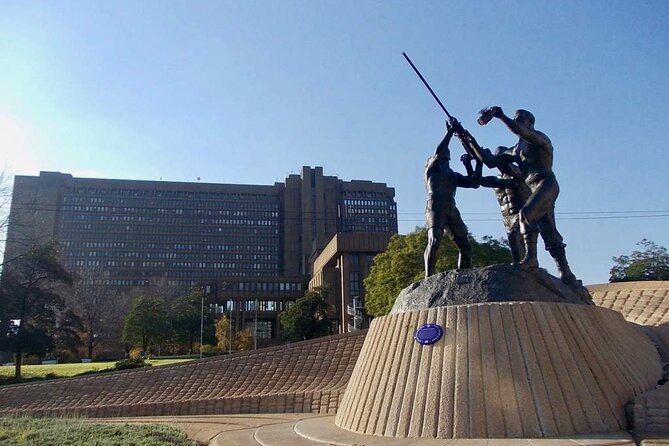
Oriental Plaza receives about 20 minutes. The complex began as late nineteenth-century warehouses and shops before becoming a shopping center serving Johannesburg’s growing population. It brings commerce, migration, and city life into the tour.
This stop gives you a change of pace after the court, labor headquarters, university, and museum. Instead of viewing history through formal exhibits, you are looking at a place shaped by business and everyday shopping. The old warehouse origins also help you picture how the inner city developed over time.
Admission is free, but twenty minutes is still a limited visit. You will get a feel for the place rather than a long shopping session. If you want to browse carefully or buy something, ask the guide how much time is available before making a purchase.
The Oriental Plaza also fits the tour’s focus on authentic experiences. It is a functioning commercial space, not simply a preserved monument. That does not make it automatically better than a museum, but it gives you a useful reminder that Johannesburg’s past remains tied to ordinary work and trade.
Museum Africa and the wider African story
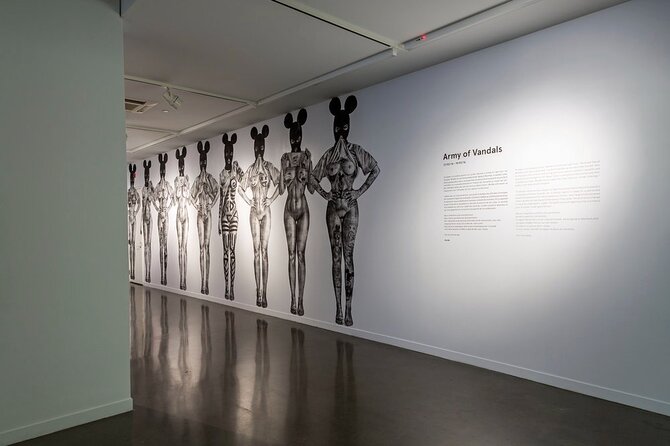
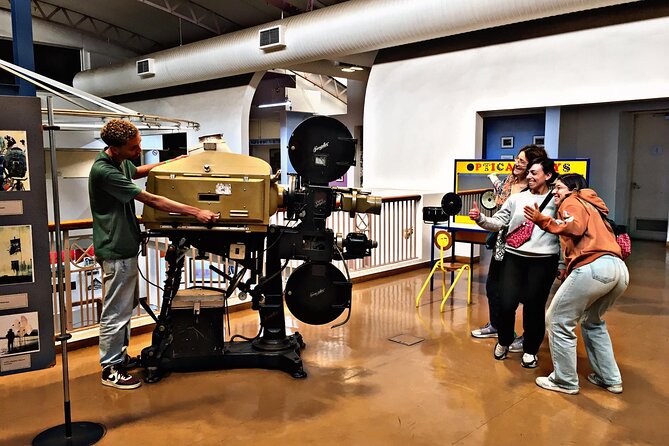
Museum Africa is scheduled for about 35 minutes, the longest museum stop on the route. Admission is included. The museum presents African history, culture, and social change through artifacts, displays, and interactive material.
This is an important stop because the tour is not limited to Johannesburg’s city center or South Africa’s political leaders. Museum Africa places the city within the wider continent. You can expect a broad presentation rather than a narrow single-topic exhibit.
Thirty-five minutes gives you the best museum window of the morning, but it remains an introduction. The museum covers a large subject, and you will need to choose what to focus on. I would listen for the connections between what you see here and what you have already learned at Constitution Hill, Wits, and the street stops.
The museum also helps balance the tour’s political emphasis. The day is about democracy and human rights, but it is also about art, culture, and the many ways people make meaning. That broader frame is one reason the tour feels more useful than a simple list of landmarks.
Newtown, street art, and the Market Theatre
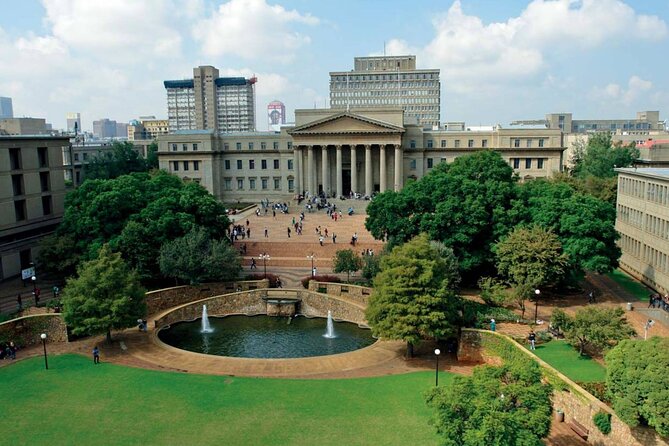
The final stage takes you into Newtown and ends at the Market Theatre on Margaret McIngana Street. You spend about 20 minutes at the theatre, with no admission charge listed for this visit.
The Market Theatre played a major role during apartheid by giving artists a place to express ideas and challenge the government’s system of racial control. It is a fitting end point for a tour that began with a former prison and the Constitutional Court. You move from punishment and law to performance and public expression.
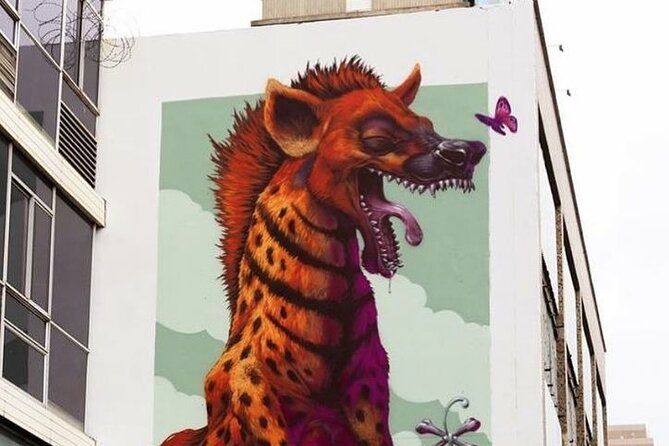
The arts element also includes street art along the route. Sean is described as explaining the purpose behind particular pieces, which is useful because murals can be easy to admire without understanding their setting. I like the idea of treating street art as part of the city’s public conversation, not just as decoration.
The end point is practical too. You finish near a major cultural venue rather than being returned to the starting point. If you want to continue exploring Newtown, you can use the Market Theatre as your next reference point, though the tour itself lasts about three hours and does not promise a full theatre performance.
What $37.02 buys you
At $37.02 per person, this tour is priced below many private sightseeing experiences, but its value is not based on luxury transport or long admissions. You are paying for a tightly planned route, a small group, local transport, a guide, and included entry to Constitution Hill, Wits Art Museum, and Museum Africa.
The price works best if you want context rather than a checklist. A guide can explain why COSATU House matters, connect the Constitutional Court to the former prison, and show how art and theatre fit into the political story. Without that explanation, several of the stops would be easy to overlook.
The schedule is also efficient. In three hours, you cover Braamfontein, Wits, the bridge, the Oriental Plaza, Museum Africa, and Newtown. The tradeoff is time. You will not have long at each place, and museum lovers may want a separate visit later.
Some bookings have also included a local food stop or meal, with one particularly substantial platter described as enough for lunch and dinner, and braai praised as a strong part of the experience. Treat food as something to confirm before booking, because it is not listed as a guaranteed feature in the formal tour details.
Who will get the most from this walk
I would choose this tour if you are visiting Johannesburg for the first time and want a fast, guided introduction to the city’s politics, art, and central districts. It suits curious people who enjoy asking questions and moving between different kinds of places.
It is especially useful if you would not feel comfortable finding these sites alone. The guide leads you through places you might otherwise miss, and the small group makes it easier to stay connected during walking and public transport sections.
The tour also suits anyone interested in South Africa’s democratic transition, labor movements, public art, or the role of theatre during apartheid. Families and older participants may appreciate that most travelers can take part and that the sites have been renovated for comfort and access, though the route still involves walking and local transport.
I would be more cautious if you want a slow museum day, a private vehicle throughout, or a single subject explored in great detail. This is a broad introduction. Its strength is the connection between stops, not the length of time spent inside any one building.
Practical details for a smoother morning
The meeting point is Constitution Hill Human Rights Precinct, 11 Kotze Street, Braamfontein. The tour starts at 10:00 a.m. and ends at the Market Theatre, 56 Margaret McIngana Street, Newtown.
Pickup is offered, and the starting area is near public transportation. Confirm the pickup details when booking, since the stated meeting point remains Constitution Hill. The group maximum is seven people, a useful limit for a route that combines walking, museums, and public transport.
Wear comfortable shoes and plan for a three-hour outing. Keep valuables secure in the normal way for an inner-city excursion, and stay with the group during transfers. The experience has free cancellation up to 24 hours before the local start time. Changes or cancellations inside that window are not accepted for a refund.
Should you book the Johannesburg City Evolution, Arts and Museums Walking Tour?
I would book it if you want Johannesburg explained through places that still matter today. Constitution Hill, COSATU House, Wits, Museum Africa, street art, and the Market Theatre give you a wide view of how law, labor, education, culture, and public expression shape the city.
The strongest reason to choose it is the guide. Sean is described as warm, committed, and able to connect history with arts and local food, while K is also named as a guide. A good guide matters here because several stops are brief and their meaning is not always obvious from the outside.
Skip it if you want a relaxed museum crawl or a long visit to each landmark. Book it if you want a compact, social, and thoughtful introduction, with enough local movement to make Johannesburg feel like a living city rather than a row of isolated attractions.
FAQ
How long does the tour last?
The tour lasts approximately three hours.
What time does the tour start?
It starts at 10:00 a.m.
Where does the tour begin?
It begins at Constitution Hill Human Rights Precinct, 11 Kotze Street, Braamfontein, Johannesburg.
Where does the tour end?
It ends at the Market Theatre, 56 Margaret McIngana Street, Newtown, Johannesburg.
How much does the tour cost?
The listed price is $37.02 per person.
How many people can join the tour?
The maximum group size is seven people.
Is pickup available?
Pickup is offered. The stated meeting point is Constitution Hill Human Rights Precinct.
Is public transportation used?
Yes. The experience includes local transportation as part of the route.
Are admission tickets included?
Admission is included at Constitution Hill, Wits Art Museum, and Museum Africa. COSATU House, Braamfontein Square, Nelson Mandela Bridge, Oriental Plaza, and the Market Theatre list free admission.
Can I cancel for a full refund?
Yes. You can cancel at least 24 hours before the start time for a full refund. Cancellations or changes made less than 24 hours before the start time are not accepted for a refund.
Just added around Johannesburg
- Private Soweto Tour 5 hours approximately from Johannesburg or Pretoria.★ 4.5 · 9 reviews
- bicycle tour soweto★ 4.5 · 20 reviews
- Taste of Africa★ 5.0 · 9 reviews
- Two day Kruger National Park Safari from Johannesburg★ 5.0 · 19 reviews
- Airport & Private Shuttle and Transfer Services in Johannesburg★ 5.0 · 9 reviews
- Sun City Day Tour From Johannesburg★ 4.5 · 6 reviews
- Pilanesberg National Park Safari, BIG 5 Full Day★ 5.0 · 4 reviews
- Full-day Johannesburg Bike Or Walking tour – With Transport★ 5.0 · 10 reviews
Museums, compared.

Soweto /Johannesburg and Apartheid Museum Guided Full Day Tour
Read our review →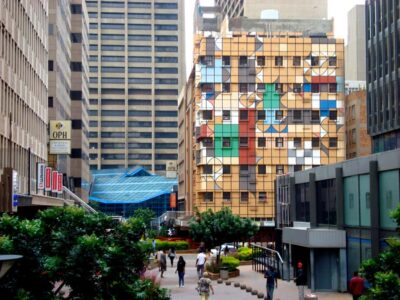
Jo’berg in 1 Day: Soweto, Apartheid Museum & City Tour
Read our review →
Full-Day Tour with Soweto and Apartheid Museum
Read our review →
Full-Day Soweto, Apartheid Museum and Lunch Tour
Read our review →
Half Guided Day Tour of Soweto And Apartheid Museum
Read our review →
Ultimate Johannesburg Soweto Experience with Apartheid Museum
Read our review →
Hop-On Hop-Off Bus, City Tour and Apartheid Museum
Read our review →
Museum of Contemporary African Art: Fast-Track Zeitz MOCAA
Read our review →Browse the lists this tour appears in