
Reviewed · 2-HOUR EXPERIENCES
2-Hour Surf Lesson in Cape Town
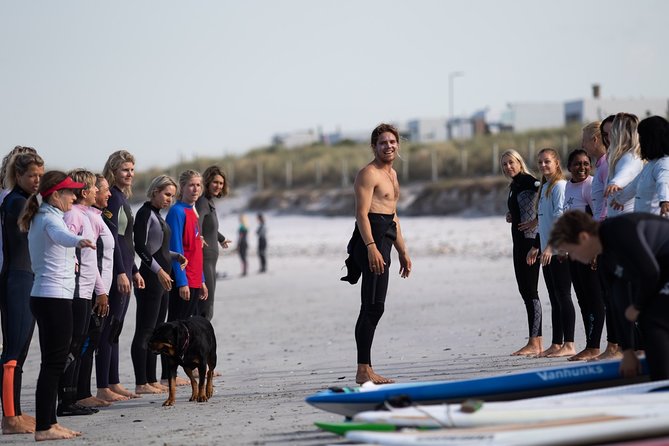
Cape Town’s surf lesson is about more than standing on a board. Your coach teaches you how waves work, where to position yourself, and how to stay safe in the ocean. Beginners learn the steps for catching a first wave, while stronger surfers can work on timing and positioning.
I like that the board and wetsuit are included, so you can arrive without hauling equipment across Cape Town. I also like the patient, safety-first teaching, especially for first-timers and children. The main concern is booking reliability: one customer arrived to find the surf school had no record of the reservation, so confirm your booking directly before setting out.
Key points
- Ocean skills, not just board skills: Learn about waves, timing, positioning, and safe choices in the water.
- Equipment included: A surfboard and wetsuit are supplied, making this simple for visitors.
- Coaches praised by name: Jesse is noted for patient beginner instruction, while Jarrod earned strong marks from a family with children.
- Instruction fits your level: Beginners work on catching a first wave, while intermediate and advanced surfers focus on wave selection and line-up position.
- Small group format: The maximum group size is 12, giving you better access to the instructor than a large school class.
- Weather matters: Lessons run for about 1 hour 30 minutes to 2 hours and depend on ocean and weather conditions.
Starting at Table View with the basics covered

You meet at 2 Coral Road in Table View, Cape Town, and return there when the lesson ends. This setup keeps the experience simple. You do not need to arrange separate equipment hire, and the supplied wetsuit removes one of the usual hassles of a beach activity.
At $56.90 per person, the price needs to be judged against what is included. You are paying for roughly two hours of instruction, a board, a wetsuit, and coaching adapted to your ability. For a visitor who does not already own equipment, that is a fair package, especially since buying or arranging separate rentals would add time and cost.
The start time is flexible, subject to ocean and weather conditions. That flexibility can help you fit the lesson around sightseeing, but it also means you should not treat the time as completely fixed until the conditions are confirmed. Cape Town’s ocean is powerful, and a safe surf school has to put water conditions ahead of a rigid timetable.
The activity is near public transportation, though no specific route or transfer service is provided. Plan to reach the meeting point on your own, and leave enough time to check in, change, and listen to the safety briefing before the practical work begins.
A few more Cape Town trips to weigh up
- Cape Town: Malay Cooking Class and Lunch in Bo-Kaap
★ 4.8 · 515 reviews - Cape Town: Cape Malay Cooking Class in Bo-Kaap
★ 4.8 · 120 reviews - Cape Town: Bo-Kapp Walking Tour and Malay Cooking Class
★ 4.7 · 105 reviews
The first lesson: safety before standing up
The opening part of the session is meant to set the tone: have fun, but stay safe. That matters in Cape Town, where the ocean is not simply a swimming pool with nicer scenery. Your instructor works with you on understanding waves and making sensible choices in the water.
For a complete beginner, this groundwork is useful because surfing can feel confusing at first. You are not only trying to balance on a moving board. You are learning when to paddle, how to face the wave, how to position the board, and how to react when things do not go as planned.
The teaching also includes mindset. That may sound less practical than board technique, but it has value. Most first attempts involve missed waves, awkward falls, and a few moments when the board seems to have a better plan than you do. A calm approach helps you keep trying without turning the lesson into a race.
Safety instruction is one of the strongest parts of this experience. The available feedback specifically praises patient coaches who explain each step and keep safety as a priority. That is the right focus for a first surf lesson, and it should reassure anyone who feels unsure about entering the ocean.
Catching your first wave as a beginner
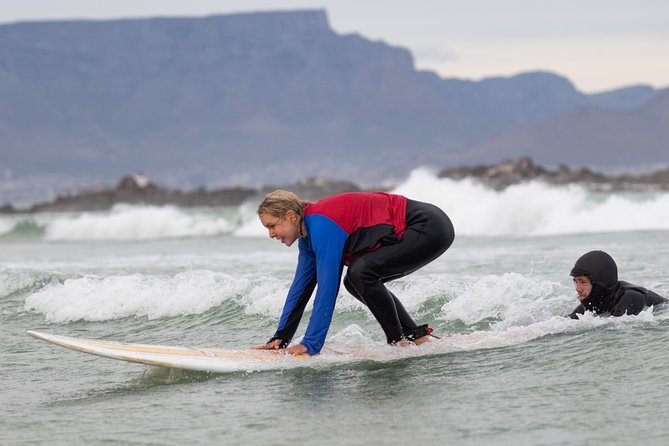
Beginners spend the practical portion learning how to catch a wave and get into a standing position. The coach breaks the process into smaller tasks rather than expecting you to manage everything at once.
You work on technique, timing, and attitude. Technique covers how you lie on the board and move into position. Timing helps you catch the wave at the right moment. Attitude is the willingness to repeat the process after an unsuccessful attempt.
The goal is not to become a polished surfer in two hours. A realistic aim is to understand the basic sequence and perhaps ride a small wave with help from the conditions and your instructor. The value is in leaving with a foundation you can build on, rather than simply being pushed into the water and told to stand up.
Jesse is specifically praised for helping a first-time surfer through early attempts. The useful detail here is not just the name, but the style of instruction associated with it: support, clear guidance, and patience. If you feel nervous about trying something new, that kind of coaching can make the difference between an enjoyable first session and a frustrating one.
Families should also note the positive experience described with Jarrod. Children loved his teaching, and the family planned to return. The class is not advertised as a children-only activity, but the feedback suggests that Jarrod’s approach can work well for younger participants who need encouragement and simple instructions.
What stronger surfers work on
This is not only a first-timer class. Intermediate and advanced surfers use the time differently, with more attention on catching a higher number of waves and improving their quality.
The main themes are timing and positioning in the line-up. Those skills are easy to overlook when you are focused on standing. A surfer can have a decent pop-up and still miss good waves by sitting in the wrong place or paddling too early.
Your instructor can help you read the water more carefully and make better choices about which waves to take. That does not mean the lesson turns into a technical masterclass for every advanced surfer. The group format and short duration limit how much individual correction you can receive, particularly if several people have different goals.
Still, the approach has more depth than a basic stand-up drill. You are encouraged to understand the ocean and the way waves behave. For someone who has surfed before but feels stuck, that broader focus may be more useful than repeating beginner exercises.
Same country, a completely different kind of day:
- Wine Tour: Paarl, Franschhoek & Stellenbosch incl 3 wineries
★ 5.0 · 3,940 reviews - Cape Town: Hop-On Hop-Off Bus Tour with Optional Cruise
★ 4.8 · 3,929 reviews - Cape Town: Cape of Good Hope & Penguins Day Tour with Pickup
★ 4.7 · 3,362 reviews - Zipline Cape Town – From Foot of Table Mountain Reserve
★ 5.0 · 3,179 reviews
How the small group affects your time in the water
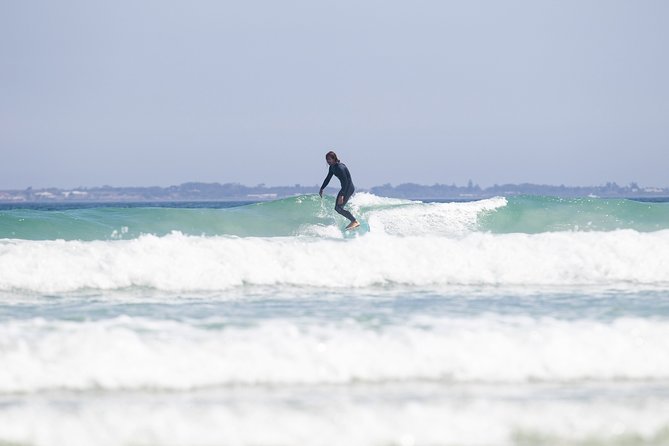
The group maximum is 12 people. That is not a private lesson, but it is smaller than a large commercial class and should give you reasonable contact with your coach.
The actual value depends on the number of people booked for your session and how mixed their abilities are. A group of beginners can move through the same basic steps together. A mixed class may require the instructor to divide attention between first-timers and more experienced surfers.
The small-group setup is a practical compromise. A private coach would offer more direct correction, but usually at a higher cost. At $56.90, this format gives you equipment and instruction without the expense of a one-to-one session.
If personal attention is your top concern, ask about the group size when confirming. The stated maximum is 12, not a promise that every session will have only a few people. Even so, the experience is designed to provide better instructor access than a large school class.
Equipment rental makes this easy for visitors
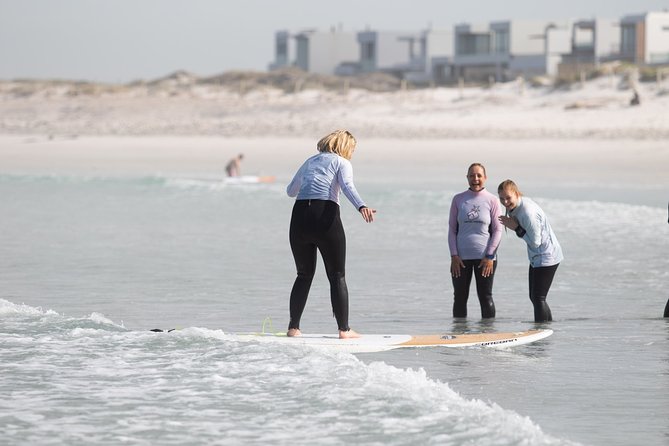
The board and wetsuit are included. That is a major advantage if you are visiting Cape Town and do not want to travel with surf gear.
The wetsuit is especially useful because you are entering the ocean, not a warm hotel pool. You can arrive with ordinary travel clothing and use the provided equipment for the lesson. The information does not specify the exact board types, wetsuit thicknesses, or changing facilities, so you should not assume anything beyond the included board and wetsuit.
Pack the usual personal beach items you need, but keep the tour’s purpose in mind. This is a lesson, not a full-day beach outing. The session lasts about 1 hour 30 minutes to 2 hours and ends back at the meeting point.
Because the equipment is supplied, the activity works well for people who want to add surfing to a Cape Town itinerary without committing to several days of lessons. You can try the sport first and decide later if you want more instruction.
Weather and ocean conditions can change the plan

The lesson requires good weather and suitable ocean conditions. If poor weather forces a cancellation, you are offered another date or a full refund.
That policy is sensible for a water activity. A fixed booking is less important than safe conditions, particularly for beginners. It also means you should avoid scheduling the lesson so tightly that a cancellation would ruin your only free morning in Cape Town.
The lesson can be arranged at a time that suits you, but conditions control the final plan. Keep some flexibility in your schedule and check for confirmation before traveling to Table View.
You can cancel for a full refund if you do so at least 24 hours before the start time. Cancellations or changes made inside that window are not refunded or accepted. The cut-off follows local Cape Town time, so check the clock carefully if you are changing plans from another time zone.
The booking issue you should take seriously
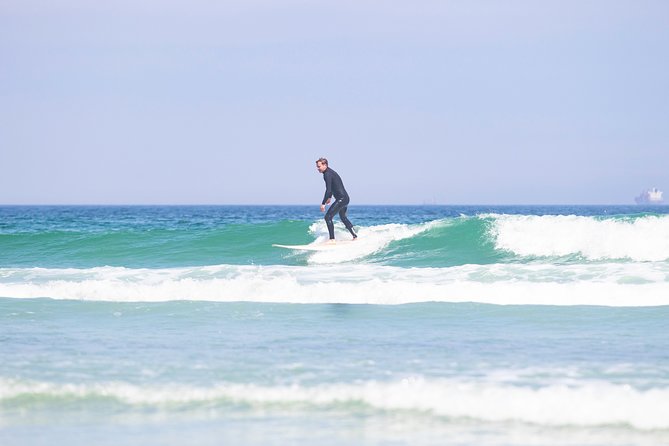
There is one serious warning attached to this experience. One customer arrived at Atlantic Surf School and was told the school had no record of the booking or payment. That is not a minor inconvenience. It can cost you a morning, transport money, and the chance to surf.
The issue appears to be a communication problem between the booking channel and Atlantic Surf School. The school name is Atlantic Surf School, while the activity information also refers to Atlantic Surf Collective in connection with coach Jesse. Before you go, confirm the date, meeting point, payment status, and the school’s recognition of your reservation directly.
This does not erase the strong safety and teaching feedback, but it changes how I would plan. Save your confirmation, contact the provider ahead of time, and do not assume that an automatic booking message is enough. If the provider cannot confirm the reservation, resolve that before arriving.
Who should book this Cape Town surf lesson
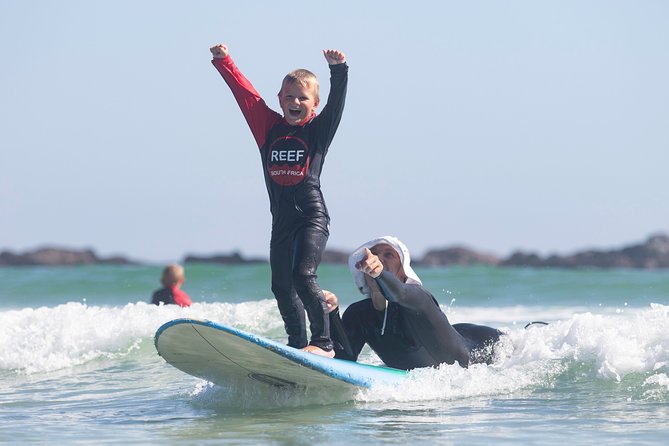
I would recommend this lesson to a first-time surfer who wants a guided introduction without buying equipment. It suits solo visitors, couples, and families who want an active break from Cape Town’s usual city and sightseeing activities.
It is also a good fit for an intermediate or advanced surfer who wants help with wave selection, timing, and position rather than basic standing technique. You should be clear about your level when arranging the lesson so the instructor can shape the session around your ability.
The experience is less suitable if you need a guaranteed start time, a private coach, or a fully fixed itinerary. Weather can change the plan, and the group can include up to 12 people. You should also be prepared to confirm the booking directly because of the reported reservation problem.
Most people can participate, and service animals are allowed. The supplied information does not list specific physical requirements beyond participation in an ocean surf lesson, so anyone with health or mobility concerns should check before booking.
Is the $56.90 price good value?
For a two-hour activity, $56.90 is reasonable if you need both equipment and instruction. The board and wetsuit are not small extras for a visitor, and the coaching covers safety, ocean awareness, technique, and wave timing.
The value is strongest for beginners. A first lesson can save you from spending hours trying to work out the basics alone, and a patient instructor can help you avoid unsafe habits. The included equipment also means you can test your interest before paying for a longer course or buying gear.
The value is more mixed for experienced surfers. If you already have a board, wetsuit, and solid knowledge of local conditions, you may prefer a more focused private session. But if your goal is to improve positioning and catch waves more effectively, the instruction can still justify the price.
The rating is 4.5 out of 5 from eight pieces of feedback, with praise centered on patient coaching, safety, and children enjoying the lesson. One serious booking complaint prevents me from calling it an effortless choice. The lesson itself appears well suited to many ability levels, but the reservation needs checking.
Should you book it?
Book this surf lesson if you want an approachable introduction to Cape Town’s ocean, need equipment supplied, and like the idea of learning how waves work rather than simply being pushed toward a board. The coaching style sounds especially promising for beginners and families, with Jesse praised for patient first attempts and Jarrod praised by children.
I would book it with two conditions: keep your schedule flexible for weather, and confirm the reservation directly with Atlantic Surf School before you travel to 2 Coral Road. If the school confirms everything, $56.90 is a fair price for equipment, safety guidance, and a chance to catch your first wave.
FAQ
Where does the surf lesson begin and end?
The lesson begins at 2 Coral Road, Table View, Cape Town, 7439, South Africa. It ends back at the same meeting point.
How long does the lesson last?
The lesson lasts between 1 hour 30 minutes and 2 hours, depending on the session.
Is equipment included?
Yes. A surfboard and wetsuit are provided as part of the experience.
Is the lesson suitable for complete beginners?
Yes. Beginners learn the basics of catching a first wave, including technique, timing, and the approach needed when learning a new skill.
Can intermediate and advanced surfers participate?
Yes. Stronger surfers work on catching more waves and improving timing and positioning in the line-up.
How many people can join the lesson?
The maximum group size is 12 participants.
What happens if bad weather cancels the lesson?
You are offered a different date or a full refund if the activity is canceled because of poor weather.
Just added around Cape Town
- Private Tour to 20 Wine Tasting in Stellenbosch and Franschhoek★ 5.0 · 11 reviews
- Sunset Safari Big 5 Aquila with Snacks and Wine Tasting★ 5.0 · 12 reviews
- Robben Island, Kirstenbosch wine tasting Tour★ 5.0 · 10 reviews
- Zip Line and Wine from Cape Town★ 5.0 · 14 reviews
- Explore Atlantis Sand Dunes with a 1hour 30mins sandboarding tour★ 5.0 · 5 reviews
- Private Group Photoshoot in Cape Town★ 5.0 · 21 reviews
- Private Transfer from Cape Town International Airport★ 5.0 · 4 reviews
- 1 Hour Cape Town City Center Photoshoot Experience★ 5.0 · 19 reviews
2-Hour Experiences, compared.


Plettenberg Bay Game Reserve: 2-Hour Game Drive
Read our review →
2-Hour Game Drive at the Plettenberg Bay Game Reserve
Read our review →


2-Hour Quad Biking Guided Excursion Through the Knysna Forests
Read our review →
Browse the lists this tour appears in