
Reviewed · BO-KAAP TOURS
Bo-Kaap: Walk with a local
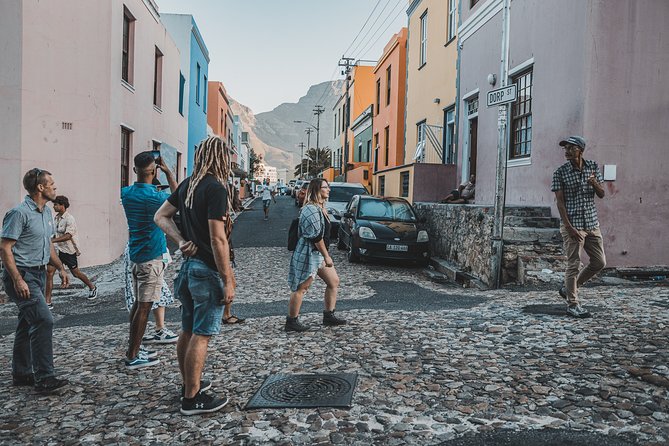
Bo-Kaap is far more than a row of pretty painted houses. This one-hour walk connects the colors, mosques, spice shops, and steep streets to the lives of people who have called the neighborhood home for generations. Your guide may be Ilyas, Sadiq, Rafiq, or Siddiq, all local men known for sharing personal family stories and present-day concerns.
I like the local connection and the chance to visit Auwal Mosque, one of South Africa’s oldest mosques. I also like the stop at Atlas Trading Company, where the smell of cardamom, cinnamon, and other Cape Malay spices gives the past a physical presence. The main consideration is the short duration: at about an hour, this is an introduction rather than a full food or cultural tour. The uneven cobblestones and uphill streets also call for solid, comfortable shoes.
Key points to know before you book
- Local guides with family roots: Guides such as Ilyas, Rafiq, Sadiq, and Siddiq live in, or were born and raised in, Bo-Kaap.
- Auwal Mosque visit: See one of South Africa’s oldest mosques and learn why Bo-Kaap is known as the birthplace of Islam in the Cape.
- Spices with a story: Atlas Trading Company connects Cape Malay cooking with the history of enslaved people in Cape Town.
- A homemade taste: Rooibos tea or coffee and a local snack are included, with some tours offering a fresh koesister in a family home.
- Small-group feel: The maximum group size is 20, making it easier to ask questions and hear personal stories.
- Easy central meeting point: The walk begins and ends at 71 Wale Street, near public transportation.
Why Bo-Kaap deserves more than a photo stop
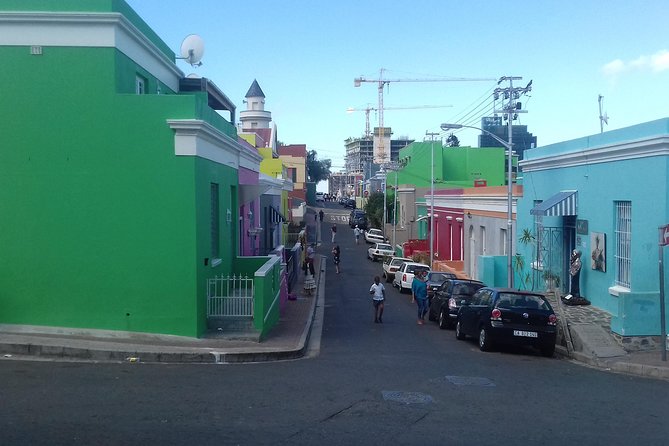
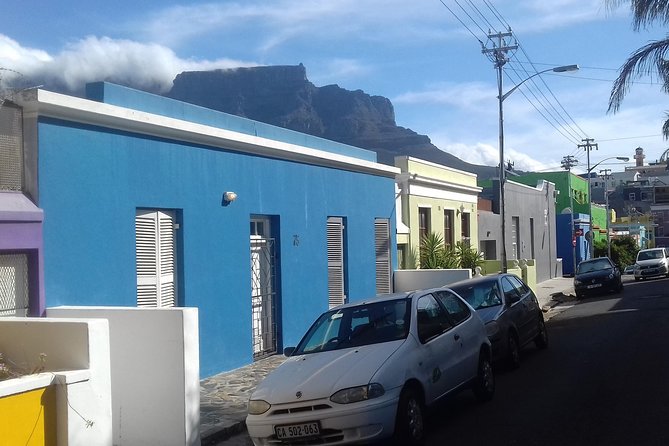
Bo-Kaap sits below Signal Hill in Cape Town’s City Bowl. Its painted homes make it one of South Africa’s most photographed streets, but the camera-ready surface tells only a small part of the story.
The neighborhood grew from Cape Town’s slave past. Dutch settlers brought enslaved people, artisans, and political exiles from parts of Africa, India, Sri Lanka, Indonesia, Malaysia, and elsewhere. Their descendants shaped the language, faith, food, music, and customs associated with Cape Malay culture.
That is why a local guide matters here. You can walk down Wale Street alone and take good pictures, but you may miss the meaning behind the buildings and the reason the neighborhood remains important to the people who live there. A guide from Bo-Kaap can explain the difference between a tourist postcard and a functioning community.
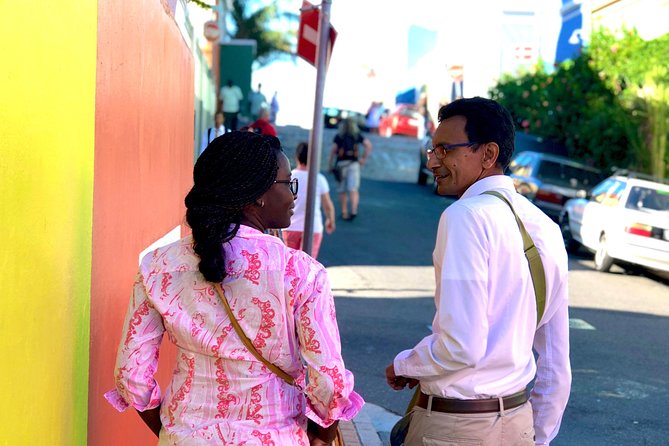
I especially value the personal angle. Guides greet friends along the way, point out community spaces, and explain how the area is changing. The best moments may not happen at a formal sight. They can come when your guide stops to speak with a neighbor or takes you to meet a relative.
More Bo-Kaap Tours in Cape Town:
- Cape Town: Malay Cooking Class and Lunch in Bo-Kaap
★ 4.8 · 515 reviews - Cape Town Walking Tour: Bo-Kaap & City Highlights
★ 4.8 · 161 reviews - Cape Town: Cape Malay Cooking Class in Bo-Kaap
★ 4.8 · 120 reviews
Starting at 71 Wale Street
The meeting point is 71 Wale Street in Schotsche Kloof. The walk returns to this same spot, which keeps the logistics simple and makes the tour easy to fit into a morning or afternoon in central Cape Town.
The opening section provides an overview of Cape Town and Bo-Kaap. You get the basic timeline before moving into personal stories, which helps put the colorful houses into context. This is useful if you are seeing Bo-Kaap early in your visit, since the rest of the neighborhood becomes easier to understand once you know why the community formed here.
The introduction is also a good time to ask questions. If you want to understand the mosque, local food, forced migration, or current concerns about preserving the neighborhood, ask early and keep the conversation going. The group size can reach 20 people, so standing close to the guide will help you hear everything.
The walk lasts about an hour. The stated stops add up to roughly 45 minutes, leaving some time for movement, photographs, questions, and the included refreshment. Expect a compact route rather than a long neighborhood hike.
Walking the colorful streets below Signal Hill
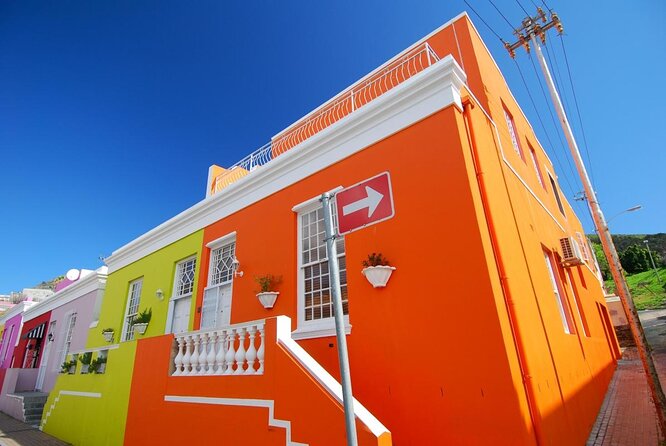
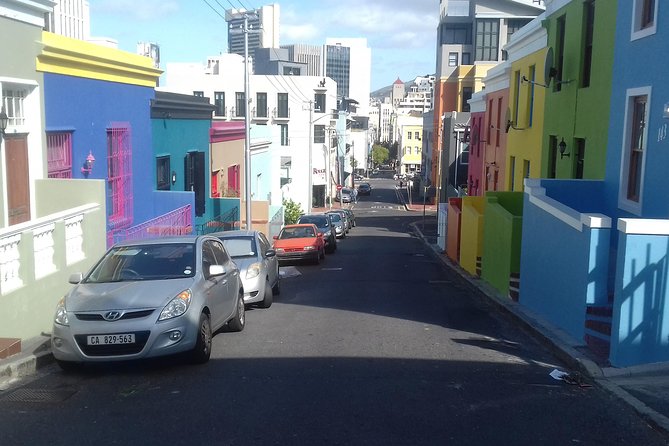
The main Bo-Kaap section is the heart of the experience. You see the painted facades, narrow streets, historic buildings, and slopes rising toward Signal Hill. These are the scenes that draw photographers, but your guide gives them more weight than a quick picture stop.
The houses are not simply colorful for decoration. The neighborhood’s identity is tied to the people who built their lives here and maintained their cultural traditions through difficult periods. Your guide can explain local customs and family connections in a way a sign or photo caption cannot.
Several guides take the group away from the busiest, most photographed streets and into quieter corners. That is a useful balance. You still see the familiar views, but you also get a sense of Bo-Kaap as a lived-in place rather than an outdoor set for photographs.
The walking pace is generally manageable, with time for questions and pictures. Still, you should expect uneven cobblestones, changes in elevation, and some uphill walking. The hills are not described as severe, but anyone with mobility concerns should consider the surface and route before booking. Wear shoes with firm soles, not smooth city shoes.
Bo-Kaap is also a residential community. Keep your camera ready, but use common sense and courtesy. Your guide can help you understand which views are public and how to photograph without treating private homes as props.
Auwal Mosque and the birthplace of Islam in the Cape
Auwal Mosque is one of the key cultural stops. It is regarded as one of the oldest mosques in South Africa and links Bo-Kaap to the arrival and growth of Islam in the Cape.
The mosque gives the walk a strong center. Instead of treating Bo-Kaap as an architectural curiosity, you see how faith helped hold the community together. The neighborhood’s Muslim identity is closely tied to the descendants of people brought to the Cape through slavery, exile, and forced migration.
The supplied tour details identify Auwal Mosque as a highlight, though the short stop-by-stop outline does not give a precise visit time. Ask your guide what access is available on the day. Religious sites can have their own rules, and your guide is the right person to explain what is appropriate.
I like this part of the walk because it corrects an easy mistake. Bo-Kaap is not just a colorful suburb with a few spice stores. It is a major part of Cape Town’s Islamic and Cape Malay story, and the mosque makes that connection visible.
A few more Cape Town trips to weigh up
- Cape Town: Nathi Langa Township Walking Tour
★ 4.9 · 493 reviews - Cape Town: Art, Culture & History Walking Tour
★ 4.9 · 392 reviews - Cape Town: Street Art Walking Tour in Woodstock
★ 4.8 · 293 reviews - Cape Town: Langa Township Walking Tour
★ 4.8 · 272 reviews
Atlas Trading Company and the smell of Cape Malay cooking
At Atlas Trading Company, the tour shifts from buildings and religion to food. This well-known spice shop is filled with the aromas used in everyday Cape Malay cooking. Even if you know little about the cuisine, the smells make the subject immediate.
The spices also carry a difficult history. Enslaved people used cooking and spices as an expression of freedom in their masters’ kitchens. Food became one way to preserve memory, skill, and identity under conditions designed to take those things away.
This is a short stop, listed at about 10 minutes, so do not expect a cooking class or a full market visit. It is a sensory introduction. You can smell the spices, ask about their use, and connect the shop to the food traditions that remain part of Bo-Kaap life.
The stop is especially useful for anyone planning to eat Cape Malay food during a Cape Town stay. You will understand more about the flavors behind dishes and pastries, instead of seeing them as just another item on a menu.
Tea, coffee, and a local sweet
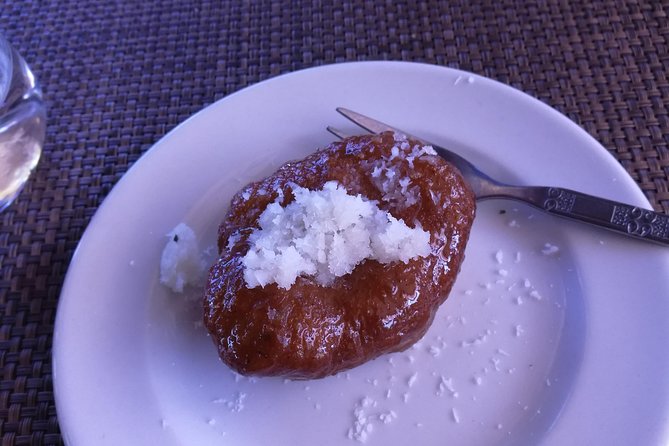
A cup of rooibos tea or coffee and a tasty snack are included. That small pause helps break up the walking and gives the group a chance to talk with the guide in a more relaxed way.
The snack may be a local homemade treat. Some experiences include koesisters, a Cape Malay pastry often flavored with spice and coated in sweetness. The exact food can vary, but the important point is that the refreshment is tied to local hospitality rather than being a generic packaged drink.
One especially memorable possibility is a visit to a guide’s aunt, where you may receive a freshly baked koesister. That is not guaranteed as a fixed stop, so do not book solely for this detail. If it happens, though, it adds the kind of personal contact that makes the walk feel different from a standard sightseeing circuit.
The food stop is modest, not a substitute for lunch. If you arrive hungry, eat beforehand or plan a meal afterward. Think of the tea and snack as a welcome taste and a chance to continue the conversation.
The value of a local voice
At $25.31 per person, this is a reasonably priced way to add context to a Cape Town sightseeing plan. The value comes less from the number of sights and more from the person explaining them.
A self-guided walk costs nothing, and you can easily find photographs of the famous streets. What you cannot get as easily is a direct account from someone whose family has lived in Bo-Kaap, who knows residents by name, and who can explain both the neighborhood’s past and its future.
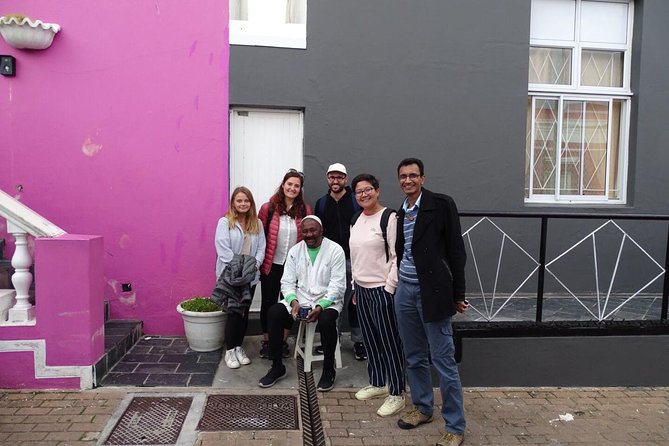
Several guides are named in the tour material, including Ilyas, Sadiq, Rafiq, and Siddiq. The assigned guide may differ on your date. The common feature is a personal connection to Bo-Kaap, not a scripted lecture delivered by someone passing through the area.
That distinction matters. A local guide can show you less obvious streets, introduce you to friends, explain a community garden, or share how preservation affects people who still live there. You may also hear concerns about keeping the culture intact as the area becomes more popular.
The small-group limit of 20 helps, though the experience will feel more intimate if your group is well below that maximum. At this price, the mix of local storytelling, a religious landmark, a spice shop, and a snack is strong value for a one-hour activity.
Who will enjoy this walk most
I would choose this tour if you want to understand Bo-Kaap instead of simply photographing it. It suits first-time visitors to Cape Town, photographers who want better context for their pictures, and anyone interested in Islam, food traditions, slavery, or local community life.
It is also a good choice if you prefer a short activity. One hour leaves plenty of time for the rest of the City Bowl, a meal, or another Cape Town sight. The central meeting point and return to the same location make the walk easy to combine with other plans.
Solo visitors may appreciate having a local guide for the route. One solo woman specifically found the experience comfortable and advised arranging transport to and from the area in advance. That is sensible practical planning, even though most participants can take part and the tour is near public transportation.
Families and older participants can also consider it, provided everyone is comfortable with uneven streets and moderate elevation changes. The pace allows for photographs and conversation, but this is still a walking tour, not a vehicle-based outing.
You should look elsewhere if you want a long food tour, a full museum visit, or a detailed architectural survey. You may also find the hour too brief if your main goal is to explore every corner of Bo-Kaap.
Timing, transport, and what to bring
Meet at 71 Wale Street and plan to arrive with enough time to locate the starting point. The activity ends back there, so you do not need to arrange a pickup at a second location.
The meeting point is near public transportation. If you prefer a rideshare, some solo visitors recommend arranging the ride before and after the walk, especially if you are unfamiliar with Cape Town. The tour itself is conducted on foot through the neighborhood.
Bring water, even though a drink is included. Cape Town weather can change, and one participant found an October morning cool and overcast, making a light jacket useful. Comfortable shoes are more important than stylish ones because of cobblestones and hills.
A phone ticket is accepted, and booking confirmation is provided at the time of booking. The activity requires good weather and a minimum number of participants. If poor weather or low enrollment cancels the walk, you are offered another date or experience, or a full refund. You can cancel for a full refund up to 24 hours before the start time, but changes or cancellations inside that window are not accepted.
The best way to approach Bo-Kaap
Try not to rush the photo stops. The painted buildings are attractive, but the strongest part of this experience is the explanation behind them.
Listen for the details that connect the neighborhood to Cape Town’s slave past, the spread of Islam, and Cape Malay cooking. Notice how often the guide knows people along the route. Those small interactions help you see Bo-Kaap as a community with daily life, not a collection of facades.
Ask questions about preservation. Bo-Kaap’s popularity brings attention, but it also creates pressure for the neighborhood to remain a real home rather than become a place designed only for sightseeing. The guides’ concern for protecting local culture gives the walk a current purpose.
Give yourself time after the tour for more photographs, shopping, or food nearby. The walk ends at the meeting point, so you can revisit a street that caught your eye without having to follow a group.
Should you book this Bo-Kaap walk?
Yes, if you want a personal and affordable introduction to one of Cape Town’s most important neighborhoods. The guide’s local roots, the Auwal Mosque connection, the Atlas spice stop, and the homemade snack offer much more than a quick circuit of colorful houses.
Book it with realistic expectations. The tour lasts about an hour, the food tasting is small, and the group may include up to 20 people. You will walk on uneven streets and may encounter ordinary city situations such as panhandling.
For most visitors, those limits are minor compared with the benefit of hearing Bo-Kaap explained by someone who belongs to it. If you have only one short activity available in Cape Town, this is a strong choice for culture, history, photography, and human connection in one compact walk.
FAQ
Where does the Bo-Kaap walking tour begin?
The tour begins at 71 Wale Street, Schotsche Kloof, Cape Town, 8001, South Africa.
Where does the activity end?
The walk ends back at the meeting point on Wale Street.
How long does the Bo-Kaap tour last?
The activity lasts approximately one hour.
What is included with the tour?
A cup of rooibos tea or coffee and a snack are included. The experience also highlights visits to Auwal Mosque and Atlas Trading Company.
How many people can join the walk?
The maximum group size is 20 participants.
Can I cancel for a full refund?
Yes. You can cancel up to 24 hours before the experience begins for a full refund. Cancellations or changes made less than 24 hours before the start time are not accepted.
Just added around Cape Town
- Lion’s Head Hike: Cape Town – Sunrise or Sunset Hike★ 5.0 · 29 reviews
- Lion’s Head Sunrise or Sunset Hike + Hotel Pick-Up★ 5.0 · 24 reviews
- Lion’s Head: Hike with a registered hiking guide★ 5.0 · 3 reviews
- Kruger National Park 3 Days Best Ever Safari from Cape Town★ 4.1 · 11 reviews
- Koeksister and Samoosa Class by the Malay Cook Up★ 4.8 · 9 reviews
- Kirstenbosch Garden, Bo-Kaap-Penguins & Cape Peninsula Tour★ 3.9 · 7 reviews
- Khayelitsha: 3-Hour Township Walking Tour★ 5.0 · 6 reviews
- Cape Town: Constantia Half-Day Wine Tour & Tastings★ 4.9 · 15 reviews
Bo-Kaap Tours, compared.
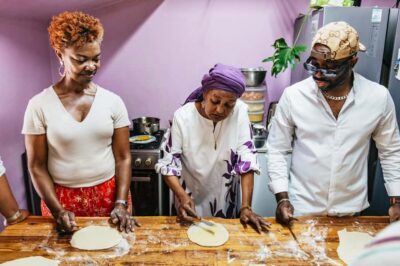

Cape Town Walking Tour: Bo-Kaap & City Highlights
Read our review →

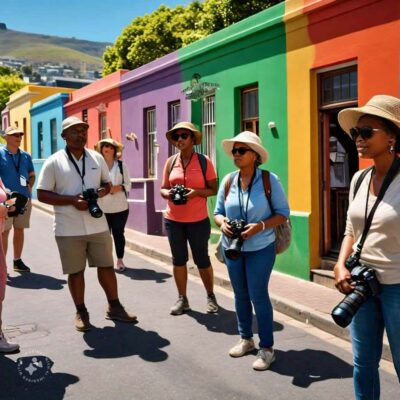

Full-Day Kirstenbosch, Bo-Kaap, and Penguins Tour
Read our review →
Kirstenbosch Garden, Bo-Kaap-Penguins & Cape Peninsula Tour
Read our review →
Browse the lists this tour appears in