
Reviewed · SOWETO TOURS
Pretoria Soweto And Johannesburg
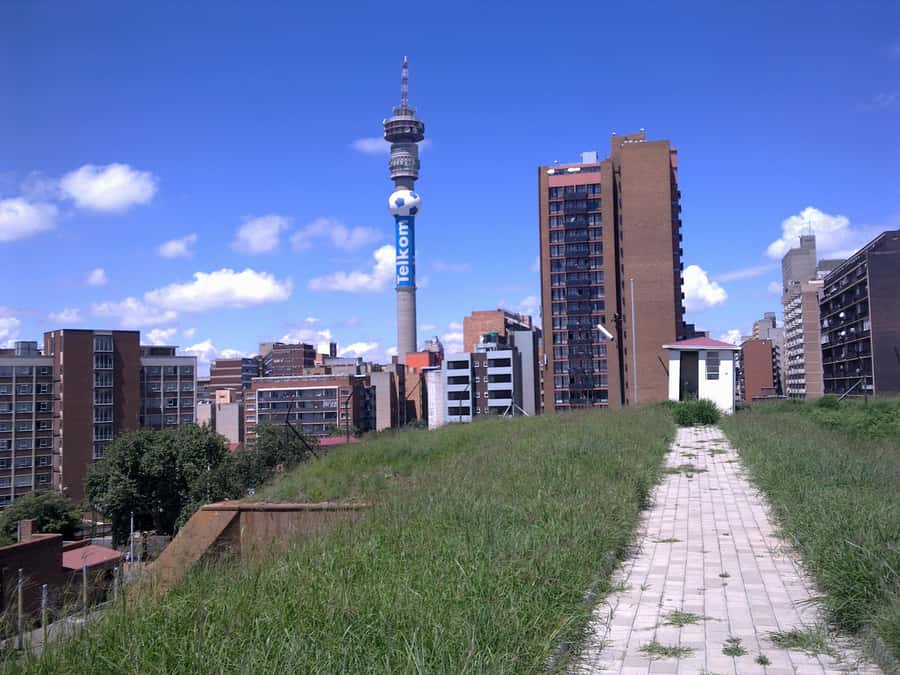
Pretoria, Johannesburg, and Soweto make an unusually broad day out. In eight hours, you move from Pretoria’s Dutch and British buildings to Johannesburg’s city streets, then into Soweto, where the story becomes personal at Mandela House and the Hector Pieterson Memorial.
I like the small-group limit of 15, which gives you a better chance to ask questions than on a large coach tour. I also like the mix of grand landmarks and ordinary city life: embassy-lined suburbs, matchbox houses, hostels, taxis, and the streets linked to the 1976 uprising.
The main concern is reliability. Several bookings received excellent feedback for guides Joseph and Victor, but three accounts describe a guide failing to arrive, with refund delays reported. Confirm your pickup details carefully before setting out.
Key points to know before booking

- Three very different places in one day: Pretoria, Johannesburg, and Soweto each show a separate side of Gauteng.
- Several important museums are included: Entrance fees cover the Voortrekker Monument, Paul Kruger House Museum, Mandela House Museum, and Hector Pieterson Museum.
- Soweto is treated as a living community, not just a photo stop: You see Orlando West, Vilakazi Street, taxi activity, hostels, and everyday housing.
- The history is politically varied: Pretoria introduces Afrikaner and British rule, while Soweto focuses on apartheid, protest, and the 1976 school uprising.
- Pickup and drop-off are practical: Options include Johannesburg, Sandton City, Randburg, Rosebank, and O.R. Tambo International Airport.
- Check communication before the day: The tour has a mixed record for pickup reliability, despite strong praise for some guides.
Why this tour covers more than the usual Johannesburg day trip
A Johannesburg visit can easily become a quick circuit of famous names. This tour tries to give you a wider picture by linking the political center of Pretoria, the crowded core of Johannesburg, and the famous streets of Soweto.
That range is the best reason to book. You are not only looking at monuments. You are also seeing how Gauteng’s cities change from formal government buildings to dense urban neighborhoods and then to Soweto’s residential streets.
The day lasts eight hours, so expect a brisk pace. The published schedule gives about an hour at the Voortrekker Monument, an hour touring Pretoria, one hour in Johannesburg, and roughly two hours around Soweto. The remaining time is used for shorter stops and driving between cities.
I would choose this experience if you have limited time in Gauteng and want a guided introduction rather than separate museum visits. If you prefer to spend half a day at one museum or explore one neighborhood slowly, the schedule may feel packed.
More Soweto Tours in Pretoria
- Johannesburg and Soweto tour
★ 5.0 · 231 reviews - Soweto Half Day Tour
★ 5.0 · 231 reviews - Johannesburg Full-Day Tour(Soweto/Jo-Burg & Apartheid Museum)
★ 5.0 · 110 reviews
The Voortrekker Monument puts Pretoria’s story first
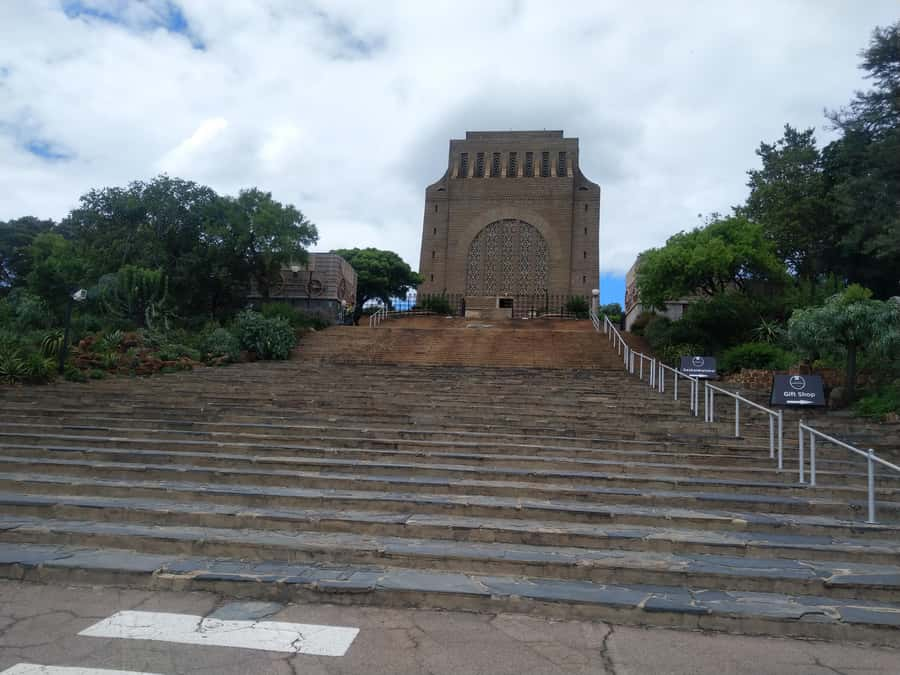
The day begins at the Voortrekker Monument, with about an hour for a guided visit. The monument is tied to the history of the Afrikaner Voortrekkers, the Dutch-speaking settlers who moved inland during the nineteenth century.
This is an important first stop because it introduces a part of South African history that can be missed if you focus only on Johannesburg and Soweto. The building and its displays present a strongly Afrikaner view of the past, so your guide’s explanations matter. Ask questions about whose story is being presented, and how it fits with the wider history of colonial rule and apartheid.
The visit is not simply a photo opportunity. The monument helps explain why Pretoria became associated with Afrikaner political power. At the same time, you should approach it as one viewpoint, not the complete story of South Africa.
Pretoria combines official power with garden suburbs
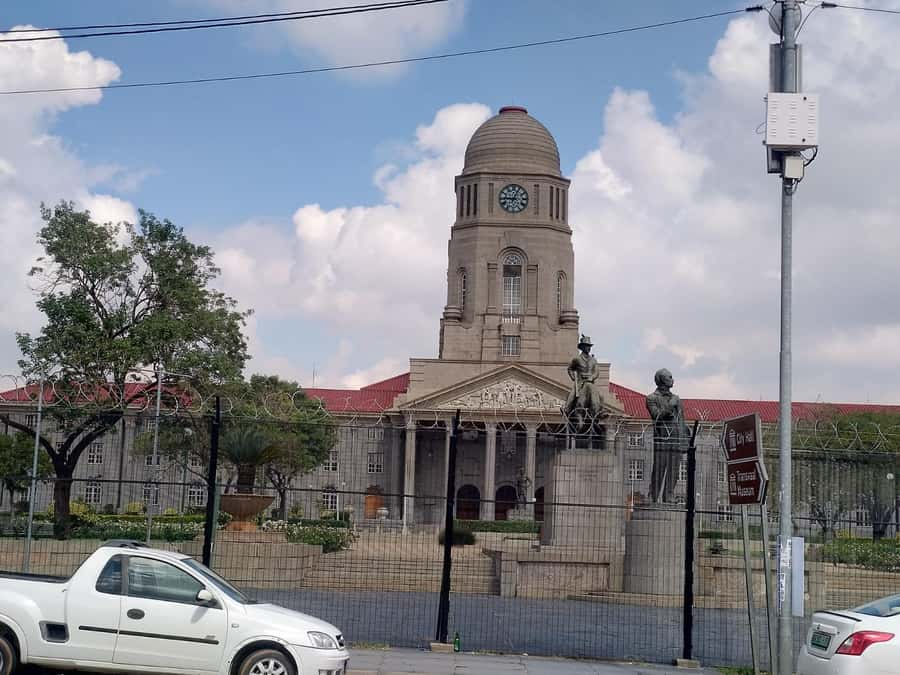
The Pretoria portion includes a city drive, embassy areas, and picturesque garden suburbs. Pretoria is often called the Jacaranda City, and its leafy residential areas give the capital a calmer feel than central Johannesburg.
You then visit the Paul Kruger House Museum, which is included in the price. Kruger was a major figure in the history of the South African Republic, and the house offers another window into the city’s Afrikaner past.
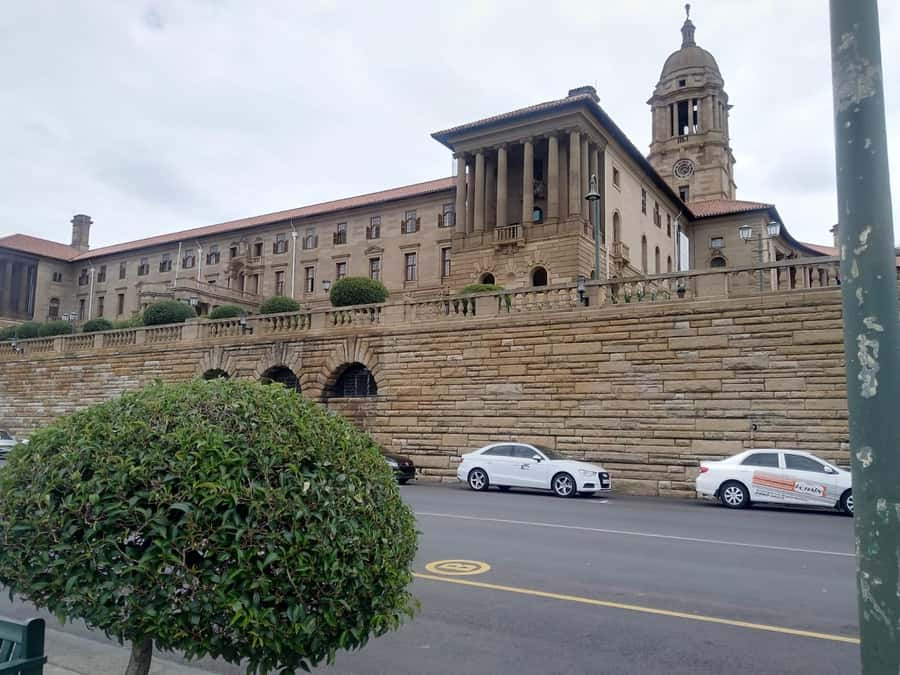
The tour also includes the Union Buildings, the seat of South Africa’s national government. Allow about 30 minutes here. The buildings are especially useful for understanding Pretoria as a political capital, with broad views and formal architecture that contrast with the more intimate Paul Kruger House.
You should not expect a long museum session at every site. The schedule gives roughly 30 minutes at the Union Buildings and 30 minutes at Church Square, so the guide will focus on orientation, key facts, and the main views.
Church Square shows Pretoria’s older center
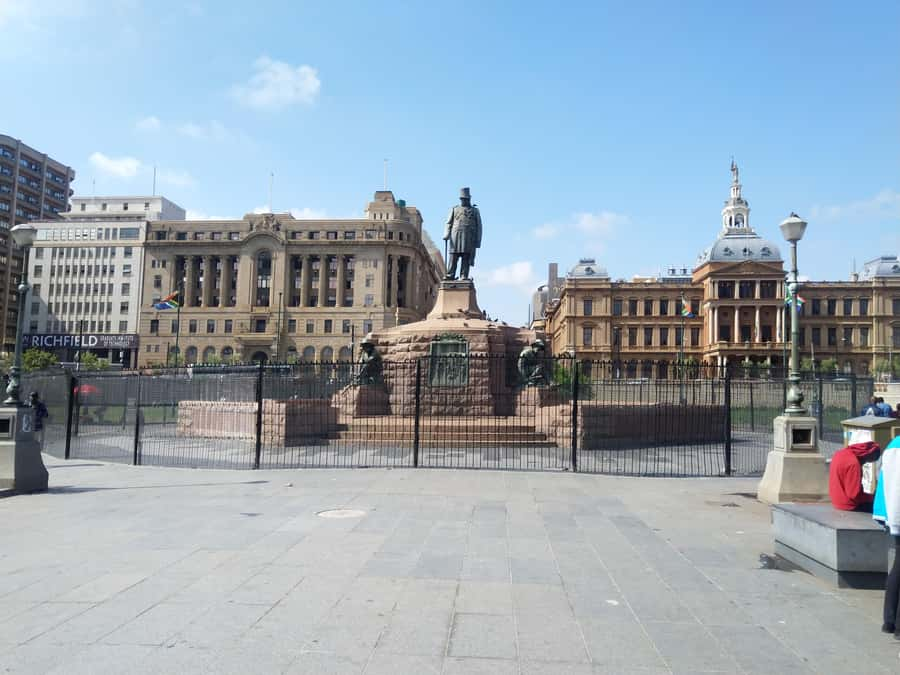
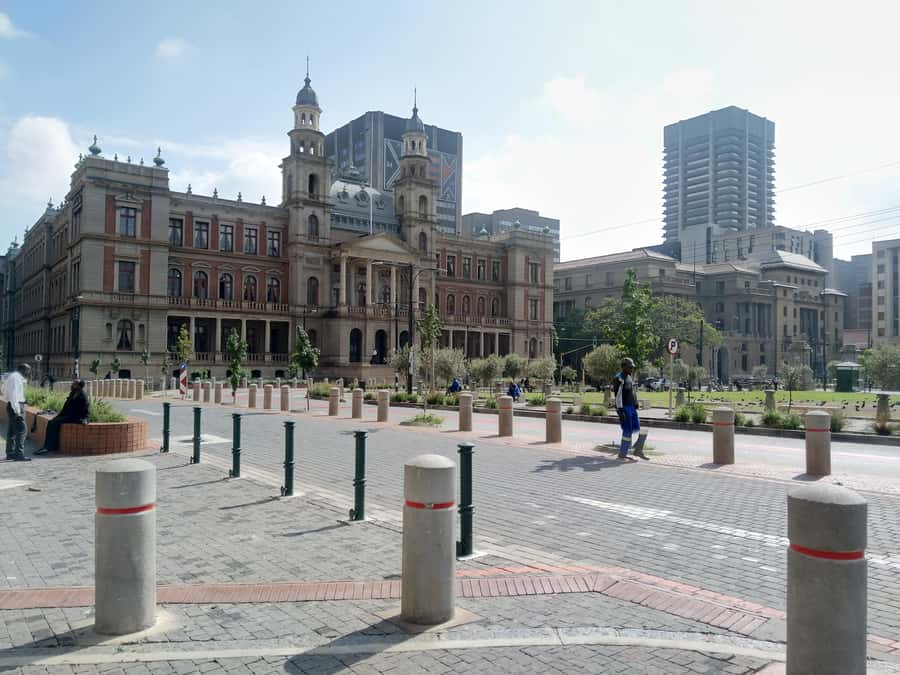
Church Square is the historic heart of central Pretoria. The guided stop lasts about half an hour and adds a useful urban setting to the grander Voortrekker Monument and Union Buildings.
Here, look closely at the mixture of Dutch and British architectural influence. The square helps you see how Pretoria developed as an administrative and commercial center rather than only as a modern capital.
The short visit is a strength if you want a broad overview. It is a limitation if you enjoy architecture and want time to study individual buildings. I would use the stop to ask your guide how the square connects to the city’s changing political identity.
Same country, a completely different kind of day:
- Ultimate Johannesburg Tour
★ 5.0 · 200 reviews - Johannesburg: Pretoria and Cullinan Diamond Mine Tour
★ 4.7 · 165 reviews - Taste of Africa Food tasting Experience
★ 4.5 · 138 reviews - Harties Cableway Experience Ticket
★ 4.5 · 119 reviews
Johannesburg shifts the tone from capital to city of gold

After Pretoria, the tour turns to Johannesburg, the city of gold. The guided city section lasts about an hour, followed by a shorter visit to Hillbrow.
Johannesburg’s identity grew from the discovery of gold, and the city’s development is closely tied to mining, migration, industry, and segregation. The tour presents this history alongside present-day city life rather than treating Johannesburg as only a set of old buildings.
Hillbrow receives about 20 minutes of guided sightseeing. The stop is brief, but it gives you a look at one of Johannesburg’s best-known inner-city areas. Your guide can help put the streets, apartment blocks, and movement of people into context.
This part of the day may feel less polished than Pretoria’s official buildings or Soweto’s famous museums. That is also its value. You see a working urban center with its pressures and contrasts, not a city edited for tourists.
Soweto brings history down to street level
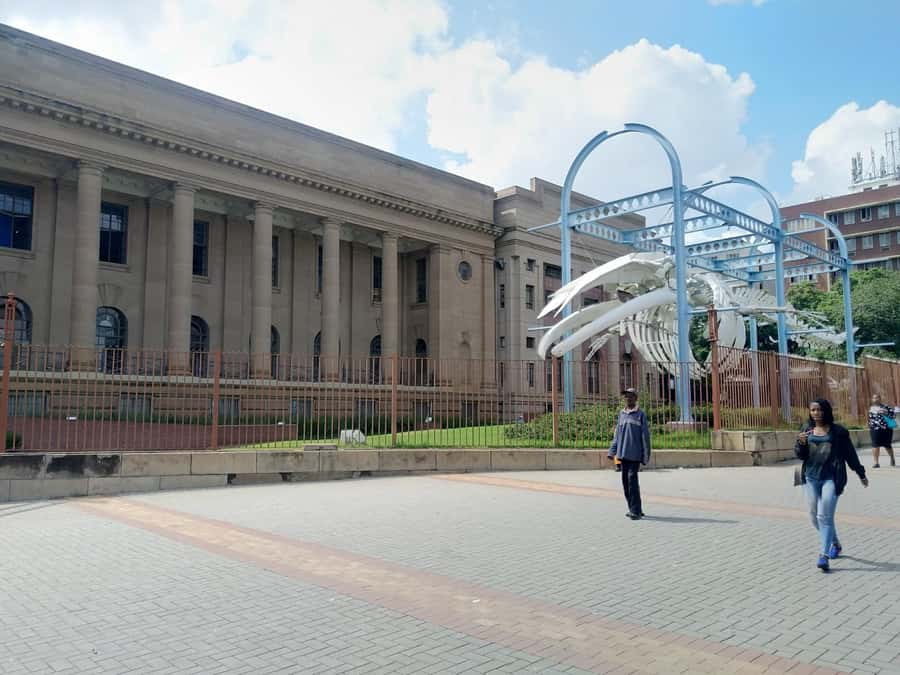
The Soweto portion is the emotional center of the day. You have about an hour and a half for the wider Soweto tour, followed by 30 minutes in Orlando West and another 30 minutes on Vilakazi Street.
The route includes upmarket Soweto suburbs, matchbox houses, hostels, and general African urban life. These details matter because Soweto is not one single type of neighborhood. The tour lets you compare different housing areas and see how the township has changed over time.
You also see taxi culture, including the Baragwanath taxi area, and drive past the house associated with Bishop Desmond Tutu. These are useful reminders that Soweto is a lived-in place, not a museum district.
At the same time, a moving vehicle gives you only a quick view of everyday life. You will learn more if you ask your guide to explain what you are seeing rather than treating each street as scenery. Be respectful with photographs, especially in residential areas.
Vilakazi Street links Mandela and Tutu
Vilakazi Street in Orlando West is one of the most significant stops. It is associated with both Nelson Mandela and Bishop Desmond Tutu, an unusual connection that gives the street a special place in South African public life.
The Mandela House Museum entrance is included. This visit adds a personal scale to the political story. Instead of only hearing about Mandela as a national leader, you see the home connected with his life in Soweto.
The stop is scheduled for 30 minutes, so expect a focused visit rather than a slow museum afternoon. If Mandela’s life is your main reason for coming to Soweto, you may want to ask in advance how much time the group will have inside the house.
Vilakazi Street can also be one of the busier parts of the day. The guide is especially valuable here, helping you connect the house, the neighborhood, and the wider events that shaped South Africa.
The Hector Pieterson Museum explains the 1976 uprising
The Hector Pieterson Museum and Memorial is another included entrance. It is linked to the 1976 Soweto uprising, when students protested against the forced use of Afrikaans in education.
This stop gives the day its clearest account of youth resistance under apartheid. The museum is named for Hector Pieterson, whose death became a symbol of the uprising after a widely seen photograph of his body being carried away.
You should allow yourself time to take in the subject. The published schedule places the museum within the wider 1.5-hour Soweto visit, so the exact balance between driving, explanation, and museum time may depend on the group and guide.
This is not a light sightseeing stop. It can be difficult, but it is essential for understanding why Soweto matters far beyond its connection with Mandela. The museum also keeps the tour from presenting Soweto only as an interesting neighborhood or a place for photographs.
The guide can make or break the day
The tour is offered in English and French, with a live guide and a maximum group size of 15. Those details matter because the route covers a lot of history in a short period.
Joseph received especially strong praise for arriving early, collecting guests at their hotel, and answering questions across all three destinations. Victor was also described as professional and caring, with a willingness to show both the good and difficult sides of South Africa.
Those individual guides appear to be a major strength. A good guide can explain the differences between Afrikaner history, British colonial influence, apartheid, township life, and modern urban Gauteng without reducing everything to a list of dates.
But the pickup record needs attention. Three separate accounts describe a guide not arriving, including one case where hotel staff tried two phone numbers. One account also described a dispute over whether the guide was waiting at the airport instead of the hotel. I would confirm the exact pickup point, time, and contact method with the provider before the morning of the tour.
Is $173 a fair price?
At $173 per person, this is not the cheapest way to see Pretoria or Soweto. The value comes from the amount packed into one day: transport between cities, a live guide, four named museum entrances, and multiple short city tours.
Separate admission fees would add up, and arranging Pretoria, Johannesburg, and Soweto independently would require careful timing. For a first visit, the convenience can justify the price, especially if you are staying in Johannesburg, Sandton, Randburg, or Rosebank.
The price is less attractive if you already have transport, enjoy planning your own museum visits, or want long stretches of free time. You are paying for coverage and interpretation, not a relaxed pace.
The small-group format improves the value. A group capped at 15 is easier to manage at museums and gives you a better chance to speak with the guide. Still, the tour’s worth depends heavily on reliable pickup and the quality of the assigned guide.
Who should book this experience?
I would recommend it to first-time visitors who want a strong overview of Gauteng in one day. It suits people interested in politics, architecture, apartheid history, and ordinary urban life, especially those who do not want to navigate three destinations alone.
It also works for visitors using Johannesburg as a base who want pickup and drop-off at a hotel area or O.R. Tambo International Airport. The airport option may be useful for fitting sightseeing around a wider trip, but you should allow plenty of schedule flexibility because the tour lasts eight hours.
The experience is wheelchair accessible, which is an important practical advantage. Still, the route includes several museums, city stops, and vehicle sightseeing, so ask the provider about the exact arrangements for your mobility needs before booking.
I would hesitate if your main goal is an in-depth Pretoria museum visit, a long walk through Johannesburg, or a quiet Soweto encounter. This is a survey of three places. Its strength is range, not a slow pace.
Practical details that affect your day
Pickup options are Randburg, Sandton City, O.R. Tambo International Airport, Rosebank, and Johannesburg. Drop-off options cover the same general areas, including Johannesburg, Sandton City, Randburg, Rosebank, and the airport.
English and French guiding are available. The tour is limited to 15 people, and the activity offers free cancellation up to 24 hours before departure plus a reserve-now, pay-later option.
The overall rating is 3.8 from 13 ratings, which reflects the split experience: several very strong reports about Joseph and Victor, alongside serious complaints about missed pickups and refund delays. I would not ignore those complaints, but I also would not dismiss the tour if the provider confirms your arrangements clearly.
Should you book Pretoria, Johannesburg, and Soweto together?
Book this tour if you want maximum historical coverage in one day, included museum entry, and a guide to explain the sharp contrasts between Pretoria, Johannesburg, and Soweto. The Voortrekker Monument, Union Buildings, Mandela House, and Hector Pieterson Museum give the day a clear structure.
The tour is particularly worthwhile with a guide such as Joseph or Victor, who can connect architecture, politics, and daily life. Before paying, confirm the pickup time and location in writing. If the provider cannot give you a clear contact plan, choose another operator.
FAQ
How long does the tour last?
The tour lasts eight hours.
Which places can I visit on the tour?
The route includes the Voortrekker Monument, Pretoria, Church Square, the Union Buildings, Johannesburg, Hillbrow, Soweto, Orlando West, and Vilakazi Street.
Are museum entrance fees included?
Yes. Entrance fees for the Voortrekker Monument, Paul Kruger House Museum, Mandela House Museum, and Hector Pieterson Museum are included.
Can I visit Mandela House Museum?
Yes. The tour includes a visit to the Mandela House Museum on Vilakazi Street in Orlando West.
Does the tour visit the Hector Pieterson Museum?
Yes. The Hector Pieterson Museum and Memorial are included as part of the Soweto portion.
Where can pickup take place?
Pickup options are Johannesburg, Sandton City, Randburg, Rosebank, and O.R. Tambo International Airport.
Where can I be dropped off?
Drop-off options are Johannesburg, Sandton City, Randburg, Rosebank, and O.R. Tambo International Airport.
What languages are available?
The live guide service is available in English and French.
Is the tour wheelchair accessible?
Yes, the activity is listed as wheelchair accessible.
Just added around Pretoria
- Pretoria half day tour★ 3.7 · 3 reviews
- Pretoria Tour-Voortrekker Monument, Town, Union Buildings★ 5.0 · 3 reviews
- Pretoria: Pretoria City Tour and Cullinan Diamond Mine Tour★ 4.9 · 24 reviews
- Pretoria: Half-Day City Tour with Hotel Pickup★ 4.2 · 6 reviews
- Half day Pretoria city tour★ 4.5 · 4 reviews
- From Pretoria: E-Bike in the wild with game near Jo’burg★ 5.0 · 6 reviews
- From South Africa Joburg: Pretoria City Half Day Tour★ 4.3 · 4 reviews
- From Johannesburg: Pretoria Guided City Tour★ 4.5 · 3 reviews
Soweto Tours, compared.

Soweto /Johannesburg and Apartheid Museum Guided Full Day Tour
Read our review →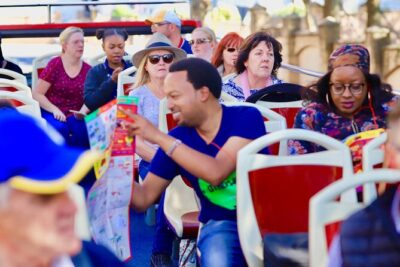
Johannesburg Hop-On Hop-Off City Tour with Soweto Option
Read our review →

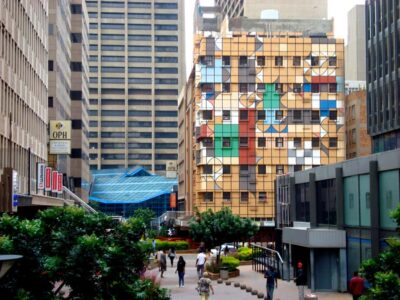
Jo’berg in 1 Day: Soweto, Apartheid Museum & City Tour
Read our review →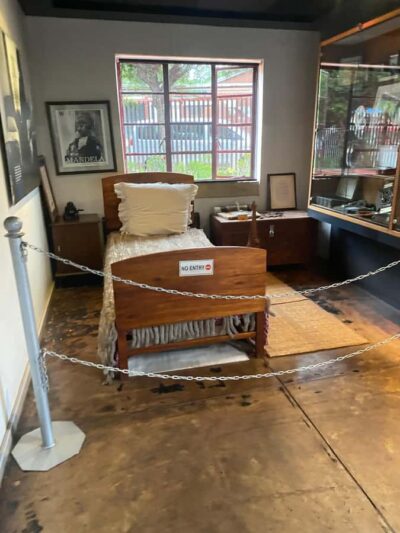
Full-Day Tour with Soweto and Apartheid Museum
Read our review →
Browse the lists this tour appears in