
Reviewed · CITY TOURS
Johannesburg City Walking Excursion
Johannesburg makes the most sense on foot, one neighborhood and one hard question at a time. This tour connects Braamfontein, Newtown, and Maboneng while explaining how gold, labor laws, apartheid, art, and migration shaped the city. I like the route because it moves beyond polished sights, and I like that it ends with local art and lunch rather than a quick photo stop.
The main caution is practical: this is a long urban walk, and the meeting instructions are not especially precise. You need comfortable shoes, sun protection, water or tissues, and a charged phone. One booking reportedly suffered from a no-show, so confirm the meeting details before setting out.
Key points to know before you book
- Braamfontein to Maboneng on foot: The route links several central districts instead of treating Johannesburg as a string of isolated attractions.
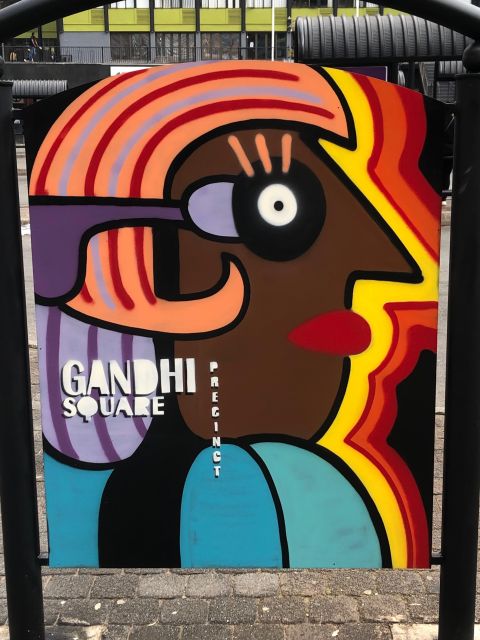
- History in real places: Workers Compound, Chancellor’s House, Gandhi Square, and the magistrate court give the past a physical setting.
- Tebogo may be your guide: One particularly strong experience was led by Tebogo, who explained Joburg clearly and made the city easier to understand.
- Local lunch included: You get a meal during the tour, which adds useful value to the $40 price.
- Street art closes the day: Maboneng provides a creative final stop, with local artists and their work.
- Not suitable for wheelchair users: Expect walking over city streets and a route that does not offer wheelchair access.
Why this Joburg walk is worth considering
Johannesburg is often treated as a place to pass through on the way to a safari. That misses the point. The city tells one of South Africa’s most important stories: gold brought workers and money, labor rules controlled movement, racial separation shaped neighborhoods, and political resistance helped change the country.
This excursion gives you that story through a series of real locations. You are not only looking at buildings. You are walking from Braamfontein toward Newtown, passing the Nelson Mandela Bridge, then continuing to places connected with music, labor, law, business, and art.
I like that the route does not pretend Joburg is simple or polished. The tour promises an explanation of the city’s current condition as well as its past. That matters. You will see a city still dealing with inequality and change, but also one with a strong creative spirit and a clear sense of local identity.
At $40 per person, the price is fair if you want context and company in central Johannesburg. A local lunch and transportation during the tour are included. Entry tickets are not, so you should not assume that every listed building or gallery includes admission in the price.
The biggest value is the guide. A good guide can make a large city legible, especially when you are walking through areas you might not choose to visit alone. The tour has received an overall rating of 4.3 from 12 ratings, with repeated praise for clear explanations, safety, and the chance to see the city center with someone who knows it.
A few more Johannesburg trips to weigh up
- Soweto: Walking Tour with a Local Guide and Lunch
★ 4.9 · 648 reviews - Soweto Walking Tour with Lunch
★ 5.0 · 288 reviews - Johannesburg: Local Food Tasting Guided Walking Tour
★ 4.7 · 192 reviews
Starting at Wing Republic in Braamfontein
The tour begins at Wing Republic, described as a restaurant marked by a beautiful black and white artwork. The meeting description is more visual than formal, so check the exact location before you go and allow time to identify the artwork.
Your guide starts with an overview of Johannesburg and its past. This opening is useful because the rest of the day covers a lot of ground. Without some basic context, the stops could feel like disconnected buildings. With it, the route becomes a story about industry, migration, law, politics, and culture.
Braamfontein is a fitting starting point. It gives you an early look at central Joburg before the route moves into Newtown and the inner city. The walk is not designed as a gentle sightseeing stroll with long pauses at every landmark. It is a city excursion with a serious amount of movement, so wear shoes that can handle several hours on foot.
An English-speaking guide leads the experience. One guide named in the feedback is Tebogo, who was praised for explaining many interesting details about Joburg. Guide quality matters here more than fancy facilities. Ask questions as you go, especially if you want more detail about present-day conditions rather than only historical dates.
Nelson Mandela Bridge and Newtown’s cultural story
The route continues from Braamfontein to Newtown, with a stop at the Nelson Mandela Bridge. The bridge is one of the city’s recognizable landmarks and gives the tour a strong visual transition into the cultural district.
Newtown is where the excursion turns toward music and art. You visit the Market Theatre and Mary Fitzgerald Square, both connected to South Africa’s cultural life. The guide explains the history of South African music and art, helping you see these places as part of a wider social story rather than simply attractive urban backdrops.
I especially like this section because it keeps the tour from becoming a march through political history alone. Johannesburg’s story includes protest and hardship, but it also includes performance, music, public gatherings, and artistic work. Mary Fitzgerald Square adds a public setting to that account.
The route’s mix of outdoor sights and cultural stops also keeps the day varied. Still, you should check whether particular interiors require an entry fee. Tickets are not included, and the tour information does not promise access to every building listed.
Workers Compound and the laws that controlled labor

The Workers Compound is one of the more important stops for understanding how Johannesburg developed. Here, the guide discusses the laborers immigration laws of South Africa and the systems that controlled workers arriving in the city.
This part may be uncomfortable, but it is essential. Johannesburg’s growth did not happen by accident. The gold industry needed labor, and laws were used to manage where workers could live, how they moved, and how families were affected. Seeing the Workers Compound gives those policies a physical setting.
The tour also includes the Science Discovery Centre. This provides a change of pace and shows another side of the city, one linked to education and public learning. The details available for the stop are limited, so treat it as part of the walking route rather than expecting a long, specialist science visit.
I would pay close attention here if you want to understand why South Africa’s cities and communities look the way they do today. The guide’s explanation is likely more useful than trying to absorb the subject from plaques alone. This is one of the points where a local perspective can turn a difficult topic into something easier to follow.
Same country, a completely different kind of day:
- From Johannesburg: Pilanesberg Nature Reserve Game Safari
★ 4.8 · 1,327 reviews - Johannesburg: Hop-On Hop-Off Bus with Optional Soweto Tour
★ 4.6 · 985 reviews - Soweto /Johannesburg and Apartheid Museum Guided Full Day Tour
★ 5.0 · 932 reviews - Johannesburg Hop-On Hop-Off City Tour with Soweto Option
★ 4.5 · 768 reviews
Ferreira Market, Chancellor’s House, and the legal lives of Mandela and Tambo
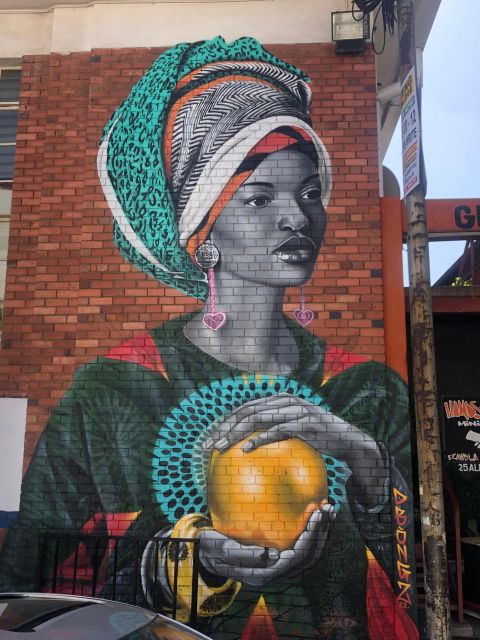
Next comes Ferreira Market, followed by Chancellor’s House. The route then focuses on Nelson Mandela and Oliver Tambo as attorneys.
This is a strong part of the excursion for anyone interested in the legal and political struggle against apartheid. Mandela is often presented through the lens of his presidency, but his work as a lawyer helps explain how he and Tambo supported people facing an unjust system. Chancellor’s House connects those public figures to a working professional life.
The stop at the magistrate court adds another layer. Courts can seem ordinary from the outside, but here they relate to the laws and institutions that shaped daily life. Your guide can help connect the building to the wider legal system and to the experiences of people who had to deal with it.
This section is not just for history specialists. I would recommend it to anyone who wants to understand how resistance operated through offices, courtrooms, and legal practice as well as through famous public speeches.
Main Street, Gandhi Square, and Johannesburg’s gold economy
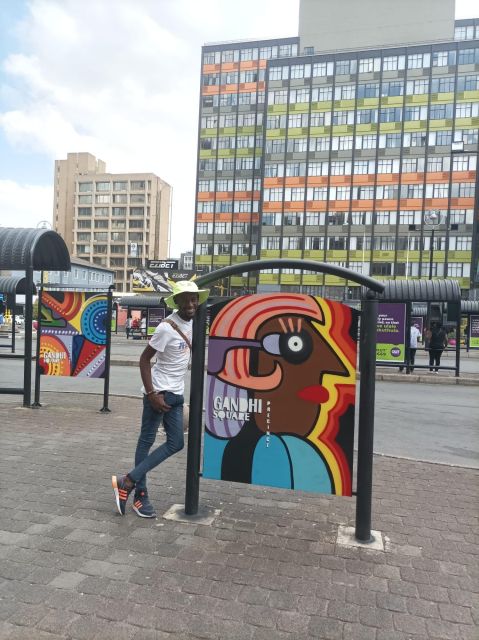
The walk continues along Main Street to Gandhi Square. The square is named for Mahatma Gandhi, and the guide explains its connection to the famous political figure.
The focus then shifts to South Africa’s biggest industry. Johannesburg’s identity is closely tied to gold, and Main Street helps place that economic story in the city center. Gold created wealth and jobs, but it also depended on systems of labor control and unequal treatment. This is where earlier stops at the Workers Compound begin to connect with the city’s commercial core.
I like the way the itinerary places industry beside politics and law. You are not given a single explanation for Joburg. Instead, you see how business, government, migration, protest, and culture affected one another.
The route also reaches the Carlton Centre, described as the fifth tallest building in Africa. That detail gives the stop a clear visual appeal, but the larger value is the chance to see Johannesburg’s scale from its central business district. Entry tickets are not included, so ask your guide what access is planned and what, if anything, costs extra.
ABSA Gallery and African art in the city center
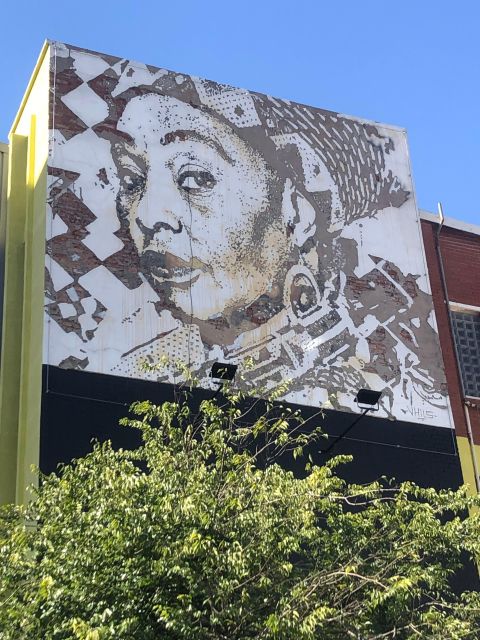
The ABSA Gallery is the tour’s main art stop before Maboneng. It exhibits works by artists from across Africa, giving you a chance to see how the continent’s art is presented in a Johannesburg setting.
This is a useful counterpoint to the political and industrial sections. Art can show how people interpret identity, memory, place, and change. It also helps prepare you for the final district, where the tour turns more directly toward street art and independent local creativity.
Do not assume the gallery visit is a private or extended art lesson. The supplied details do not specify how long you stay or whether admission is required. If you have a particular interest in African art, tell your guide early so the visit can be more useful to you.
The gallery also strengthens the value of the $40 price. You are getting more than a basic city walk. The day brings together public landmarks, historic sites, cultural institutions, and local art, with a meal included.
Maboneng, street art, and the final coffee stop
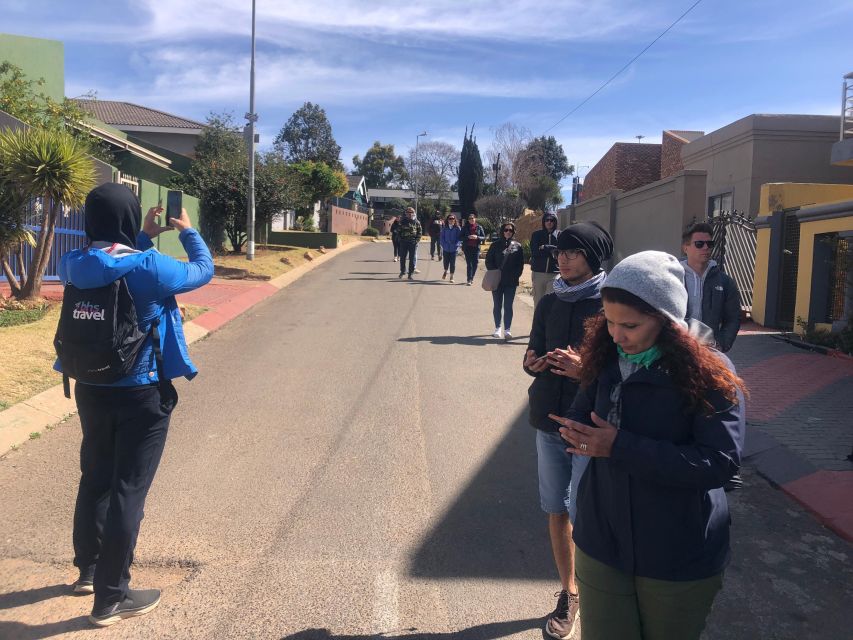
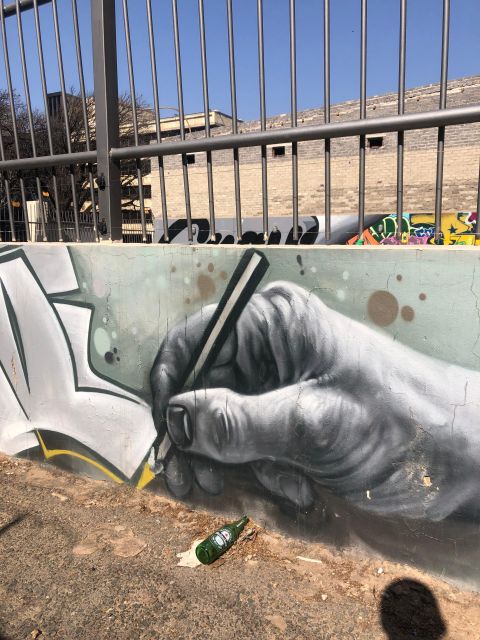
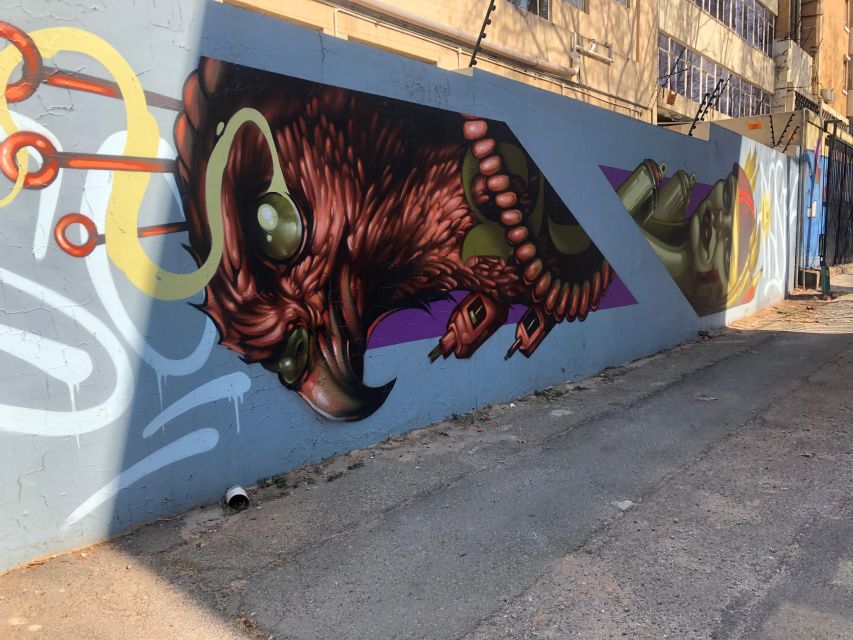
The final location is Maboneng, described as Johannesburg’s art world. Here you see local artists and their work, including the heartwarming street art that forms one of the tour’s main highlights.
Maboneng gives the excursion a hopeful ending. After learning about laws, labor, inequality, and political conflict, you finish among creative work and neighborhood art. That does not erase Joburg’s problems, but it shows how people continue to shape the city in positive ways.
This is likely to be the most relaxed part of the route. You can look closely at murals and other works while asking your guide about the artists and the area. The details do not specify named artists or a particular gallery schedule, so keep your expectations flexible.
The tour ends at Home of the Bean, a coffee shop where getting an Uber is easy. That is a practical finish, especially if you are still learning your way around Johannesburg. The stated ending information also says the activity ends back at the meeting point, so confirm the exact end arrangement with the provider before booking your return ride.
A local lunch is included during the day. The tour does not specify the restaurant, menu, or dietary options, so contact the provider in advance if you have food restrictions.
What the $40 price really covers
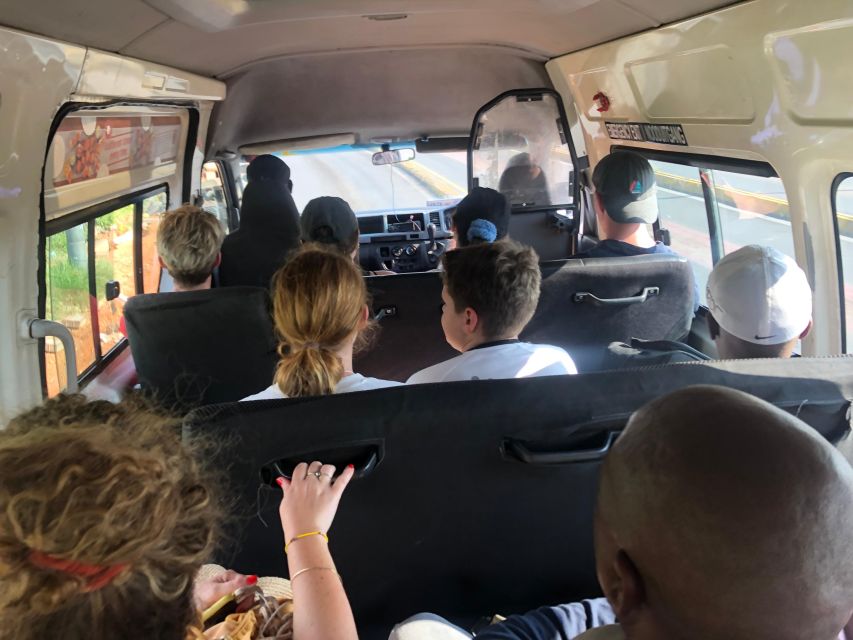
At $40 per person, this is a reasonable choice for a guided central-city experience, especially because lunch and transportation during the tour are included. You are paying for a local guide, a broad route, historical explanation, and help navigating parts of Joburg that you may not feel comfortable finding alone.
The price is less attractive if you want a short, gentle walk or guaranteed entry into every attraction. This is a substantial route with many stops, and tickets are excluded. You may also spend extra on drinks, additional food, or admission fees if any of the sites require them.
The tour’s strongest value is its human explanation. A guide can point out the links between the city’s gold economy, labor laws, legal history, and modern art scene. One very positive account singled out Tebogo for making Joburg understandable and interesting.
There is also a small but important reliability concern. One booking resulted in nobody arriving, which is a serious failure for any paid excursion. The overall rating remains 4.3 from 12 ratings, and several experiences were highly positive, but I would confirm the meeting point, start time, and guide contact details before the day of the walk.
Who should book this walking excursion
I would choose this tour if you want to understand Johannesburg rather than simply photograph its tallest buildings. It suits first-time visitors who want an introduction to the city center, history-minded visitors interested in Mandela and Tambo, and anyone drawn to African art and street murals.
It also suits people who prefer a local guide when visiting unfamiliar urban areas. The experience is specifically built around safe guidance through the city, and one strong account valued being able to visit the heart of Joburg with a guide rather than alone.
You should think twice if you have limited mobility. The tour is not suitable for wheelchair users, and the route involves extended walking. It also may not suit anyone looking for a tightly timed attraction tour with guaranteed indoor access.
Bring comfortable clothes, sturdy walking shoes, sunglasses, a sun hat, biodegradable sunscreen, a jacket, a camera, hand sanitizer or tissues, and a power bank. The tour operates despite the weather, so prepare for changing conditions. Weapons and sharp objects are not allowed, smoking indoors is prohibited, and littering and nudity are not permitted.
My booking advice
Book this Johannesburg City Walking Excursion if you want a thoughtful introduction to the city’s past and present, with a route that includes Newtown culture, labor history, Mandela and Tambo’s legal work, gold-era landmarks, African art, and Maboneng street art.
The best reason to go is the combination of local guidance and a wide range of real places. The main reasons to hesitate are the long walk, excluded entry fees, unclear meeting description, and one reported no-show. Reserve only after confirming the pickup point and timing. You can cancel up to 24 hours ahead for a full refund, and the reserve-now, pay-later option keeps your plans flexible.
FAQ
Where does the tour begin?
The tour begins at Wing Republic. The meeting instructions describe it as a restaurant with a beautiful black and white artwork as its painting, so confirm the exact location before arriving.
Where does the tour end?
The final stop is Home of the Bean, a coffee shop where it is easy to get an Uber. The activity information also says the tour ends back at the meeting point, so confirm the exact end arrangement with the provider.
What language is the tour offered in?
The tour is offered in English.
Is lunch included?
Yes. A local lunch is included in the price.
Is transportation included?
Yes. Transportation during the tour is included. Hotel pickup and drop-off are not included.
Are entry tickets included?
No. Entry tickets are not included in the price.
Is hotel pickup available?
No. Hotel pickup and drop-off are not included.
Is the tour suitable for wheelchair users?
No. The experience is not suitable for wheelchair users.
Does the tour operate in bad weather?
Yes. The tour takes place despite the weather, so bring suitable clothing and sun or rain protection as needed.
What should I bring?
Bring comfortable shoes, sunglasses, a sun hat or hat, a camera, biodegradable sunscreen, a jacket, comfortable clothes, hand sanitizer or tissues, and a power bank.
Can I cancel for a refund?
Yes. You can cancel up to 24 hours in advance for a full refund.
Just added around Johannesburg
- Lion park★ 4.5 · 5 reviews
- Lesedi cultural village:★ 5.0 · 6 reviews
- Lesedi Cultural Village with lunch or dinner cultural food★ 4.6 · 9 reviews
- Lesedi Cultural Village★ 4.9 · 4 reviews
- Lesedi Cultural Village Half-Day Tour★ 4.7 · 9 reviews
- Kruger National Park – 5 Day Safari Tour★ 4.7 · 4 reviews
- From Johannesburg: Kruger National Park 4-Day Luxury Safari★ 4.8 · 9 reviews
- Kruger National Park – 4 Day Safari Tour★ 4.8 · 19 reviews
City Tours, compared.
Cape Town Hop-On Hop-Off City Tour with Optional Cruise
Read our review →
Johannesburg Hop-On Hop-Off City Tour with Soweto Option
Read our review →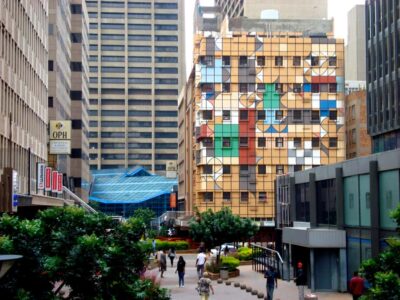
Jo’berg in 1 Day: Soweto, Apartheid Museum & City Tour
Read our review →
Cape Town City Pass: Save Over 50% on 80+ Top Attractions
Read our review →
Hop-On Hop-Off Bus, City Tour and Apartheid Museum
Read our review →

Browse the lists this tour appears in