
Reviewed · WILDLIFE
Jukani Wildlife Sanctuary Admission with Guided Tour
Jukani Wildlife Sanctuary gives you close views of rescued lions, tigers, leopards, and jaguars, along with a useful explanation of why these animals cannot simply be returned to the wild. The walk is guided, not a quick look from a car, and the small groups make it easy to hear and ask questions.
I like the 90-minute walking route and the guide’s focus on animal welfare rather than simple photo opportunities. I also like the practical timing advice: late afternoon often gives you a better chance of seeing active cats, while hot late mornings can mean more animals tucked into shade.
The main drawback is simple: these are living animals, not performers. On a hot day, you may see fewer cats moving about, and some enclosures may seem quiet. At about $24.73 per person, the price is fair for a guided visit, but your satisfaction depends greatly on the weather and your expectations.
Key points to know before you go
- Rescued big cats are the main attraction: Lions, tigers, leopards, jaguars, cheetahs, and pumas form the heart of the visit.
- The walk lasts about 90 minutes: You move from enclosure to enclosure with a professional local guide.
- Groups are limited to 16 people: That keeps the commentary audible and leaves room for questions.
- Late afternoon is usually the wiser choice: Animals can be less visible during the heat of the day, while feeding time may bring more activity.
- The sanctuary is in The Crags: You must arrange your own transport to Jukani Wildlife Sanctuary on the N2.
- The visit raises real conservation questions: It shows why rescued animals that have been domesticated, abused, or kept in private facilities may need lifelong care.
Meeting the cats at Jukani Wildlife Sanctuary
Jukani is not a traditional safari. You do not ride through open bush hoping to spot a distant lion. Instead, you follow a guide on foot through a wildlife sanctuary where animals live in large enclosures designed around their individual needs.
That difference matters. The cats here are at their permanent home. Some have been rescued from facilities that could no longer care for them. Others have been humanized, domesticated, mistreated, or kept in conditions that make release impossible. The sanctuary’s work is therefore less about preparing animals for freedom and more about providing safe, long-term care.
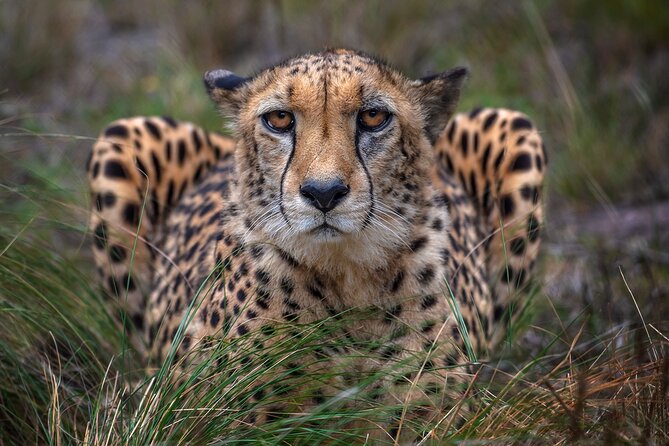
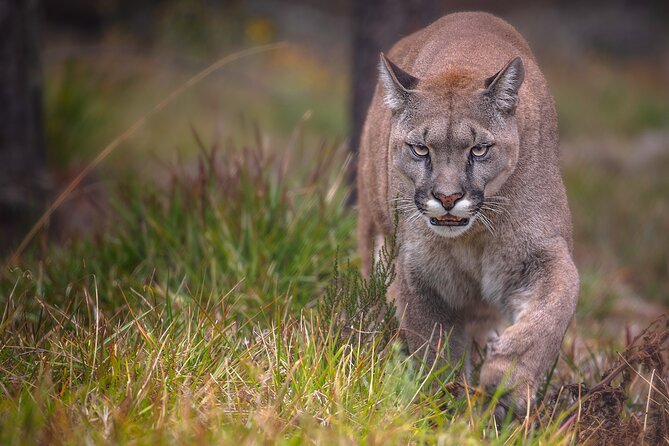
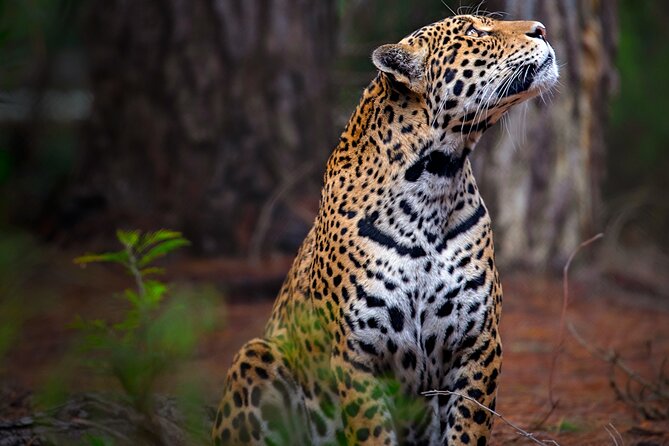
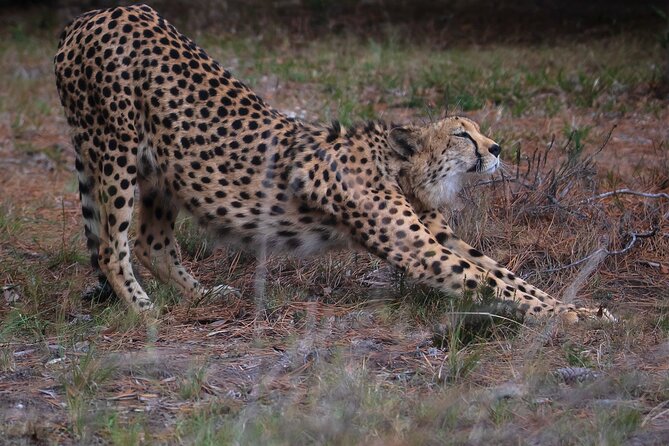
The main draw is the chance to see several kinds of big cat in one visit. Lions, tigers, leopards, and jaguars are all part of the route. You may also see the fast-moving cheetah and tree-climbing puma, two animals with very different habits and body shapes.
A guide gives the visit its purpose. Instead of simply pointing out a cat and moving on, the commentary covers biology, behavior, and conservation status. You learn to look at how an animal uses its space, where it rests, and how its past affects its present life.
The route also includes smaller and less familiar animals. Caracals, spotted hyenas, honey badgers, raccoons, zebra, and springbok add variety. If you are mainly interested in lions and tigers, these other animals may feel like an extra. I think they make the visit more worthwhile, since they show that Jukani is not only a big-cat display.
More Garden Route Tours in Plettenberg Bay:
- Plettenberg Bay: Swim with Seals
★ 4.7 · 887 reviews - Knysna Ziplines Tour
★ 5.0 · 688 reviews - Standard Canyoning Trip in The Crags, South Africa
★ 5.0 · 381 reviews
What the 90-minute walking safari is like
The advertised visit takes about an hour and a half. That is long enough to feel like a proper activity, but short enough to fit into a busy day around the Garden Route.
You begin at reception at Jukani Wildlife Sanctuary, on the N2 near The Crags. Before setting off, you are asked to sign an indemnity form. The activity ends where it begins, so you do not need to arrange a second meeting point.
From there, the guide leads the group from enclosure to enclosure. The pace is set by the animals and by the guide’s explanations. You may stop for a while when a cat is visible, then move on if an animal is resting out of sight.
This is a walking tour, so wear shoes and clothing suited to the weather. The sanctuary operates in all weather conditions. That makes a light rain jacket useful on a wet day and sun protection important in warm weather. One visitor specifically recommended carrying an umbrella on a hot day, since parts of the route can leave you exposed to the sun.
The route is suitable for most people, but remember that you are walking for roughly 90 minutes. Children must be accompanied by an adult. The small group limit of 16 is helpful for families because young children can remain near the guide and ask questions without getting lost in a large crowd.
The guides are a major part of the experience. Guides named in the feedback include Xola, Elvis, Riko, and Bazil. You should not assume a particular guide will lead your tour, but the repeated praise for their patience, warmth, and animal knowledge is encouraging. Xola was singled out for his enthusiasm, while Elvis was noted for helping people locate animals in each enclosure. Riko was praised for keeping two children, ages three and six, interested for the full 90 minutes.
Lions, tigers, leopards, and jaguars
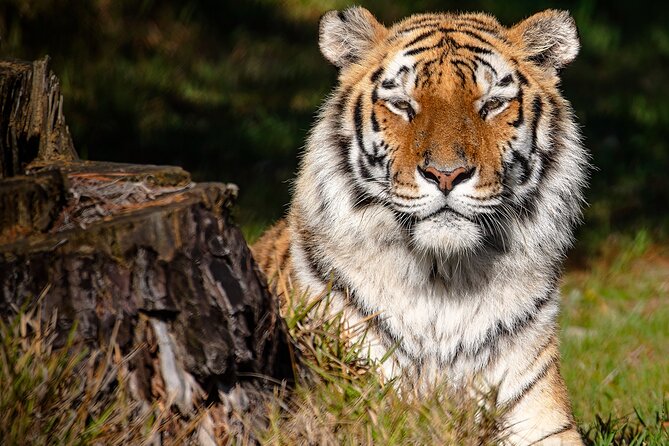
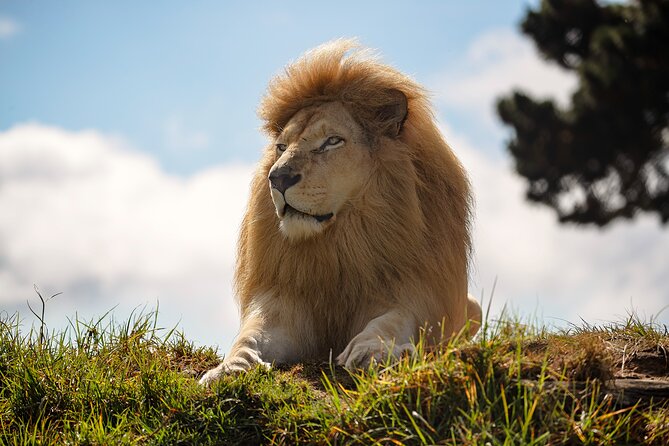
The big cats provide the memorable moments. Jukani lets you see them from close viewing areas rather than from a distant safari vehicle. Viewing decks can help you look into the enclosures with fewer fence obstructions, which is useful if you want photographs.
The setting is designed to give the animals room and shade. That is good for the cats, but it can make them harder for you to find. On a hot day, many animals may be resting in huts or shaded areas. You might see only a few cats moving around, even though several species are present.
This is where a guide earns the admission price. A good guide can help you locate an animal that blends into the background or is lying low in the shade. The explanation also prevents the visit from becoming a simple checklist of species.
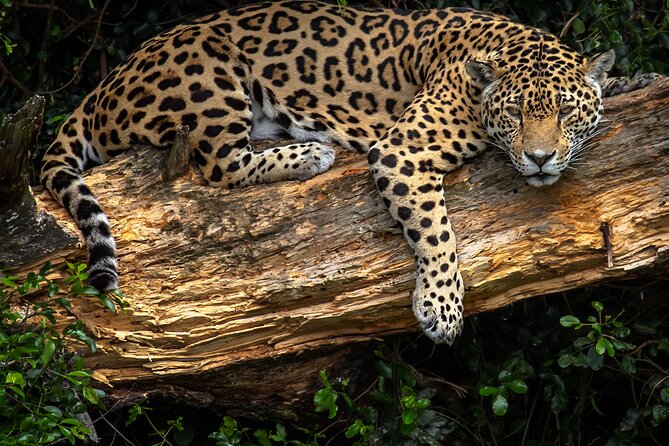
You may see a tiger stretched out in the shade, a jaguar close to the viewing area, or a lion resting rather than roaring. That is normal animal behavior. The sanctuary does not stage performances, and there is no promise that every cat will be visible at every moment.
For photography, the close viewing points are a real advantage. The fences can still interfere with pictures, so manual focus may help you focus on the animal rather than the wire. A camera with a long lens is not required by the tour information, but patient positioning and careful focus can improve your results.
Why the rescue message matters
The most useful part of the visit is the explanation of how these animals came to Jukani. Many cannot survive in the wild because people have altered their behavior or harmed them physically. Animals that have been kept as pets, used by private owners, or held in unsuitable facilities may lack the skills needed to hunt and live independently.
That raises difficult questions about zoos, private ownership, and the human desire to keep wild animals close. Jukani does not let you treat the cats as decorative objects. Their stories make the visit more serious, especially when you understand that their impressive appearance may hide a troubled past.
I appreciate that the sanctuary setting gives you time to think about those issues. A quick photograph can be memorable, but the guide’s explanation tells you why each animal is there and why lifelong care may be the only responsible option.
The experience is still designed for a general audience, not a specialist conservation course. You will not receive a technical lecture on every aspect of wildlife management. Instead, you get clear information while walking through the property, with time to ask about behavior, rescue, and the animals’ needs.
If you are looking for a place where every animal is preparing for release, this may not match your hopes. The sanctuary’s purpose is permanent care for animals that cannot return to the wild. That is worth understanding before you arrive.
A few more Plettenberg Bay trips to weigh up
- Guided Wildlife Tour and Forest Walk with Lunch Platter
★ 4.6 · 40 reviews - The Private Wildlife Tour
★ 4.5 · 12 reviews - Cape Town: Marine Wildlife Tour from the V&A Waterfront
★ 4.6 · 1,118 reviews - Big Five Game Reserve Wildlife Safari from Cape Town
★ 4.0 · 576 reviews
Choosing the best time of day
Timing can make a large difference. Several visits were much more successful in the late afternoon, when the heat eased and animals became more active. Some people also planned their visit around feeding at roughly 3:30 to 4 p.m.
The exact feeding schedule and animal activity can vary, so do not treat feeding time as a guaranteed show. Still, late afternoon is a sensible choice if you want better odds of seeing movement.
Late morning can be less rewarding during hot weather. Cats naturally seek shade and may remain inside shelters. One especially hot visit produced only brief views of a jaguar and tiger before the hour was over.
This does not mean a morning tour is a poor choice. You may have a cool day, active animals, or a cat resting in an open spot. It simply means you should plan around the animals, not expect them to follow your timetable.
The sanctuary offers multiple tour times during the day. If you have flexibility, I would choose a later departure and allow about two hours in the area. That gives you breathing room before or after the guided walk and avoids turning the activity into a rushed stop.
Is $24.73 good value?
At $24.73 per person, this is reasonably priced for a guided animal visit. Your admission is included, and prepaid entry saves you from buying a ticket at the gate. The professional local guide is also included, which is important because the commentary gives meaning to what you see.
The value is strongest for people who care about big cats and animal rescue. Seeing lions, tigers, leopards, jaguars, cheetahs, and pumas in one place would cost more time and money if you tried to find them separately in the wild.
The value is weaker if you need constant action. This is not a theme-park show. You may spend part of the walk waiting for a cat to appear or looking into a shaded enclosure. If animals are sleeping, the guide can explain their habits, but you cannot force a better sighting.
The small group also helps. With no more than 16 people, you can hear the guide and ask questions. That is a better setup than a large crowd gathered around a speaker, especially when the guide is explaining details about an animal’s background.
Food and drinks are not included. There is a cafe on the property, but the cost was described as high, so you may prefer to plan accordingly. Transport is also not included. You need to make your own way to the sanctuary on the N2.
Who will enjoy this visit most?
I would recommend Jukani to anyone with a strong interest in big cats, rescue work, or animal behavior. It suits families, photographers, and people looking for a worthwhile short activity near The Crags.
Families should find the 90-minute length manageable. Children must stay with an adult, and the guide-led format gives them something to listen for beyond simply spotting animals. The experience kept young children engaged for the full walk in one reported family visit, though every child is different.
Photographers will appreciate the close views and viewing decks. Be prepared for fences and animals that may be lying in shade. This is a place for patience, not guaranteed portrait shots.
It also works well as a spare half-day activity. One hour and 30 minutes is not enough to fill an entire day, and you should not plan it as your only major attraction. Pair it with other stops in the area, leaving enough time to arrive without rushing.
People seeking a conventional safari should set their expectations differently. You are visiting a sanctuary with rescued animals, not tracking free-ranging wildlife. The reward is close observation and a clearer understanding of why these particular animals need permanent homes.
Practical details for a smooth visit
Book ahead if your schedule is tight. The experience is often reserved about 12 days in advance, so popular departure times may not remain available at the last minute.
Your mobile ticket is convenient at arrival, and the prepaid admission helps you avoid the ticket-buying line. You still need to check in at reception and sign the indemnity form before the walk starts.
Tours are conducted in English. Afrikaans tours can be arranged, which may be useful if you prefer that language. Confirm the arrangement before your visit rather than assuming it will be available at every departure.
Dress for the forecast. The tour runs in all weather, and the route is outdoors. Bring sun protection in warm weather, an umbrella if strong sun is expected, and clothing that allows comfortable walking.
Free cancellation is available if you cancel at least 24 hours before the local start time. Inside that window, you cannot receive a refund, and changes are not accepted. That policy gives you some room to adjust plans, but it is worth checking the weather before the final cancellation deadline.
Should you book the Jukani guided tour?
Book it if you want close views of rescued big cats and value a guide who can explain the animals’ behavior and past lives. The price is fair, the group is small, and the 90-minute walk fits neatly into a Garden Route itinerary.
Choose a late afternoon time if possible, especially during warm weather. You will have a better chance of seeing the cats active, and feeding time may add movement, though neither activity is guaranteed.
Skip it if you need a full-day attraction, a true open-range safari, or nonstop animal action. Jukani is best understood as a thoughtful rescue sanctuary visit. Go with patience, comfortable clothes, and realistic expectations, and it can be a memorable and useful stop near The Crags.
FAQ
Where is Jukani Wildlife Sanctuary?
Jukani Wildlife Sanctuary is on the N2 in The Crags, Western Cape, South Africa.
How long does the guided tour last?
The walking tour lasts approximately 90 minutes. The total visit may take about one to two hours.
What animals can I see?
The sanctuary is home to lions, tigers, leopards, jaguars, cheetahs, pumas, caracals, spotted hyenas, honey badgers, raccoons, zebra, and springbok.
Is admission included?
Yes. The entrance fee is included in the experience.
Is transportation included?
No. You must arrange your own transportation to and from Jukani Wildlife Sanctuary.
How large are the tour groups?
The group is limited to a maximum of 16 people.
What language is the tour conducted in?
The tours are conducted in English. Afrikaans tours can be arranged.
Can children join the tour?
Yes. Children may participate, but they must be accompanied by an adult.
Does the tour operate in bad weather?
Yes. The activity operates in all weather conditions, so you should dress appropriately.
Can I cancel for a refund?
You can receive a full refund if you cancel at least 24 hours before the experience start time. Cancellations or changes made less than 24 hours beforehand are not accepted and are not refunded.
Just added around Plettenberg Bay
- eBike Tours★ 5.0 · 5 reviews
- The Private Wildlife Tour★ 4.5 · 12 reviews
- Seal Swimming Activity in Plettenberg Bay★ 5.0 · 23 reviews
- 1.5-Hour Seal Viewing Boat Tour in Plettenberg Bay★ 4.5 · 16 reviews
- Cats in Conservation★ 5.0 · 10 reviews
- Quad Bike Fun Ride in The Crags, Plettenberg Bay★ 5.0 · 5 reviews
- 3D ARCHERY EXPERIENCE (1,5 hour guided tour) in Plettenberg Bay★ 5.0 · 25 reviews
- Birds of Eden Admission Ticket★ 4.5 · 15 reviews
Wildlife, compared.

Big Five Game Reserve Wildlife Safari from Cape Town
Read our review →

2 Day South African Wildlife Tour with 4×4 Safari from Cape Town
Read our review →
Schotia Safaris: Best Wildlife Encounters in Port Elizabeth
Read our review →
Browse the lists this tour appears in