
Reviewed · HISTORICAL TOURS
African Township And Cultural Tour – Langa from Cape Town Half Day
Langa is not a polished sightseeing set piece. It is a working community, and this half-day tour gives you a structured way to see its art, businesses, hostels, food, and daily routines with local guidance. At Guga S’thebe, you can try African drumming and see pottery made by local artists.
I like the small group of no more than 15 people, which leaves more room for questions and conversation. I also like that Remi gives the tour a human focus, introducing you to residents and explaining how shipping containers have become shops, salons, barbershops, and even homes. The main consideration is that some sights, including poverty, crowded hostels, and a prepared sheep’s head, may be difficult to take in.
Key points before you book
- Guga S’thebe sets the tone: See local art and crafts, watch performing arts, try African drumming, and learn about pottery.
- Langa is explained through everyday places: Walk past a police station, school, hostels, shops, and container businesses rather than seeing the township from a vehicle window.
- Local voices are central: Remi and a native township guide help you speak with residents and ask respectful questions.
- You may taste township beer and African food: A local brewing facility and a typical township restaurant are part of the experience, though lunch is not included.
- The group stays manageable: The tour is limited to 15 people, with an air-conditioned vehicle and bottled water.
- The price covers useful basics: At $64.07 per person, hotel pickup, drop-off, two guides, transport, water, and included admissions make this a practical half-day outing.
Why Langa makes a worthwhile half-day outing
Cape Town can be easy to admire from its waterfront, beaches, and mountain viewpoints. Langa asks you to look at another side of the city, one shaped by apartheid-era planning, migrant labor, local enterprise, art, and community life.
That change of setting is the point. You are not simply driven through a township and shown a few photo stops. The tour uses ordinary places to explain how Langa works. A police station, a school, a hostel, a food stand, and a converted shipping container all become part of the story.
I find that approach more useful than a quick drive-by. You can ask questions, meet people, and connect the past with what you see today. The experience is also guided, which matters in a place where local knowledge helps you move respectfully and understand what you are seeing.
Remi is the named guide associated with the tour, and his role is a major part of the experience. He explains township life, answers questions, and gives you time to speak with residents. A native township guide joins the outing as well, adding local context that a guide based only outside Langa could not provide.
The tour lasts about four hours. That is enough time to see several parts of Langa without committing an entire day, though it also means the schedule is fairly full. You should expect a broad introduction rather than a slow, detailed study of every stop.
A few more Cape Town trips to weigh up
- Cape Town: Art, Culture & History Walking Tour
★ 4.9 · 392 reviews - Cape Town Guided City Cycling Heritage Tour – Private Tour
★ 5.0 · 27 reviews - Robben Island Tour; Pickup, Drop-off; Guided Tour Historic Prison
★ 4.5 · 23 reviews
Starting from Cape Town and entering Langa
The advertised start time is 8:30 a.m., with the meeting point listed at The Silo Hotel in the V&A Waterfront. Hotel pickup is included in the tour details, so confirm the pickup arrangement when you book, especially if you are staying somewhere other than the listed meeting point.
Transport is provided in an air-conditioned vehicle. That is useful in Cape Town, where a morning can begin cool and turn warm quickly. Bottled water is also included, a small but practical touch during the walking portions.
The tour provides round-trip transport, so you do not need to arrange a taxi to Langa or work out your own route back. The activity ends at the meeting point. Since the exact pickup process can vary, check the confirmation carefully for the time and location given to you.
The group limit is 15 people. That is not a private tour, but it is small enough for the guide to manage questions and for you to hear explanations. It also helps during resident interactions, where a huge group would feel intrusive.
Guga S’thebe: art, pottery, and the first drumbeat
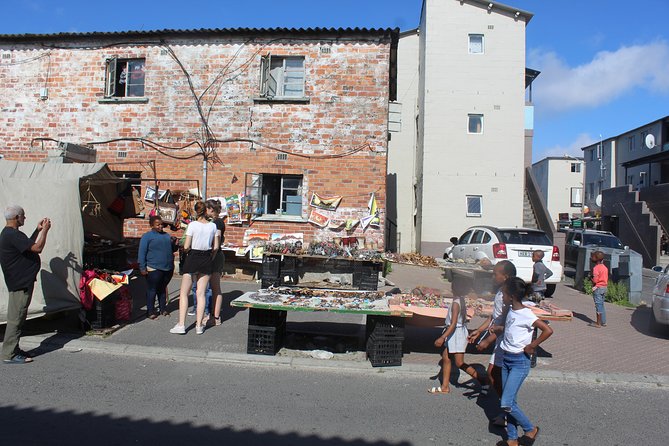
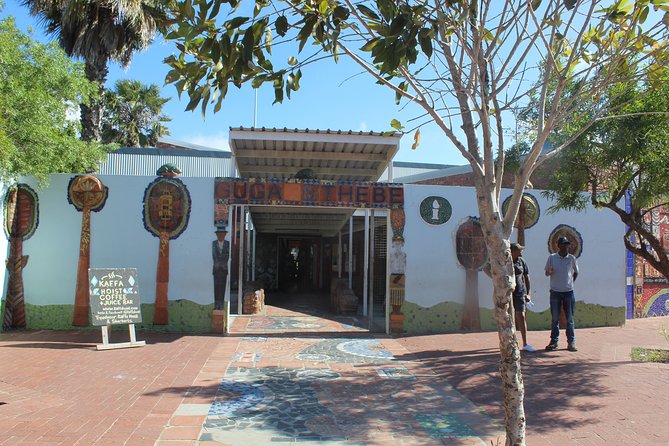
The first stop is Guga S’thebe, a local art and craft center. It serves as a creative space and a community meeting place, so it gives you an immediate introduction to Langa through local work rather than through statistics alone.
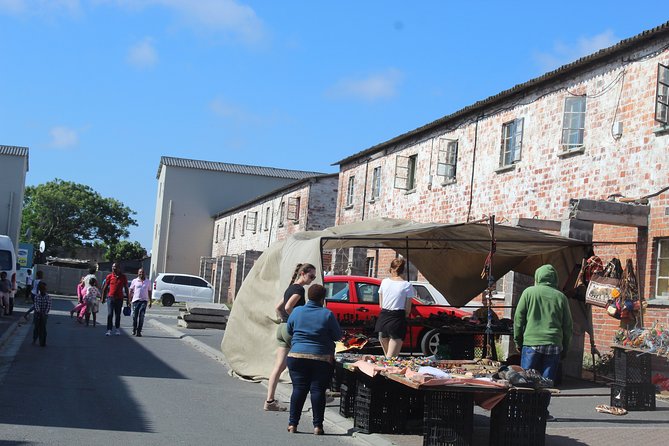
You can see art and crafts made for sale by local residents. Buying something here can support the people producing it, but take your time and choose something because you genuinely like it. The value of the stop is not just shopping. It is seeing how creative work can provide income and bring people together.
Performing arts are also part of the visit. The program includes a chance to learn African drumming, which gives you an active role instead of leaving you on the sidelines. Do not expect a long music workshop in a four-hour tour, but the lesson offers a direct connection to local performance traditions.
Pottery is another focus. You may see how it is made and learn about the craft from people working in the center. This is a good place to ask about materials, training, sales, and how art fits into household income.
The scheduled stop is about 30 minutes. That is enough for an introduction, a short activity, and a look at the crafts, but not enough for a leisurely browse of every item or a full performance program. If you enjoy hands-on cultural activities, this is likely to be one of the strongest parts of the morning.
Walking through Langa’s working streets
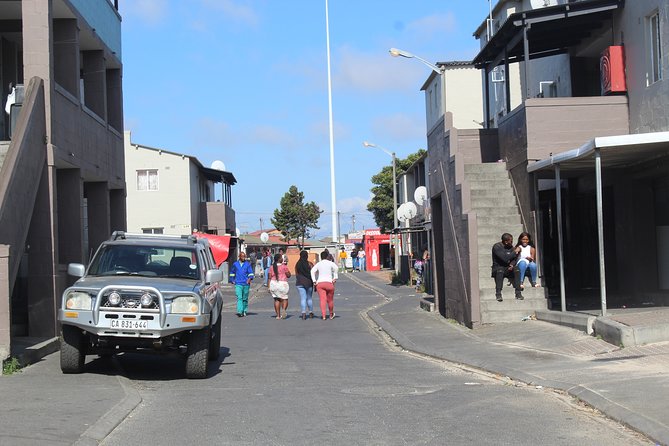
After Guga S’thebe, the experience shifts from a cultural center to the streets of the township. You walk past the SAPS Langa Police Station and learn why Langa is considered Cape Town’s oldest township.
The police station is not presented as a grand monument. Its value is local and historical. It serves as a working place for the community, and it helps connect the township’s past with its present-day institutions.
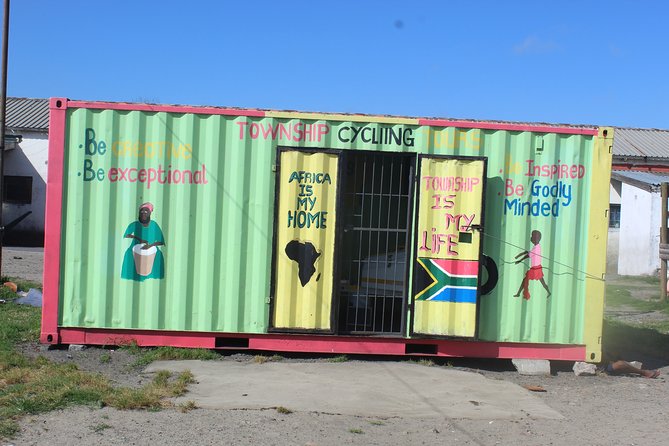
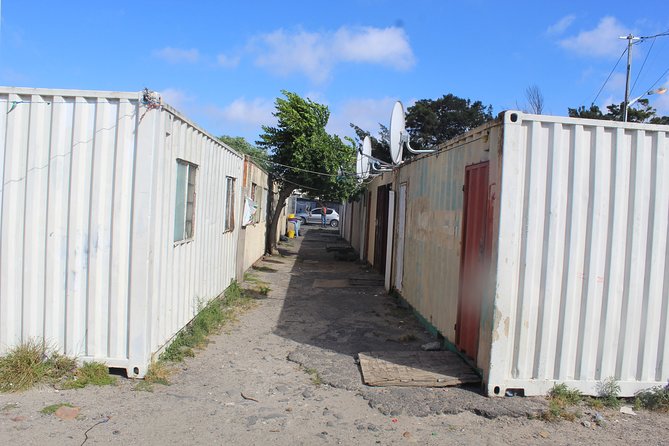
You also see how residents use shipping containers for business and housing. Containers have been adapted into hair salons, barbershops, and other small enterprises. This is one of the clearest examples of local ingenuity on the tour. A container may look temporary from the outside, but inside it can be a source of income, a service for neighbors, or a family home.
These details are easy to miss if you pass through by car. Walking lets you notice the scale and variety of local businesses. It also gives you a chance to ask how people use these spaces and what kinds of work support the community.
The walking section calls for good manners. Ask before taking photographs of people, homes, or businesses, and let the guide lead conversations. The point is to meet people as neighbors and professionals, not to treat the township as a human exhibit.
Same country, a completely different kind of day:
- Wine Tour: Paarl, Franschhoek & Stellenbosch incl 3 wineries
★ 5.0 · 3,940 reviews - Cape Town: Hop-On Hop-Off Bus Tour with Optional Cruise
★ 4.8 · 3,929 reviews - Cape Town: Cape of Good Hope & Penguins Day Tour with Pickup
★ 4.7 · 3,362 reviews - Zipline Cape Town – From Foot of Table Mountain Reserve
★ 5.0 · 3,179 reviews
Beer, food, and the social side of the tour
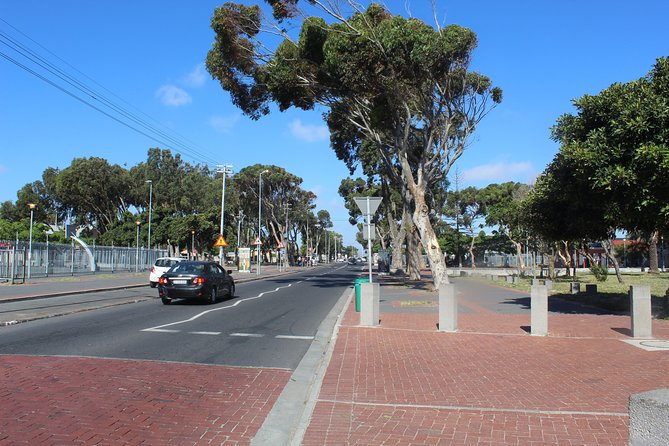
The tour includes a visit to a local African beer brewing facility, where you can taste the beer. This adds a social and sensory element to the morning, and it shows how small local production can be part of township life.
The beer is not simply a novelty tasting. The experience connects it to places where people gather and spend time. You can ask the guide about the brewing process, how the facility operates, and the role of local drinks in community life.
A typical township restaurant is also included as an opportunity to taste African food. Lunch itself is not included, so treat this as a chance to sample local food rather than a full meal covered by the tour price. The details of the menu are not specified, so you should not book expecting a particular dish.
You might encounter a local delicacy involving a sheep’s head, prepared before cooking by local women. For some people, this is a memorable look at food traditions. For others, it may be confronting. The tour is at its best when you approach the subject with curiosity and respect, without assuming that unfamiliar food is merely a spectacle.
If you do not drink alcohol, confirm with the guide what nonalcoholic options are available at the brewing stop. The supplied details promise a beer tasting, but they do not specify alternatives.
Hostels, schools, and the apartheid-era story
The tour visits local hostels that were built for male migrant workers under apartheid. These buildings help explain how government policy separated families and controlled labor. You see not only the physical structures but also the effect that such planning had on everyday life.
The hostel section may be one of the more serious parts of the tour. You are looking at homes where people live, not ruins preserved for easy sightseeing. Listen closely to the guide, keep your camera away unless invited, and ask questions in a way that recognizes the dignity of the people who live there.
You also walk past a school known for producing national sportsmen. This connects education and sport with local pride. The stop is brief, but it adds balance to the tour. Langa is shown not only through hardship and government neglect, but also through talent, ambition, and community achievement.
The tour also asks you to consider how far the government has gone in providing the quality of life promised after independence. That is a large question for a short outing, but the places you see give it a practical frame. You can compare public services, housing, local businesses, and community facilities instead of discussing politics in the abstract.
The experience does not present an easy, one-sided story. You may see creativity beside poverty, strong community ties beside difficult housing conditions, and new businesses beside old structures built under segregation. That complexity is valuable, though it can make the morning emotionally demanding.
Meeting residents and handling sensitive subjects
A strong feature of the tour is the opportunity to meet local residents and ask questions. Remi’s approach is described as patient, allowing time for conversation rather than rushing from one stop to the next.
Still, an organized interaction does not remove the need for courtesy. You should introduce yourself, listen more than you speak, and avoid questions that reduce people to poverty or political hardship. Ask about work, family life, schooling, business, food, music, or whatever the guide suggests is suitable.
Safety is another practical concern. The tour is designed for tourists and includes a registered, accredited guide along with a native township guide. That provides structure and local support, which is especially useful for a first visit. The guide’s presence does not mean you should wander away from the group or ignore normal city precautions.
The tour may also offer a visit to an African traditional healer. The healer can discuss your past, future, and love life, and you may be offered a love portion. This is optional in spirit, and you should decide in advance what you are comfortable with. If you are not interested, simply tell the guide.
For some people, this will be a fascinating look at belief and traditional practice. For others, it may feel too personal or commercial. Ask questions respectfully, and do not feel pressured to purchase or accept anything.
Is $64.07 a fair price?
At $64.07 per person, this is not the cheapest way to spend a morning in Cape Town. You are paying for more than transport, though. The price includes pickup and drop-off, an air-conditioned vehicle, a registered guide, a native township guide, bottled water, included admissions, a beer tasting opportunity, and a chance to sample African food.
The small group also improves the value. With a maximum of 15 people, the guide can give clearer explanations and manage conversations better than on a large coach outing. The tour is still shared, but it has a more personal scale.
The price makes the most sense if you want context and local contact without arranging several separate visits. It is less attractive if you only want a quick view from a vehicle, a full meal, or a long craft workshop. Lunch is not included, and the schedule does not promise extensive time at each stop.
I would compare it with the cost of arranging private transport, a guide, and local visits on your own. For many people, the convenience and local leadership justify the price, especially on a first Cape Town visit.
Who should book this Langa experience?
I would recommend it to you if you want to understand Cape Town beyond its central tourist areas and are willing to listen carefully. It suits people interested in social history, local business, crafts, food, music, and present-day community life.
It is also a good fit if you prefer a half-day activity. You start at 8:30 a.m. and return after roughly four hours, leaving the rest of the day open.
You should think twice if you want a carefree sightseeing outing with only light topics. Langa is presented honestly, and you may see crowded living conditions, difficult housing issues, and the lasting effects of apartheid planning. Some food and traditional practices may also be unfamiliar.
The tour is listed as suitable for most people, and it is near public transportation. No special physical requirements are stated, but parts of the experience involve walking. If you have mobility concerns, ask the provider what the walking route involves before booking.
Booking, weather, and cancellation notes
Confirmation is provided when you book. The experience has a free cancellation policy if you cancel at least 24 hours before the start time. Cancellations made within 24 hours are not refunded, and changes during that period are not accepted.
The tour requires good weather. If poor weather forces cancellation, you are offered another date or a full refund. The activity also requires a minimum number of participants. If that minimum is not reached, you are offered another date, another experience, or a full refund.
Should you book the Langa township tour?
Book it if you want a guided, respectful introduction to township life and value direct conversation over polished sightseeing. The strongest reasons are the local guides, manageable group size, hands-on drumming and pottery, and the chance to see how residents turn limited spaces into working businesses.
Skip it if you are looking for a relaxed food tour, a private experience, or a simple photo stop. Langa can challenge you, and the most worthwhile parts require attention, patience, and respect.
For a first visit to Cape Town, this four-hour outing offers useful context at a reasonable all-in price. Go with an open mind, keep your questions thoughtful, and let the local guides explain what you are seeing.
FAQ
How long does the Langa township tour last?
The tour lasts approximately four hours and begins at 8:30 a.m.
Where does the tour start?
The listed meeting point is The Silo Hotel, Silo Square, Victoria & Alfred Waterfront, Cape Town.
Does the tour provide hotel pickup?
Yes. Hotel pickup and drop-off are included. Confirm your exact pickup arrangements when booking because the listed meeting point is The Silo Hotel.
What is the group size?
The tour has a maximum of 15 participants.
Is transportation included?
Yes. Transport is provided in an air-conditioned vehicle, with return transport after the tour.
Is food included?
The tour includes an opportunity to visit a typical township restaurant and taste African food. Lunch is not included.
Can I taste local beer?
Yes. The tour visits a local African beer brewing facility where you can taste the beer.
What happens if the tour is canceled because of bad weather?
You are offered a different date or a full refund if poor weather causes the cancellation.
Just added around Cape Town
- Private Tour to 20 Wine Tasting in Stellenbosch and Franschhoek★ 5.0 · 11 reviews
- Sunset Safari Big 5 Aquila with Snacks and Wine Tasting★ 5.0 · 12 reviews
- Robben Island, Kirstenbosch wine tasting Tour★ 5.0 · 10 reviews
- Zip Line and Wine from Cape Town★ 5.0 · 14 reviews
- Explore Atlantis Sand Dunes with a 1hour 30mins sandboarding tour★ 5.0 · 5 reviews
- Private Group Photoshoot in Cape Town★ 5.0 · 21 reviews
- Private Transfer from Cape Town International Airport★ 5.0 · 4 reviews
- 1 Hour Cape Town City Center Photoshoot Experience★ 5.0 · 19 reviews
Historical Tours, compared.

Soweto Township Cultural Tour incl Apartheid Museum and Nelson Mandela House
Read our review →
Cape Town Guided City Cycling Heritage Tour – Private Tour
Read our review →
Robben Island Tour; Pickup, Drop-off; Guided Tour Historic Prison
Read our review →

Browse the lists this tour appears in