
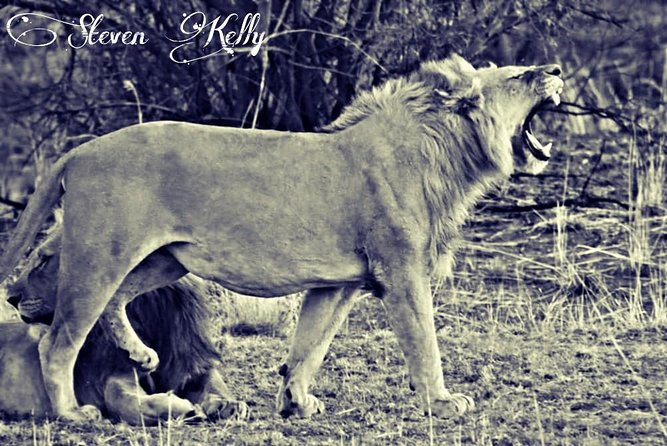
Reviewed · KRUGER NATIONAL PARK SAFARIS
Kruger Lion Expedition with the Little Lionman Steve Kelly
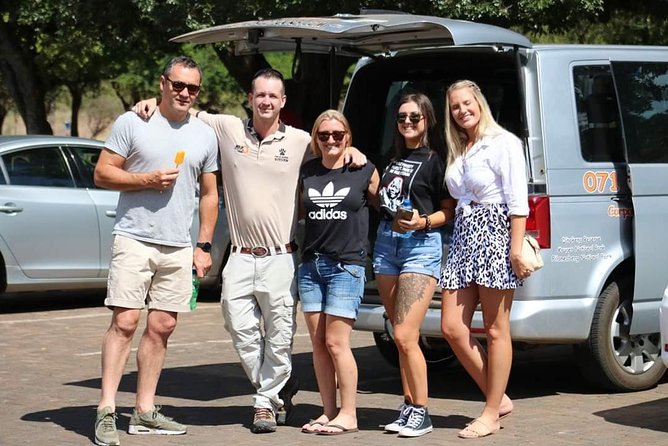
Kruger’s lions are the main event here, but the most unusual part is the chance to search for them on foot, escorted by two qualified armed rangers. Steven Kelly, the guide known as the Little Lionman, brings years of hands-on work with lions, leopards, cheetahs, hyenas, and wild dogs to a safari built around predator behavior.
I like the mix of four different camps and two night drives, which gives you several parts of southern Kruger rather than one fixed base. I also like that Steven handles the long transfers, meals, camp changes, and park activities, leaving you free to watch for tracks and tell a leopard from a shadow.
The catch is the amount of road time. The tour begins with a roughly 587-kilometer transfer from Johannesburg or Pretoria, and several park days involve long drives. At $1,298.71 per person, it offers a lot, but you should be comfortable with early mornings, basic camp routines, and the fact that wild animals never follow a schedule.
Key points to know before booking
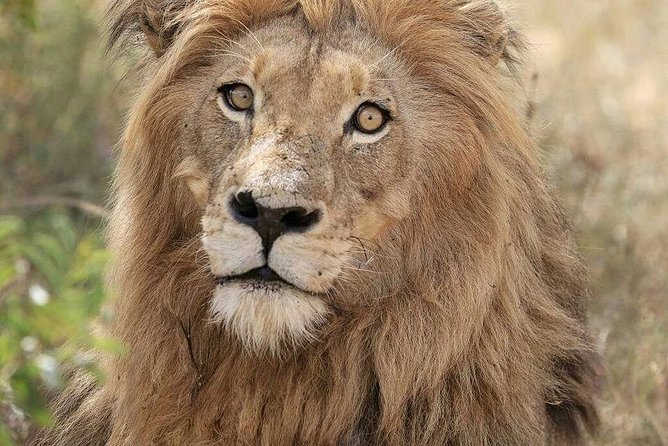
- Lion tracking on foot: Spend about four hours walking in a concession near Skukuza with two qualified armed rangers.
- Four Kruger camps in four nights: Sleep at Skukuza, Lower Sabie, Crocodile Bridge, and Berg en Dal for a broad southern Kruger route.
- Two two-hour night drives: Search for active lions, leopards, and hunting animals after dark at Lower Sabie and Berg en Dal.
- Steven Kelly leads the trip: His background includes more than eight years working with Africa’s major predators and captive big cats.
- Most major costs are covered: Transport, accommodation, park fees, meals, guide fees, binoculars, snacks, drinks, WiFi, and the listed activities are included.
- Private tour format: Only your own group takes part, with pickup offered from a hotel or airport in Johannesburg or Pretoria.
Why this safari is built around lions
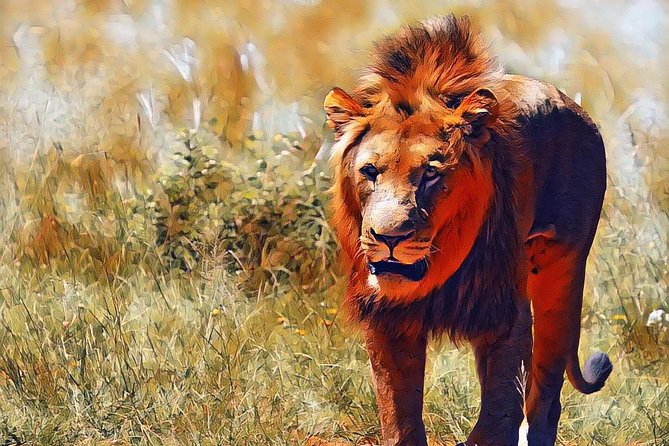
Many Kruger safaris promise the Big Five and then leave you to hope for the best. This trip has a narrower aim: find lions and understand how predators use the bush. That focus gives the days a clear purpose, especially when you are not simply driving from sighting to sighting.
Steven Kelly is central to the experience. He spent more than eight years working directly with lions, leopards, cheetahs, hyenas, and wild dogs, first in the captive-animal industry and later in conservation education and wild safari work. His nickname, the Little Lionman, came from the South African rock band the Parlotones, who recognized his reputation as a big-cat handler.
His background should add useful context when you see a pride resting under a tree or a lone male moving through open grass. You can expect plenty of stories about his earlier work, including his connection with Mad Mike, the childhood hero who helped turn his attention from captive animals toward the importance of wildlife in the wild.
That personal angle is one of the strongest reasons to choose this trip. You are not just being driven around a park. You are being shown how to watch for predator activity, read the behavior of lions, and think about the difference between seeing a wild animal and seeing one in captivity.
More Kruger National Park Safaris in Johannesburg
- From Johannesburg: 3-Day Budget Tent Kruger Park Safari
★ 4.5 · 163 reviews - 3-Day Kruger National Park Open Vehicle Safari
★ 5.0 · 61 reviews - Johannesburg: 4-Day Classic Kruger National Park Safari
★ 4.8 · 52 reviews
Day 1: the long road from Johannesburg to Skukuza
Pickup begins early, listed around 5:30 or 6:00 a.m., from a hotel or airport in Johannesburg or Pretoria. Confirm the exact pickup time when you book, since the published details use both times.
The first day is mostly a transfer. The drive to Skukuza is about 587 kilometers and is described as taking roughly eight hours, with the route passing through the Panorama area and the Blyde River Canyon before continuing toward Kruger National Park.
This makes Day 1 a demanding start, but the route gives you more than a plain highway transfer. Mountain scenery and the Blyde River Canyon break up the journey before you reach Skukuza, the park’s main camp and one of the best-known bases in Kruger.
Once at camp, the plan is simple: check in, take a quick swim, and have dinner at the restaurant. Do not expect a full safari day on arrival. The value is in getting you deep into Kruger in one organized move, without asking you to arrange a separate airport transfer, park entry, camp booking, and meal plan.
Day 2: walking after lions near Skukuza
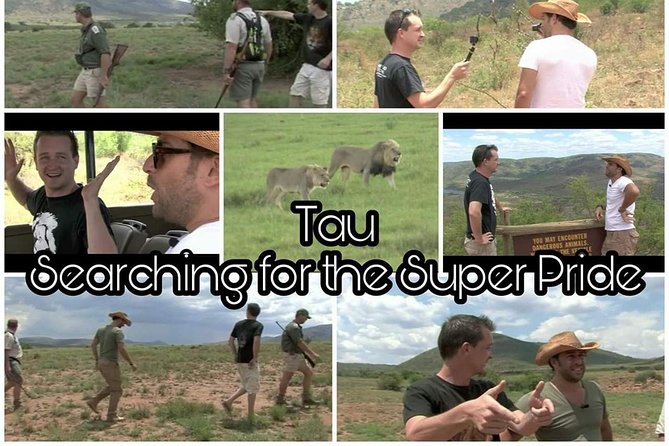
The safari proper begins before sunrise. Steven wakes you at about 5:30 a.m. with coffee and rusks, a small but welcome touch before the morning activity.
The main event is a roughly four-hour walk in a concession near Skukuza. This area is known for lions, leopards, and other Big Five animals. Two qualified armed rangers escort the walk, while Steven and the other guides explain the plants, animals, tracks, and signs that can reveal predator activity.
Walking changes the way you experience Kruger. From a vehicle, you can cover much more ground and get close to animals without making them feel threatened. On foot, you move more slowly and pay attention to smaller clues. A track, scent, alarm call, or patch of disturbed grass can matter as much as a direct sighting.
The safety setup also matters. This is not a casual stroll beside the road. The armed rangers provide the required protection while you learn how to move through an area where large predators live. The supplied details do not promise a lion sighting on foot, and that is worth keeping clear in your mind. The goal is to search in a strong lion area, not to turn a wild animal into a scheduled appointment.
After the walk, you return for breakfast, pack up, and begin a slow drive toward Lower Sabie. The drive takes about four hours and works as another game-viewing period. Since you are moving through Kruger, keep your binoculars ready even when the official activity has ended.
Lower Sabie and the first night drive
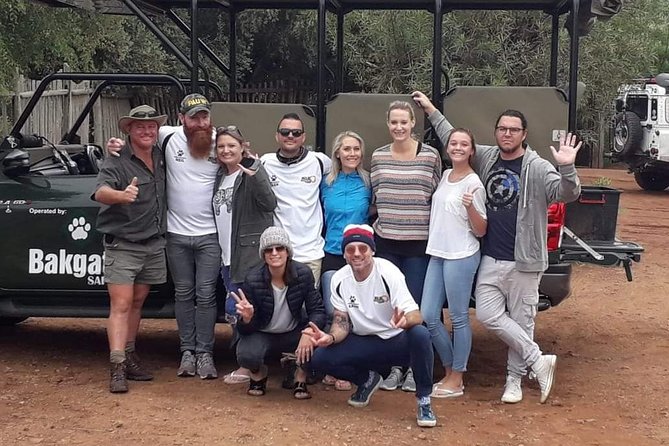
Lower Sabie is chosen for its large numbers of lions and hyenas. After settling in, you have a few hours to relax before dinner and a two-hour night drive.
Night drives add a side of Kruger that you cannot get during normal daylight viewing. Lions are often more active after sunset, and darkness gives you a chance to search for predators stalking antelope. You may also see animals that remain hidden during the heat of the day, though no particular sighting can be guaranteed.
After the drive, the group gathers around a warm fire. This is when Steven’s personal story becomes part of the evening. He talks about his work with captive lions, his shift toward wild animal education, and the start of his company with Mad Mike.
I like this rhythm: active morning, slow afternoon transfer, then a focused night outing. The drawback is that Day 2 is long. You begin before dawn, walk for four hours, drive for another four, take a night drive, and still need enough energy to enjoy the campfire.
Same country, a completely different kind of day:
- From Johannesburg: Pilanesberg Nature Reserve Game Safari
★ 4.8 · 1,327 reviews - Johannesburg: Hop-On Hop-Off Bus with Optional Soweto Tour
★ 4.6 · 985 reviews - Soweto /Johannesburg and Apartheid Museum Guided Full Day Tour
★ 5.0 · 932 reviews - Johannesburg Hop-On Hop-Off City Tour with Soweto Option
★ 4.5 · 768 reviews
Day 3: the route toward Crocodile Bridge
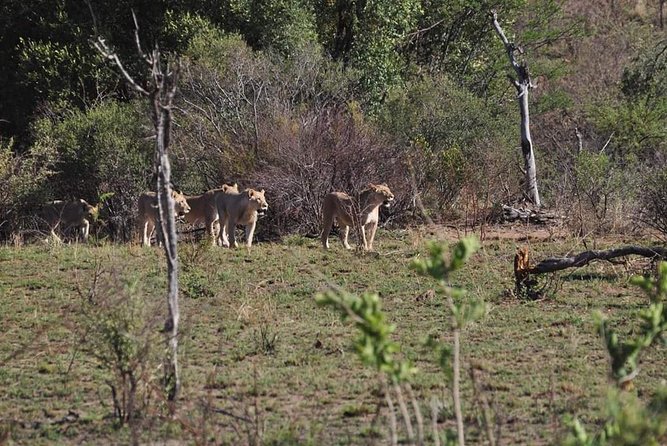
Day 3 begins with a full English breakfast and a roughly three-hour game drive to Crocodile Bridge. The route is not just a transfer. It is a chance to watch the bush change as you move through southern Kruger and to search for animals along the way.
Crocodile Bridge is known here for the Vuremi Pride, described as a large group of 22 females and nine male lions. A white male lion had also been seen moving with the pride recently, but sightings can change quickly, so treat that as a possibility rather than a promise.
Large prides can be fascinating because they reveal more than one animal’s behavior. You might see adults resting while younger lions play, several males guarding the group, or a pride spread out after a hunt. The guide’s skill matters most when the lions are doing something ordinary. Knowing why they position themselves in shade, stay close to one another, or ignore a passing vehicle can turn a quiet sighting into a useful lesson.
The camp change also helps prevent the trip from feeling repetitive. You are not returning to the same road each afternoon. At the same time, moving every day means you spend less time settling into each camp. Pack in a way that lets you access a camera, jacket, sunscreen, and binoculars without unpacking everything.
Day 4: Berg en Dal, buffalo, lions, and a final night search
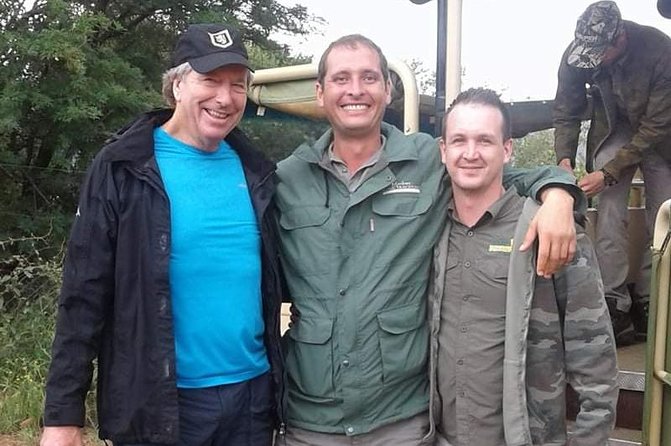
The next morning starts around 6:00 a.m. with a light breakfast before a long drive toward Berg en Dal. The route is described as taking about six hours, making this one of the most road-heavy parts of the expedition.
Berg en Dal is known especially for leopard sightings, but it also offers lions and buffalo. It is presented as one of the stronger areas for Big Five viewing, so the final camp gives the itinerary a wider focus beyond lions alone.
After the long drive, you can use the pool before Steven prepares a hosted braai for the final evening in the park. A braai, South Africa’s social barbecue tradition, is a fitting way to end the last full night. Meals are included, and the supplied feedback highlights Steven’s cooking as one of the pleasures of the trip.
The final night drive takes you back into the dark to search for lions and leopards hunting among the antelope. This is another two-hour outing, and it gives you a second chance to see how the park changes after sunset.
For many people, the contrast between daytime and night is a major part of the trip’s appeal. In daylight, you can study pride structure, body language, and habitat. At night, you rely more on the guide’s experience, a spotlight, and brief glimpses of movement. It feels less predictable, but that uncertainty is part of the point.
Day 5: one last game drive and the return to Johannesburg
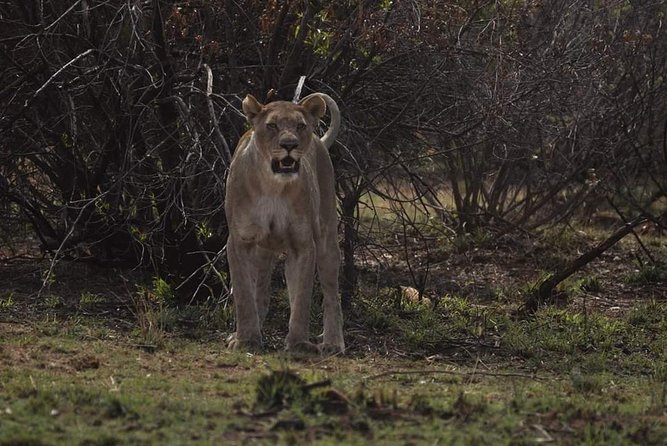
The final morning offers a two-hour game drive from 6:00 to 8:00 a.m. around the Berg en Dal area. It is a last chance to photograph lions and leopards before breakfast and the long trip back.
After a full English breakfast, you leave around 9:00 a.m. for the approximately six-hour transfer to your Johannesburg hotel or airport. If you have a flight that day, allow plenty of extra time beyond the stated drive duration. The tour information does not provide a guaranteed arrival time, and roads, park exit procedures, and traffic can all affect the journey.
The return transfer is useful because it keeps the trip as one package. You do not need to solve the transport problem of getting from southern Kruger back to Johannesburg. Still, the final day is not a relaxed travel morning. It includes an early drive, breakfast, and several hours on the road.
What the $1,298.71 price includes
At $1,298.71 per person, this is not a budget park visit. The value depends on how much of the included program you would otherwise need to arrange yourself.
The price covers four nights in four different camps, park fees, guide fees, transfers, an air-conditioned vehicle, WiFi on board, binoculars, light snacks, beverages, four breakfasts, four lunches, and four dinners. It also includes the Big Cat Experience, the lion-tracking bush walk, and two two-hour night drives at Lower Sabie and Berg en Dal.
That is a substantial bundle. You are paying for a guide with a specialized predator background, long-distance transport from Johannesburg, accommodation, meals, park access, and a private group format. Alcohol is not included, so budget separately if you want drinks beyond the supplied nonalcoholic refreshments.
The strongest value comes if you want a guided, tightly organized safari rather than a self-drive trip. If you already have a rental car, Kruger accommodation, park access, and a good wildlife guide arranged, the price may feel less attractive. If you are starting in Johannesburg and want one person to handle the difficult parts, the package makes more sense.
Who will enjoy this five-day Kruger expedition
I would recommend this experience most strongly to people who are fascinated by big cats and want more than a standard morning game drive. The walking excursion is a real point of difference, and Steven’s work with captive and wild predators gives the trip a clear educational thread.
It also suits first-time safari visitors who prefer a private group and want transport, meals, camps, and activities organized in advance. Families and mixed-age groups may appreciate the range of activities, though the early starts and long drives can be tiring.
You should think twice if you dislike changing camps, sitting in a vehicle for several hours, or getting up before dawn. You should also accept that a lion-focused itinerary does not guarantee lions every day. The supplied comments describe memorable lion and leopard encounters, including a leopard posing near a vehicle, but wildlife remains wild and sightings vary.
The experience requires good weather and a minimum number of people. If poor weather or low numbers force cancellation, you are offered another date, another experience, or a full refund. You can cancel for a full refund up to three full days before the local start time, but late cancellations and late changes are not accepted.
Should you book the Little Lionman safari?
Book it if you want a predator-focused Kruger trip led by a guide whose career has been built around big cats. The lion walk, two night drives, four camps, and included Johannesburg transfer give you a fuller program than a simple one-camp safari.
Skip it if you want a slow, comfortable stay with minimal driving. This is an active five-day circuit with early alarms, long road sections, and several camp moves.
For the right person, the appeal is clear: you learn how to look for predators, see different parts of southern Kruger, and spend time with a guide who can connect wild sightings to years of animal work. Just bring patience. The best safari moments may arrive after hours of dust, silence, and careful watching.
FAQ
Where does the Kruger Lion Expedition start?
Pickup is offered from hotels or airports in Johannesburg or Pretoria. The stated start time is around 5:30 to 6:00 a.m., so confirm the exact pickup time when booking.
How long is the experience?
The expedition lasts approximately five days and includes four nights of accommodation in Kruger National Park.
Which camps are included?
The route includes Skukuza, Lower Sabie, Crocodile Bridge, and Berg en Dal, with one night at each camp.
Is lion tracking done on foot?
Yes. The tour includes a roughly four-hour Big Five bush walk near Skukuza, with two qualified armed rangers escorting the group.
Are night drives included?
Yes. Two two-hour night drives are included, one from Lower Sabie and one from Berg en Dal.
What is not included in the price?
Alcoholic beverages are not included. The listed package does include accommodation, meals, park fees, transport, guide fees, binoculars, WiFi, snacks, and beverages.
Just added around Johannesburg
- Private Soweto Tour 5 hours approximately from Johannesburg or Pretoria.★ 4.5 · 9 reviews
- bicycle tour soweto★ 4.5 · 20 reviews
- Taste of Africa★ 5.0 · 9 reviews
- Two day Kruger National Park Safari from Johannesburg★ 5.0 · 19 reviews
- Airport & Private Shuttle and Transfer Services in Johannesburg★ 5.0 · 9 reviews
- Full-day Johannesburg Bike Or Walking tour – With Transport★ 5.0 · 10 reviews
- Sun City Day Tour From Johannesburg★ 4.5 · 6 reviews
- Pilanesberg National Park Safari, BIG 5 Full Day★ 5.0 · 4 reviews
Kruger National Park Safaris, compared.
Kruger National Park – Private full day Safari trip.
Read our review →
Kruger National Park sunrise Morning Private safari
Read our review →
Kruger National Park: Full-Day Game Drive with Pickup
Read our review →
Kruger National Park: Full-Day Private Safari With Pickup
Read our review →
Marloth Park: Kruger National Park Safari Game Drives
Read our review →Browse the lists this tour appears in