
Reviewed · MUSEUMS
Cape Town: District Six Museum Skip-the-Line Entrance Ticket
Cape Town’s District Six Museum puts apartheid’s forced removals into human terms. Instead of treating history as a list of laws and dates, it shows what happened to a multi-racial community of musicians, artists, families, and workers when the government dismantled their neighborhood.
I like the museum’s personal staff stories, which can add warmth and detail to the displays. I also like the low $4 price and skip-the-line entry, making this an easy stop to add to a day in central Cape Town.
The main drawback is size. You may see the museum in about half an hour, so it is best for a focused visit rather than a full morning. It is closed Sundays, and last entry is at 15:00.
Key points to know before you go
- District Six was a lively multi-racial community: The museum explains how apartheid policy broke apart a neighborhood known for musicians, artists, and families.
- Personal stories matter here: Staff members may have lived in District Six or been displaced residents, giving the visit a direct human voice.
- Photos, recordings, and testimonies lead the visit: Expect a compact museum centered on first-person evidence rather than a long formal tour.
- The ticket costs $4 per person: That is strong value if you are already near the museum and want a meaningful historical stop.
- There is no guided tour included: Your ticket covers admission, but staff interaction is part of the experience rather than a scheduled tour.
- Plan around the hours: The museum opens Monday through Saturday from 09:00 to 16:00, with last entry at 15:00, and closes on Sundays.
Why District Six belongs on a Cape Town history day
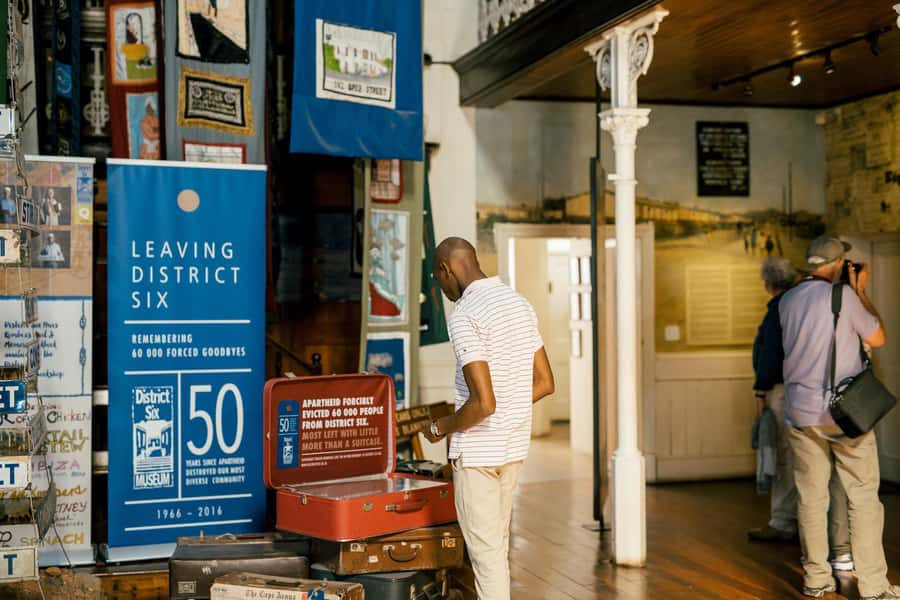
District Six Museum deals with one of Cape Town’s most painful subjects: racial segregation under apartheid and the forced removal of residents from their homes. The museum’s strength is its scale. You are not looking at an abstract national story from a distance. You are looking at the destruction of a specific neighborhood and the lives tied to it.
District Six had a reputation as a lively, mixed community. Musicians and artists lived there, alongside families and workers from different racial backgrounds. The apartheid regime treated that shared community as a problem to be solved. The result was forced removal and the dismantling of the area.
That contrast gives the museum its emotional force. The point is not only that people were moved. It is that an entire way of living together was broken apart by government policy.
I find this kind of museum especially useful early in a Cape Town visit. It gives you context for later conversations about apartheid, segregation, housing, and the city’s divided communities. You do not need a detailed background in South African history to follow the visit. The photographs, recordings, and testimonies make the subject accessible.
A few more Cape Town trips to weigh up
- Museum of Contemporary African Art: Fast-Track Zeitz MOCAA
★ 4.4 · 204 reviews - Cape Town: Private Guided Tour of Cape Town Diamond Museum
★ 4.7 · 156 reviews - ROBBEN ISLAND MUSEUM TOUR, WITH OPTIONAL LAST MINUTE TICKETS
★ 3.4 · 85 reviews
What you see inside the museum
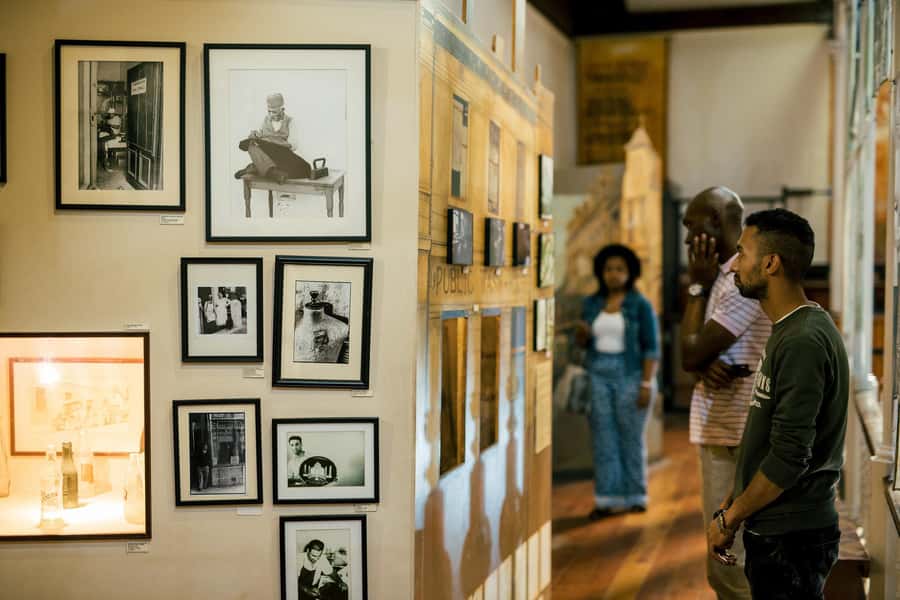
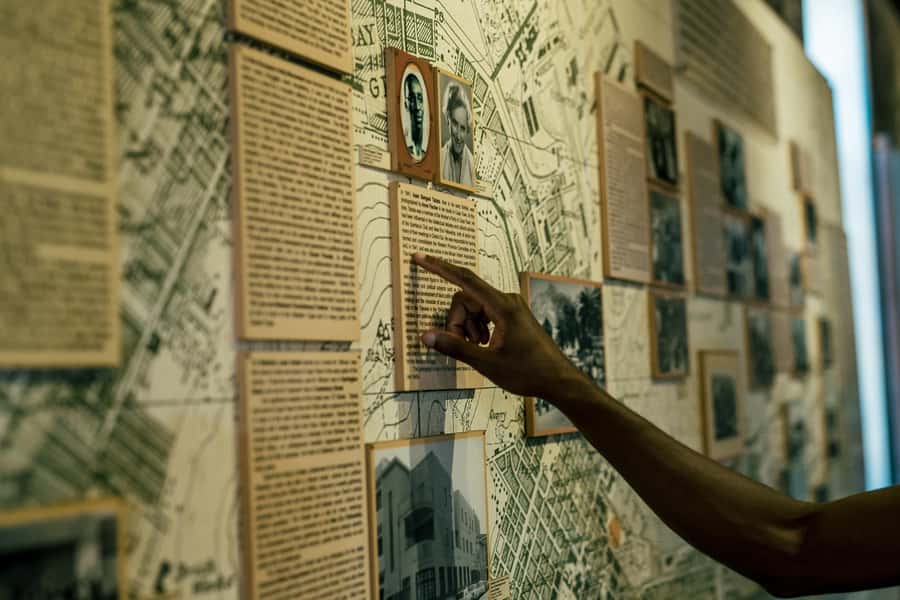
The museum is compact, with displays built around photographs, recordings, and personal testimonies. These materials help show both the physical character of District Six and the people who called it home.
Photographs can make forced removals easier to understand because they show what disappeared. You may see evidence of streets, buildings, gatherings, and ordinary daily life. The recordings and spoken accounts add another layer, bringing memory and emotion into a place where official documents alone would feel cold.
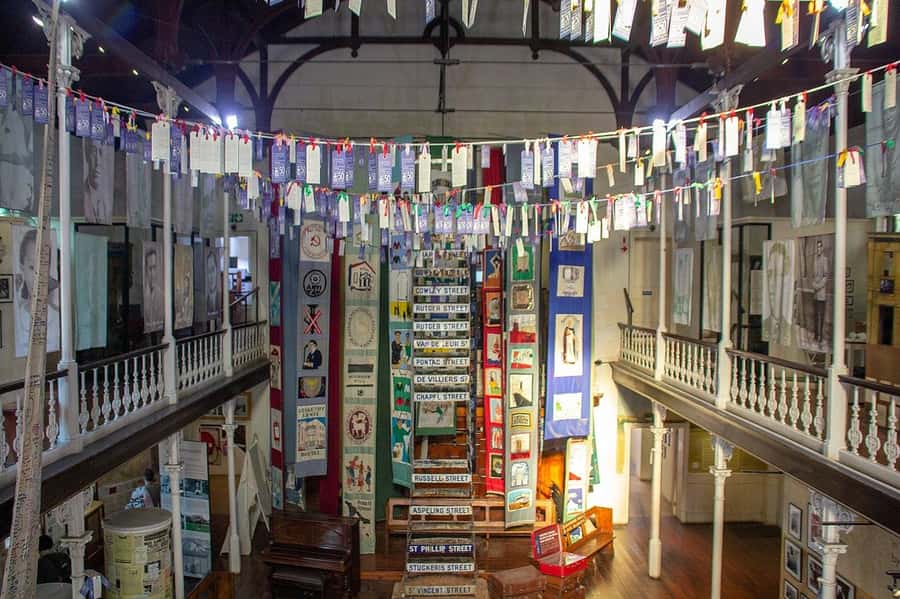
The experience is not designed as a long procession of rooms or a packed sightseeing attraction. You move through a focused presentation of the neighborhood’s story. That makes it possible to visit in a short window, but it also means you should not expect a large museum with hours of exhibits.
Give yourself time to pause. A quick look at the displays can tell you the basic story, but the museum rewards careful reading and listening. If you rush through, you may understand the policy but miss the personal cost.
The staff stories are the heart of the visit
The ticket does not include a guided tour, but the staff can be an important part of your visit. Some staff members were displaced residents themselves, so they may share intimate memories of life in District Six.
That personal connection changes the tone of the museum. You are not simply reading about a neighborhood that vanished. You may hear about what it was like to live there, what removal meant for families, and how the area remained part of people’s identity after they were forced out.
No individual guide names are provided for this experience, and there is no scheduled guide included with admission. The quality and amount of conversation may depend on which staff members are available when you arrive. Still, it is worth allowing time for a respectful exchange.
Ask clear, thoughtful questions rather than treating the conversation like a standard tour briefing. The most useful questions will often concern daily life, community ties, and personal memories. The museum’s human scale makes those details especially important.
A high point of the visit is the chance to connect the broad subject of apartheid with an individual voice. That is why I would not treat the museum as a quick ticket scan, even though the physical visit may be short.
A short visit with serious emotional weight
One practical issue is the museum’s size. A visitor found that it was very small and worthwhile mainly when you already have a spare half hour nearby. That is fair advice, though it does not make the museum unimportant.
Think of this as a compact, concentrated history stop. It may take around half an hour to view the main material, especially if you read quickly. You could spend longer if you listen carefully, speak with staff, and give the testimonies the attention they deserve.
The subject can also feel heavy. The museum deals with racial segregation, forced removals, and the loss of home. It is not a light break between scenic stops. I would avoid squeezing it between activities if you are in a hurry or not prepared to give the topic your attention.
The emotional effect is part of the value. One especially strong response to the museum connected apartheid’s past with the continued reality of people living apart by skin color, even after legal segregation ended. That reaction points to the museum’s wider purpose: it helps you think about what changed, and what did not change quickly enough.
Same country, a completely different kind of day:
- Wine Tour: Paarl, Franschhoek & Stellenbosch incl 3 wineries
★ 5.0 · 3,940 reviews - Cape Town: Hop-On Hop-Off Bus Tour with Optional Cruise
★ 4.8 · 3,929 reviews - Cape Town: Cape of Good Hope & Penguins Day Tour with Pickup
★ 4.7 · 3,362 reviews - Zipline Cape Town – From Foot of Table Mountain Reserve
★ 5.0 · 3,179 reviews
Why the $4 ticket is good value
At $4 per person, admission is inexpensive by Cape Town sightseeing standards. The ticket includes the entrance fee and skip-the-line access, so you are paying a small amount for a direct encounter with an important part of the city’s past.
The value depends on how you use it. If you are already in the area, this is an easy decision. You get a focused museum visit, historical context, and the possibility of speaking with staff who have personal ties to District Six.
If you are crossing Cape Town only to see this one small museum, the calculation is different. You will need to account for your own transport and time, neither of which is included. The museum may not fill a full day, and its short visit can feel limited if you expect a large collection.
The best approach is to pair it with other central Cape Town plans. The ticket is particularly useful when you can fit the museum into your schedule without building an entire day around it. Its low cost also makes it a sensible choice for anyone who wants more historical depth without committing to an expensive tour.
Skip-the-line entry, but no scheduled tour
The skip-the-line feature is useful because it keeps the visit simple. You meet at the District Six Museum, use the entrance ticket, and begin exploring without arranging transport or joining a long excursion.
That simplicity also tells you what this product is and is not. It is an admission ticket, not a full guided experience. There is no included transport, and no guided tour is listed. If you want a structured explanation from a guide for the entire visit, this may feel too independent.
On the other hand, many people prefer that freedom. You can set your own pace, spend longer with the photographs, and talk with staff if the opportunity comes up. You are not tied to a group schedule or a fixed route.
The ticket is valid for one day from first activation. You can reserve now and pay later, and cancellation is allowed up to 24 hours in advance for a full refund. Those terms are helpful if your Cape Town schedule is still shifting.
Timing your visit from Monday to Saturday
The museum is open Monday through Saturday from 09:00 to 16:00. Last entry is at 15:00, so do not arrive near closing and expect a full visit.
A morning visit gives you the most time and leaves room for a longer conversation with staff. An early afternoon visit can also work, but remember that a 15:00 arrival is already too late. The museum is closed Sundays, so check your calendar before booking.
Because the museum is compact, you do not need to reserve an entire day. The activity is described as valid for one day, but that refers to the ticket’s validity rather than a full-day program. Plan a focused stop and keep your wider Cape Town schedule flexible.
I would allow at least half an hour, then add time if you want to study the materials closely. The exact length will depend on your reading pace and how much conversation is possible during your visit.
Who will appreciate this museum most
This experience suits you if you want to understand Cape Town beyond its scenery. It is especially useful for visitors interested in apartheid, social history, community life, and the personal effects of government policy.
Families with older children may also find the displays helpful, though the subject is serious. The photographs and testimonies can make a difficult period easier to discuss than a textbook alone. Younger children may not get much from the visit if they do not yet understand the background.
The museum also works well for people with limited time. At $4, it offers a low-cost way to add historical context to a city itinerary. You do not need to book a large excursion or spend several hours inside.
You may want to skip it if you are looking for entertainment, scenic views, or a long guided tour. The museum is small, sober, and focused. Its value comes from the story and the people connected to it, not from the size of the building or the number of objects on display.
My take on the District Six Museum ticket
I like this ticket because it keeps the practical side easy while giving you access to a museum with real emotional purpose. The staff stories are the feature I would prioritize, since personal memories can add meaning that photographs and captions cannot provide by themselves.
The $4 price is another strong point. It is a good buy when you are already nearby, and skip-the-line entry removes a minor hassle. Just keep your expectations in check: this is a small museum, not an all-day attraction or a guided city tour.
The most important tip is to slow down once you enter. Read the displays, listen to the recordings, and speak with staff respectfully if they are available. A short visit can still stay with you for a long time.
Should you book it?
Book the District Six Museum ticket if you want a direct, human account of apartheid and forced removals, especially if you are already planning time in central Cape Town. The low price, flexible cancellation, and short visit make it easy to fit into your plans.
Skip it only if your schedule is too tight for a thoughtful stop or if you expect a large museum with a full guided program. For everyone else, this is one of Cape Town’s most useful small history visits. It will not take all day, but it can change how you understand the city.
FAQ
Where is the District Six Museum experience located?
The meeting point is the District Six Museum in Cape Town, in South Africa’s Western Cape.
How much does admission cost?
The ticket costs $4 per person and includes the entrance fee.
Is a guided tour included?
No. The ticket includes museum admission, but a guided tour is not included.
What can I see inside the museum?
You can see photographs, recordings, and testimonies about District Six, apartheid-era segregation, and the forced removal of the community.
Can I speak with museum staff?
Yes. Staff members share stories about District Six, and some were displaced residents themselves. The amount of conversation may depend on who is available when you visit.
When is the museum open?
The museum is open Monday through Saturday from 09:00 to 16:00. Last entry is at 15:00.
Is the museum open on Sundays?
No. The museum is closed on Sundays.
Can I cancel the booking?
Yes. You can cancel up to 24 hours in advance for a full refund. You can also reserve now and pay later.
Just added around Cape Town
- Lion’s Head Hike: Cape Town – Sunrise or Sunset Hike★ 5.0 · 29 reviews
- Lion’s Head Sunrise or Sunset Hike + Hotel Pick-Up★ 5.0 · 24 reviews
- Lion’s Head: Hike with a registered hiking guide★ 5.0 · 3 reviews
- Kruger National Park 3 Days Best Ever Safari from Cape Town★ 4.1 · 11 reviews
- Koeksister and Samoosa Class by the Malay Cook Up★ 4.8 · 9 reviews
- Kirstenbosch Garden, Bo-Kaap-Penguins & Cape Peninsula Tour★ 3.9 · 7 reviews
- Khayelitsha: 3-Hour Township Walking Tour★ 5.0 · 6 reviews
- Cape Town: Constantia Half-Day Wine Tour & Tastings★ 4.9 · 15 reviews
Museums, compared.

Soweto /Johannesburg and Apartheid Museum Guided Full Day Tour
Read our review →
Jo’berg in 1 Day: Soweto, Apartheid Museum & City Tour
Read our review →
Full-Day Tour with Soweto and Apartheid Museum
Read our review →
Full-Day Soweto, Apartheid Museum and Lunch Tour
Read our review →
Half Guided Day Tour of Soweto And Apartheid Museum
Read our review →
Ultimate Johannesburg Soweto Experience with Apartheid Museum
Read our review →
Hop-On Hop-Off Bus, City Tour and Apartheid Museum
Read our review →
Museum of Contemporary African Art: Fast-Track Zeitz MOCAA
Read our review →Browse the lists this tour appears in