
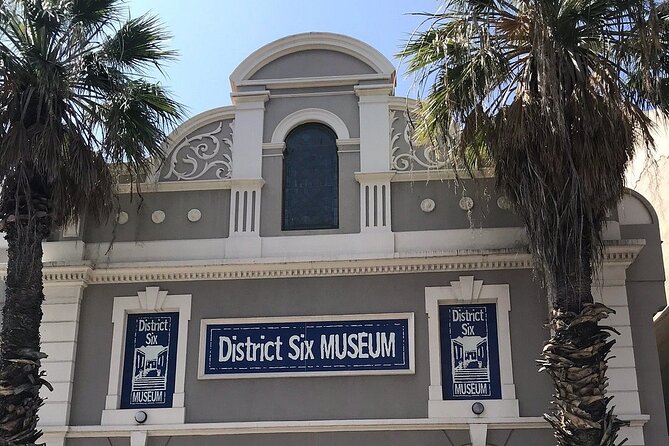
Reviewed · MUSEUMS
Skip the Line: District Six Museum Admission Ticket
District Six Museum tells the story of a community destroyed by apartheid, not through dry dates alone, but through photographs, recordings, and personal testimony. The museum recalls a once-multi-racial neighborhood of musicians, artists, families, and gang members before forced removals scattered its residents.
I like the freedom to choose your pace and the chance to hear directly from former residents when an optional guided tour is available. At only $3.71 per person, admission is remarkably affordable. The main caution is ticket reliability: one visitor had to pay again when the venue did not accept a Viator-issued ticket, although the provider apologized and advised requesting a refund.
Key points to know before you go
- A floor-sized map brings District Six back into view: Former residents marked the locations of homes that were demolished.
- Personal stories carry the museum: Staff members include displaced residents with firsthand connections to the area.
- You choose between independence and guidance: Explore alone or pay extra for an optional tour.
- Plan on 30 minutes to 1.5 hours: Your visit can be brief or slow and reflective.
- The museum suits adults and children: Its material is educational, direct, and rooted in real lives.
- Check your mobile ticket at the entrance: A past admission problem led one person to pay twice.
Why District Six matters in Cape Town
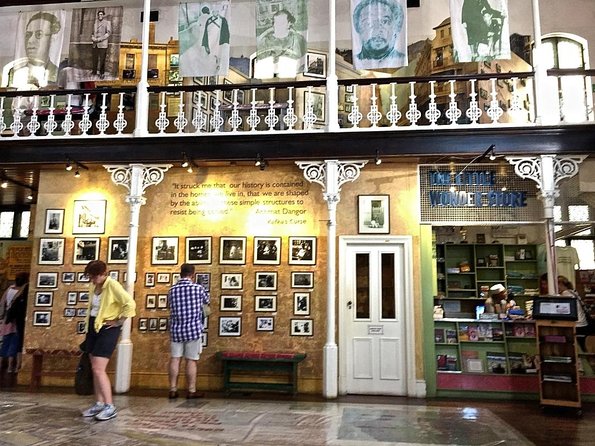
District Six was once a colorful, mixed community close to central Cape Town. It was home to families, artists, musicians, workers, and people whose lives did not fit the strict racial divisions imposed by apartheid.
That mixture was part of what made the area important. District Six was not simply a residential quarter. It was a social place where different communities lived near one another, built careers, formed friendships, and developed a strong local identity.
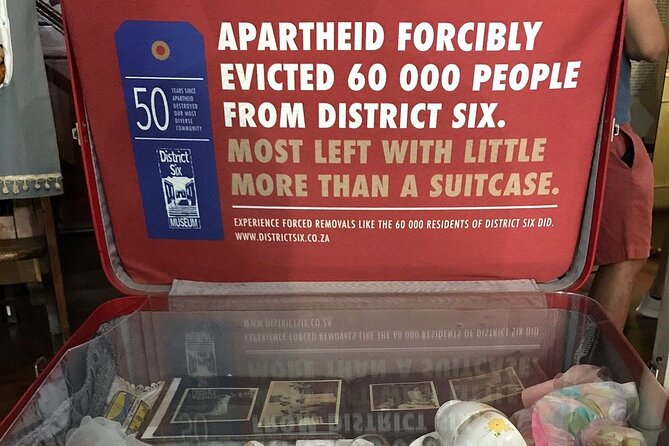
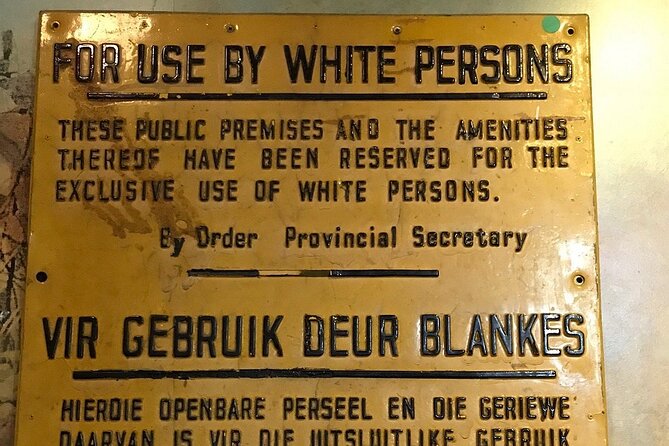
Under apartheid, the government declared District Six a white area. Residents were forcibly removed over a period lasting about 20 years, and much of the neighborhood was demolished. The museum exists to remember the people who lost their homes and to explain how that destruction was carried out.
I find this setting valuable because it gives apartheid a human scale. You are not only learning about laws and official policy. You are seeing what those policies did to streets, families, memories, and ordinary routines.
A few more Cape Town trips to weigh up
- Museum of Contemporary African Art: Fast-Track Zeitz MOCAA
★ 4.4 · 204 reviews - Cape Town: Private Guided Tour of Cape Town Diamond Museum
★ 4.7 · 156 reviews - ROBBEN ISLAND MUSEUM TOUR, WITH OPTIONAL LAST MINUTE TICKETS
★ 3.4 · 85 reviews
Entering the museum and finding the old neighborhood
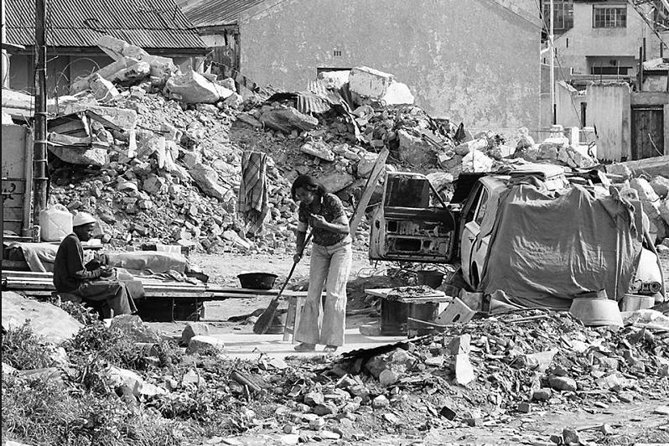
The museum’s ground floor contains one of its most affecting features: a large street map of District Six. Former residents have written notes on it to show where their homes once stood.
This map helps you understand the physical loss. Instead of hearing only that buildings were demolished, you can look at a neighborhood laid out under your feet and see how former residents locate themselves within it. A home becomes a marked point. A street becomes part of someone’s childhood.
Allow time here before rushing to the photographs. The map gives you a useful frame for everything that follows. As you move through the exhibits, you can connect personal accounts to the places represented on the floor.
The map is also a good reason to bring children or teenagers. It offers a clear, visual way to discuss how a neighborhood works and what it means when that neighborhood is removed. The subject is painful, but the physical layout can make it easier for younger visitors to grasp.
Photographs, recordings, and testimony
The museum uses photographs, audio recordings, and testimonials to tell the story of District Six. These materials help you move beyond a general account of apartheid and focus on the people who lived through forced removal.
Photographs can show the character of the area before demolition. Recordings add voices and memory. Testimonials explain the upheaval in personal terms, giving you a clearer sense of how relocation affected daily life.
The museum also presents District Six as a place with many sides. It recalls musicians and artists, as well as the good and bad gangsters associated with the neighborhood. That detail matters because it avoids presenting the area as a perfect lost paradise. Communities are complicated. They contain creativity, hardship, conflict, humor, and pride at the same time.
I appreciate that balance. The museum’s purpose is to honor displaced residents, but it does not need to turn them into symbols without flaws. Their neighborhood is remembered as a real place, with real social tensions and a strong character.
Meeting staff with personal connections
One of the most meaningful parts of the visit may come between the formal exhibits. Many staff members were displaced District Six residents themselves and have personal stories to share.
This makes the museum feel less like a collection of objects behind glass. You may be able to ask questions and hear details from someone with an intimate connection to the area. The quality of this part can depend on who is available and how much time you have, but it is an important reason not to rush through the building.
If you are interested in family history, community life, or the human effects of apartheid, speak with the staff when possible. The museum is designed for local people as well as international visitors, so you can expect an educational setting that takes the subject seriously without limiting itself to a foreign audience.
The optional guided tour offers another way to hear the story. Tours are led by a former District Six resident when available, and the personal connection can add context that a self-guided visit cannot provide.
Same country, a completely different kind of day:
- Wine Tour: Paarl, Franschhoek & Stellenbosch incl 3 wineries
★ 5.0 · 3,940 reviews - Cape Town: Hop-On Hop-Off Bus Tour with Optional Cruise
★ 4.8 · 3,929 reviews - Cape Town: Cape of Good Hope & Penguins Day Tour with Pickup
★ 4.7 · 3,362 reviews - Zipline Cape Town – From Foot of Table Mountain Reserve
★ 5.0 · 3,179 reviews
Self-guided visit or optional guided tour
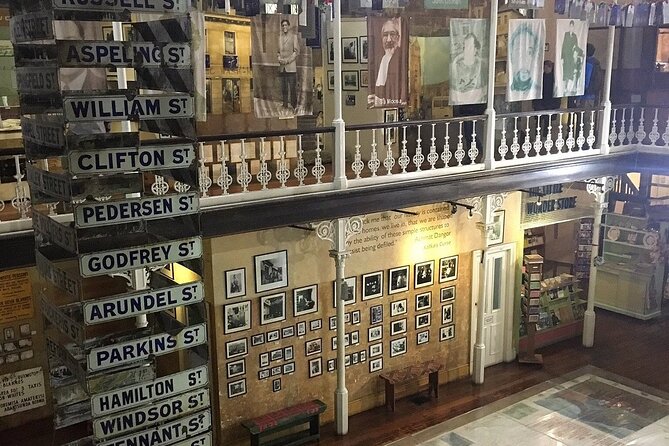
The prepaid ticket lets you explore independently. This is useful if you have a tight Cape Town schedule or prefer to read, listen, and pause without keeping up with a group.
A self-guided visit also lets you decide how much emotional space you need. Some people will want to spend time with the map and testimonials. Others may prefer a shorter visit focused on the main displays. The stated visit length ranges from 30 minutes to 1.5 hours, which reflects that flexibility.
The optional tour is worth considering if you want more explanation or personal context. A former resident can connect the exhibits to lived experience and help you understand details that might be easy to miss on your own.
There is no claim that the guided tour is included in the $3.71 admission price. It is an extra cost, so check the arrangements before you arrive. If you choose the self-guided option, you still receive the central museum experience and can examine the displays at your own pace.
How long should you allow?

You can see the museum in about 30 minutes if you move directly through the main displays. That is enough for a brief introduction, but it may feel too quick if you want to study the map, listen to recordings, and speak with staff.
For a more thoughtful visit, allow closer to 1.5 hours. That gives you time to read the material, consider the testimonials, and pause at the floor map. It also leaves room for conversation if staff members are available.
I would avoid squeezing this visit into a rushed gap between major Cape Town attractions. The museum is small enough to fit into a city day, but its subject deserves attention. A short stay can work, yet you will get more from it if you arrive without an immediate deadline.
Is the $3.71 ticket good value?
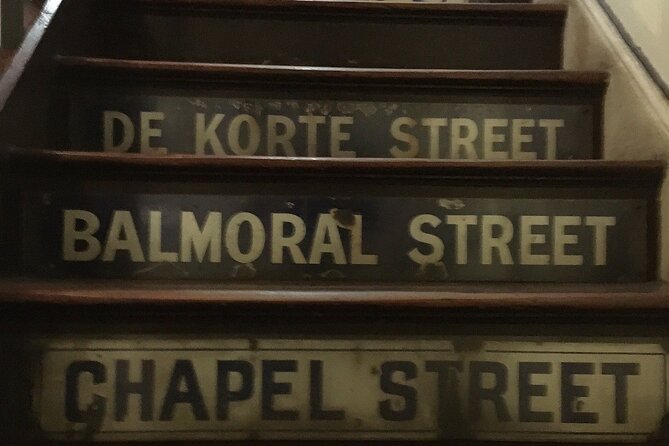
At $3.71 per person, admission is inexpensive by Cape Town sightseeing standards. The ticket gives you access to a museum that explains a major part of the city’s past through original testimony, photographs, recordings, and a distinctive physical map.
The value is especially strong if you want history that connects directly to the city around you. This is not an expensive attraction built around spectacle. You are paying a small amount for access to a place of memory and education.
The low price does not mean the visit is lightweight. The subject is serious, and the emotional impact may be greater than the modest admission fee suggests. You should judge the ticket by the depth of the story, not by the number of rooms or flashy displays.
The optional tour changes the calculation. If personal explanation is important to you, the extra charge may be worthwhile. If you prefer control over your time, the included admission is enough to explore the museum independently.
The ticket issue you should prepare for
The biggest practical warning comes from a ticketing problem reported by one visitor. The venue did not accept a Viator-issued ticket, so the visitor had to pay again. The amount was small, but the experience was frustrating.
The provider, SA City Pass, apologized and said it was investigating the issue. It also advised requesting a refund from Viator. The information does not show that this is a regular problem, but you should still check your mobile ticket before heading over and keep proof of any second payment if the entrance staff cannot accept it.
This is not a reason to dismiss the museum. It is a reason to pay attention to the admission process. Confirmation is provided at booking, and the ticket is mobile, so have the confirmation ready on your phone.
Getting there and practical details
The museum is near public transportation, which makes it a workable stop during a day in central Cape Town. The supplied details do not identify a specific bus route, train stop, or parking arrangement, so check current local directions before setting out.
Service animals are allowed, and most people can participate. The activity has a maximum group size of 15 people, although the self-guided option means you are not required to stay with a group for the museum visit.
Food and drinks are not included. Since the visit may take anywhere from 30 minutes to 1.5 hours, plan any refreshments separately. The museum itself should be treated as a focused cultural stop rather than a full meal or entertainment venue.
You can cancel for a full refund if you do so at least 24 hours before the experience start time. Cancellations or changes made within 24 hours are not accepted for a refund. The cut-off uses Cape Town local time, so check that detail if your plans are changing.
Who will get the most from this museum?
This museum suits anyone who wants to understand Cape Town beyond beaches, scenic viewpoints, and colonial architecture. It is particularly useful early in your stay, since it gives you social and political context for the city you are about to explore.
Families can use the map and photographs to introduce children to apartheid in a concrete way. The subject is difficult, but the museum’s educational purpose makes it suitable for adults and children.
It also suits visitors who prefer quiet, self-paced cultural stops. You do not need to commit to a long tour, and you can spend only as long as the material holds your attention.
You may want to choose the optional guided tour if you value personal accounts and have enough time for a slower visit. The former-resident connection is the feature most likely to add something beyond the displays themselves.
Should you book the District Six Museum ticket?
I would book this if you want a low-cost, meaningful history stop in Cape Town. The strongest parts are the floor map marked by former residents, the personal testimony, and the chance to speak with staff who were displaced from District Six.
Choose the self-guided ticket if you want flexibility and a short visit. Pay extra for the guided option if you want more context from a former resident. Just verify the mobile ticket at the entrance and keep any payment record in case the admission system fails.
This is not a light sightseeing attraction, and it may leave you thinking about the city long after you leave. That is precisely its value. For $3.71, it offers a direct look at the people and neighborhood behind one of Cape Town’s most important historical stories.
FAQ
How much does admission to the District Six Museum cost?
The admission ticket costs $3.71 per person. A guided tour is an optional extra and is not included in the entrance price.
How long does a visit take?
The visit takes approximately 30 minutes to 1.5 hours. Your timing depends on how closely you study the exhibits and whether you join an optional guided tour.
Can I explore the museum without a guide?
Yes. The ticket allows you to take a self-guided visit and explore at your own pace.
Who leads the optional guided tour?
The optional guided tour is led by a former resident of District Six.
What can I see inside the museum?
You can see photographs, recordings, testimonials, and a large ground-floor street map of District Six. Former residents have marked the map with notes showing where their demolished homes once stood.
Is the museum suitable for children?
Yes. The museum caters to locals and international visitors and is described as an educational experience for both adults and children.
Can I cancel the ticket for a refund?
Yes. You can cancel at least 24 hours before the experience start time for a full refund. Cancellations or changes made less than 24 hours before the start time are not refunded or accepted.
Just added around Cape Town
- Sunset Safari Big 5 Aquila with Snacks and Wine Tasting★ 5.0 · 12 reviews
- Private Tour to 20 Wine Tasting in Stellenbosch and Franschhoek★ 5.0 · 11 reviews
- Robben Island, Kirstenbosch wine tasting Tour★ 5.0 · 10 reviews
- Zip Line and Wine from Cape Town★ 5.0 · 14 reviews
- Explore Atlantis Sand Dunes with a 1hour 30mins sandboarding tour★ 5.0 · 5 reviews
- Private Group Photoshoot in Cape Town★ 5.0 · 21 reviews
- Private Transfer from Cape Town International Airport★ 5.0 · 4 reviews
- 1 Hour Cape Town City Center Photoshoot Experience★ 5.0 · 19 reviews
Museums, compared.

Soweto /Johannesburg and Apartheid Museum Guided Full Day Tour
Read our review →
Jo’berg in 1 Day: Soweto, Apartheid Museum & City Tour
Read our review →
Full-Day Tour with Soweto and Apartheid Museum
Read our review →
Full-Day Soweto, Apartheid Museum and Lunch Tour
Read our review →
Half Guided Day Tour of Soweto And Apartheid Museum
Read our review →
Ultimate Johannesburg Soweto Experience with Apartheid Museum
Read our review →
Hop-On Hop-Off Bus, City Tour and Apartheid Museum
Read our review →
Museum of Contemporary African Art: Fast-Track Zeitz MOCAA
Read our review →Browse the lists this tour appears in