
Reviewed · HIKING & TREKKING
Jonkershoek: Waterfall Hike and 4×4 Safari Ride
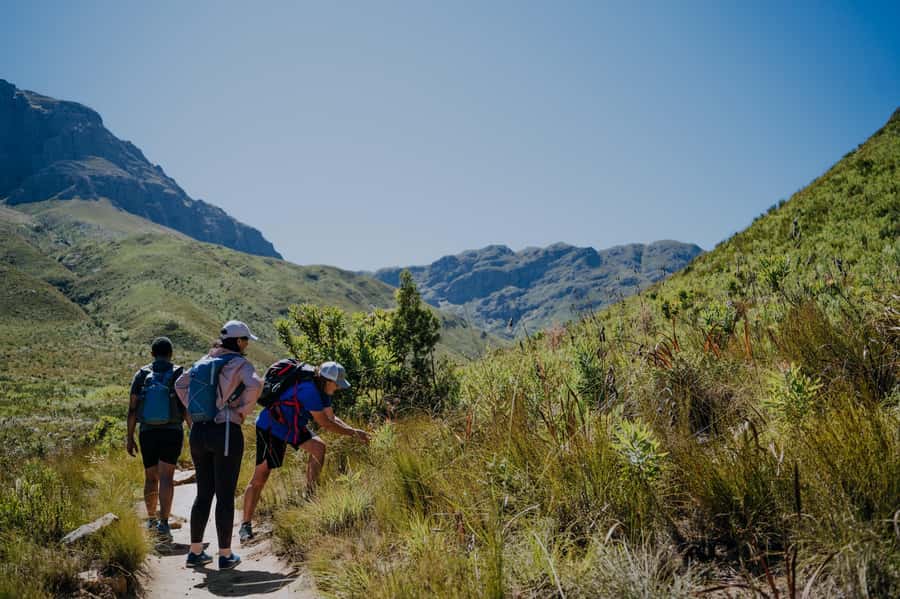
Jonkershoek’s best feature is the mix of open-air safari ride and mountain hike in one half-day outing. You begin near Lanzerac Deli, travel into the reserve by safari vehicle, then walk along rocky trails toward the first or second waterfall, with a lookout point available when weather gets in the way.
I like the way the guide can match the walk to your ability, and I like the chance to spend real time beside cold running water rather than simply stopping for a photograph. Louise, one of the guides, is especially good at helping people feel safe and comfortable. The main caution is the terrain: the longer route can cover about 10 kilometres with 340 metres of climbing, and much of it is rough rock.
Key points to know before booking
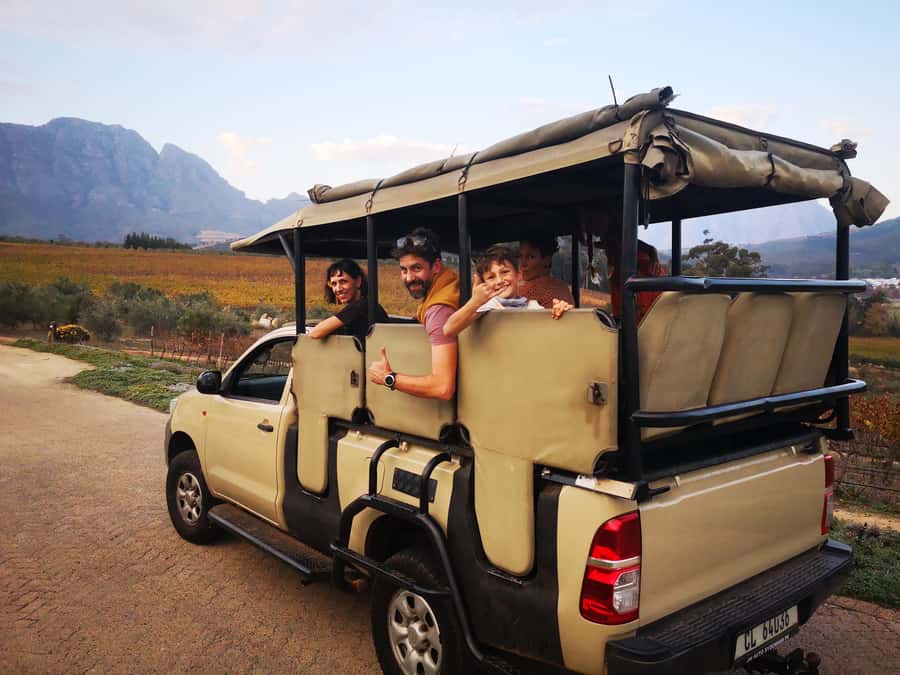
- A 10-kilometre safari vehicle loop takes you through Jonkershoek Nature Reserve before and after the walk.
- The waterfall route has two options: an easier 3-kilometre walk to the first waterfall or a more demanding 2 to 3-hour hike toward the second.
- Rocky ground and some height exposure make the longer route moderately challenging.
- A private group and flexible pace let the guide adjust the outing to your fitness level.
- Swimming is possible in hot weather, but the pools are cold, and you will need to bring swimwear and a towel.
- The $77 price includes reserve entry, transport, and a registered mountain guide with wilderness first-aid training.
Starting at Lanzerac Deli
Your meeting point is the trail centre opposite Lanzerac Hotel Deli. After entering through the main security gate, turn left and look for the safari vehicle.
This is a useful meeting place because you can arrive with water, snacks, and a warm layer already packed. The outing lasts four hours, but the exact starting time depends on availability when you book. Arrive ready to walk, rather than treating the first vehicle ride as the main event.
You will meet an Afrikaans or English speaking guide from Scootours Cape Town. The guide handles the reserve entry, the vehicle transfers, and the walking route. Louise has been singled out for her friendly manner, strong local knowledge, and care with pacing, but the booking does not guarantee a particular guide.
The group is private, which matters here. A private outing makes it easier to choose the shorter waterfall walk, take a longer break, or continue toward the second waterfall if the group is comfortable. It also means you are not tied to the speed of a large mixed party.
A few more Stellenbosch trips to weigh up
- E-Bike & Hike Jonkershoek
★ 5.0 · 12 reviews - Jonkershoek Nature Reserve: Guided Panorama Trail Hike
★ 5.0 · 3 reviews - Cape Town: Lion’s Head Sunrise or Sunset Hike
★ 5.0 · 1,084 reviews
The first 35 minutes: riding into Jonkershoek
The safari vehicle carries you from the starting point into the reserve, with one ride taking about 15 minutes and another about 20 minutes. Along with the later return ride, this gives the outing a total circular drive of about 10 kilometres.
This transfer is more than a practical shuttle. It lets you cover ground without spending all your energy before the hike begins. It also gives you a broad look at Jonkershoek’s mountain setting, including steep slopes, valleys, and indigenous plant life.
The ride can feel exposed and lively compared with a standard car transfer, but it is not a wildlife safari in the usual sense. The main attraction is the reserve’s scenery and the change from cultivated Stellenbosch surroundings to a wilder mountain setting. Keep your jacket close. Weather can shift quickly in the reserve, even when conditions are pleasant near the deli.
The route includes a stop at a viewpoint. The timing gives about 80 minutes for a guided visit around this part of the outing, followed by roughly 30 minutes for a break, photographs, and free time. Those periods can blend with the walking schedule depending on weather, fitness, and the waterfall route selected.
Viewpoints, mountain air, and a slower pace
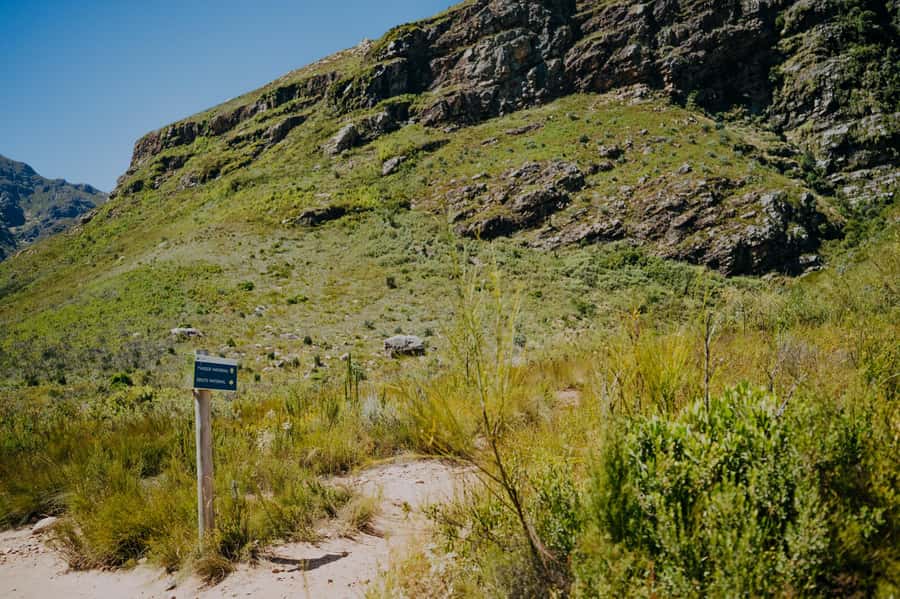
The guide pauses at useful viewpoints rather than rushing straight to the water. These stops give you time to see the shape of the reserve, take photographs, and catch your breath before the more demanding sections.
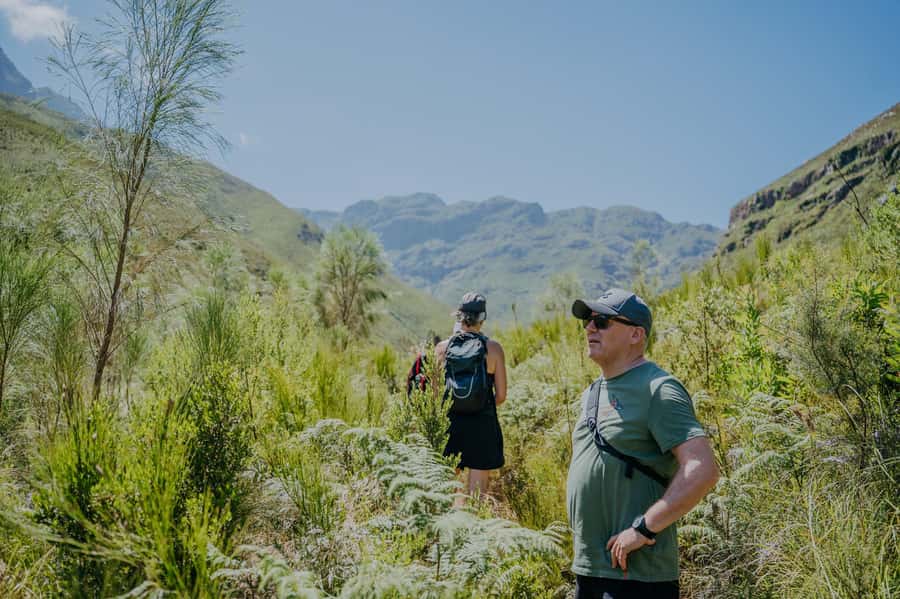
I like this part of the experience because it gives the hike a natural rhythm. You are not simply counting kilometres. You get a short lesson in the local plant life, time to listen to the mountain streams, and a chance to notice how much the scenery changes as you move farther into the reserve.
The walk is also sold as a nature therapy experience, and that description makes sense in practical terms. You have clean mountain air, quiet stretches, running water, and long pauses away from roads and town noise. You do not need to treat the outing as a fitness test. A slow walk, a picnic, or time sitting near the waterfall can be just as worthwhile as reaching the farthest point.
Bring your own snacks because food is not supplied. A small backpack is best, with enough water for the walking time and space for a jacket. The guide can point out places to stop, but you should not expect a café or shop along the trail.
Choosing between the first and second waterfall
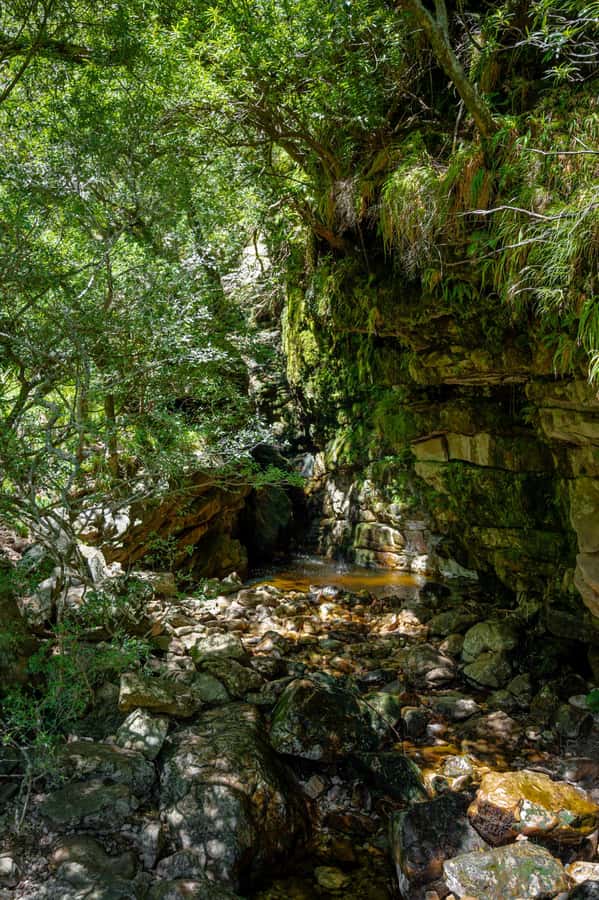
The first waterfall is the easier choice. The route is described as about 3 kilometres, and it suits you if you want more free time in nature without committing to the full climb. You can picnic, listen to the water, or take a cold plunge if weather and conditions permit.
The longer route continues toward the second waterfall. Expect about 2 to 3 hours of hiking, depending on your fitness and the pace of the group. The total distance is approximately 10 kilometres, with about 340 metres of height gain.
That distance does not tell the whole story. The trail is moderately challenging, with rocky ground and some height exposure. One Dutch visitor described the route as beautiful but difficult because it is largely made up of rocks. That is useful advice: sturdy hiking shoes are far more important here than fashionable trainers.
The guide will help you walk safely and can set a pace that suits the group. Louise, in particular, has been praised for encouraging people to work within their own ability and for making them feel secure on the route. Still, a guide cannot remove the physical demands of uneven rock, climbing, or exposed sections.
If you are unsure about your fitness, choose the first waterfall. You will still get the central experience: a guided walk through Jonkershoek, time beside falling water, and the chance to slow down in a striking mountain setting. If you regularly hike on uneven ground, the second waterfall offers a fuller challenge.
Same country, a completely different kind of day:
- Stellenbosch: Guided Historical Walking Tour
★ 4.7 · 283 reviews - Stellenbosch: Historical Bike Tour & Wine Tasting
★ 4.9 · 248 reviews - Full Day Afrivista Wine Tours from Stellenbosch
★ 5.0 · 238 reviews - From Stellenbosch: Hop-On Hop-Off Wine Tour Southern Route
★ 4.7 · 105 reviews
Reaching the waterfall pools
The first and second waterfalls end at pools surrounded by rugged rock. The water creates a calm place to pause, especially after the climb.
On a hot day, you can bring swimwear and a towel and try the cold water. The supplied advice is clear that swimming is optional, so pack for it only if you genuinely want the plunge. A warm jacket still belongs in your bag, even in summer. Mountain weather can change, and wet clothes can make the return journey uncomfortable.
You may prefer to stay dry and use the break for photographs or a picnic. The 30-minute rest period gives you room to do that, although your exact time at the pool depends on the chosen route and weather.
If conditions prevent the group from reaching the second waterfall, the guide can take you to a lookout point instead. That is an important safety feature, not a disappointing substitute. A mountain walk should respond to rain, slippery rock, and changing conditions rather than force a fixed endpoint.
What the guide adds
The guide is the reason this is more than a marked walk. You receive help with the reserve entrance, the vehicle transfers, the route choice, and the rougher sections of the trail.
The guide also provides context about the indigenous plants and the reserve’s natural setting. You will have someone to identify sensible stopping places, explain what to expect on the route, and monitor the group as the ground becomes more uneven.
The available feedback places strong emphasis on the guides’ care and preparation. Louise is described as friendly from arrival, well informed across the outing, and attentive to each person’s comfort. Another account highlights the help given while walking safely to and from the waterfall. Those details matter more here than a long list of facts because the route has rocks, climbing, and some exposure.
The guide holds a registered mountain guide qualification and wilderness first-aid training. That does not make the hike risk-free, but it gives you a trained person managing the outing in a reserve where conditions can change.
How difficult is the 10-kilometre walk?
This is not a gentle stroll for everyone. The easier first-waterfall option is about 3 kilometres, while the longer outing can reach approximately 10 kilometres and 340 metres of climbing.
The uneven rock is the key issue. You need closed hiking shoes with a firm sole, comfortable clothes, and enough water. If you have limited hiking experience, tell the guide at the start and consider taking the shorter route.
Some height exposure is noted on the longer walk. That wording suggests sections where you should pay attention to your footing and surroundings, rather than a flat path with no drop-offs. People who dislike heights should ask the guide about the day’s conditions before committing to the longer route.
The minimum age is eight. The activity is not suitable for children under eight, and younger children may also find the longer rocky route demanding even if they meet the age requirement.
What $77 includes, and what it does not
At $77 per person, the outing offers reasonable value if you want a guided reserve visit rather than only a self-guided walk. The price includes entry to Jonkershoek Nature Reserve, the safari vehicle from the reserve entrance to the trail head, the return transport on the circular route, and the registered mountain guide.
Those inclusions remove several costs and practical tasks. You do not need to arrange a separate reserve transfer, work out the vehicle route, or manage the waterfall walk alone. For a private group, the price also buys flexibility and personal attention.
The price does not include snacks, drinks, swim equipment, or a towel. Bring those yourself. You should also bring a hat, sunscreen, a rain jacket, and a warm layer. The reserve’s weather can change quickly, so packing light does not mean packing too little.
I would rate the value highest for visitors staying around Stellenbosch who want both transport and a guided walk in four hours. If you already have your own vehicle, reserve access, and strong route-finding skills, the price may feel less attractive. The guide, safety support, and safari vehicle are the main reasons to pay for this version.
A practical packing list
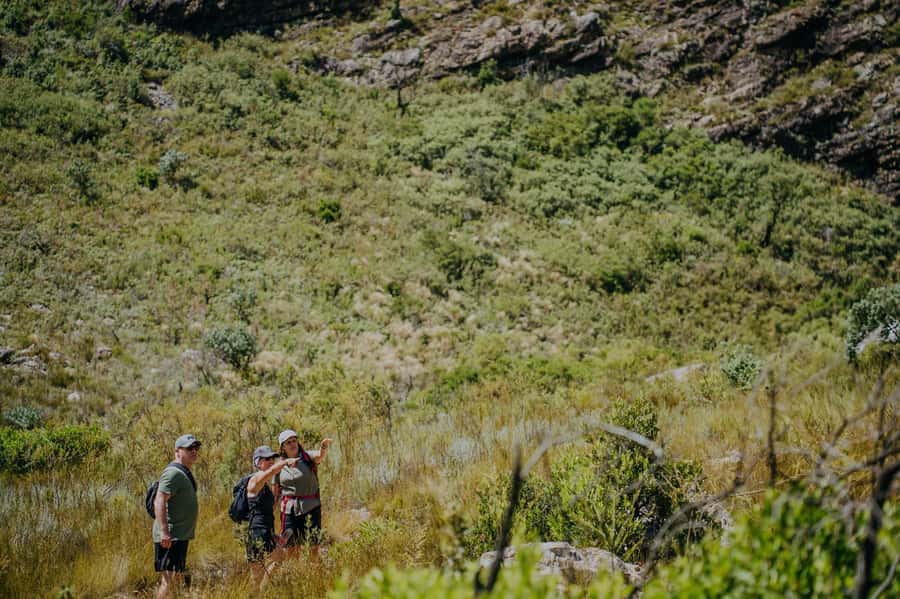
Keep your bag small but useful. You will carry it on the hike, so avoid bringing anything you do not need.
- Water bottle and snacks
- Small backpack or daypack
- Hiking shoes with good grip
- Comfortable walking clothes
- Warm jacket
- Rain jacket
- Hat and sunscreen
- Swimwear and towel if you may enter the pool
A jacket deserves special attention. The route can be warm in direct sun and cool near water or under changing weather. A rain jacket is also useful even when rain is not forecast at the starting point.
The trail centre is opposite the deli, but the tour does not include a meal stop. Eat beforehand or bring food for the break. A picnic near the waterfall can be part of the experience, as long as you carry everything in and out.
Timing and the shape of the half-day
The four-hour duration gives you a compact outing without taking an entire day from your Stellenbosch plans. The rough sequence includes a 15-minute vehicle ride, a guided viewpoint visit, a break of about 30 minutes, around an hour of hiking in the stated schedule, and a 25-minute return vehicle ride.
At the same time, the fuller route is described as a 2 to 3-hour hike. Treat the published time blocks as a guide rather than a strict stopwatch. Your actual walking time will depend on the first or second waterfall, your pace, pauses, and weather.
That flexibility is useful. You can choose a shorter walk and enjoy a longer rest, or spend more of the outing on the trail. Ask at the start how the day’s timing will work so you know how much time is available at the waterfall.
The vehicle returns you to Lanzerac Deli at the end. That makes the experience easy to pair with other Stellenbosch plans, provided you leave some room for changes caused by conditions on the trail.
Who should book this outing?
I would recommend it to active adults, couples, friends, and families with children aged eight or older who want a guided mountain experience without committing to a full-day expedition.
It is a good fit if you value:
- A private group rather than a large shared party
- A guide who can adjust the pace
- A mix of vehicle sightseeing and walking
- The option of an easier or longer waterfall route
- Time for swimming, a picnic, or quiet rest
- Transport and reserve entry included in the price
It is less suitable if you want a flat walk, a guaranteed easy path, or a purely sightseeing-based outing. The longer route has rough rock, climbing, and some height exposure. You should also think twice if you are not prepared to carry water and personal supplies.
Booking flexibility and languages
You can cancel up to 24 hours before the activity for a full refund. You can also reserve your place and pay later, which helps if your Stellenbosch plans are still shifting.
Guiding is available in Afrikaans and English. The group is private, and the minimum age is eight. Starting times vary, so check availability for the date you want.
Should you book the Jonkershoek waterfall hike?
Book this if you want a personal, active outing that combines a safari vehicle ride with a proper mountain walk. The strongest reasons are the flexible route, the trained guide, the waterfall pools, and the way the private format lets you work at your own pace.
Choose the first waterfall if you want an easier day with more time to sit, picnic, and enjoy the water. Choose the second only if you are comfortable with roughly 10 kilometres of rocky walking and 340 metres of climbing.
At $77, the experience earns its price through transport, reserve entry, and guide support rather than luxury. Pack carefully, wear real hiking shoes, and be honest about your fitness at the start. Do that, and Jonkershoek offers a memorable half-day in the mountains without requiring you to plan every detail yourself.
FAQ
Where does the Jonkershoek waterfall hike start?
The meeting point is the trail centre opposite Lanzerac Hotel Deli. After entering through the main security gate, turn left and look for the game vehicle.
How long does the activity last?
The complete experience lasts four hours. Starting times vary, so check availability for your chosen date.
Is transport included?
Yes. The price includes safari vehicle transport from the reserve entrance to the trail head and transport back along the circular route to the entrance.
How difficult is the hike?
The longer option takes about 2 to 3 hours, covers approximately 10 kilometres, and gains about 340 metres. It is moderately challenging, with rocky ground and some height exposure. The first waterfall offers an easier route of about 3 kilometres.
Can I swim at the waterfall?
You may swim in the pool during hot weather if you want to brave the cold water. Bring swimwear and a towel, and remember that swimming is optional.
What languages are available?
The live guide speaks Afrikaans or English.
Is the activity suitable for children?
Children under eight are not permitted. Children aged eight and older may take part, but the longer route can be demanding because of the rocky terrain and climbing.
Just added around Stellenbosch
- Jonkershoek Nature Reserve: Guided Panorama Trail Hike★ 5.0 · 3 reviews
- From Stellenbosch: Stellenbosch Guided Vineyard Walk★ 4.4 · 4 reviews
- Franschhoek: E-bike Tour with Wine Tasting and Lunch★ 4.8 · 30 reviews
- E-Bike & Hike Jonkershoek★ 5.0 · 12 reviews
- Marine Eco Cruise and Half-Day Wine Route with Tastings★ 4.6 · 5 reviews
- Cape Wineland 3 Award Winning Vineyards★ 4.6 · 5 reviews
- Vine Hopper: Hop-On Hop-Off Wine Tour – Northern Route★ 4.5 · 62 reviews
- Vine Hopper: Hop-On Hop-Off Wine Tour – Southern Route★ 4.5 · 64 reviews
Hiking & Trekking, compared.
Hike Table Mountain or Lions Head in Cape Town Like a Local
Read our review →
Hike Table Mountain with a Guide – Choose Route
Read our review →
Browse the lists this tour appears in