
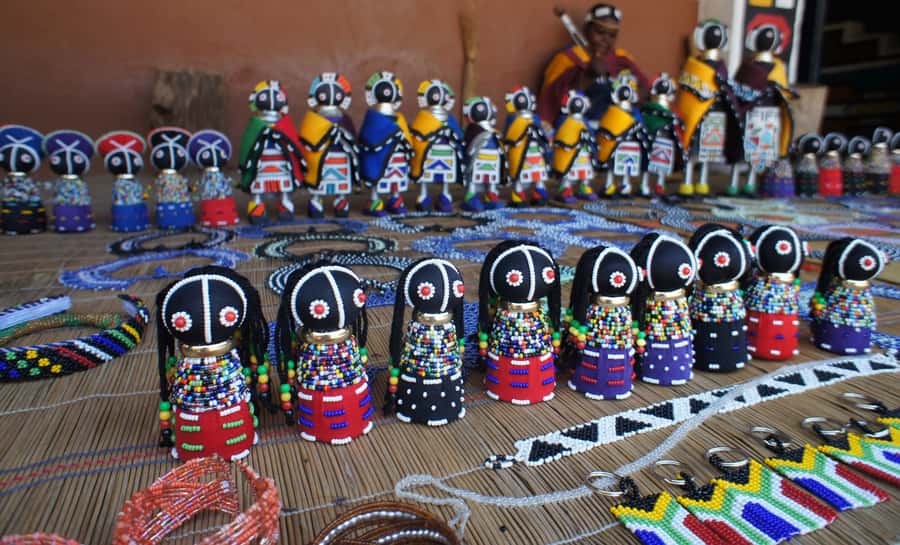
Reviewed · LESEDI CULTURAL VILLAGE TOURS
Johannesburg: Lesedi Cultural Village Experience
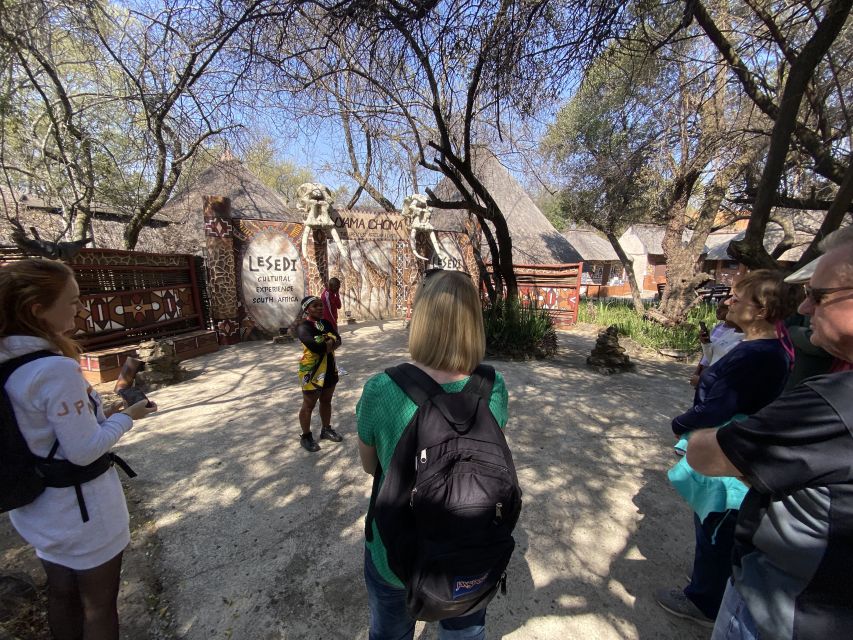
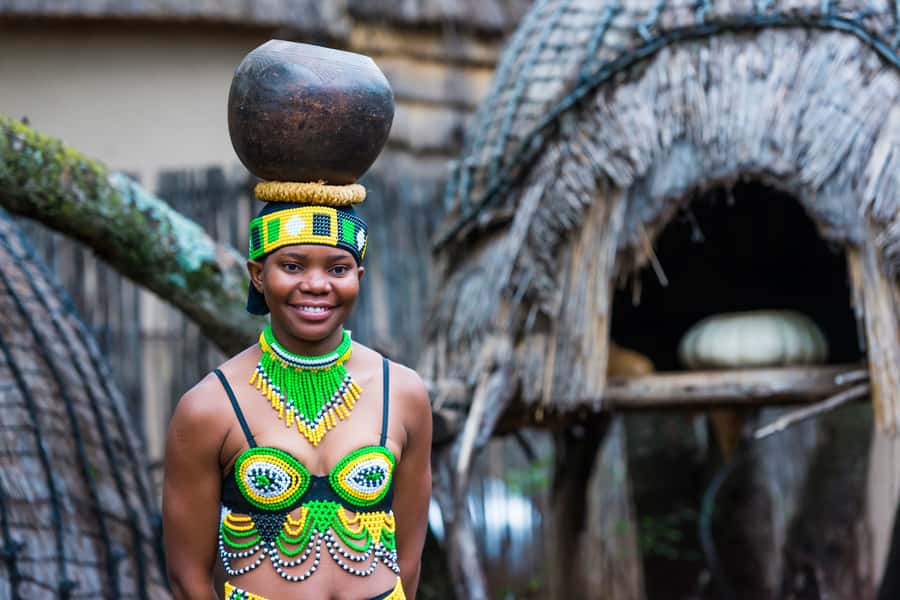
Lesedi Cultural Village puts five South African cultures into one half-day visit: Xhosa, Zulu, Pedi, Basotho, and Ndebele. You move between traditional village settings, hear stories and music, watch dancing, then sit down to a large African buffet.
I like the easy hotel pickup and the small group limit of 13. I also like that the meal is part of the price, with unusual choices such as ostrich and crocodile. The main drawback is that some parts of the site can feel worn, so this is best treated as a practical cultural introduction rather than a polished theme-park show.
Key points to know before booking
- Five cultures in one visit: See village settings connected with Xhosa, Zulu, Pedi, Basotho, and Ndebele traditions.
- A performance-led afternoon: Traditional music, tribal dancing, and gumboot dancing form the liveliest part of the visit.
- Nyama Choma buffet included: Lunch or dinner covers a broad selection of African food, while drinks cost extra.
- Simple Johannesburg logistics: Hotel pickup and return are offered from Johannesburg, Pretoria, airport hotels, Sandton, Melville, and the city area.
- Small group format: The group is limited to 13 people, with an English-speaking guide.
- Allow five hours: Morning departures return around 3:00 PM, while afternoon departures return around 10:00 PM.
Five South African cultures in one afternoon
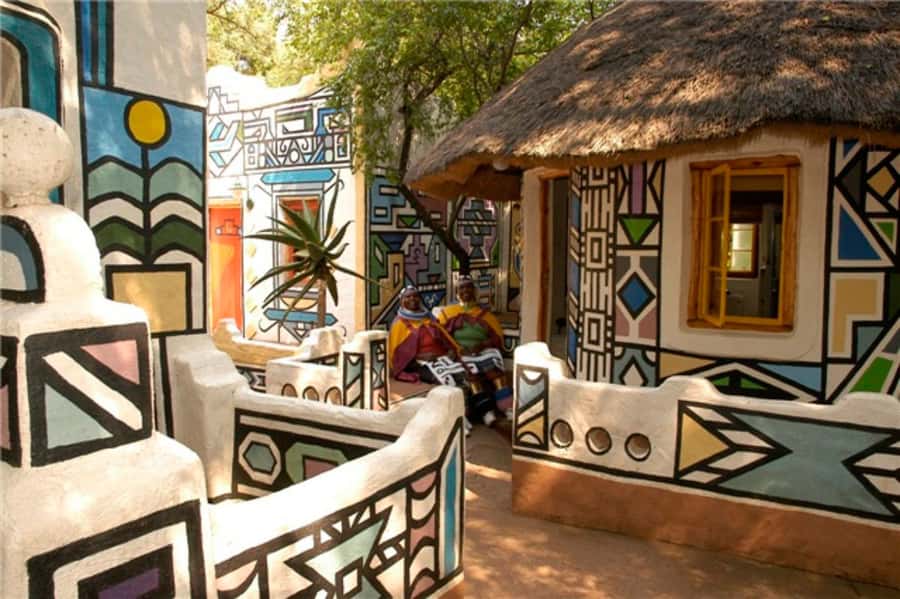
Lesedi Cultural Village is designed as a compact introduction to several South African cultural traditions. Instead of spending days arranging separate visits, you can see five village areas during one organized outing from Johannesburg.
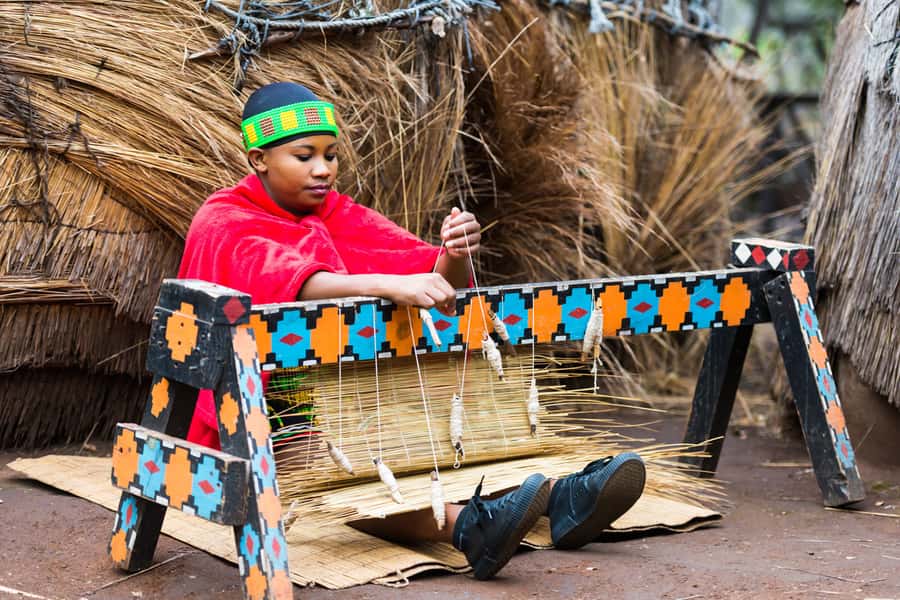
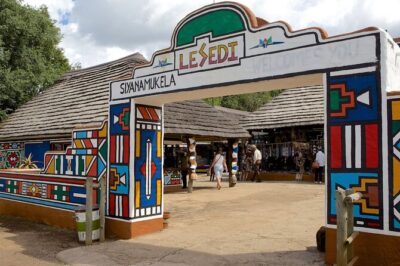
The villages represent the Xhosa, Zulu, Pedi, Basotho, and Ndebele peoples. Each area gives you a setting for stories, music, customs, and traditional design. The format is easy to follow: you walk with a guide, stop to hear explanations, and then continue to the next village.
I find this useful if your Johannesburg schedule is short. South Africa has many cultures and communities, and no five-hour visit can cover them in full. Still, the village gives you a clear first look at several traditions without requiring long-distance travel.
You should also set the right expectations. This is a cultural presentation in a purpose-built visitor setting, not a visit to ordinary family homes or a rural community going about daily life. That does not make it worthless. It simply means you are paying for an organized introduction, with performances and explanations shaped for visitors.
More Lesedi Cultural Village Tours in Johannesburg
- Lesedi Cultural Village and Cradle of Humankind Tour
★ 5.0 · 48 reviews - Lesedi Cultural Village Tour
★ 5.0 · 46 reviews - Lesedi Cultural Village
★ 5.0 · 45 reviews
The ride from Johannesburg to Lesedi
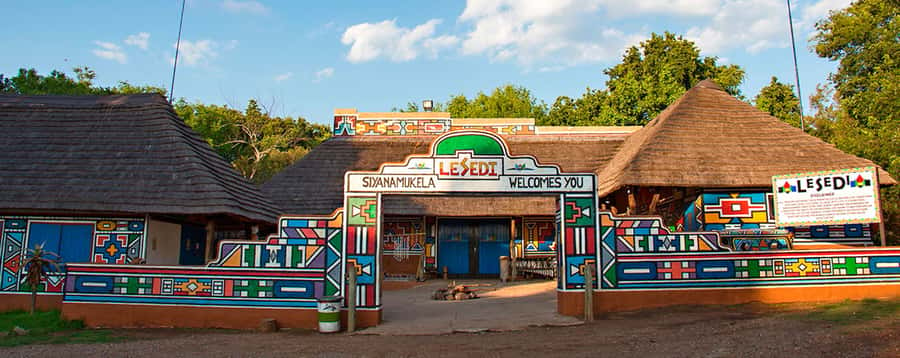
Your guide collects you from your hotel or residence in Johannesburg, with selected pickup points in Pretoria as well. Before setting off, you receive a short tour briefing. That small step matters because the day has several parts, including transport, village visits, a performance, and a meal.
The listed pickup times are set by area. Airport hotels are served at about 9:30 AM or 2:30 PM. Sandton hotels are collected around 10:00 AM or 3:00 PM, while Melville and the city area are listed at about 9:45 AM or 2:45 PM.
The coach ride includes a roughly 20-minute transfer, followed by a scenic portion on the way to Lesedi. The schedule allows about 40 minutes for the arrival and sightseeing segment. On the return, the coach portion is listed at about one hour, so the total time can feel longer than the simple distance suggests once hotel pickups and drop-offs are included.
You get free onboard uncapped WiFi, which is handy for checking messages or keeping an eye on plans. The small group size, limited to 13 people, should make the guide’s explanations easier to hear than on a large bus tour.
Walking through the Xhosa, Zulu, Pedi, Basotho, and Ndebele villages
The main guided visit lasts about 90 minutes. You move through five traditional village areas, with each one linked to a different cultural group.
The value here is comparison. You are not only looking at one set of buildings or hearing one set of customs. The sequence lets you notice differences in village style, stories, music, and traditions as you go from one area to the next.
The guide is central to the quality of this section. A good explanation turns the buildings and displays into something useful, while a rushed explanation would leave you with little more than photographs. The available information confirms that the tour is led in English, so English-speaking visitors should be able to follow the commentary.
The visit also gives you time to stop for photos. Bring a camera if you like recording details, but try to listen before reaching for it. The strongest part of a cultural visit is often the explanation of what you are seeing, not the building itself.
The site has received a high overall rating of 4.6 from 43 ratings, and the strongest praise focuses on the guide, the clear information, and the enjoyable mix of culture and food. That fits the design of the visit: you get a lot of content in a short period, but the guide’s approach makes a real difference.
Music, tribal dancing, and the famous gumboot style
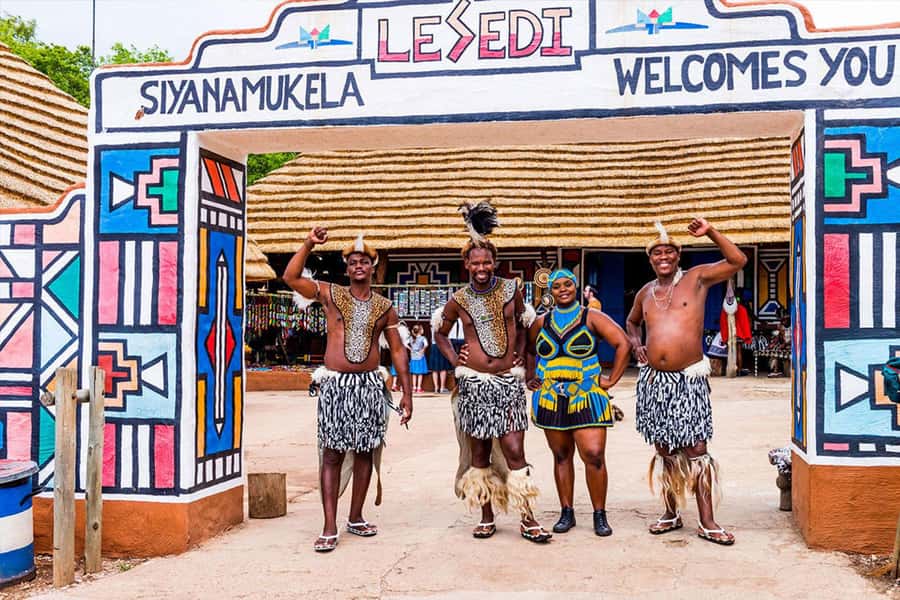
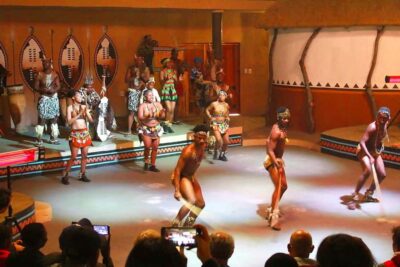
After the village walk, the group gathers for traditional music and dancing. This is the most lively part of the program, and it gives the visit a shared social moment rather than a series of quiet stops.
You can expect traditional dancing as well as gumboot dancing. Gumboot dancing has a strong performance element, using boots and body percussion to create rhythm. It is visually clear and easy to enjoy even if you know little about its background.
The program also presents a traditional South African tribal get-together. Music and dance help show how culture is expressed through movement and sound, not just through buildings or objects.
I like this part because it breaks up the guided explanations. After walking between the villages and listening to stories, the performance gives you something energetic and memorable. It is also a good fit for families and for anyone who prefers a cultural visit with action rather than a museum-style format.
Keep in mind that this is a scheduled performance for visitors. You are watching a prepared presentation, not arriving at an unplanned local celebration. For many people, that structure is exactly what makes the activity easy to enjoy. If you want a more spontaneous experience, you may find the format more formal than expected.
Same country, a completely different kind of day:
- From Johannesburg: Pilanesberg Nature Reserve Game Safari
★ 4.8 · 1,327 reviews - Johannesburg: Hop-On Hop-Off Bus with Optional Soweto Tour
★ 4.6 · 985 reviews - Soweto /Johannesburg and Apartheid Museum Guided Full Day Tour
★ 5.0 · 932 reviews - Johannesburg Hop-On Hop-Off City Tour with Soweto Option
★ 4.5 · 768 reviews
Lunch or dinner at Nyama Choma
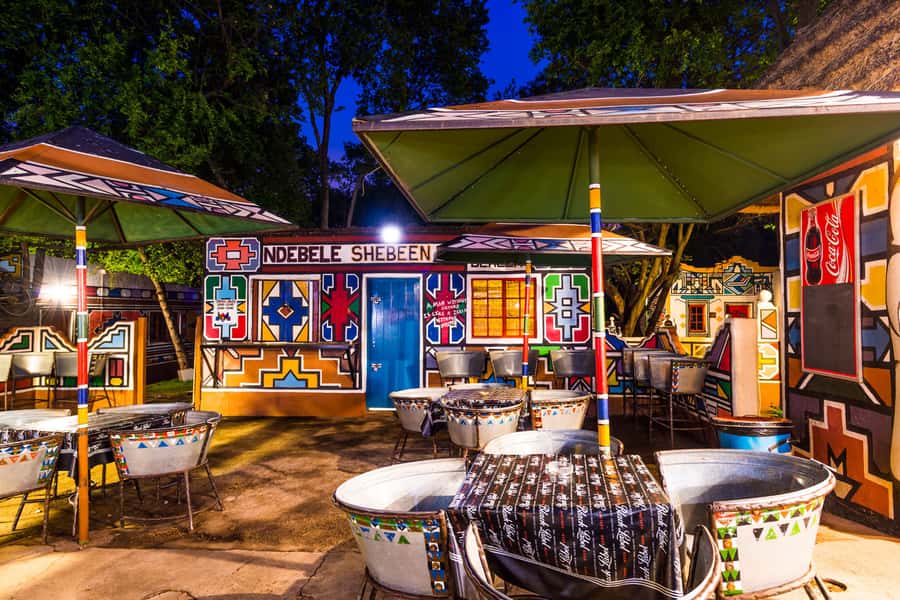
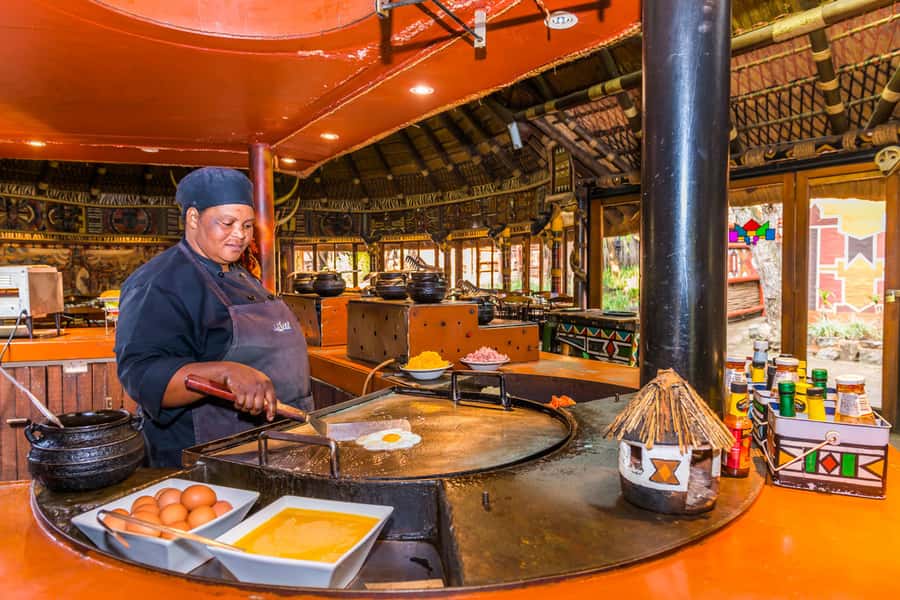
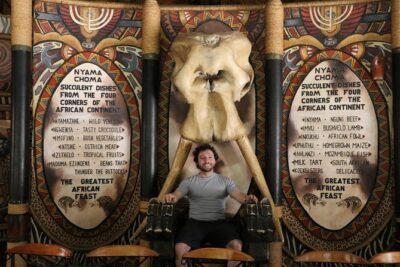
The meal takes place at Nyama Choma, a restaurant whose name means Great African Feast. You have about one hour for the meal and free time.
The restaurant is arranged in three themed areas: North Africa, East Africa, and South Africa. That gives the buffet a wider reach than a single regional menu. You can expect a broad choice of African dishes, with crocodile and ostrich among the more unusual options listed for the meal.
Lunch is included on the morning departure, while the afternoon departure has dinner. Drinks are not included, so budget separately for anything you want to drink with the meal.
The food is one of the tour’s better value points. At $144 per person, you are not paying only for entry to the village. The price also covers the return transfer, the guide, the cultural program, and a substantial meal. If you were arranging separate transport from Johannesburg and paying for food at the site, the package could be convenient and reasonably priced.
Still, the price will feel high if you mainly want a short dance show. The value depends on using the full package: transport, the five village areas, the explanations, the performance, and the buffet.
A practical tip is to ask your guide about the dishes as you eat. The unusual foods are more interesting when you know what you are trying, and the meal gives you another chance to connect the performance with broader regional traditions.
What the five-hour schedule feels like
The tour is advertised as five hours, with a morning version starting around 10:00 AM and returning to your hotel around 3:00 PM. The afternoon version starts around 3:00 PM and returns at about 10:00 PM.
The morning option works well if you want the rest of the day free in Johannesburg. You can combine it with an evening meal or another activity, provided you allow enough time for the return transfer.
The afternoon option gives you a later cultural outing and finishes at night. It may suit you if your morning is occupied, but you should not plan anything soon after the stated return time. Hotel drop-offs can take time, especially when several areas are included.
The schedule includes a 30-minute break and photo stop before the one-hour meal. That gives you a little breathing room after the guided village walk. This is not a nonstop five-hour march, though the day does contain a fair amount of movement and transport.
The site is listed as wheelchair accessible. If you need specific support during the walking portion, confirm the details at booking, since the provided information does not describe the exact paths or facilities.
The condition of the site and the limits of the experience
The main caution is maintenance. One recent assessment found the site somewhat rundown, with paths, parking areas, and other parts needing attention. That is worth knowing before you pay a premium price and expect a highly polished attraction.
The condition does not remove the value of the cultural program, but it can affect your first impression. Some visitors will focus on the guide, dancing, and food. Others may be distracted by worn paths or tired-looking facilities.
I would think of Lesedi as a practical cultural stop, not a luxury outing. The price is easier to justify if you care about having transport arranged and want several traditions presented in one place. If spotless grounds and modern visitor facilities are important to you, lower your expectations.
There is also an ethical question around cultural performances. The experience presents living cultures through a visitor program, and you may wonder how much money reaches the performers and guides. The available information does not explain staff pay or the distribution of tour income, so I cannot offer a firm answer. It is reasonable to enjoy the visit while remembering that staged cultural displays need fair treatment and proper support for the people presenting them.
Who will get the most from this tour?
I would recommend Lesedi to you if you have limited time in Johannesburg and want a guided overview of several South African cultures. It is also a sensible choice if you prefer an organized outing with hotel pickup, a live English-speaking guide, and a meal already arranged.
Families may like the mix of walking, music, dancing, and food. First-time visitors to South Africa can use the tour as a starting point before seeking more focused cultural visits elsewhere.
The small group limit of 13 is another plus. It should feel more personal than a large coach excursion, and you have a better chance to ask questions during the village walk or on the drive.
I would be less enthusiastic if you are looking for a quiet, deeply local encounter or a visit to a working village. The experience is structured and visitor-focused. You also need to accept that parts of the site may look in need of repair.
Is $144 a fair price?
At $144 per person, the package sits in the mid-to-high range for a half-day outing, but the inclusions matter. You receive:
- Return transfers from Johannesburg or Pretoria
- Entry to Lesedi Cultural Village
- An English-speaking live guide
- A traditional buffet lunch or dinner
- Free onboard uncapped WiFi
- A small group capped at 13 people
Drinks are extra. The price is strongest for visitors staying without a car, since arranging a private return transfer could add a meaningful cost. It also saves you from coordinating entry and a meal separately.
The price is weaker if you already have transport and only want the village visit. In that case, the dated facilities may make the package feel less appealing. I would book it for convenience and content, not for luxury.
The cancellation terms are friendly: you can cancel up to 24 hours ahead for a full refund, and you can reserve now and pay later. Availability determines the exact starting time, so check the pickup slot that matches your hotel area.
Should you book Lesedi Cultural Village?
Book this experience if you want a well-organized first look at five South African cultures, especially with limited time in Johannesburg. The included transfer and buffet make the day simple, and the dancing, music, and food give it enough variety to keep the five hours moving.
Think twice if you expect a pristine site or a fully unplanned community encounter. Lesedi is a staged cultural presentation, and some maintenance issues may be visible.
For most first-time visitors who value convenience, an English-speaking guide, and a broad cultural sampler, I think the $144 price can make sense. Choose the morning departure if you want your evening free. Choose the afternoon option if you prefer a later outing and do not mind returning around 10:00 PM.
FAQ
Where is Lesedi Cultural Village?
Lesedi Cultural Village is in North West, South Africa, a short distance outside Johannesburg.
How long does the tour last?
The experience lasts about five hours, including transportation from Johannesburg, the village visit, the performance, and the meal.
What cultures are represented at Lesedi?
The tour visits village areas connected with the Xhosa, Zulu, Pedi, Basotho, and Ndebele cultures.
Is transportation included?
Yes. Return transfers are included from Johannesburg or Pretoria, with pickup available from listed hotel areas and selected airport hotels.
What time does the morning tour run?
The morning tour starts at about 10:00 AM and returns to your hotel at around 3:00 PM. Exact pickup times vary by area.
What time does the afternoon tour run?
The afternoon tour starts at about 3:00 PM and returns at around 10:00 PM. Exact pickup times vary by area.
Is food included?
Yes. The price includes lunch on the morning tour or dinner on the afternoon tour. Drinks are not included.
What food is served?
Nyama Choma offers a buffet with African dishes from themed North African, East African, and South African areas. Crocodile and ostrich are among the listed choices.
Is the tour wheelchair accessible?
Yes, the activity is listed as wheelchair accessible. The provided information does not give specific details about every path or facility.
Just added around Johannesburg
- Lion park★ 4.5 · 5 reviews
- Lesedi cultural village:★ 5.0 · 6 reviews
- Lesedi Cultural Village with lunch or dinner cultural food★ 4.6 · 9 reviews
- Lesedi Cultural Village Half-Day Tour★ 4.7 · 9 reviews
- Lesedi Cultural Village★ 4.9 · 4 reviews
- Kruger National Park – 5 Day Safari Tour★ 4.7 · 4 reviews
- From Johannesburg: Kruger National Park 4-Day Luxury Safari★ 4.8 · 9 reviews
- Kruger National Park – 4 Day Safari Tour★ 4.8 · 19 reviews
Lesedi Cultural Village Tours, compared.
Lesedi Cultural Village and Cradle of Humankind Tour
Read our review →
Browse the lists this tour appears in