
Reviewed · PILANESBERG SAFARIS
From Johannesburg: Pilanesberg Nature Reserve Game Safari
Pilanesberg gives you a real safari day without requiring a lodge stay or a flight to Kruger. After an early hotel pickup, you trade Johannesburg’s traffic for dry bush, open plains, dams, and an open Land Cruiser where every bend may reveal a rhino or giraffe. The animal sightings are the main event, not a staged wildlife show.
I like two things right away: the two long game drives give you a fair chance to find animals, and hotel pickup makes the day easy for a first visit to Johannesburg. Guides such as Petrus, Martin, Desmond, and Solly are praised for careful driving, sharp eyes, humor, and clear explanations.
The catch is the distance. You spend roughly four to five hours on the road between Johannesburg and Pilanesberg, making this a long day. Lunch is convenient, but it can be fairly simple, and the conservation fee is extra.
Key points at a glance
- Two open-vehicle drives: You spend about 4.5 to 5 hours inside Pilanesberg, split between morning and afternoon.
- A strong chance of common wildlife: Elephants, rhinos, giraffes, zebras, hippos, impalas, kudus, warthogs, and many birds are regular possibilities.
- Big Five sightings are never guaranteed: Lions, leopards, buffalo, elephants, and rhinos may appear, but wildlife decides the schedule.
- A very early start: Hotel pickups can begin around 5:45 or 6 a.m., with a return to Johannesburg before or around sunset.
- Bring layers and sun protection: Open vehicles can feel cold and windy early, then hot and bright by midday.
- Extra park fee: International visitors pay R500 at the gate, in addition to the tour price.
Why Pilanesberg works for a Johannesburg day trip
Pilanesberg Nature Reserve sits in South Africa’s North West province, within reach of Johannesburg for a full day out. Its setting is unusual: the dry feel of the Kalahari meets vegetation associated with the wetter Lowveld. That mix supports a wide range of animals and gives you more variety than a simple grassland drive.
The reserve is home to more than 7,000 animals and over 300 bird species. You may see fish eagles, kingfishers, and cormorants around the dams, along with crocodiles and hippos near the water. Away from the water, the usual cast includes zebra, giraffe, antelope, jackal, hyena, wildebeest, baboon, and warthog.
I like Pilanesberg for a practical reason: you can get a genuine national park safari without committing several nights or adding another flight to your itinerary. It is not the same as staying in a private reserve at a luxury lodge, where you may have more time at dawn and dusk. But for one available day in Johannesburg, it offers a solid taste of South African wildlife.
More Pilanesberg Safaris in Johannesburg
- Full Day Ultimate Pilanesberg National Park Safari from Johannesburg or Pretoria
★ 4.5 · 718 reviews - Full Day Pilanesberg Experience in Open Vehicle
★ 4.5 · 414 reviews - Full Day Safari Tour of Pilanesberg National Park, Open Jeep experience
★ 5.0 · 139 reviews
The 5:45 a.m. pickup and long road north
The day begins early at your Johannesburg hotel. Pickup is included, and the service covers Johannesburg locations, with many pickups in the Sandton area. The exact starting time depends on availability, but some departures begin around 5:45 or 6 a.m.
The drive to Pilanesberg takes about two to two and a half hours, depending on the pickup route and traffic. That is long enough for a nap, so bring a neck pillow if you want to sleep. Some vehicles have Wi-Fi, though you should bring a power bank if you plan to use your phone for photos or video.
The transfer is more than just dead time. Drivers such as Thomas, Arnold, Niki, Simon, Sunny, and Mdu have been praised for punctual pickups, safe driving, useful commentary, and friendly care. Some departures include a stop for refreshments and a short comfort break. Still, I would bring a small snack and avoid overloading on drinks before the reserve, since bathroom stops are limited.
The road portion is the main trade-off. A day that is advertised as 12 hours can feel even longer once you add hotel pickups, traffic, and the two-hour return. You will likely be tired on the way home. For many people, that is a fair price for fitting a safari into a Johannesburg stay. If long road days wear you down, an overnight near Pilanesberg would be more comfortable, though that is not part of this experience.
Morning game drive: your first look at the reserve
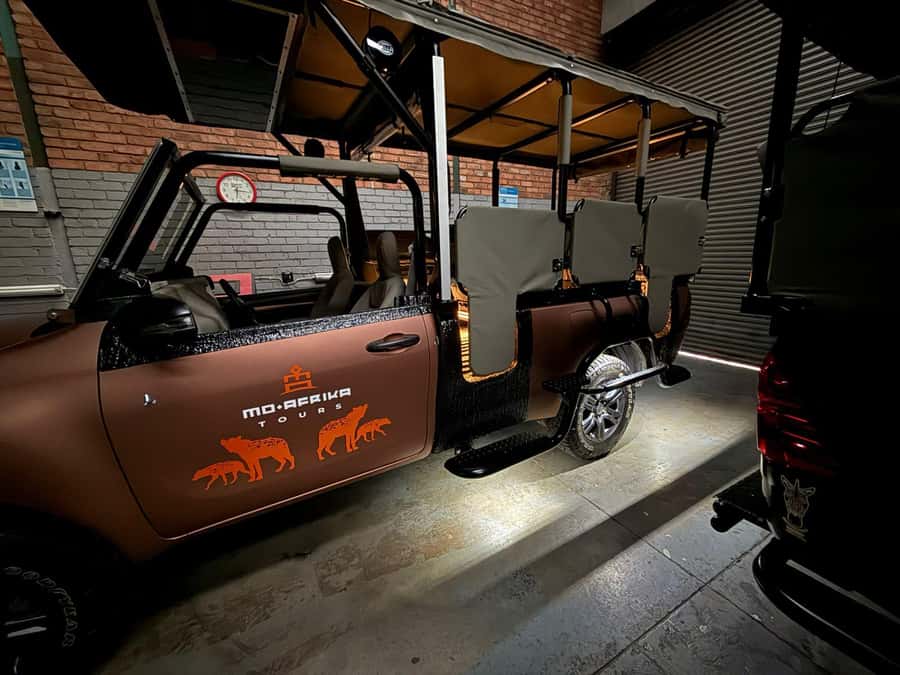
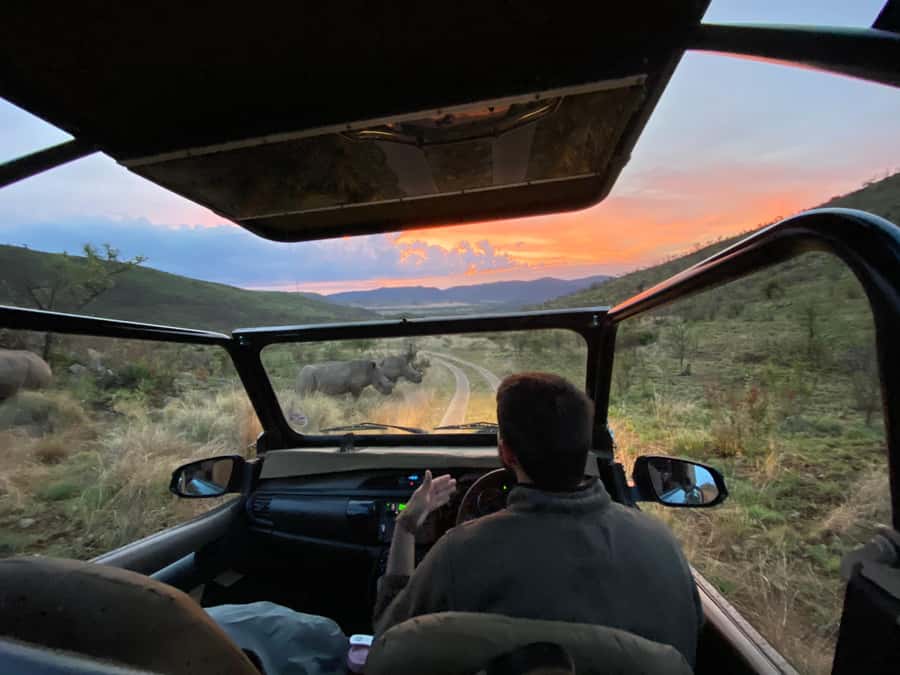
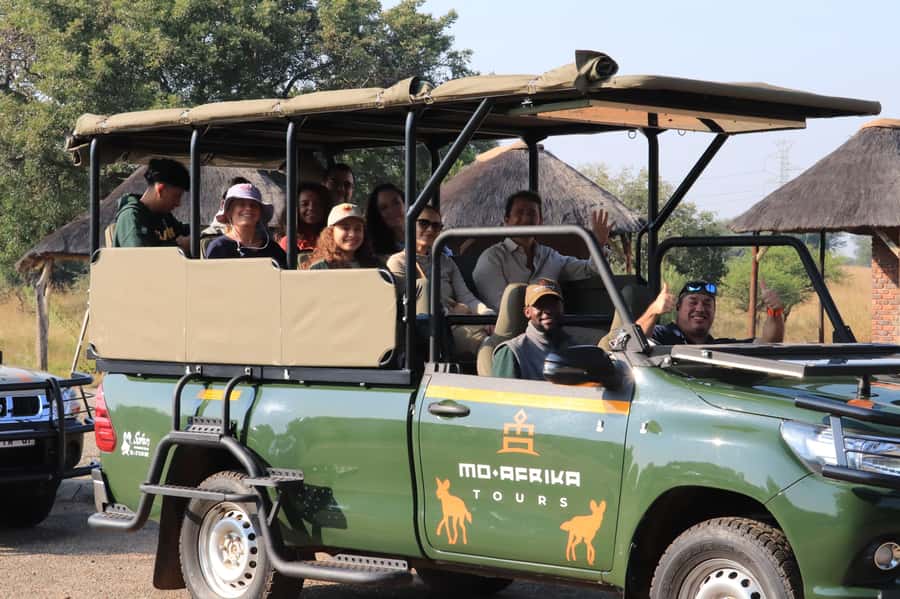
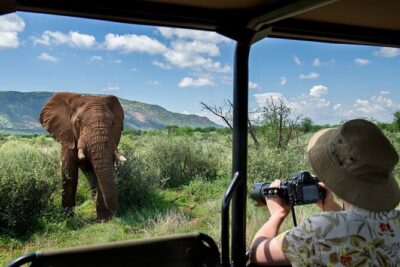
After reaching Pilanesberg, you board an open safari vehicle with a guide. The first drive lasts about 2.5 hours. This is when you begin to understand the value of the open vehicle. You get a broad view in every direction, fresh air, and the ability to hear the bush rather than simply watch it through a closed window.
An experienced guide does more than point at animals. Guides including Petrus, Martin, Petros, Desmond, Michael, Doreen, Wisdom, Lethabo, and Thabo are praised for explaining animal behavior, identifying tracks or distant movement, and positioning the vehicle safely for photographs. The names and guides vary by departure, so you cannot request a particular person as a guaranteed feature.
The early drive can be chilly, especially in winter. The air moves quickly through the back rows, and a jumper alone may not be enough for some people. Bring a warm layer, a windproof jacket, and perhaps gloves and a hat. Blankets may be available on some vehicles, but you should not rely on that.
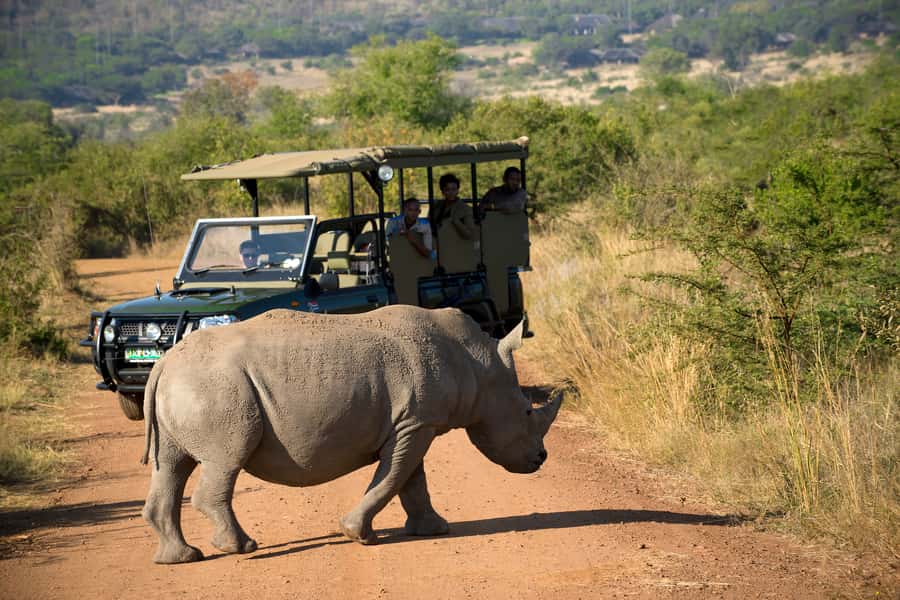
The rewards begin quickly. Elephants, rhinos, zebra, giraffes, hippos, impalas, kudus, wild pigs, baboons, and warthogs have all been seen on this route. You may also find a crocodile at a dam or a large bird circling above the water.
This is a national park experience, so the animals are not placed for you. The guide can search likely areas and follow fresh information from other vehicles, but no one can promise a lion around the next corner. That uncertainty is part of the appeal, though it can frustrate anyone counting down a strict Big Five checklist.
Lunch beside the water hole
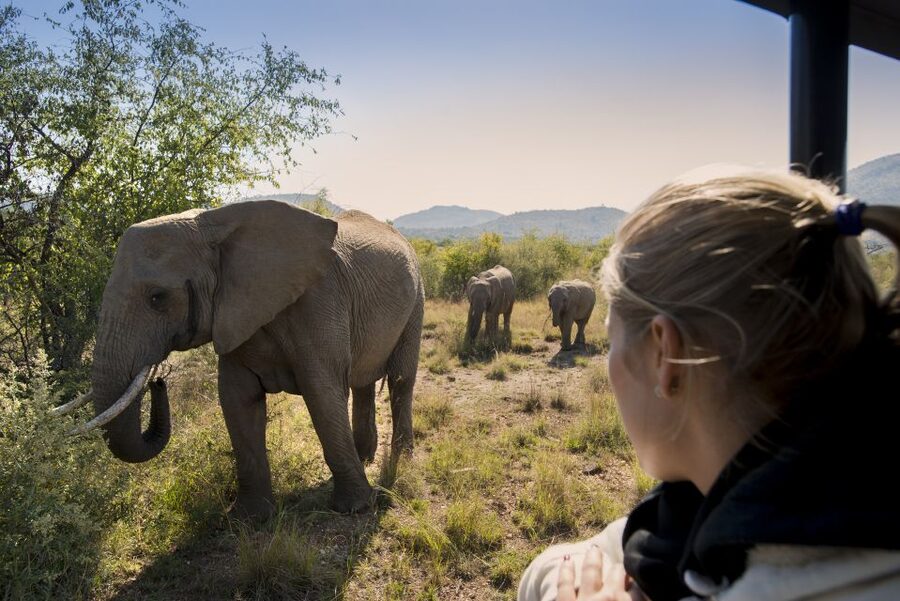
Around midday, you stop for lunch at one of the reserve’s rest camps. The break lasts about 50 minutes to an hour, giving you time to eat, use facilities, stretch your legs, and escape the vehicle’s tight seating for a while.
The meal is included, which is useful on such a long day. You may find burgers, wraps, or a wider choice of basic dishes, depending on the arrangement at the rest stop. Some people find the meal delicious and satisfying, while others consider it ordinary or wish it included more distinctly South African food such as a braai.
Portions may feel small if you have worked up an appetite during the morning drive. I would pack a snack for the road, as additional food and drinks are not included. A lunch stop overlooking a water hole also gives you a chance to keep watching the reserve instead of treating the meal as a pause from it. Hippos, birds, or other animals may be nearby, but sightings at the rest camp are not guaranteed.
Same country, a completely different kind of day:
- Johannesburg: Hop-On Hop-Off Bus with Optional Soweto Tour
★ 4.6 · 985 reviews - Soweto /Johannesburg and Apartheid Museum Guided Full Day Tour
★ 5.0 · 932 reviews - Johannesburg Hop-On Hop-Off City Tour with Soweto Option
★ 4.5 · 768 reviews - Half-Day Tour of Soweto Tour
★ 4.5 · 712 reviews
Afternoon drive: warmer, brighter, and often different
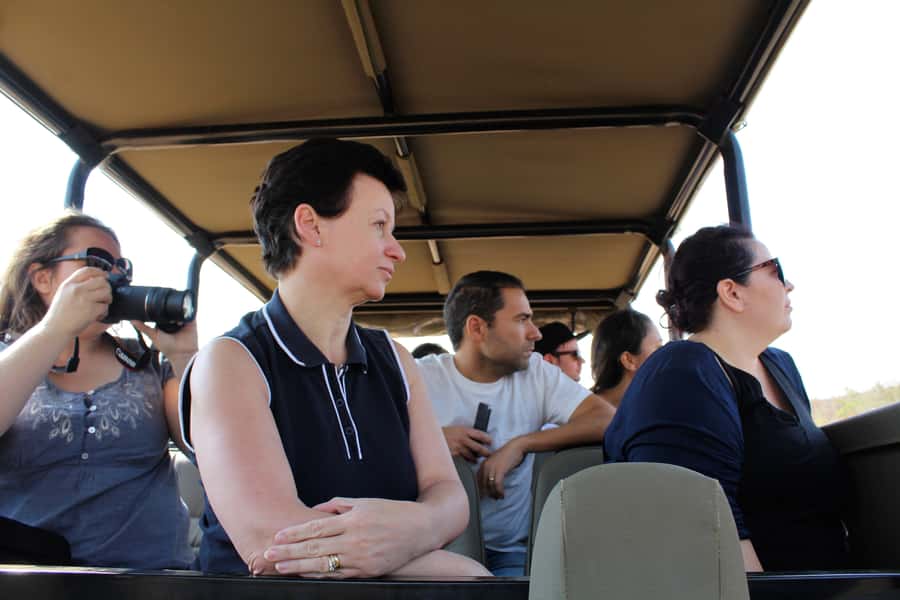
After lunch, you return to the open vehicle for a drive of about two hours. The afternoon changes the feel of the reserve. It is generally hotter, the light is stronger, and animals may be moving toward water or shade.
This second drive matters because animal activity shifts during the day. It also gives your guide another chance to follow fresh sightings. One group arrived late for lunch because the guide was giving them especially good animal encounters, which illustrates the balancing act: the best wildlife moments do not always follow the clock.
The afternoon is a good time to ask questions. You can ask about the reserve’s ecology, the difference between rhino species, bird behavior, predators, or how the dry and wetter vegetation zones support different animals. Guides are often the strongest part of the experience, combining humor with practical knowledge. Petrus is repeatedly praised for his energy and comic timing, while Martin is singled out for detailed animal explanations and patient guiding.
The Big Five are elephants, rhinos, lions, leopards, and buffalo. Elephants and rhinos are the most dependable targets on this trip, while lions, leopards, and buffalo require more luck. Some departures see three or four of the five. One especially fortunate group reported all five, though the lion was partly hidden in the grass. Another saw a leopard only faintly. Other groups saw no big cats at all.
That range is normal for a wild reserve. Book this for the full range of animals and the experience of searching, not as a guaranteed lion tour.
What the open vehicle is really like
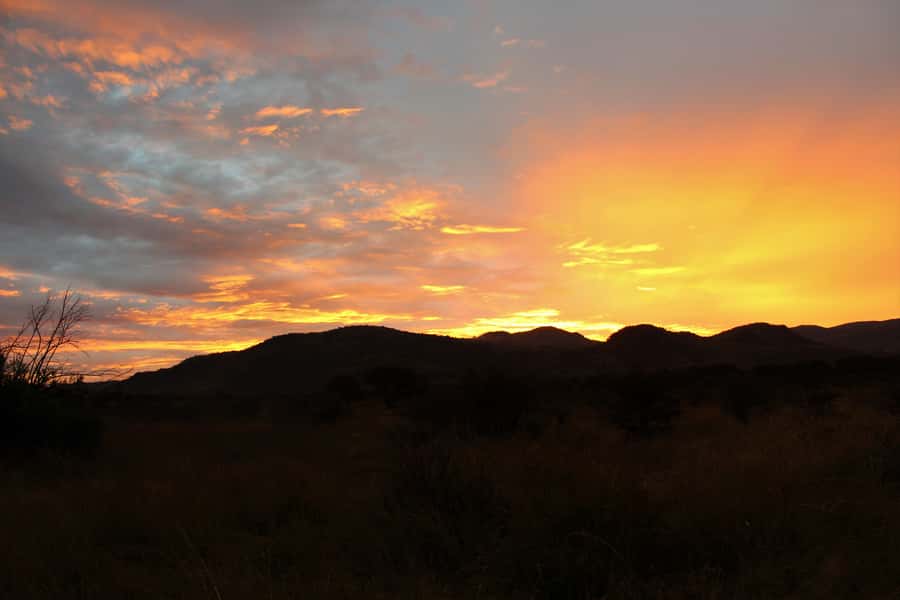
An open safari vehicle brings you closer to the sounds and smells of the bush. It also exposes you to the weather. Morning wind can be cold, midday sun can be fierce, and the back seats may feel especially windy on the road through the reserve.
Dress in layers so you can adjust throughout the day. Wear light clothing underneath, then add a jumper or jacket at sunrise. A sun hat, sunglasses, sunscreen, and a camera are essential. Covering your shoulders and arms can help prevent sunburn during several hours outdoors.
Binoculars are useful for distant birds, cats, and animals partly hidden in grass. A phone camera can capture close elephants or rhinos, but do not expect every sighting to fill the frame. Your guide will usually work to position the vehicle well while keeping a safe distance.
Smoking and pets are not allowed. Bring your passport or ID card, since it is listed among the required items. The activity is wheelchair accessible, but you should confirm the practical vehicle arrangements when booking if you use a wheelchair.
Cost, park fees, and overall value
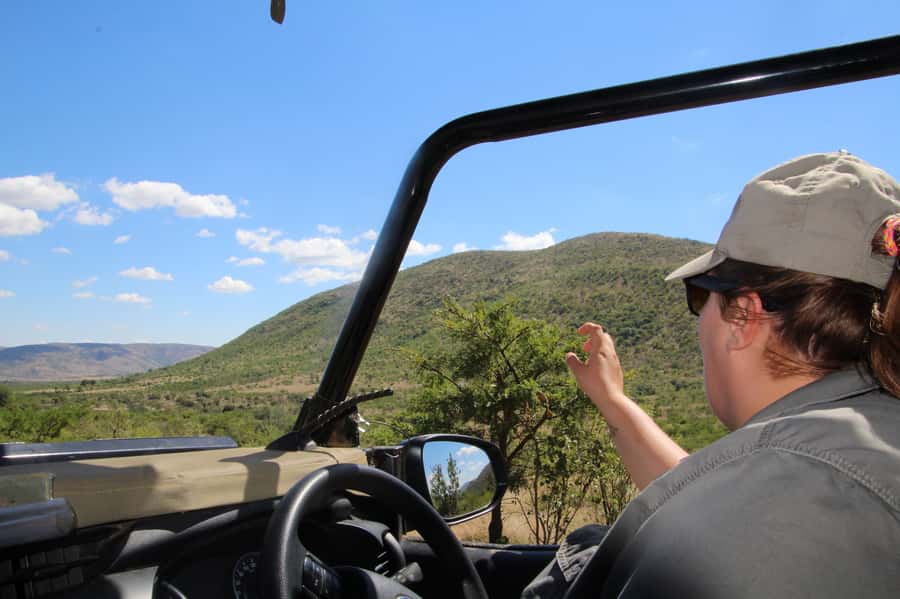
The tour price is listed at $186 per person. That includes hotel pickup and drop-off, two open safari drives, and lunch. It does not include the Pilanesberg National Park conservation fee, paid at the gate.
The additional fee is:
- R500 per international visitor
- R275 per SADC national
- R168 per South African resident
That extra charge is important when comparing the total cost with other safari options. Even so, the package can be good value if you have only one free day in Johannesburg. You get transport, a full day in the reserve, an English-speaking guide, about five hours of game driving, and lunch without arranging separate transfers or hiring a private vehicle.
The value is strongest for solo visitors and couples who want a shared experience. Solo travelers can join the group rather than paying for a private vehicle, and several solo women have found the pickup, transfers, and guide support reassuring. Small vehicle groups can make sightings more pleasant, with one report describing around 10 people per vehicle.
The value is weaker if you want complete flexibility, long photographic stops, or the best possible predator odds. A private or overnight safari gives you more control and access to early and late animal activity, but it costs more and requires extra time.
Who should book this safari
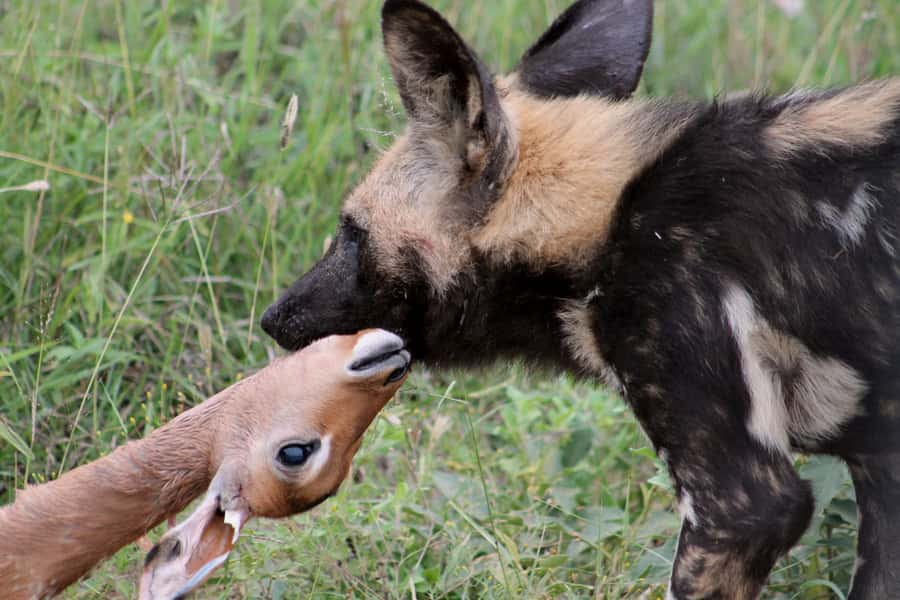
I would choose this tour if you are staying in Johannesburg and have one spare day for wildlife. It suits first-time safari visitors, solo travelers, couples, and anyone who wants a managed day with transport included.
It is also a good fit if you care about visiting a national park rather than a small private reserve. You will see a broad mix of animals in a protected natural setting, with a guide explaining what you are looking at instead of simply driving past.
I would think twice if you dislike early starts, long road transfers, or uncertain results. Children under four are not suitable for the shared experience. The information also says that if you have a child from zero to five years old, you need to book a private tour, so families should clarify the age rule before paying.
Free cancellation is available up to 24 hours in advance, and you can reserve now and pay later. Those policies help if your Johannesburg schedule is still moving around.
Should you book the Pilanesberg day trip?
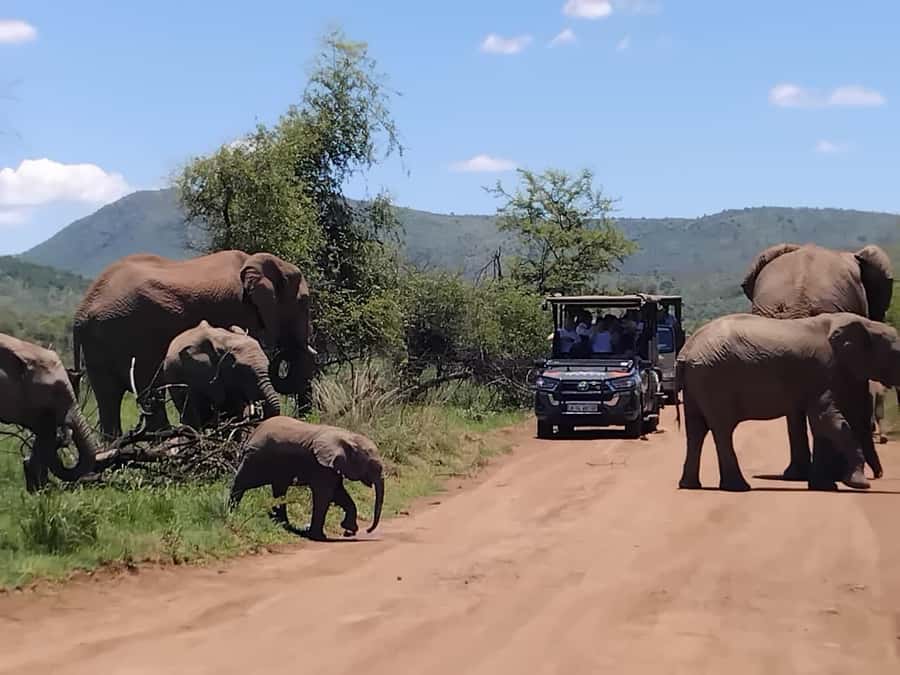
Book it if you want the most convenient one-day safari from Johannesburg. The day is long, but the payoff can be substantial: herds of elephants, close rhino sightings, giraffes, zebra, hippos, crocodiles, birds, and perhaps a lion, leopard, or buffalo.
I especially like the combination of two drives and an open vehicle. You are not limited to one rushed circuit, and you get a second chance after lunch when the reserve feels warmer and more active. The guides are another major strength, with names such as Petrus, Martin, Desmond, Solly, and Wisdom receiving repeated praise for effort, humor, safe driving, and animal spotting.
Just set your expectations correctly. No safari can control the animals, and the trip from Johannesburg takes time. Bring warm layers, sun protection, snacks, binoculars, and patience. If you can accept the road hours and the extra conservation fee, this is a practical and memorable way to add wild South Africa to a Johannesburg visit.
FAQ
How long does the Pilanesberg safari from Johannesburg last?
The experience lasts about 12 hours, including hotel pickup and drop-off, the road journey, two game drives, and lunch.
How much time is spent on game drives?
You spend about 4.5 to 5 hours on game drives, split between a morning drive of around 2.5 hours and an afternoon drive of around two hours.
Is lunch included?
Yes. Lunch is included and lasts about 50 minutes to one hour at a rest camp in Pilanesberg. Additional food and drinks are not included.
Is the conservation fee included in the tour price?
No. The Pilanesberg National Park conservation fee is paid at the gate. The listed rates are R500 for international visitors, R275 for SADC nationals, and R168 for South African residents.
Will I see the Big Five?
You have a chance to see elephants, rhinos, lions, leopards, and buffalo, but sightings are not guaranteed. Elephants and rhinos are often seen, while big cats and buffalo depend on luck, timing, and the animals’ movements.
What should I bring?
Bring your passport or ID card, sun hat, camera, sunscreen, sunglasses, and warm layers. An open vehicle can be chilly early in the day and hot later. Binoculars and a small snack are also useful.
More National Parks in Johannesburg
- 3-Day Kruger National Park Open Vehicle Safari
★ 5.0 · 61 reviews - Johannesburg: 4-Day Classic Kruger National Park Safari
★ 4.8 · 52 reviews - Johannesburg: 3-Day Classic Kruger National Park Safari Tour
★ 4.7 · 45 reviews - From Johannesburg: 2-Day Safari into Kruger National Park
★ 4.3 · 29 reviews
More Safari in Johannesburg
- Early Morning Balloon Safari with Breakfast from Magaliesburg
★ 5.0 · 418 reviews - From Johannesburg: Lion & Safari Park Half-Day Tour
★ 4.6 · 384 reviews - From Johannesburg: 3-Day Budget Tent Kruger Park Safari
★ 4.5 · 163 reviews - Safari Flight
★ 5.0 · 107 reviews
Just added around Johannesburg
- Lion park★ 4.5 · 5 reviews
- Lesedi Cultural Village with lunch or dinner cultural food★ 4.6 · 9 reviews
- Lesedi cultural village:★ 5.0 · 6 reviews
- Lesedi Cultural Village Half-Day Tour★ 4.7 · 9 reviews
- Lesedi Cultural Village★ 4.9 · 4 reviews
- Kruger National Park – 5 Day Safari Tour★ 4.7 · 4 reviews
- From Johannesburg: Kruger National Park 4-Day Luxury Safari★ 4.8 · 9 reviews
- Kruger National Park – 4 Day Safari Tour★ 4.8 · 19 reviews
Pilanesberg Safaris, compared.
Full Day Safari Tour of Pilanesberg National Park, Open Jeep experience
Read our review →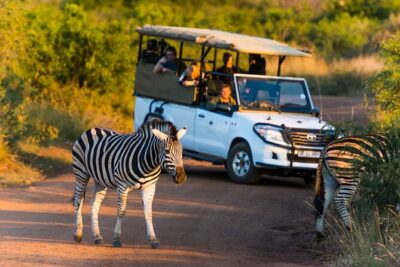
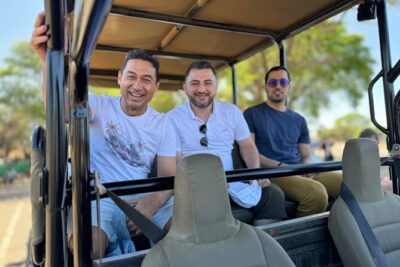
Full Day Exquisite Pilanesberg Safari from Johannesburg
Read our review →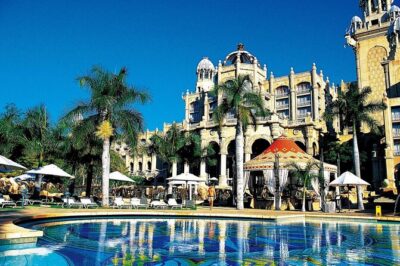
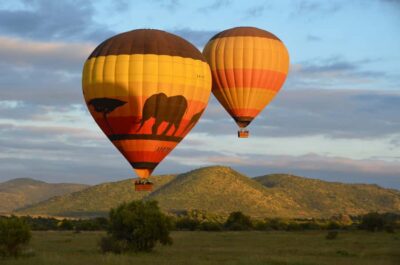
Pilanesberg National Park/Sun City Hot Air Balloon Safari
Read our review →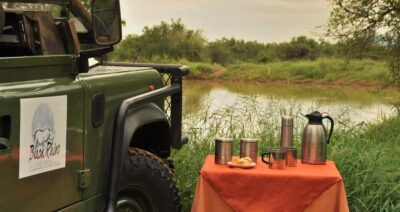
3-Hour Scheduled Safari Game Drive in Pilanesberg National Park
Read our review →Browse the lists this tour appears in