Reviewed · HALF-DAY
Half-Day Small-Group Township Tour South Africa from Cape Town
Cape Town’s townships are not a side note to the city’s story. They are central to understanding how apartheid divided families, neighborhoods, and opportunities. This half-day tour takes you into that history through District Six and Langa, with time to walk through a local community and hear how those policies still affect daily life.
I like two things here. First, the small vehicle, limited to 12 people, gives the guide room to answer real questions. Second, the tour puts history beside ordinary life, from a preschool and local pub to conversations about housing, work, and community. The main consideration is that the exact stops can change. A preschool or healer may be closed, and the tour details refer to both District Six and Langa.
Key points before you book
- Expect a personal history lesson: Guides including Sam, Wilson, and Luyolo have shared local knowledge and, in some cases, personal experience of township life.
- Walk through Langa: Much of the experience takes place on foot, so bring comfortable shoes, a hat, and sun protection.
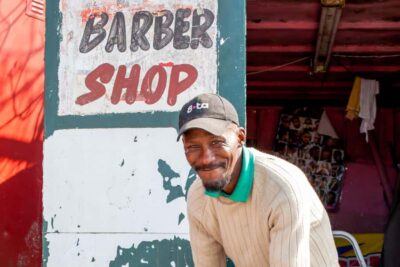
- See more than landmarks: The route may include a preschool, shebeen, traditional healer, school, and community streets.
- Keep Robben Island separate in your planning: The island visit is an optional addition and depends on ticket availability and weather.
- Use the four hours well: Hotel pickup, transport, and drop-off make this a useful morning or afternoon addition to a Cape Town stay.
- Know the limits: Food and drinks are not included, and one booking problem has been reported, so confirm pickup details before departure.
Why Cape Town’s townships matter
The tour begins with the Group Areas policy, the apartheid law that classified people by race and forced many families out of central Cape Town. District Six became one of the clearest examples of this destruction. Homes, businesses, schools, and places of worship were removed, and residents were sent away from the city center.
That context gives the walking portion real weight. You are not simply looking at modest housing or unfamiliar streets. You are seeing the long result of laws designed to control where people could live, work, study, and meet.
A good guide makes this history easier to understand. Sam, Wilson, and Luyolo are names associated with especially strong guiding on this experience. Wilson has explained the history of townships while sharing personal experience, and Sam has been praised for answering questions and adapting to pickup changes.
I would not book this as a quick photo stop. The point is to listen. Cape Town’s story includes colonial rule, apartheid, forced removals, continuing inequality, and the efforts of local people to build stable communities despite those burdens.
A few more Cape Town trips to weigh up
- Half-Day Tour Through Cape Town’s Townships
★ 4.8 · 979 reviews - Stellenbosch: Half-Day Wine Tour
★ 4.7 · 601 reviews - From Cape Town: Cape Point and Boulders Beach Half-Day Tour
★ 4.8 · 498 reviews
District Six and the story of forced removal

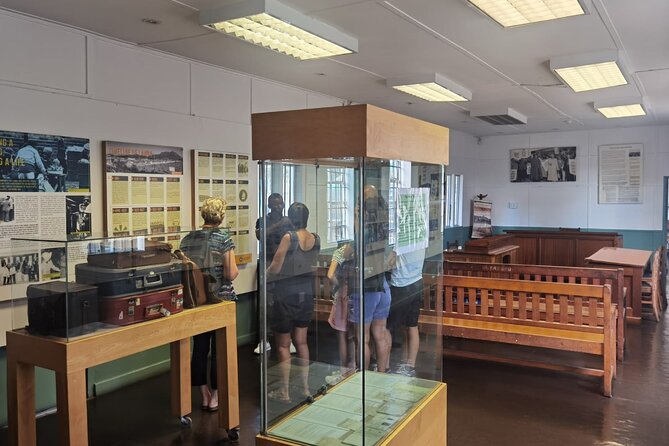
District Six is the clearest historical anchor in the supplied route. The museum honors the people removed during the 1960s and helps explain how the Group Areas policy changed the center of Cape Town.
This stop is valuable because it gives you a reference point before entering a township. Without it, the rest of the morning can feel like a general visit to a different part of the city. With it, you can connect the museum’s account of forced removal to the streets, buildings, and living conditions you see later.
The information provided for the tour is not perfectly consistent about the exact District Six stop. Some descriptions focus on the museum, while other details describe a local school, pub, traditional healer, and community visit in Langa. Treat District Six as the historical framework and Langa as the likely township setting, but confirm the final route with the operator.
That uncertainty is not necessarily a problem. Township tours depend on local schedules, access, weather, and which community partners are available that day. It does mean you should avoid booking with the assumption that every listed stop is guaranteed.
Walking through Langa with a local guide
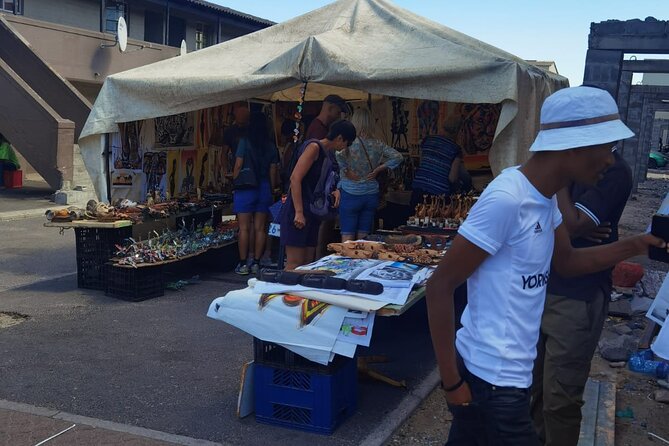
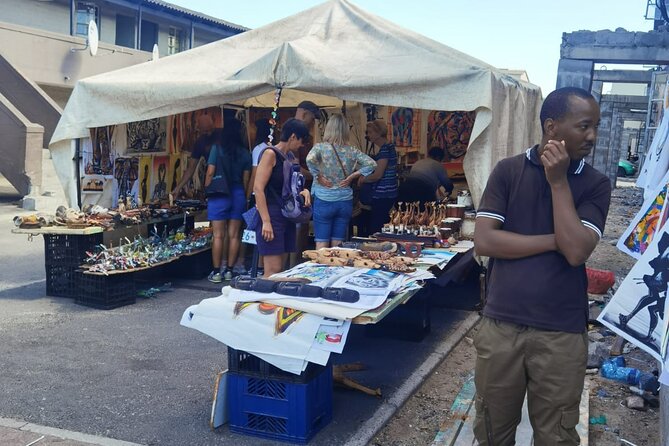
Langa is described repeatedly in the experience details and is the main place where you get an up-close look at township life. You walk through the neighborhood with a guide, hear about its past, and see how people live and work today.
The walking section is the heart of the tour. A minivan can take you to a township, but it cannot explain the small details of a place. Walking lets you pause, ask questions, and notice the difference between public spaces, homes, schools, shops, and gathering places.
The tone matters. The best version of this experience is not a staged display of poverty. It is a guided introduction to a real community, with the guide explaining the history and current challenges while helping you move through the area respectfully.
Several details make this feel more personal than a standard city sightseeing trip. Guides may discuss continuing inequality, the difficulty of breaking free from old colonial and apartheid-era limits, and the role of local people in improving their communities. You may also meet residents who are part of ordinary neighborhood life rather than performers brought in for a tour.
The experience has been described as safe and welcoming, but you should still follow the guide’s instructions. Stay with the group, ask before taking close-up photos, and remember that the people you see are not scenery.
The preschool visit and meeting local children
A local preschool is one of the most memorable possible stops. The children are often excited by visitors, and the setting gives you a direct look at an important part of community life.
This stop can also be emotionally powerful. Adults often focus on apartheid, housing, and inequality, while children quickly turn the visit into something warmer and more ordinary. A family with young children may find this especially engaging.
The preschool is not always open. One account specifically notes that it was closed during winter, so you should see it as a possible stop rather than a promise. School schedules and seasonal closures can change the plan.
If you want to bring something for the children, ask the operator in advance what is appropriate. Some people arrive wishing they had known how many children would be present. Small, practical gifts may be welcomed, but unplanned handouts can create awkwardness or unequal attention. A local guide can advise you better than a generic packing list.
Families should also note that children must be accompanied by an adult. The walking and social parts can work well for older children, but the tour deals with forced removals, racial laws, and present-day inequality. Parents should decide how much historical detail suits their children.
Same country, a completely different kind of day:
- Wine Tour: Paarl, Franschhoek & Stellenbosch incl 3 wineries
★ 5.0 · 3,940 reviews - Cape Town: Hop-On Hop-Off Bus Tour with Optional Cruise
★ 4.8 · 3,929 reviews - Cape Town: Cape of Good Hope & Penguins Day Tour with Pickup
★ 4.7 · 3,362 reviews - Zipline Cape Town – From Foot of Table Mountain Reserve
★ 5.0 · 3,179 reviews
A shebeen, traditional healer, and everyday culture
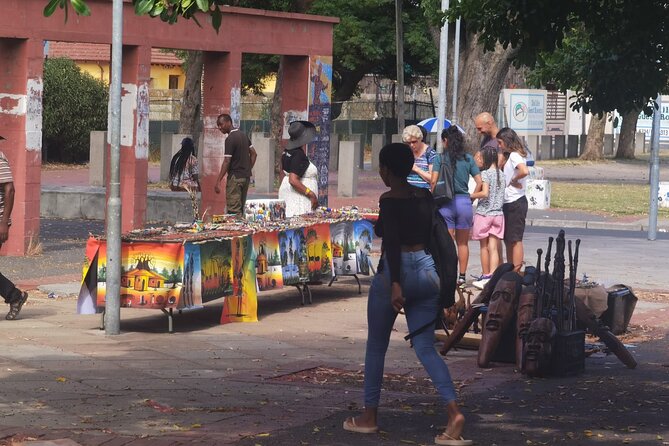
The route may include a shebeen, traditionally a local pub or informal drinking place, and a meeting with a traditional healer. These stops broaden the tour beyond political history.
A shebeen can show how people gather, socialize, and maintain community connections. The traditional healer offers another view of local cultural practice. Neither stop should be treated as a curiosity exhibit. You are there to listen and understand how these places fit into community life.
Again, availability is not certain. One account says both the healer and preschool were closed during winter, yet the walking tour still provided a strong sense of Langa. That is useful advice: the guide’s explanation and the walk matter more than checking off every advertised stop.
The experience is at its best when you let the guide explain what you are seeing instead of trying to force a dramatic moment. Ask respectful questions about culture, history, and daily life. Avoid assuming that one person or one stop represents every township in Cape Town.
What the four-hour schedule feels like
The activity lasts about four hours. Hotel pickup and drop-off are included, and transport is by private, air-conditioned minivan. The stated meeting point is 9 Dock Road at the Victoria and Alfred Waterfront, and the activity ends back at the meeting point.
The exact pace is not fully spelled out, but you should expect a combination of driving, historical commentary, and walking. The walking can be extensive, according to the experience details, so comfortable shoes are essential. Bring a hat as well. One person found the sun harsh and wished they had packed one.
The small-group limit is a real advantage. The maximum is 12 people, which is smaller than the advertised description of fewer than 15. With fewer people in the vehicle, you can usually hear the guide better and ask questions without holding up a large crowd.
Morning and other departure choices are offered, which helps you fit the tour around Table Mountain, the waterfront, or other Cape Town plans. I would avoid scheduling an important timed activity immediately afterward. The tour includes driving and community visits, and the pace may shift if a conversation runs long or a pickup takes extra time.
Food, drinks, and lunch are not included. Eat beforehand and carry water, especially on a warm day. The tour is not described as strenuous, but a moderate level of fitness is recommended because of the walking.
Adding Robben Island to the day
Robben Island is offered as an optional addition. The island is associated with Nelson Mandela’s imprisonment and has a history reaching back 500 years. The listed Robben Island portion is four hours with admission included, but the ticket is subject to availability and weather.
This can create a meaningful full-day history program. The township visit explains how apartheid shaped communities on the mainland, while Robben Island shows one of the most important places connected to the struggle against apartheid.
Do not treat the two parts as guaranteed on the same timetable. Ferry and island access depend on conditions, and the ticket must be available. One arrangement has the township guides dropping people near the boat for the Robben Island visit, which can make the combination practical, but you should confirm the handoff and timing before booking.
If you have only half a day, choose the township tour on its own. If apartheid history is a major reason for your Cape Town visit and you can spare most of a day, the combination may be worthwhile. The island is not a substitute for the township walk. It tells a different part of the story.
Guide quality makes the difference
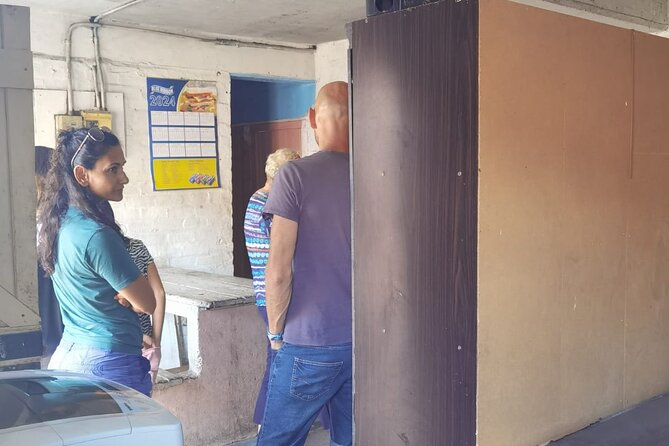
This tour depends heavily on the guide. The strongest accounts describe guides who explain history clearly, welcome questions, and connect national events to local experience.
Sam is noted for being patient, flexible, and willing to accommodate a changed pickup location. Wilson is associated with a walking tour that brought township history to life through personal experience. Luyolo is also singled out as an excellent guide. Since guide assignments can change, you cannot assume you will receive a particular person unless the operator confirms it.
A good guide should explain both the past and the present. Apartheid ended as a legal system, but inequality did not vanish overnight. The tour can help you understand why housing, education, employment, and access to the city remain complicated issues.
I also value the fact that the experience is not presented as a simple before-and-after story. You are likely to hear about hardships, but also about achievement, local pride, family life, and community strength. That balance keeps the visit from becoming a gloomy lecture.
Price, group size, and overall value
At $39.68 per person, this is a low-cost way to spend four hours with transport and a guide included. Hotel pickup and drop-off add practical value, particularly if you are not comfortable finding your own way to Langa or District Six.
The price is most attractive for people who want context rather than a luxury vehicle or a long list of formal attractions. You are paying for access, transport, interpretation, and a local introduction to places that are difficult to understand from a guidebook alone.
The value drops if you expect every listed stop to operate every time. The preschool, healer, and other community locations can close, and the route description itself leaves some uncertainty about District Six and Langa. The tour remains worthwhile if the walking and historical conversation are your priorities.
The experience carries a 4.7 rating from 62 ratings, with 94 percent recommending it. That is a strong record, but one serious problem appears in the supplied feedback: a booking where the operator did not arrive and did not communicate afterward. It seems to be an exception rather than the usual pattern, but I would confirm the pickup time and location shortly before departure.
Who should book this Cape Town township tour
I would recommend it to you if you want to understand Cape Town beyond the waterfront, beaches, and mountain views. It suits adults interested in South African history, families who can discuss difficult subjects with children, and anyone who prefers meeting local guides to riding past townships from a distance.
It is also useful early in a Cape Town visit. The history can change how you understand the city center, District Six, public transport, housing patterns, and the separation between tourist areas and residential communities.
You may want to skip it if you dislike walking, want a tightly fixed schedule, or expect a polished attraction with guaranteed access to every stop. It is also not the right choice if you are uncomfortable entering a residential community with a guide and discussing poverty or inequality in a direct way.
Wear comfortable walking shoes and a hat. Eat first, bring water, and ask about photography. If you plan to add Robben Island, confirm the ticket and weather arrangements before setting your schedule.
Should you book it?
Book this tour if you want a thoughtful, human introduction to Cape Town’s apartheid legacy and are willing to accept a flexible route. The strongest part is the combination of a local guide, a small group, and time on foot in Langa, supported by the District Six context.
I would book it for the guide’s interpretation and community connection, not simply for a checklist of a preschool, pub, or healer. If those stops are closed, the tour can still work well when the guide explains the neighborhood and gives you space to ask honest questions.
At this price, with transport included, it offers solid value. Confirm your pickup, pack for sun and walking, and consider Robben Island only if you have enough time and the ferry arrangements line up.
FAQ
How long is the township tour?
The township experience lasts approximately four hours.
Where does the tour start?
The stated meeting point is 9 Dock Road, Victoria and Alfred Waterfront, Cape Town, 8001, South Africa.
Is hotel pickup included?
Yes. Hotel pickup and drop-off are included, although the stated activity end point is back at the meeting point.
How many people can join the tour?
The maximum group size is 12 people.
Which parts of Cape Town does the tour visit?
The experience focuses on District Six and Langa. Possible community stops include a local school or preschool, a shebeen, and a traditional healer.
Is Robben Island included?
Robben Island is offered as an optional addition or upgrade. Tickets depend on availability and weather conditions.
Are food and drinks included?
No. Food, drinks, and lunch are not included unless specifically stated.
What should I wear or bring?
Wear comfortable walking shoes and bring a hat. The tour recommends a moderate level of physical fitness, and the walking can expose you to strong sun.
Just added around Cape Town
- Lion’s Head Sunrise or Sunset Hike + Hotel Pick-Up★ 5.0 · 24 reviews
- Lion’s Head Hike: Cape Town – Sunrise or Sunset Hike★ 5.0 · 29 reviews
- Lion’s Head: Hike with a registered hiking guide★ 5.0 · 3 reviews
- Kruger National Park 3 Days Best Ever Safari from Cape Town★ 4.1 · 11 reviews
- Koeksister and Samoosa Class by the Malay Cook Up★ 4.8 · 9 reviews
- Kirstenbosch Garden, Bo-Kaap-Penguins & Cape Peninsula Tour★ 3.9 · 7 reviews
- Khayelitsha: 3-Hour Township Walking Tour★ 5.0 · 6 reviews
- Cape Town: Constantia Half-Day Wine Tour & Tastings★ 4.9 · 15 reviews
Half-Day, compared.