
Reviewed · HALF-DAY
Half-Day Private Sightseeing Tour of Durban
Durban’s appeal comes from its mix of Indian Ocean beachfront, port-city bustle, and layered past, all packed into a four-hour private tour. You move from City Hall and the old center to Moses Mabhida Stadium, African markets, the Botanical Gardens, and the Golden Mile without having to sort out the transport yourself.
I like the private format, since your guide can give more attention to your group and adjust the pace. I also like the range of stops, especially the chance to see both Durban’s handsome public buildings and its everyday markets. The main drawback is time: four hours is enough for a useful introduction, but not enough for a slow visit at every stop.
Key points to know before booking
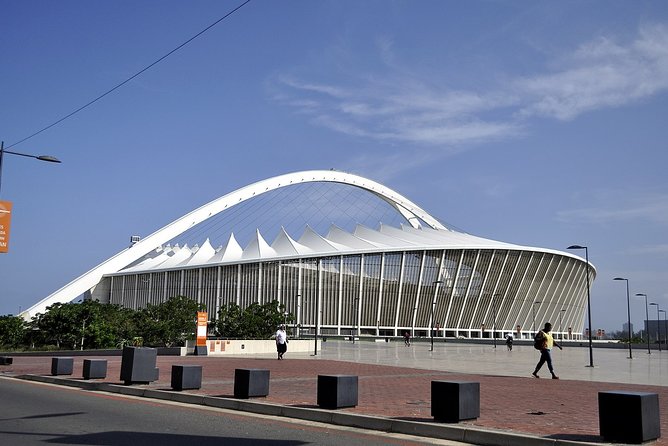
- Moses Mabhida Stadium includes a cable car ride to the top, offering a different view of Durban from the city streets.
- The tour combines driving and walking, with visits to City Hall, the Golden Mile, museums, markets, and gardens.
- Private transport keeps the half-day practical, especially when several parts of Durban need to be linked.
- The African markets add local color and human detail, with traditional healers and bead workers included in the route.
- The Botanical Gardens date to 1849, giving the visit an unusual link to plant testing for medicinal and economic uses.
- Guides Brandyne and Zamani have received special praise, with Brandyne also arranging a private golf cart tour of the gardens.
A four-hour introduction to Durban
This is a city tour for getting your bearings fast. Durban is a major port and the business center of KwaZulu-Natal, with luxury hotels along the beachfront and a city center shaped by colonial buildings, apartheid-era policies, African commerce, and a large Indian influence.
The route tries to show more than the postcard version. You will see the clean, open beachfront, but you will also pass through older central streets and markets where daily life is less polished and more revealing.
That balance matters. Durban can be easy to reduce to beaches and warm weather, yet its character comes from the meeting of many communities and periods. A local guide can connect the buildings and neighborhoods in a way that a quick drive on your own may not.
Because the tour is private, only your group joins the activity. That gives you a quieter setting for questions and can make the guide’s explanations feel more relevant to your interests. If you care about architecture, apartheid, plant history, sport, or local commerce, say so early.
The advertised price is $239.61 per person. That is a serious cost for four hours, particularly for a solo participant or a very small group. The value improves when several people share the private vehicle and guiding, since the price includes private transportation, a professional local guide, and entrance fees.
Lunch is not included. Since the tour lasts about four hours, you can easily eat before or after, but do not expect a meal stop to be part of the standard outing.
A few more Durban trips to weigh up
- Half-Day Tour Through Cape Town’s Townships
★ 4.8 · 979 reviews - Half-Day Tour of Soweto Tour
★ 4.5 · 712 reviews - Stellenbosch: Half-Day Wine Tour
★ 4.7 · 601 reviews
City Hall and Durban’s older center
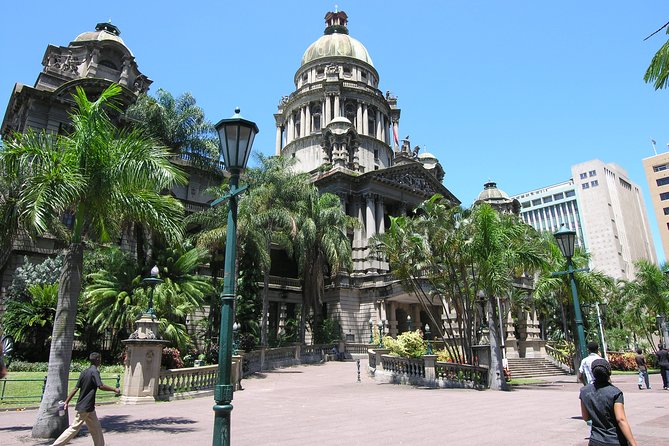
The walk through the city center begins with City Hall, one of the key civic landmarks on the route. This is a useful first stop because it places Durban’s public life and architecture in view before the tour shifts to stadiums, beaches, gardens, and markets.
The old post office is also part of the possible city-center experience. One guide, Brandyne, took a group past the port, City Hall, the old post office, and along Main Street during a three-and-a-half-hour tour.
That detail gives you a good idea of how the outing works in practice. The tour is not just a series of distant photo stops. At points, you get out and walk through the center, seeing the relationship between major public buildings and the streets around them.
Do not expect a long architectural study of every building. With only four hours and several major stops, the guide has to keep moving. Still, the central walk gives context that you miss if you see Durban only through a vehicle window.
The port is another useful piece of the city’s identity. Durban’s economy and character are tied to its role as a major harbor, and seeing that side of the city helps explain why it developed as a commercial center.
Moses Mabhida Stadium and the cable car ride
Moses Mabhida Stadium is one of the tour’s most memorable modern sights. Its sweeping design has become a symbol of present-day Durban, and the stadium gives the route a welcome change from older civic buildings and museums.
The experience includes a cable car ride to the top of the stadium. From above, you get a broad view across Durban, including the beachfront and the city spread behind it. The height changes your understanding of the city: the Golden Mile becomes a narrow strip beside the water, while the central districts reveal how close they are to the coast.
The cable car also gives the tour a clear high point, both literally and in terms of visual appeal. If you like seeing a city from above, this is one of the strongest reasons to choose this outing instead of a simple driving circuit.
The tradeoff is timing. A stadium stop with a cable car ride requires coordination, and a busy day or delay could reduce the time available elsewhere. Since the tour is listed at about four hours, ask your guide how the stops will be timed if the stadium view is your top priority.
Admission fees are included, which makes the advertised price easier to assess. You are not being asked to pay a separate entrance charge for each listed attraction, at least within the stated inclusions.
The Golden Mile along Durban’s beachfront
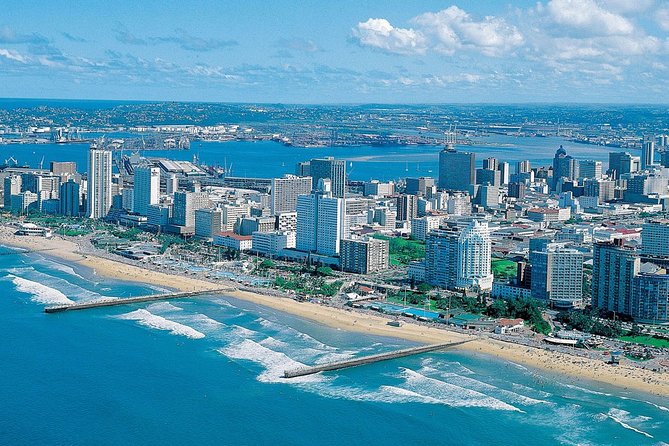
The Golden Mile is Durban’s famous beachfront promenade. It has been renewed as a public coastal strip and runs beside hotels, recreation areas, and the center of town.
This is the part of the tour that gives you Durban’s relaxed, seaside face. You can expect a stop where the city opens toward the Indian Ocean, with a strong contrast between the formal center and the broad waterfront.
The name can create the impression of one continuous beach experience, but this is still a sightseeing tour, not a beach day. Four hours must cover many places, so do not book it expecting a long swim, extended sunbathing, or a leisurely promenade walk.
I like including the Golden Mile because it helps explain Durban’s tourism appeal. The beachfront is not an isolated resort zone. It sits beside the central business district, making the connection between work, leisure, hotels, and the port easy to see.
If you want more time at the shore, use this tour as an introduction and return later on your own. The tour’s strength is comparison: you see the beachfront alongside the city’s older streets, public buildings, markets, and cultural sites.
Same country, a completely different kind of day:
- Durban: 30-Minute Harbor Boat Cruise
★ 4.7 · 665 reviews - Durban: 1-Hour Boat Cruise from Wilson’s Wharf
★ 4.7 · 496 reviews - Durban Point Waterfront: Luxury Canal Boat Cruise
★ 4.4 · 298 reviews - Durban: Pontoon Boat Harbor Cruise
★ 4.4 · 182 reviews
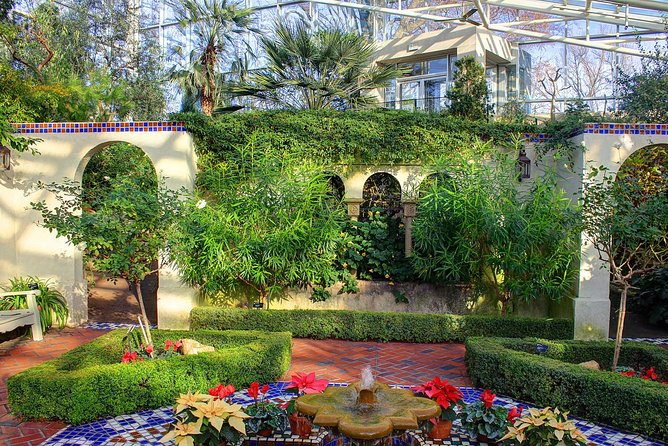
Durban Botanical Gardens, founded in 1849
The Botanical Gardens offer a quieter change of pace. Founded in 1849, the gardens were created to test plants for medicinal and economic uses, so they are not simply a pleasant green stop. Their original purpose connects plant study with the practical needs and commercial ambitions of the period.
The visit can include a walk through the gardens. One especially useful detail comes from Brandyne’s tour, which used a private golf cart for the garden portion. That may not be guaranteed on every departure, but it shows that the garden visit can be handled in more than one way.
A golf cart can make a difference in a short tour. You cover more ground without using up the half-day on foot, and you get a better chance to see the gardens as a whole. Ask about this option when booking or at the start, since the supplied tour details do not promise it for every group.
The gardens are also a good place to slow down and ask questions. A guide who explains why certain plants mattered can turn a pleasant stop into a useful look at medicine, trade, and colonial-era plant collection.
The limitation is that garden visits are pace-dependent. If you want a detailed botanical tour, four hours shared among so many attractions will feel brief. If you want a calm break between city sights, the gardens should fit well.
African markets, traditional healers, and bead workers
The African markets bring the most direct contact with local commerce on the route. The tour includes markets with traditional healers and bead workers, giving you a chance to see crafts and practices that are easy to miss on a standard city drive.
This stop is valuable because it moves beyond formal landmarks. City Hall tells you about civic institutions, while a market shows how people work, sell, make, and interact in the present day.
Go with an open mind and listen closely to your guide. Traditional healing has its own place in local culture, and beadwork carries both artistic and cultural meaning. The guide’s role is important here, since context can help you understand what you are seeing rather than treating the market as a quick photo stop.
The market visit may feel less orderly than the gardens or beachfront. That is part of its character, but it also means you should stay aware of your belongings and follow your guide’s instructions. The supplied details do not promise a shopping allowance or a specific amount of free time, so think of this as a guided cultural stop rather than a dedicated market-shopping excursion.
If you prefer only polished attractions, this part may be outside your comfort zone. If you want to see a more ordinary and active side of Durban, it adds real value.
Kwa-Muhle Museum and the apartheid-era story
Kwa-Muhle Museum is included among the major stops. Its name and subject connect the visit to Durban’s apartheid history and the systems that shaped where people lived, worked, and moved.
This is an important counterweight to the stadium and beachfront. Durban’s public image can lean heavily on sport, hotels, and the sea, but the city’s modern identity also reflects segregation, unequal development, and the long effects of apartheid.
The museum stop will be most useful if you want the guide to explain how the site fits into the wider city. Museum time may be limited because the route also includes gardens, markets, City Hall, and Moses Mabhida Stadium, so you should not expect an extended museum study.
Still, even a shorter visit can give the rest of the tour more meaning. After seeing the center, the port, and the affluent beachfront, you have a better framework for understanding why parts of Durban look and feel so different from one another.
One guide, Zamani, was especially praised for showing both the attractive and less attractive parts of the city. That is the right approach here. A useful city tour should not hide difficult subjects behind a cheerful sightseeing script.
What the private format changes
Private transport is the practical backbone of this experience. Durban’s main sights are spread across different parts of the city, and linking them in four hours by ordinary public transport would take planning and patience.
With a private vehicle, you can move from the center to the stadium, waterfront, gardens, and markets without spending the day working out connections. Pickup is offered, and the tour operates for your group alone.
The private format also changes the tone. You can ask for more explanation at a stop that interests you, or keep moving if a particular site is less important to you. The exact flexibility is not spelled out, so do not assume every part of the schedule can be changed, but the setting is more adaptable than a large shared coach.
The main benefit is not luxury. It is efficiency and conversation. A good guide can use the drive between stops to explain Durban’s history and culture, rather than leaving you to watch the streets pass in silence.
Examples from the tour include Brandyne, who combined the port, civic buildings, Main Street, Victoria Market, and a golf cart visit to the gardens, and Zamani, who presented both the attractive and rougher sides of town. Guide assignments can change, but these examples suggest the experience depends heavily on the person leading it.
Is $239.61 per person good value?
At $239.61 per person, this is not a budget sightseeing option. It makes the most sense for people who place a high value on private transport, a dedicated guide, and seeing many parts of Durban in a single morning or afternoon.
Entrance fees and private transportation are included, which prevents the price from climbing with several small add-ons. Lunch is not included, but that is easy to manage around a four-hour tour.
For two people, the total cost is substantial. For a larger private group, the cost per person may feel more reasonable, particularly if you would otherwise need taxis or separate visits to reach the stadium, gardens, markets, and city center.
I would compare this with your arrival plans. If you have only one day in Durban, the tour can save valuable planning time and give you a strong first look. If you have several days and enjoy using local transport at your own pace, the price may be harder to justify.
Group discounts are offered, though the exact terms are not provided. Check the final price for your party before paying, since group size is central to the value calculation.
Who should book this Durban tour?
I would choose this tour if you want a guided first look at Durban and prefer not to manage transportation between scattered sights. It suits couples, families, and small groups who want a private setting and a guide available for questions.
It is also a good fit if your interests are broad. You get architecture, apartheid history, coastal scenery, sport, plants, markets, and local culture rather than one narrow theme.
The tour is less suitable if you want deep time at one place. Museum fans may want longer inside Kwa-Muhle, plant lovers may prefer a dedicated garden visit, and beachgoers may want several hours on the Golden Mile.
The route also asks you to accept contrast. You will see attractive public spaces and less tidy urban areas. That honest view is one of the tour’s strengths, but it may not suit anyone looking for a carefully polished city showcase.
Confirmation is provided at booking, and the activity is near public transportation. Most people can take part, according to the supplied details. Good weather is required, and if poor weather cancels the outing, you are offered another date or a full refund.
The cancellation rule is strict in normal circumstances: the booking is non-refundable and cannot be changed for any reason. Check your schedule carefully before paying.
Should you book it?
Book it if you want one efficient, private overview of Durban with a local guide, transport, major landmarks, and several cultural stops. The cable car at Moses Mabhida Stadium, the market visit, and the unusual 1849 Botanical Gardens give the half-day more variety than a basic city drive.
I would be most comfortable recommending it to a small group that can share the cost. For a solo visitor, the price is harder to defend unless convenience and private guiding matter more than saving money.
Choose it with realistic expectations. This is a fast introduction, not a full study of every museum or neighborhood. If that sounds right, the tour gives you a useful sense of how Durban’s beachfront, port, center, gardens, markets, and difficult past fit together.
FAQ
How long does the private Durban sightseeing tour last?
The tour lasts approximately four hours. One reported outing ran for about three and a half hours.
Is hotel pickup available?
Pickup is offered. The provided details do not specify particular pickup locations or times.
Is this a private tour?
Yes. Only your group participates in the activity.
What attractions are included?
The route includes Durban city center and City Hall, Moses Mabhida Stadium, the Golden Mile, Durban Botanical Gardens, African markets, and Kwa-Muhle Museum. The port, old post office, Main Street, and Victoria Market may also be included in the city sightseeing portion.
Does the tour include a cable car ride?
Yes. The experience includes a cable car ride to the top of Moses Mabhida Stadium.
Are entrance fees included?
Yes. Entrance fees are included in the tour price.
Is lunch included?
No. Lunch is not included.
What happens if bad weather cancels the tour?
The tour requires good weather. If it is canceled because of poor weather, you can choose a different date or receive a full refund. Normal cancellations or amendments are non-refundable.
Just added around Durban
- Zululand 5 Day Private Safari from Durban★ 5.0 · 4 reviews
- Valley of a Thousand Hills – Durban★ 5.0 · 3 reviews
- Zulu Cultural Experience – Tour to the village of iSithumba and PheZulu★ 5.0 · 4 reviews
- Zulu Cultural Experience: Zulu Village + Tribal Markets + Traditional Zulu Food★ 5.0 · 5 reviews
- Garden Route Durban to Cape Town via Addo National Park – 7 Days★ 5.0 · 15 reviews
- Full Day-Drakensberg-MandelaCaptureSite-HowickFalls-MidlandsMeander from Durban★ 3.5 · 11 reviews
- Drakensberg, Nelson Mandela Capture S & Howick Falls – 2 Day Tour from Durban★ 5.0 · 3 reviews
- Durban: Journey along the Epic Sani Pass & Lesotho Tour★ 5.0 · 7 reviews
Half-Day, compared.





Half-Day White Shark Cage Diving from Gansbaai
Read our review →Browse the lists this tour appears in