

Reviewed · CYCLING TOURS
Cape Town: Guided Bike Tour
Cape Town makes more sense from a bicycle seat. This three-hour ride links the V&A Waterfront with the Castle of Good Hope, Adderley Street, Bo-Kaap, Company Gardens, St. George’s Mall, and Green Point. You get a quick look at both the city’s grand public face and its everyday streets, with a guide explaining how the past still shapes life here.
I like the way the route covers so much ground without feeling like a bus tour, and I like the personal touch of the local snack stop, which has included Cape Malay food at Faeeza’s Tea Garden or kitchen. The guides, including Lucas, Gareth, Bradley, Eric, and others on the AWOL team, are praised for clear stories and a caring approach. The main catch is simple: traffic, hills, and left-side cycling can unsettle a nervous rider, and one rider reported bike chains coming off.
Key points to know before you ride
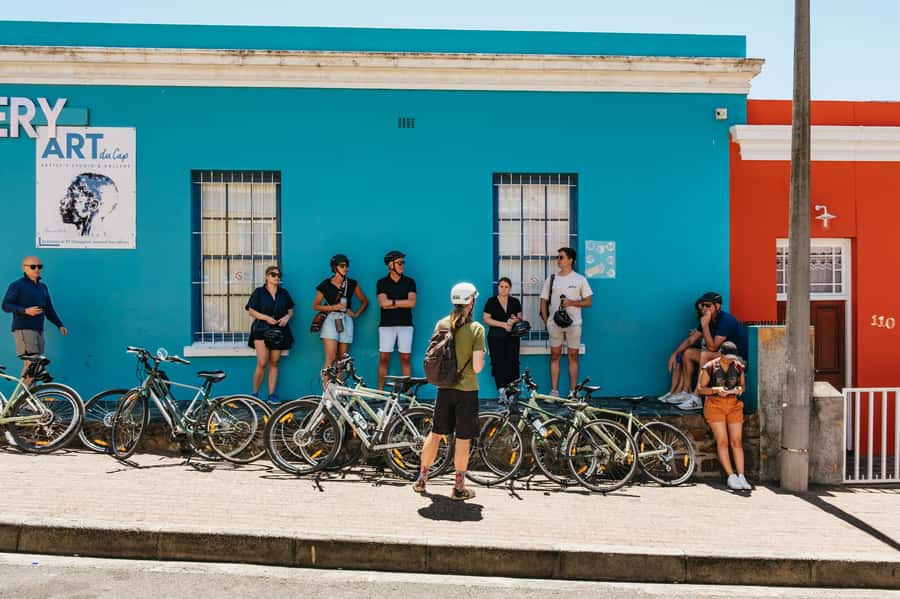
- A useful first-day orientation: The route gives you a working sense of Cape Town’s central districts before you tackle the city on your own.
- History with street-level context: The Castle of Good Hope, Adderley Street, Bo-Kaap, and Company Gardens each reveal a different chapter of Cape Town.
- A human guide makes the difference: Guides such as Lucas and Gareth are praised for warm personalities, clear explanations, and careful group management.
- Small groups or private rides: You can choose a shared group or a private tour, which matters if you want more questions, a slower pace, or a custom feel.
- Not a flat cruise: The ride is described as manageable, but expect hills and some roads with traffic.
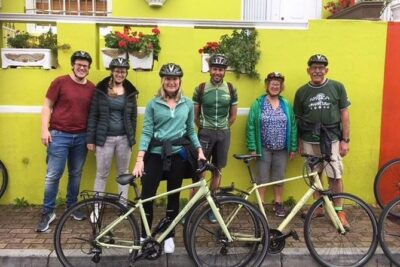
- Bring the right clothes: Wear comfortable shoes and cycling clothes. Skirts, high heels, valuables, and loose clothing are not allowed.
Why a bicycle works so well in Cape Town
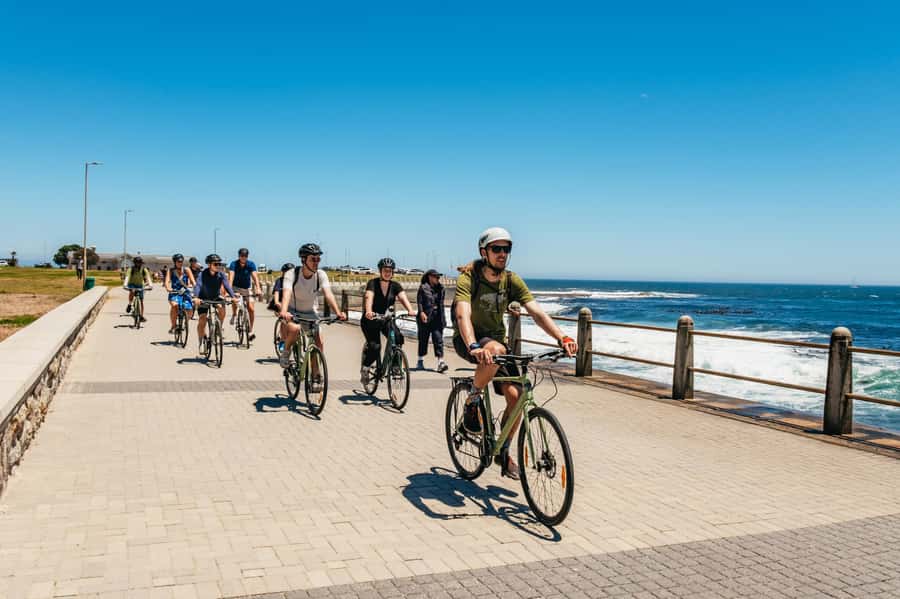
A sightseeing vehicle can show you Cape Town’s main landmarks, but a bicycle lets you connect them. You notice the change from waterfront development to the older city center, then from formal civic spaces to Bo-Kaap’s close-set streets and painted homes.
The pace is also right for a first look. Three hours is long enough to reach several districts, but short enough to leave room for Table Mountain, museums, the harbor, or a relaxed lunch later. You are not stopping at every doorway, but you get a useful map in your head.
I especially like this as a first-day activity. One rider who booked it at the start of a Cape Town stay found it a good way to learn the city, and that is exactly the point. Afterward, Adderley Street, Company Gardens, Green Point, and the Waterfront are no longer disconnected dots on a map.
The tour begins and ends at the AWOL Tours office. Your bike, helmet, guide, and safety briefing are included. Food and drinks are not included, though the three-hour program includes local snacks, and past routes have featured Cape Malay treats.
A few more Cape Town trips to weigh up
- Cape Town: Atlantis Dunes Quad Bike and Photo Stop
★ 4.4 · 497 reviews - Quad biking Atlantis Dunes Cape Town & Photo Shoot
★ 4.0 · 393 reviews - Cape Town: Atlantis Dunes Quad Bike Tour and Photo Session
★ 4.5 · 322 reviews
From the V&A Waterfront into the city
The V&A Waterfront is the practical starting point. It is easy to recognize as a major visitor area, but the route does not stay in the polished waterfront district. Instead, you ride inland toward the older core of Cape Town.
The opening safety briefing matters, especially if you are not used to cycling on the left. Your guide sets the pace and keeps the group together, then leads you onto the city streets. A past rider who was nervous about cycling found the guide’s close attention reassuring, while another specifically noted that riding on the left required care.
This is not a race. The ride is intended for different ages and fitness levels, and the guides can tailor it to your needs. Still, suitable for all fitness levels does not mean effortless. You should be comfortable starting, stopping, steering, and riding near traffic.
The Waterfront departure also gives the ride a clear before-and-after rhythm. You start among modern buildings and open harbor spaces, then move toward places where Cape Town’s political and social past is easier to read in the streets.
Castle of Good Hope and Adderley Street
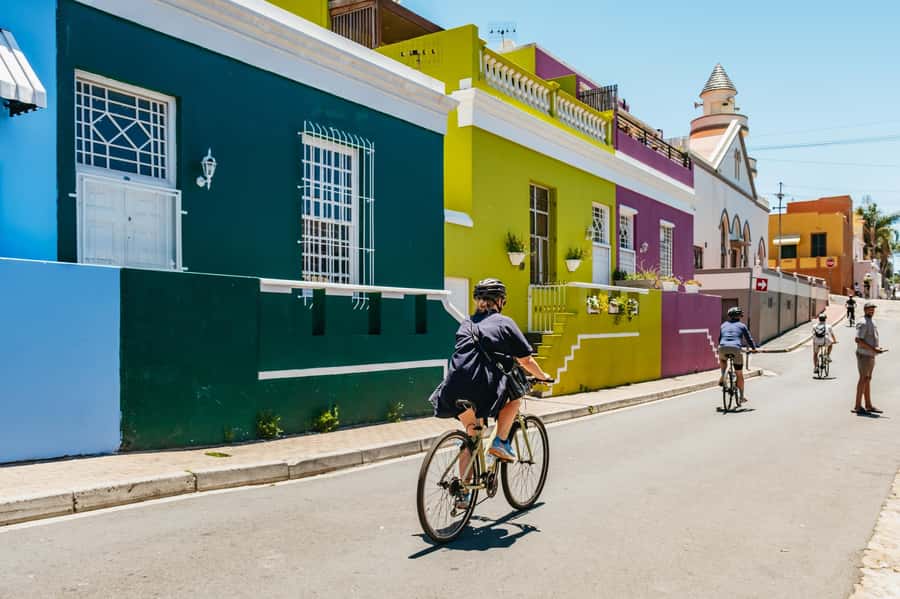
The Castle of Good Hope is one of the route’s most important historic stops. This fort gives the tour a physical anchor: instead of hearing only dates and names, you see the kind of military structure that helped shape the early colonial settlement.
The stop is valuable even if you are not planning a full museum visit. Your guide can place the building within the wider story of Cape Town, then connect it to the streets and public spaces that came later. The tour description says you visit the fort, but the exact amount of time inside or the extent of the visit can vary, so do not treat this as a long castle tour.
From there, the ride continues toward Adderley Street. This is a central route through the city, and cycling it helps you understand how the old center is arranged. Rather than seeing the street as a single photo stop, you get it as part of a sequence: fort, civic center, gardens, pedestrian areas, and older neighborhoods.
The guide’s commentary is a major part of the value here. Several guides have been singled out for explaining both historical events and present-day Cape Town. That balance keeps the tour from becoming a parade of old buildings with no connection to modern life.
Company Gardens and St. George’s Mall

The Company Gardens offer a calmer section of the ride. This central green space provides a break from traffic and a useful contrast with the denser streets around it.
You can expect a sightseeing stop rather than an extended free period. The point is to see how the gardens fit into the city and to hear about their place in Cape Town’s development. Your guide may also use the pause to answer questions or adjust the group’s pace.
St. George’s Mall adds another change of mood. The route shifts from a formal garden to a pedestrian area with a more active city feel. The combination is one reason the bike tour works better than a narrow landmark circuit. You are not simply ticking off one famous site after another. You are seeing how public areas, commercial streets, historic buildings, and neighborhoods sit beside one another.
For photography, these stops are useful because the ride offers changing views without asking you to spend the whole morning posing in front of one building. Keep your camera secure and avoid carrying valuables, since the operator specifically advises leaving valuables behind.
Same country, a completely different kind of day:
- Wine Tour: Paarl, Franschhoek & Stellenbosch incl 3 wineries
★ 5.0 · 3,940 reviews - Cape Town: Hop-On Hop-Off Bus Tour with Optional Cruise
★ 4.8 · 3,929 reviews - Cape Town: Cape of Good Hope & Penguins Day Tour with Pickup
★ 4.7 · 3,362 reviews - Zipline Cape Town – From Foot of Table Mountain Reserve
★ 5.0 · 3,179 reviews
Bo-Kaap: painted homes and Cape Malay flavor
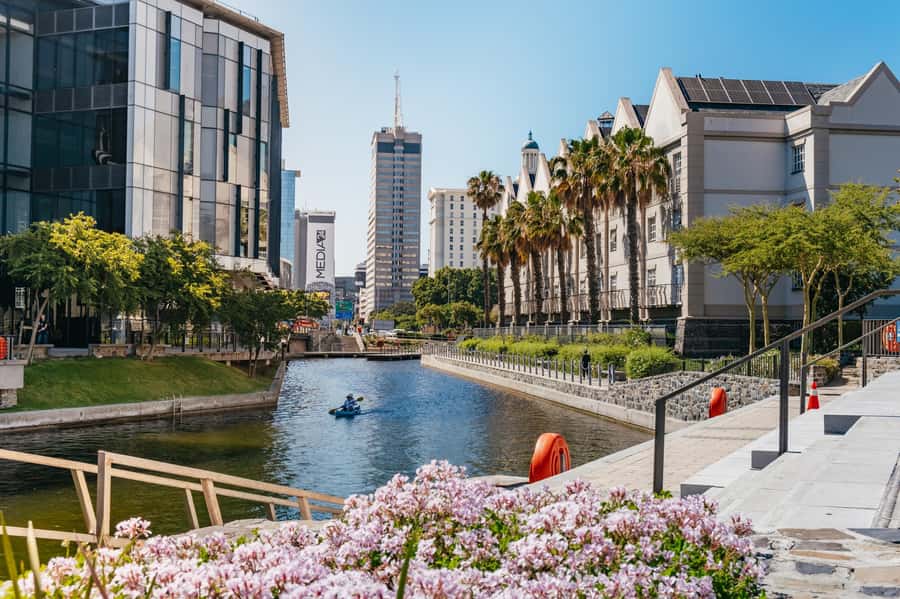
Bo-Kaap is the most visually memorable part of the ride for many people. Its colorful houses and sloping streets make it instantly recognizable, but the neighborhood deserves more than a quick photo.
This is where a guide adds real value. You hear about the former township and the Cape Malay community, then see the neighborhood as a lived-in place rather than a backdrop. The route description emphasizes both historic landmarks and contemporary life, and Bo-Kaap is where those subjects meet most clearly.
The hills also become more noticeable here. One rider described a refreshment stop after an uphill climb, and other accounts praise the ride as manageable but scenic. You should expect some effort, even if the guide keeps a relaxed pace.
Local food can make this stop especially rewarding. The program includes local snacks, while past rides have included Cape Malay food at Faeeza’s Tea Garden or kitchen and homemade treats at Rashida’s house. These details are not the same as a full meal, and food and drinks are not part of the listed inclusions, but a small taste adds a personal connection that a standard sightseeing stop lacks.
Give yourself time to listen here. Bo-Kaap is not just about bright walls. It is a place where architecture, religion, food, family life, and the city’s difficult past come together. The best guides explain that context without turning the stop into a lecture.
Green Point Stadium and the eco-park
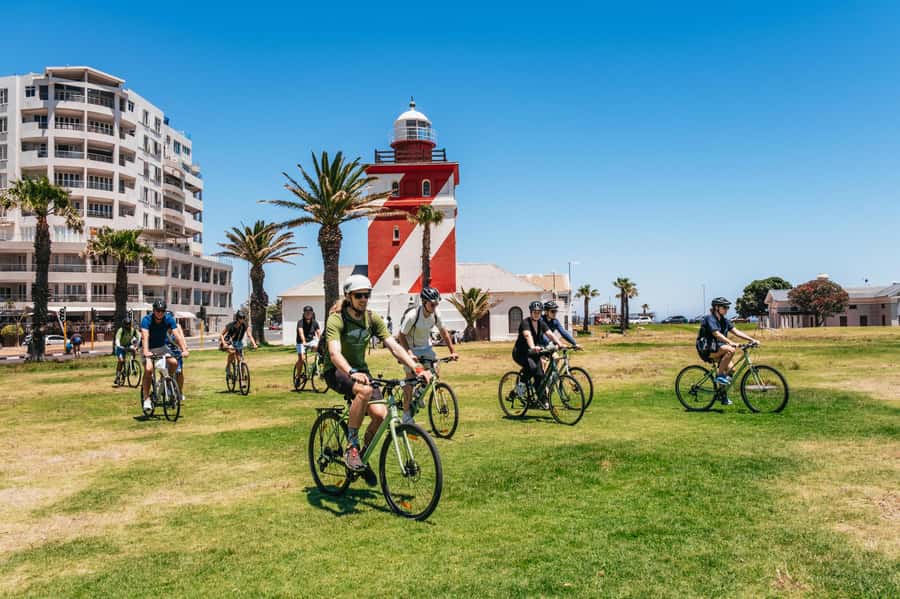
The route then reaches Green Point, where the modern side of Cape Town comes forward. Green Point Stadium, built for the 2010 FIFA World Cup, is a striking landmark and a clear contrast to the Castle and older streets.
Seeing the stadium by bike lets you understand its scale and setting. The stop also shows how a major sporting project changed this part of the city. You get a look at a newer public face of Cape Town, then continue through the newly landscaped Green Point eco-park.
The eco-park gives the ride some breathing space. It is another place where the bicycle is useful because you can move through the area at a relaxed speed instead of viewing it through a vehicle window. The route also includes the oldest working lighthouse in South Africa, a small but distinctive landmark that rounds out the Green Point section.
This part of the tour may appeal most to visitors who want more than old-town sightseeing. Cape Town is not only forts, gardens, and historic streets. The stadium, eco-park, and lighthouse show a city still changing and making room for new public spaces.
What the guides add to the ride
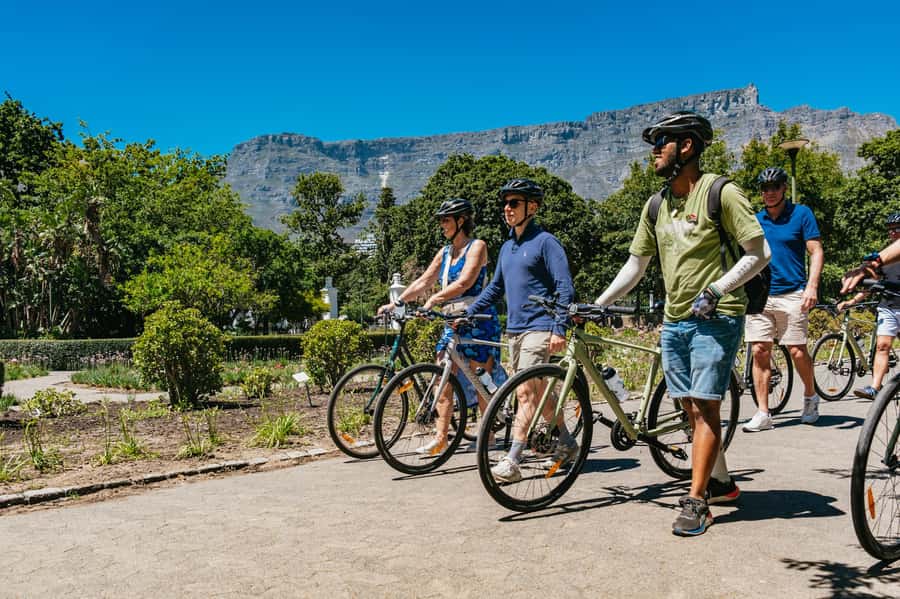
The strongest thread running through the tour is the guide. The experience depends less on a fixed script than on how well the guide reads the group, handles traffic, and explains the city.
Lucas has led several particularly well-received rides, with riders describing him as friendly, caring, funny, and good at managing a group. Gareth is also praised for leading riders into the heart of Cape Town with a relaxed manner and useful historical detail. Bradley, Eric, Lelo, Niels, Bevan, Shaun, and other AWOL guides have also been described as warm and engaging.
That does not mean every guide will use the same route or tell the same stories. It does mean the operator has a team with experience handling both first-time visitors and riders who are unsure of themselves.
Safety deserves a fair look. The positive accounts describe guides who watch the road, keep riders together, and help people adjust to left-side traffic. One rider felt the guide could have used hand signals more consistently, and another reported that the bikes needed maintenance after several chains came off. These are isolated concerns in an otherwise strongly positive record, but they are worth keeping in mind.
At the start, tell the guide if you are nervous, slow on hills, or unfamiliar with city cycling. The route is tailored to the group, and speaking up gives the guide a better chance to set a comfortable pace.
Is $100 a fair price?
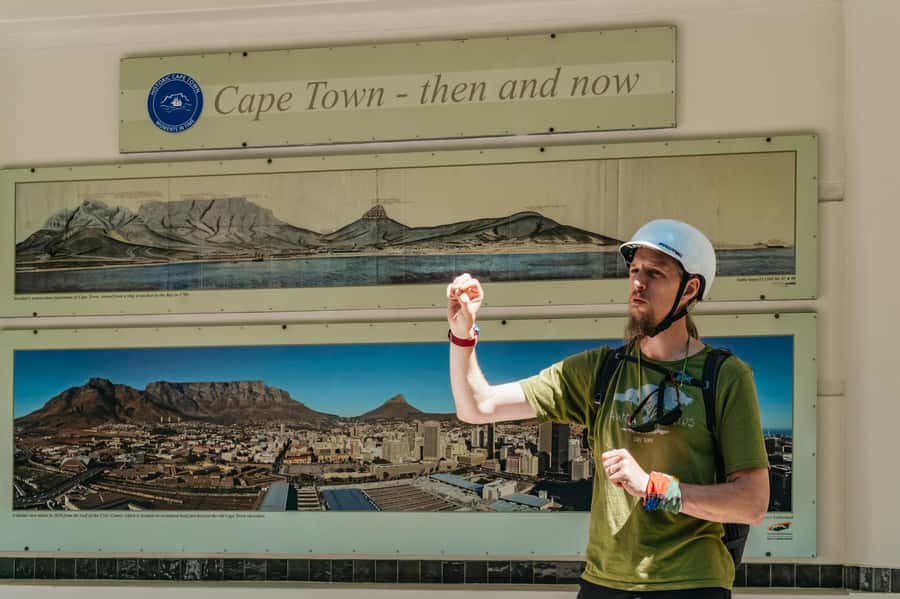
At $100 per person for three hours, this is not the cheapest way to see Cape Town. You are paying for the bike, helmet, guide, route planning, and the convenience of covering several central districts under your own power.
The value improves if this is your first visit or your first day in town. A private car can cover more distance, but it does not give you the same street-level feel. Walking is cheaper, but you will not cover the Waterfront, central city, Bo-Kaap, and Green Point as efficiently in three hours.
The private or small-group option also changes the calculation. If you want to ask many questions, need a gentler pace, or prefer not to ride with a larger group, the extra privacy may be worth it. A shared group is likely the better value if you mainly want an overview and enjoy meeting other riders.
Food and drinks are not included, so budget for anything you want beyond the local snack stop. You also receive a bike and helmet rather than a full day of cycling, which is why I would view the tour as an orientation and cultural introduction, not as a stand-alone day trip.
Who will enjoy this Cape Town bike tour?
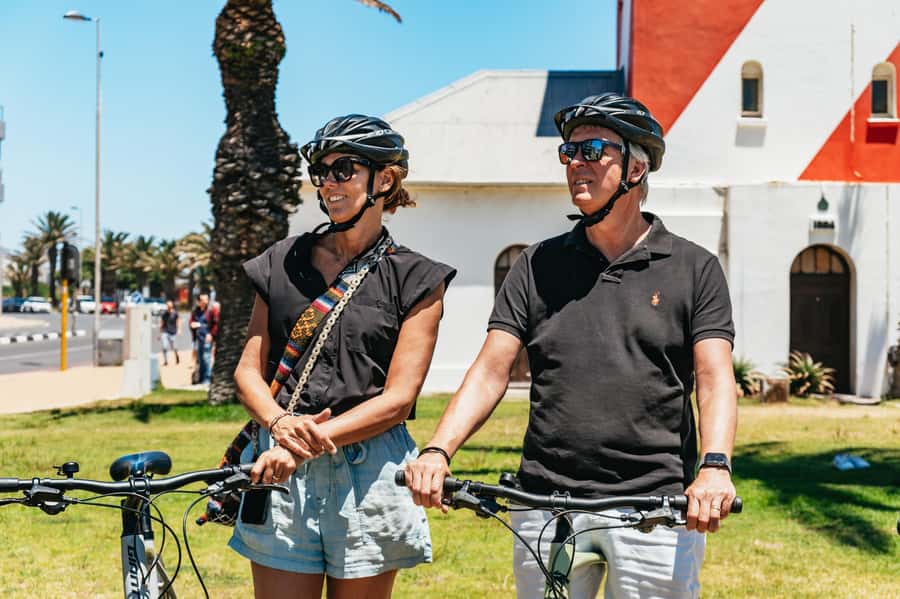
I would choose this tour if you want to:
- Get your bearings on your first day in Cape Town
- Combine major landmarks with neighborhood streets
- Hear history explained by a local guide
- See Bo-Kaap without relying on a vehicle
- Try a small taste of local food
- Ride at a moderate pace rather than join a hard cycling excursion
- Choose between a shared group and a private ride
You should think twice if you dislike cycling near traffic, have difficulty with hills, or need step-free access. The activity is not suitable for people with mobility impairments, and skirts, high heels, loose clothing, and valuables are not allowed.
Wear proper cycling clothes and comfortable shoes. The operator says the route can be adapted, but you still need basic control of a bicycle. If you are an uneasy rider, this is the time to say so, not halfway up a Bo-Kaap hill.
Booking details that matter
The tour lasts three hours and is available with English, German, or French guidance. Starting times vary, so you need to check availability when booking.
You can cancel up to 24 hours before the activity for a full refund, and the reserve-now, pay-later option lets you hold a place without paying immediately. The meeting point is the AWOL Tours office, where the bike, helmet, and safety briefing are provided.
The tour returns to the same office. Since food and drinks are not included, plan your next meal separately, especially if you prefer a substantial breakfast or lunch rather than a local snack.
Should you book it?
Yes, if you want a lively introduction to Cape Town that mixes major sights, local neighborhoods, and useful historical context. The route is broad, the guides are a major strength, and the bike gives you a better sense of how the city fits together than a string of isolated photo stops.
I would book it early in a Cape Town stay, ideally in a private or small group if you want more flexibility. If you are not confident on a bike, ask for a slower pace at the start and take the traffic and hills seriously. For most reasonably comfortable cyclists, this is a smart three-hour orientation with enough local flavor to feel like more than simple sightseeing.
FAQ
How long is the Cape Town guided bike tour?
The tour lasts three hours, including sightseeing, a safety briefing, guided cycling, and local snacks.
Where does the tour start and finish?
You meet at the AWOL Tours office, and the tour returns to AWOL Tours at the end.
What is included in the price?
The $100 per person price includes the bike, helmet, and guide. Food and drinks are not included.
Which languages are available?
Live guiding is available in English, German, and French.
Is the tour private or shared?
You can choose a shared group tour, a small group, or a private bike tour.
What should I wear and bring?
Bring comfortable shoes and cycling clothing. High heels, skirts, valuables, and loose clothing are not allowed. The activity is not suitable for people with mobility impairments.
Just added around Cape Town
- Lion’s Head Hike: Cape Town – Sunrise or Sunset Hike★ 5.0 · 29 reviews
- Lion’s Head Sunrise or Sunset Hike + Hotel Pick-Up★ 5.0 · 24 reviews
- Lion’s Head: Hike with a registered hiking guide★ 5.0 · 3 reviews
- Kruger National Park 3 Days Best Ever Safari from Cape Town★ 4.1 · 11 reviews
- Koeksister and Samoosa Class by the Malay Cook Up★ 4.8 · 9 reviews
- Kirstenbosch Garden, Bo-Kaap-Penguins & Cape Peninsula Tour★ 3.9 · 7 reviews
- Khayelitsha: 3-Hour Township Walking Tour★ 5.0 · 6 reviews
- Cape Town: Constantia Half-Day Wine Tour & Tastings★ 4.9 · 15 reviews
Cycling Tours, compared.


Quad biking Atlantis Dunes Cape Town & Photo Shoot
Read our review →
Atlantis Dunes Quad Bike Tour and Photo Session
Read our review →
Atlantis Dunes Quad Bike & Free Sandboarding Tour
Read our review →
WILDX Atlantis QUAD BIKE ADVENTURE + PHOTO OPS CAPE TOWN
Read our review →

Browse the lists this tour appears in