Reviewed · CAPE TOWN TOURS
Cape Town: Afrikaans Culture And Making Traditional Biltong
Biltong is more than South Africa’s answer to beef jerky. In this relaxed voorkamer, or lounge, you learn how Khoisan drying methods and Great Trek-era spices shaped the snack, then make your own biltong sticks. I like the hands-on work and the spread of local treats, including coffee, rusks, dried fruit, preserves, and even vegan biltong. The one drawback is that the activity takes place in a home with cats, so it is not suitable for people with animal allergies.
I also like the small group of eight or fewer, which gives the hosts room for questions, stories, and jokes. At $42 per person, the 90-minute session is a fair buy if you want food, culture, and a personal welcome in one short stop, but it is less useful if you only want to buy biltong and leave.
Key points to know before booking
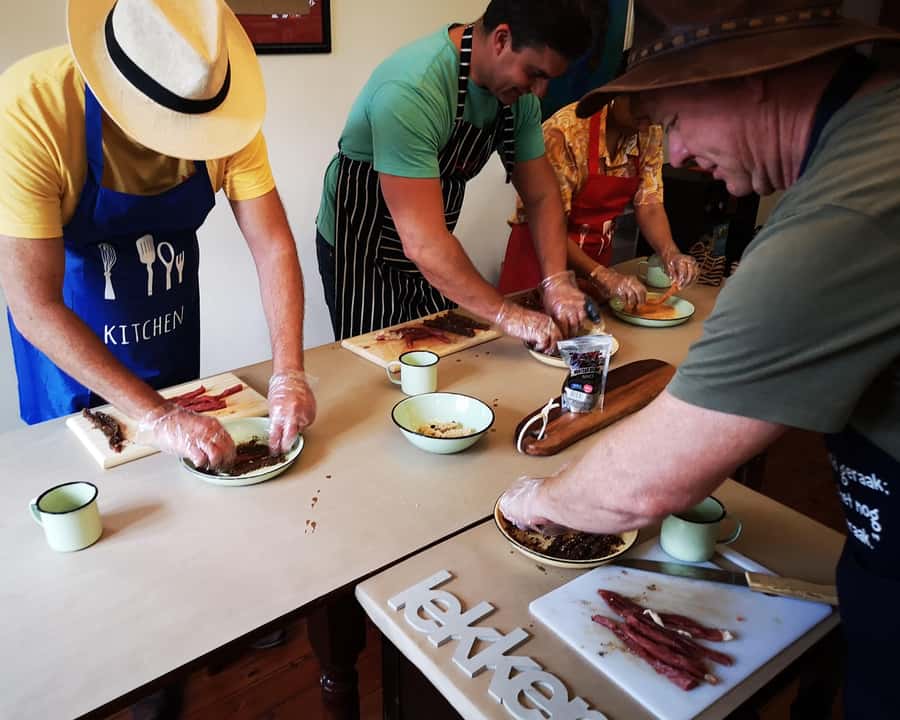
- Make your own biltong sticks: You handle the preparation with supplied aprons, knives, and equipment.
- Taste several South African snacks: Biltong is served alongside dried fruit, preserves, a refreshing bottled drink, coffee, and homemade rusks.
- Learn the story behind the snack: The session connects Khoisan meat-drying methods with the spice traditions of the Great Trek pioneers.
- Hear about Afrikaans culture: Expect folk music, Afrikaans songs, sayings, tall tales, and an explanation of how the language developed.
- Fits neatly into a Cape Town day: The session lasts 90 minutes and takes place at Unit 5, 165 High Level Road in Three Anchor Bay.
- Check the cat issue first: Cats live on the property, and the activity is not suitable for people with animal allergies or wheelchair users.
A Cape Town food experience with a home-cooked feel
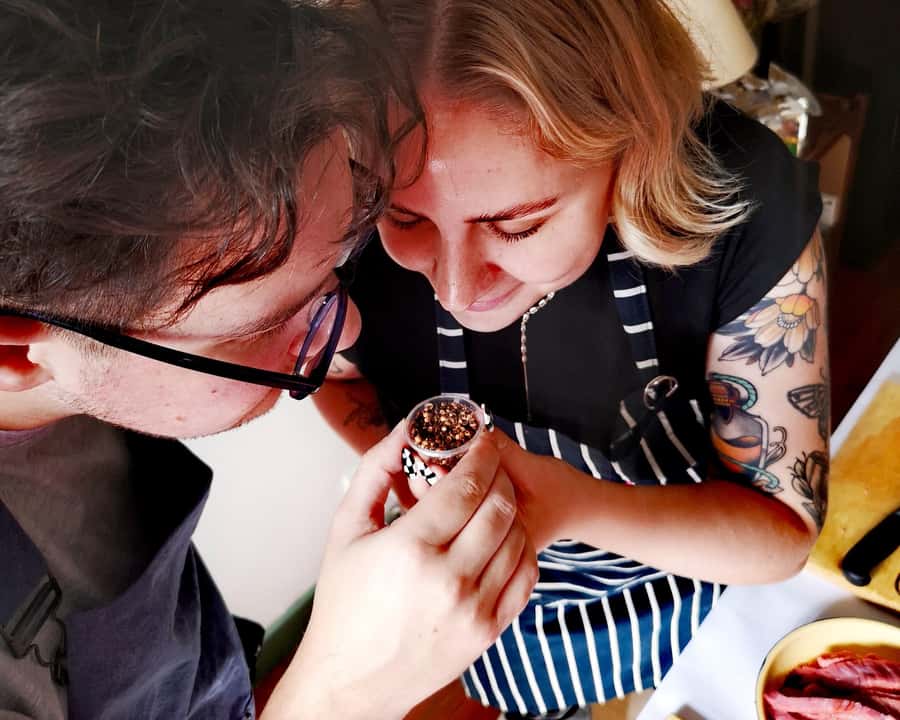
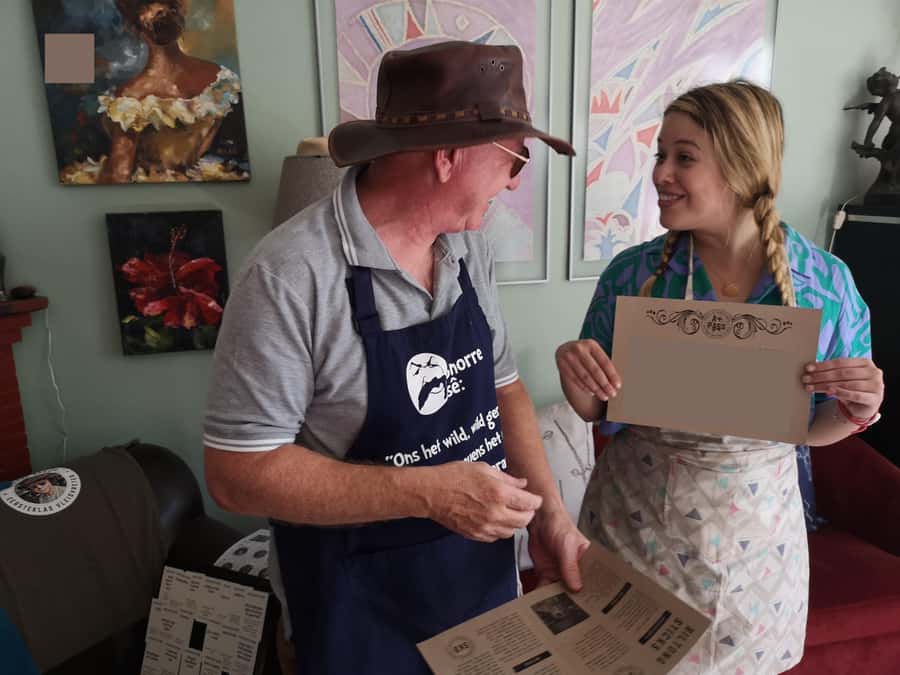
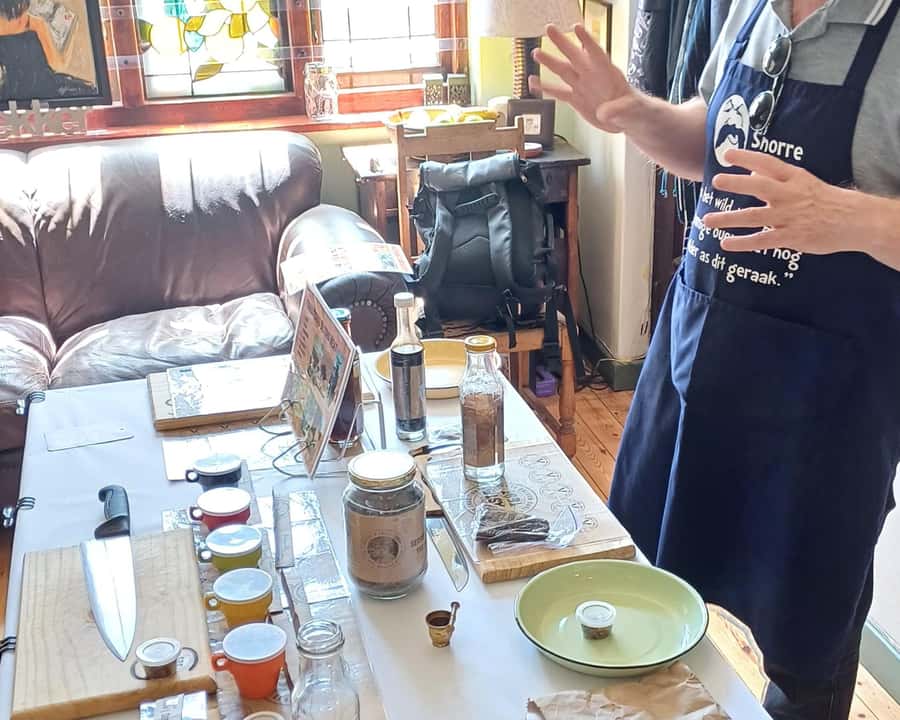
This is not a bus tour or a quick market tasting. You enter a private voorkamer, a traditional lounge setting, and spend time with hosts who use food to explain their culture.
That setting matters. Biltong can seem simple at first glance: dried meat, sliced thin, eaten by hand. Here, you get the story behind it, the reasons for the spice blend, and the practical steps that turn a cut of meat into a snack that can last.
The tone is relaxed and social. You can expect a drink in an iconic bottle at the start, plenty of conversation, and a mix of information and humor. Boeremusiek, or Boer folk music, and familiar Afrikaans songs help give the session a sense of place without turning it into a formal lecture.
I would choose this activity for a first or second day in Cape Town if you want an easy introduction to local food and language. The short format also works well between other plans. You do not need to give up half a day to get a taste of Afrikaans culture.
Other Cape Town days people book alongside this one:
- Wine Tour: Paarl, Franschhoek & Stellenbosch incl 3 wineries
★ 5.0 · 3,940 reviews - Cape Town: Hop-On Hop-Off Bus Tour with Optional Cruise
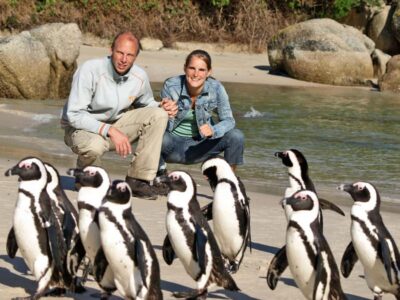
★ 4.8 · 3,929 reviews - Cape Town: Cape of Good Hope & Penguins Day Tour with Pickup
★ 4.7 · 3,362 reviews
What happens during the 90-minute session
The activity begins with a refreshing drink and local snacks. This first part sets the pace: informal, generous, and built around conversation rather than a rigid demonstration.
You then hear how air-drying meat reaches back to Khoisan hunter-gatherer traditions. The session also explains how Great Trek pioneers added the familiar use of spices. That comparison helps you see biltong as a product of several cultural influences, not just an old-fashioned preservation method.
The hosts explain the choices that affect the final result. You learn about cuts and grades of meat, the spice blend, curing, and storage. These details are useful because they help explain why biltong can vary so much in flavor, texture, and quality.
The tasting comes next. You try several types of biltong, with a vegan option available by prior arrangement. If you already love biltong, this is likely the most enjoyable part. You can compare textures and flavors instead of treating every piece as the same snack.
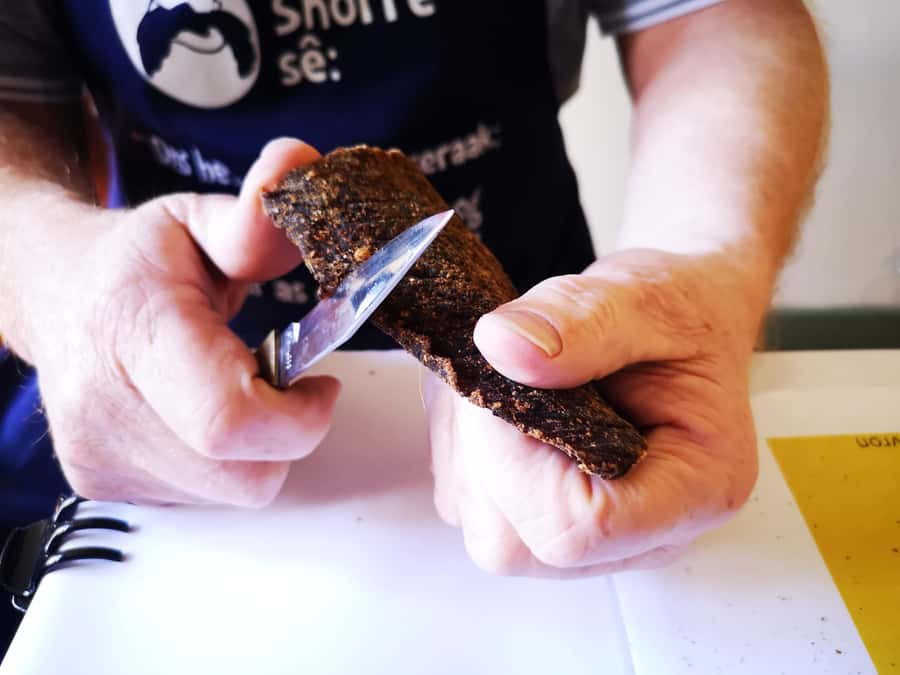
The hands-on section lets you prepare biltong sticks. Aprons, knives, and the needed equipment are supplied, so you do not need to bring anything special beyond comfortable clothing. This is a simple activity, but it gives the session a practical finish. You leave with a sample of the sticks you prepared.
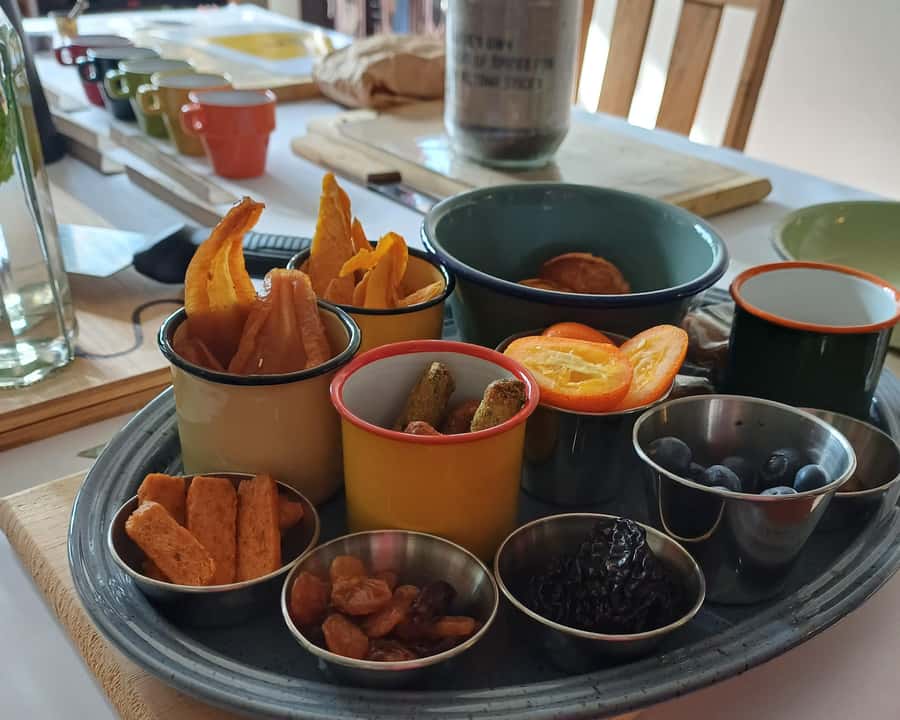
The final food stop is moerkoffie, strong coffee served in a rustic tin mug, with homemade Karringmelkbeskuit, or buttermilk rusk. Dried fruit and preserves add more local flavor. The snacks are not filler. They help show how South African hospitality often works through a table of small tastes rather than one carefully staged dish.
Why the biltong lesson is worth your time
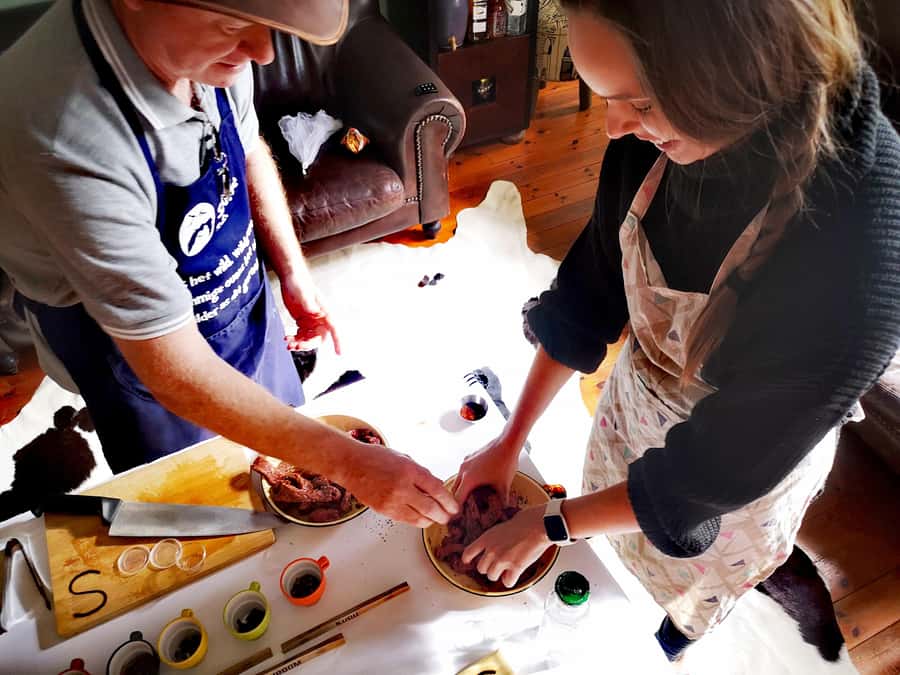
The best part of this session is that it explains process. You do not just hear that biltong is dried meat. You learn how meat selection, seasoning, curing, and storage work together.
That is valuable if you want to buy biltong later in your trip. You will have a better sense of what you are tasting and can ask more useful questions at shops or markets. The lesson also gives you a way to talk about biltong with South Africans without reducing it to a local version of jerky.
The vegan tasting option is another thoughtful feature. It must be arranged ahead of time, so do not assume it will be ready if you mention it at the door. If you avoid meat, contact the provider before booking or as soon as you reserve.
Preparing biltong sticks is suitable for people who prefer doing something over sitting through a talk. It is also a good choice for families, as the activity is accessible to all ages according to the experience details. Younger children may need help with the knives, but no special skill is required.
You should still keep your expectations sensible. This is a short class, not a full professional butchery course. The focus is on understanding the food, tasting it, and taking part in a simple preparation step.
Afrikaans culture through language, music, and food
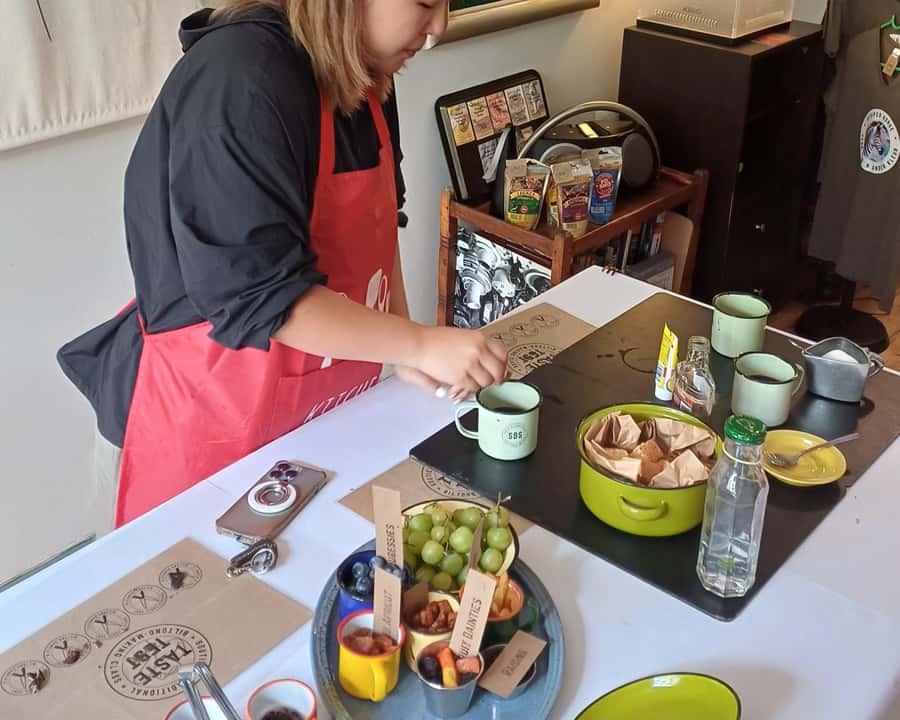
The cultural part gives the food lesson more depth. Afrikaans developed from a mix of European, Asian, and African languages, and the session introduces that background in an easy, conversational way.
You also hear classic Afrikaans sayings and tall tales. That may be one of the most memorable parts for visitors because sayings reveal how people use humor and everyday language. You are not simply memorizing vocabulary. You are hearing how culture is carried through expression.
Boeremusiek and Afrikaans tunes add atmosphere. The music keeps the session from feeling like a classroom and supports the stories about Afrikaner culture. If you have no prior connection to Afrikaans, you can still follow along because the instructor speaks English.
The setting is intimate, with a maximum of eight participants. That number is small enough for conversation and questions, though the exact feel will depend on the group. If you prefer a quiet, private tasting with no interaction, this may feel more social than you want.
I would also expect some friendly storytelling. The description promises tall tales, history, sayings, and a relaxed mood, so this is not a silent sampling. Come ready to listen and take part.
Same country, a completely different kind of day:
- Zipline Cape Town – From Foot of Table Mountain Reserve
★ 5.0 · 3,179 reviews - Cape Town: Table Mountain Cable Car, Hop-On Hop-Off Bus Tour
★ 4.6 · 3,157 reviews - Cape Point and Boulder’s Penguins Full Day Tour
★ 5.0 · 3,118 reviews - From Cape Town: Cape Point & Boulders Beach Full-Day Tour
★ 4.8 · 3,032 reviews
The food beyond biltong
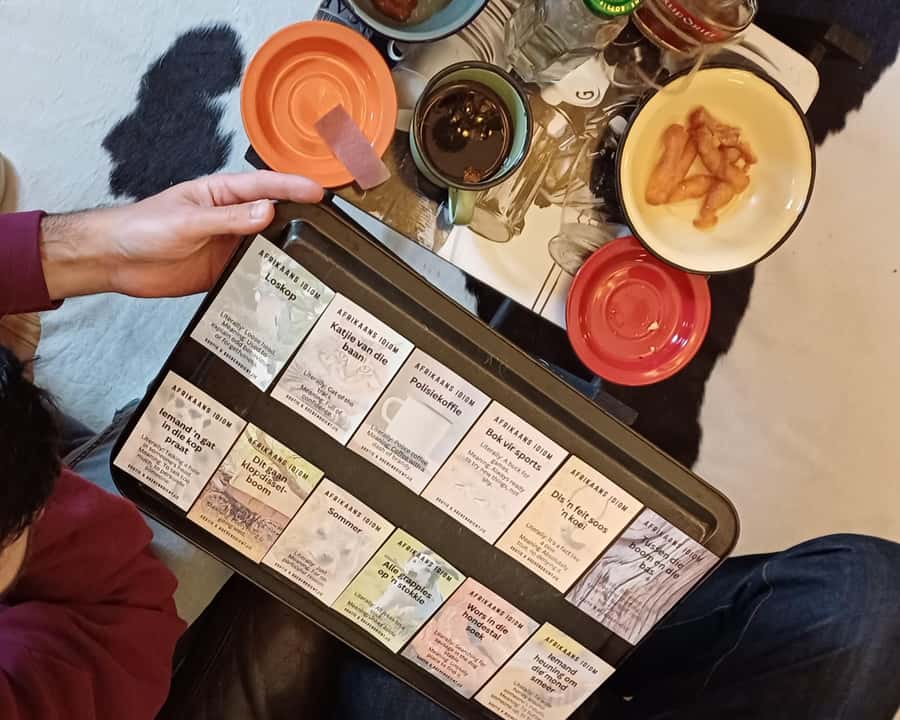
Biltong gets top billing, but the snack table broadens the experience. The bottled drink gives you an easy start, while dried fruit and preserves provide sweet and tart flavors alongside the savory meat.
Moerkoffie and Karringmelkbeskuit bring in a classic pairing. The coffee is described as strong and is served in a tin mug, while the buttermilk rusk gives you something crisp and slightly sweet to dunk or eat alongside it.
These small touches make the session feel more like a welcome into someone’s home than a product demonstration. They also make the $42 price easier to understand. You are paying for instruction, tasting, equipment, a prepared snack spread, and a cultural conversation, not just for a packet of meat.
Still, value depends on your interests. If you do not eat meat, you will need to arrange the vegan option in advance, and the session may have less appeal if you are not interested in food preparation. If biltong is a favorite or you want a distinct South African food memory, the cost is more reasonable.
Extra biltong, souvenirs, and T-shirts are not included. You can buy additional snacks or merchandise if available, so bring cash if you think you will want more to take home.
Location and planning in Three Anchor Bay
The meeting point is Unit 5, 165 High Level Road, Three Anchor Bay, Cape Town. You should plan to arrive with the address ready, since the activity takes place at a specific property rather than at a large public attraction.
Three Anchor Bay makes this a practical add-on to plans in the central Cape Town area, but the supplied details do not include transport or parking arrangements. I would check your route and allow enough time to find Unit 5 without rushing.
The 90-minute length is one of the strongest practical points. You can fit it into a day that also includes other Cape Town sights, and you will not need to carry special gear. Comfortable clothes are recommended, which makes sense for a hands-on food activity.
Bring a camera if you want to record the setting, the snacks, or your biltong-making session. Cash is also suggested for extra purchases. You do not need to bring knives or aprons because those are provided.
The experience is conducted in English. That makes the stories and explanations accessible to English-speaking participants, though the Afrikaans words and songs still give the session a local sound.
Who will enjoy this most
I would recommend this to you if you like food experiences with a personal story attached. It suits people who want more than a standard tasting and enjoy meeting hosts in a small setting.
It is especially good for:
- Biltong fans who want to understand how flavor and texture are created.
- Food-curious visitors who enjoy making something with their hands.
- Families and mixed-age groups looking for a short, shared activity.
- Visitors interested in language and culture who want a light introduction to Afrikaans.
- Busy sightseers who cannot spare a full afternoon.
- Repeat Cape Town visitors seeking something beyond the main attractions.
The activity may not suit you if you have animal allergies, since cats live on the property. It is also not suitable for wheelchair users. If you need vegan food, arrange it before arrival rather than relying on a last-minute request.
You should also skip it if you want a large-scale culinary workshop with extensive cooking. This is a compact, social session centered on tasting, explanation, and preparing biltong sticks.
Is $42 a fair price?
At $42 per person, the cost is not the cheapest way to taste biltong in Cape Town. You could spend less on a packet of biltong at a shop. That comparison, however, misses most of what you receive here.
The price covers a 90-minute hosted session, several food samples, a bottled drink, coffee and rusks, dried fruit and preserves, an explanation of meat cuts and curing, and a hands-on preparation activity. You also receive a sample of your biltong sticks to take away.
The small group improves the value. With no more than eight participants, the hosts can keep the talk personal and allow questions. The experience also offers something difficult to get from a shop: context about Afrikaans culture, music, sayings, and hospitality.
I would call it good value for a food-focused visitor, particularly if you enjoy learning while eating. It is less compelling for someone who only wants the lowest-cost biltong tasting or who dislikes group conversation.
The four recorded ratings are all five stars, with especially strong praise for the welcoming hosts, tasty snacks, fun interaction, and the amount participants learn. Those points match the structure of the session: it is designed to be social as much as instructional.
Booking details and small practical cautions
You can cancel up to 24 hours before the activity for a full refund, and the reserve-now, pay-later option lets you keep your plans flexible. Starting times vary, so check availability for the day you want.
The session is limited to eight people. That makes advance booking sensible if your dates are fixed, especially if you want to arrange the vegan option.
Wear comfortable clothes and bring a camera and cash. The supplied equipment includes aprons and knives, so you can arrive without cooking tools.
The two main restrictions are clear: the property is not suitable for wheelchair users, and people with animal allergies should not attend because cats live there. These are not minor details, so check them before paying.
Should you book Soutie’s Biltong Sticks Class?
Book it if you want a warm, compact introduction to South African food and Afrikaans culture, especially if you enjoy tasting, conversation, and hands-on work. The combination of biltong history, spice and curing instruction, homemade snacks, music, and biltong-stick preparation gives you more than a simple food sample.
I would make it a strong choice for a short Cape Town itinerary. The main reasons are the 90-minute format, the small group, and the personal setting. Just arrange the vegan option in advance, avoid it if cats are a problem, and do not expect a full cooking course.
If those points fit your plans, $42 buys a tasty activity with a clear sense of place and something small to take home.
FAQ
How long does the biltong experience last?
The activity lasts 90 minutes.
Where does the class take place?
It takes place at Unit 5, 165 High Level Road, Three Anchor Bay, Cape Town, South Africa.
How many people can join the session?
The group is limited to eight participants.
What language is the experience conducted in?
The instructor conducts the session in English.
Is a vegan option available?
Yes, vegans can be accommodated by prior arrangement.
What is included in the price?
The experience includes a refreshing drink, biltong tasting, an explanation of biltong’s history and preparation, coffee, Karringmelkbeskuit, dried fruit, preserves, equipment, aprons, knives, visual aids, and an interactive biltong-stick preparation session.
Is the property suitable for people with animal allergies?
No. Cats live on the property, and the activity is not suitable for people with animal allergies.
Just added around Cape Town
- Platteklip Guide Hike + Cable Car Down | With Hotel Pick-up★ 5.0 · 5 reviews
- Photoshoot Session: Cape Town Bo-Kaap!★ 4.9 · 37 reviews
- Muizenberg Cape Town: Private Surf Lesson★ 5.0 · 37 reviews
- Luxury Cape of Good Hope & Penguin Tour★ 5.0 · 4 reviews
- Lion’s Head Hike: Cape Town – Sunrise or Sunset Hike★ 5.0 · 29 reviews
- Lion’s Head Sunrise or Sunset Hike + Hotel Pick-Up★ 5.0 · 24 reviews
- Lion’s Head: Hike with a registered hiking guide★ 5.0 · 3 reviews
- Kruger National Park 3 Days Best Ever Safari from Cape Town★ 4.1 · 11 reviews
Cape Town Tours, compared.

Wine Tour: Paarl, Franschhoek & Stellenbosch incl 3 wineries
Read our review →
Cape of Good Hope & Penguins Day Tour with Pickup
Read our review →
Zipline Cape Town – From Foot of Table Mountain Reserve
Read our review →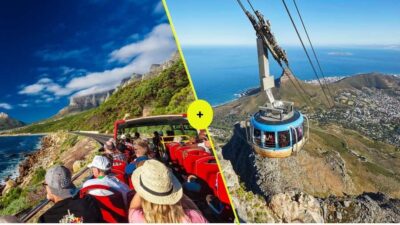
Table Mountain Cable Car, Hop-On Hop-Off Bus Tour
Read our review →
Cape Point and Boulder’s Penguins Full Day Tour
Read our review →