
Reviewed · FOOD & DRINK
African Food and Storytelling Tour Cape Town City Centre
Cape Town’s food story is told best in its ordinary places: a Somali eatery, a market stall, a small spice shop, a mission, or a restaurant you might pass without noticing. This walking food tour links those places to the city’s public squares, old buildings, and the lives of African business owners.
I like two things right away. First, the food is not limited to one national cuisine: you taste Somali, Cape Malay, Creole, and West African dishes. Second, guides such as Dennis, Tawanda, and Sifiso connect each bite to migration, history, politics, and daily business life. The main consideration is that this is a city walk with several stops, not a sit-down restaurant tour, so you should arrive hungry and ready to walk.
Key points at a glance
- Three main food experiences: Two warm shared meals, one Cape Malay or Creole snack tasting, plus warm and cold drinks.
- Eight city-centre stops: Church Square, the Grand Parade, Mandela’s City Hall balcony, the flower market, Greenmarket Square, and several small food businesses.
- African food beyond South Africa: Somali and Malian West African cooking give the tour a wider regional focus.
- Small group size: The maximum is 10 people, which suits a walking tour built around conversation.
- A history and business tour too: Expect discussion of public space, informal trading, entrepreneurship, and gentrification.
- Useful first-day activity: The food stops and local recommendations can help you choose places to return to later in your Cape Town stay.
Why this is more than a Cape Town food crawl
Many city food tours move from one restaurant to the next. This one uses food as a way into Cape Town’s inner city. You walk through old public squares, look at changing business districts, meet African entrepreneurs, and consider how people from different parts of the continent have shaped city life.
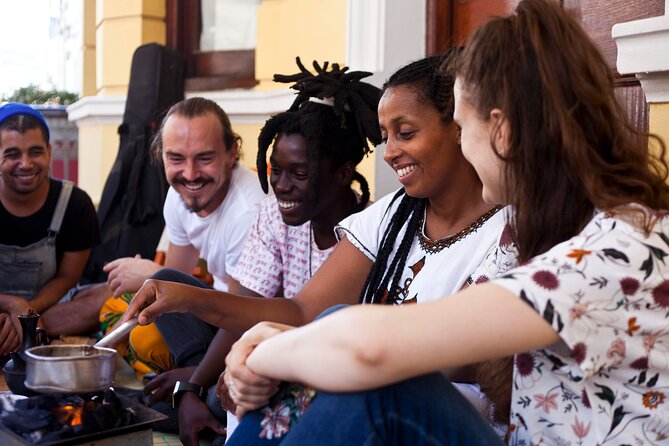
That wider lens gives the meals more meaning. Somali food is not presented as a random tasting. It comes with an introduction to Somali food customs, signature dishes, and spiced tea. West African food is tied to the way cuisine can bring people together. Even the Cape Malay snack stop includes a look at old public space, second-hand books, and small vendors.
I particularly like the focus on businesses that are easy to miss. You may visit hole-in-the-wall restaurants, community kitchens, informal stalls, and African-owned shops that do not appear on the usual Cape Town dining list. This is useful if you want to see how the city works beyond its polished restaurant streets.
The subject of gentrification also gives the walk an honest edge. You are not shown a frozen version of Cape Town. The city centre is changing, and the tour asks who benefits, who trades there, and how small businesses hold onto their place.
A few more Cape Town trips to weigh up
- Cape Town: Full-Day Winelands Tour with Wine Tastings & Food
★ 4.9 · 1,288 reviews - The Cape Town Essentials Food Tour
★ 5.0 · 385 reviews - From Cape Town: Winelands Full Day Tour and Wine Tasting
★ 4.5 · 364 reviews
Starting at Church Square
The tour begins at the statue of Jan Hendrik Hofmeyr on Church Square. You meet directly across from McDonald’s, where Parliament and Spin Street meet.
Take care with this detail: there is another Church Square in Woodstock, and that is not the meeting point. The correct location is Church Square in Cape Town’s city centre.
This first stop lasts about 15 minutes and sets the tone. Church Square is South Africa’s second-oldest public square, making it a useful place to begin a discussion about public space and the layers of Cape Town’s past. You receive a welcome and an introduction before setting off on foot.
This is not the sort of opening where you simply hear a date and move on. The square helps frame the questions that return throughout the walk: Who uses public spaces? Who is allowed to trade? How do old civic areas adapt to modern city life?
Somali food and the first warm meal
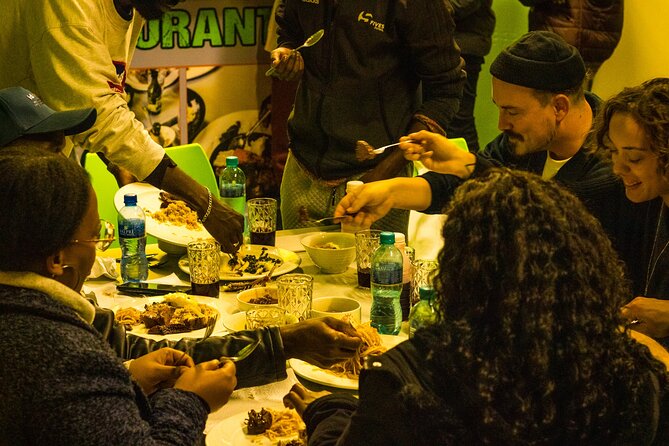
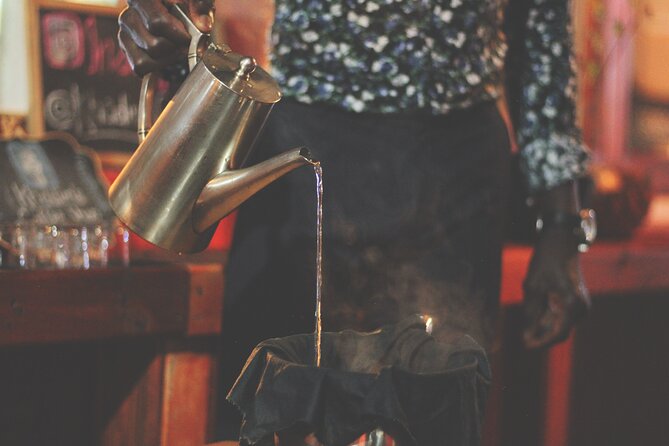
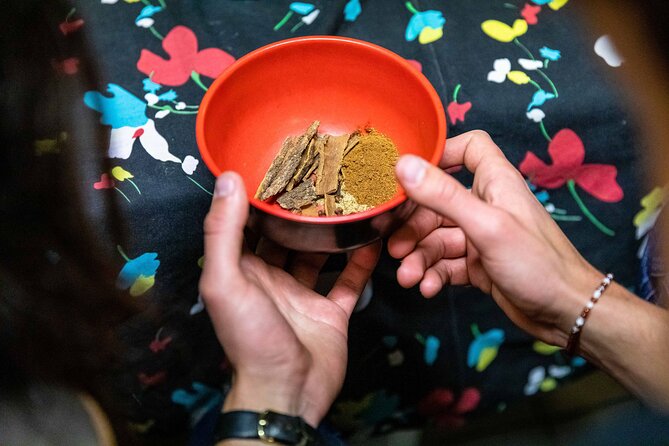
The first food stop introduces Somali cuisine in Cape Town. You share a warm East African meal and taste signature Somali dishes with spiced tea.
The food is served as a shared experience, rather than as a formal individual tasting menu. That matters because it encourages you to look at the dishes together and ask questions. The stop lasts about 20 minutes, though the timing can change with group size and discussion.
For anyone who has only tried South African food, this is a helpful early expansion of the menu. You get a sense of Somali flavors and food traditions without having to choose an unfamiliar restaurant by yourself. The warm meal also gives the walk a practical rhythm: you start eating early, then continue through the city rather than waiting until the end.
You should not expect a long restaurant sitting here. The focus is tasting, context, and conversation. If you have dietary restrictions, the supplied details do not specify how they are handled, so ask before booking.
The Old Post Office and Cape Malay snacks
At Golden Acre Shopping Centre, the tour turns toward the historic Old Post Office. This stop combines colonial history, changing public space, small food vendors, Cape Malay or Creole snacks, and second-hand books.
It is a good example of the tour’s mixed format. You are not only eating. You are also looking at how an old civic or commercial place is used now, and how small traders create a living business district within it.
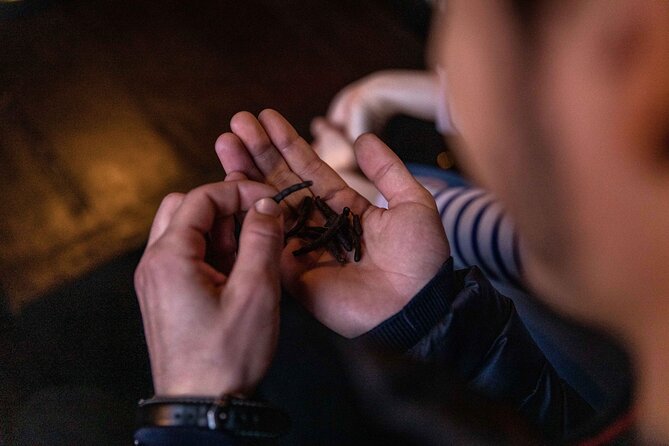
The snack tasting is the tour’s lighter food experience. Cape Malay and Creole flavors add another strand to the story of Cape Town cooking. The chance to browse second-hand books gives the stop a personal, local-business feel, especially if you like browsing small shops as much as eating.
Plan for around 20 minutes. The stop may feel brief if you want a thorough look at the books or vendors, but the short format helps the tour cover a broad section of the city.
Same country, a completely different kind of day:
- Wine Tour: Paarl, Franschhoek & Stellenbosch incl 3 wineries
★ 5.0 · 3,940 reviews - Cape Town: Hop-On Hop-Off Bus Tour with Optional Cruise
★ 4.8 · 3,929 reviews - Cape Town: Cape of Good Hope & Penguins Day Tour with Pickup
★ 4.7 · 3,362 reviews - Zipline Cape Town – From Foot of Table Mountain Reserve
★ 5.0 · 3,179 reviews
Grand Parade and Mandela’s balcony
The Grand Parade is South Africa’s oldest public square. Here, the guide discusses the square’s past and pauses at Cape Town City Hall, where Nelson Mandela gave his first public address after his release from prison.
This is one of the tour’s most powerful historical pauses because it joins a major national moment with the ordinary activity around the square. You also hear about informal food vendors who trade there and about their experience of making a living in the city centre.
I like this contrast. Mandela’s balcony is a symbol of national political history, while the vendors represent the daily work of keeping a family or small business going. The tour does not treat history as something sealed behind glass. It shows how the same public space can hold memory, politics, food, and commerce at once.
The stop lasts about 15 minutes. If you want a full City Hall visit, this tour is not designed for that. You see the balcony from the outside and use the location as a place for discussion.
Adderley Street’s flower market
The walk continues along Adderley Street to one of Southern Africa’s oldest open-air flower markets. You pass through the market and greet its vendors.
This is a short stop, about 15 minutes, but it changes the pace of the tour. After the political and architectural focus of the Grand Parade, the flower market brings you into a working public marketplace. The guide’s attention to vendors fits the tour’s larger interest in small businesses and the people who keep old city spaces active.
Do not treat this as a long shopping visit. It is a walk through the market with introductions, not a dedicated flower-buying excursion. Still, it adds a useful everyday scene to the food and history stops.
Greenmarket Square and Cape Town’s West African community
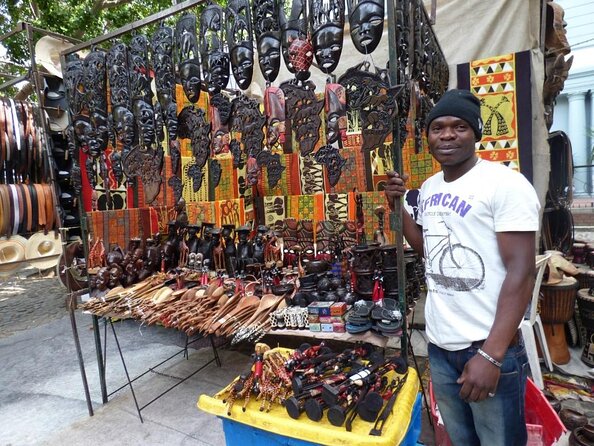
Greenmarket Square is the tour’s end point and one of its key places. It is Cape Town’s third-oldest public square and a meeting place for informal African traders and entrepreneurs.
Here, you can browse souvenirs if you wish and begin learning more about Cape Town’s West African community. The walk may also pass a Senegalese tailor known for African textiles, a worthwhile detail if you are interested in fabrics and clothing.
Greenmarket Square gives you a chance to see commerce in motion. The emphasis is not simply on buying a souvenir. You hear about the people selling goods, the communities represented there, and the way African migration has shaped the city centre.
Because the tour ends here, you can stay on the square afterward if you want to browse. The experience itself ends on foot, so you should plan your onward transport from Greenmarket Square rather than Church Square.
West African food from Mali
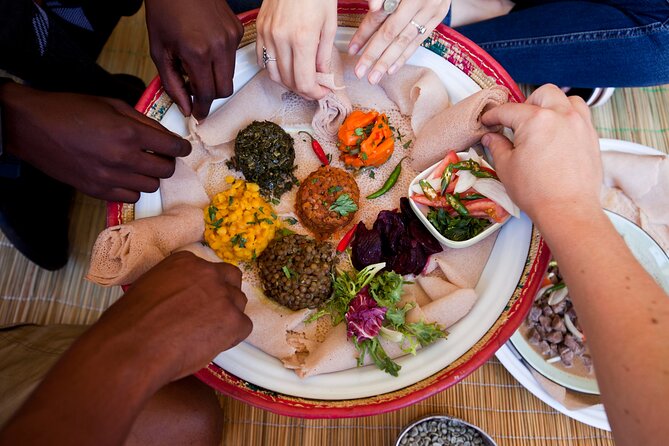
The second shared warm meal focuses on West African cuisine, including food from Mali. This stop lasts about 30 minutes, making it the longest food sitting of the tour.
The guide uses the meal to talk about how African cuisine brings people together. That theme works especially well after walking through public squares and meeting different kinds of traders. Food becomes a common point between communities rather than a list of unfamiliar dishes.
The meal is also where you are most likely to realize why arriving hungry matters. The tour includes two warm shared meals, a snack tasting, tea or coffee, other warm and cold drinks, and a treat. Several stops are close together in time, so I would not schedule a large dinner soon afterward.
The food is ample enough that some people may want to cancel their evening meal plans. I would keep dinner flexible, especially if you prefer to sample everything rather than eat lightly.
The Methodist Mission and a final cup
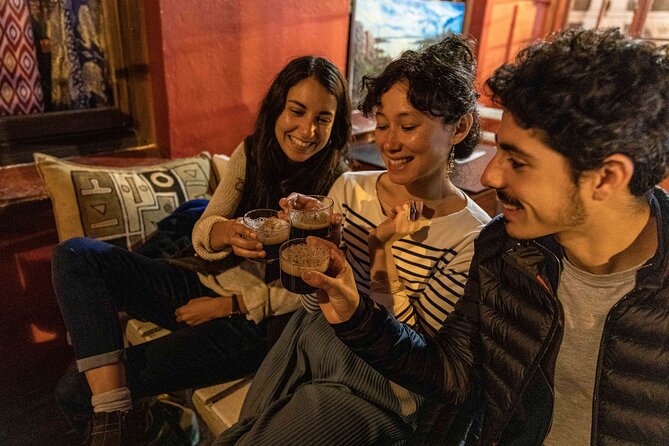
The Methodist Mission is the final cultural stop, where people from many walks of life gather each day. The building is linked to community activism and social justice, and the tour pauses here for tea or coffee and a treat.
This is a thoughtful way to finish. Instead of ending with a final plate and sending you away, the guide gives you a quieter place to reflect on the stories heard during the walk. It also reinforces the idea that food businesses are part of wider community networks.
The stop lasts around 20 minutes. The coffee or tea is not a full meal, but it rounds out the food portion and gives you a chance to ask questions.
How much food do you actually get?
You receive three main food experiences:
- A warm Somali meal with spiced tea
- Cape Malay or Creole snacks and warm or cold drinks
- A warm West African meal from Mali
The Methodist Mission adds tea or coffee and a treat. The exact dishes can change because the tour works with small businesses and an evolving local food scene. That flexibility is part of the appeal, but it means you should not book expecting a fixed menu.
The food is shared, and the tour is designed for curiosity. You may taste dishes you would not order on your own, including food from places that can feel unfamiliar at first glance. The guides help explain what you are eating and where it fits in the wider African food story.
If you are a picky eater, the available information suggests variety rather than a narrow menu. Still, the operator does not provide a detailed list of ingredients, so contact them in advance about allergies, religious restrictions, or vegetarian needs.
The walking, group size, and practical rhythm
The experience lasts about two to three hours and has a maximum of 10 people. That small group size matters because much of the value comes from asking questions and hearing stories from the guide and business owners.
You need a moderate level of physical fitness. This is a walking tour through Cape Town’s city centre, with several stops rather than one continuous restaurant visit. Wear comfortable shoes and leave enough room in your schedule for the tour to run closer to three hours.
The start and end points are different. You begin at Church Square and finish at Greenmarket Square. From there, you can walk on or arrange your own transport. Limited city-centre parking makes Uber the recommended choice if you are not staying nearby.
The tour uses a mobile ticket, and confirmation is provided when you book. It is near public transportation, but the practical details of your return journey are yours to arrange.
Is $92.02 a fair price?
At $92.02 per person, this is not the cheapest way to sample Cape Town food. But price it against what is included: two warm shared meals, a snack tasting, drinks, a treat, a small group, and roughly two to three hours of guiding through historic and working parts of the city.
You are also paying for access. A solo visitor might find one Somali restaurant or a West African food business, but locating several small places, understanding the city’s public spaces, and making sense of the cultural connections would take time and confidence.
The value is strongest if you want context with your meal. If you only want the largest possible amount of food for your money, a restaurant meal will cost less. If you want a guided introduction to African cuisines and Cape Town’s inner-city business life, the price is easier to justify.
Book it early in your stay if you can. The food stops and business recommendations may help you decide where to eat and shop later.
Who should book this experience?
I would choose this tour for you if you want:
- African cuisines beyond a standard Cape Town restaurant menu
- Small businesses and informal markets rather than polished tourist venues
- History tied to real streets and public squares
- A small group with room for questions
- A food experience that addresses migration, community, and gentrification
- A useful introduction to the city centre early in your visit
It may not suit you if you want a long, seated meal at every stop, a fixed menu, or a tour devoted only to food. The public-space and social history sections are central, not filler between tastings.
Also consider the weather. The experience requires good weather. If poor conditions force a cancellation, you are offered another date or a full refund. If the minimum number is not met, the same options apply.
Should you book the African Food and Storytelling Tour?
Book this if you want Cape Town food served with place, memory, and conversation. The strongest part is the combination of Somali and West African meals with Cape Malay snacks, old squares, informal traders, books, flowers, fabrics, and the Mandela balcony.
I would make it an early activity in your city-centre stay, arrive very hungry, wear walking shoes, and keep dinner plans loose. Skip it only if your priority is a formal restaurant crawl or a predictable menu. For a personal look at the people and businesses shaping Cape Town’s inner core, it offers unusually good value.
FAQ
Where does the tour begin?
It begins at Church Square in Cape Town’s city centre, at the statue of Jan Hendrik Hofmeyr. The meeting point is directly across from McDonald’s, where Parliament and Spin Street meet.
Does the tour begin at Church Square in Woodstock?
No. The meeting point is Church Square in Cape Town’s city centre, not Church Square in Woodstock.
Where does the tour end?
The tour ends at Greenmarket Square in Cape Town’s city centre. It ends on foot, and you arrange your own onward transport.
How long does the experience last?
The tour lasts approximately two to three hours.
How many people can join the tour?
The maximum group size is 10 people.
What food is included?
The experience includes two warm shared meals, one Cape Malay or Creole snack tasting, warm and cold beverages, and tea or coffee with a treat at the Methodist Mission.
Do I need to be physically fit?
You should have a moderate level of physical fitness because this is a walking tour through Cape Town’s city centre.
Can I cancel for a full refund?
Yes. You can cancel at least 24 hours before the local start time for a full refund. Cancellations or changes made less than 24 hours before the start time are not refunded or accepted.
Just added around Cape Town
- Lion’s Head Hike: Cape Town – Sunrise or Sunset Hike★ 5.0 · 29 reviews
- Lion’s Head Sunrise or Sunset Hike + Hotel Pick-Up★ 5.0 · 24 reviews
- Lion’s Head: Hike with a registered hiking guide★ 5.0 · 3 reviews
- Kruger National Park 3 Days Best Ever Safari from Cape Town★ 4.1 · 11 reviews
- Koeksister and Samoosa Class by the Malay Cook Up★ 4.8 · 9 reviews
- Kirstenbosch Garden, Bo-Kaap-Penguins & Cape Peninsula Tour★ 3.9 · 7 reviews
- Khayelitsha: 3-Hour Township Walking Tour★ 5.0 · 6 reviews
- Cape Town: Constantia Half-Day Wine Tour & Tastings★ 4.9 · 15 reviews
Food & Drink, compared.

Full-Day Winelands Tour with Wine Tastings & Food
Read our review →


Stellenbosch & Franschhoek 20 Wine Tasting + Lunch Shared Tour
Read our review →

Browse the lists this tour appears in