
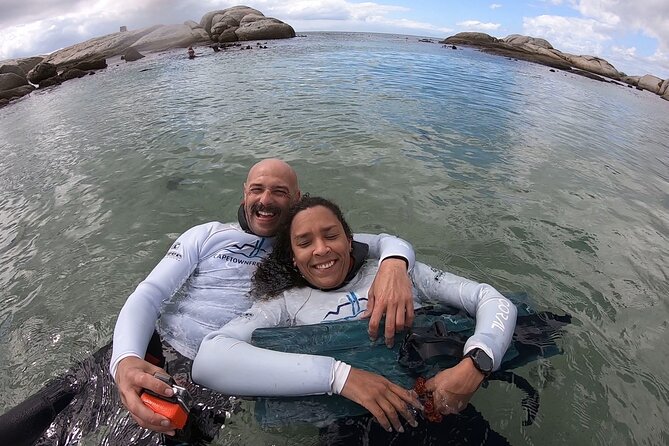
Reviewed · SNORKELING
Kelp Forest Snorkeling in Cape Town
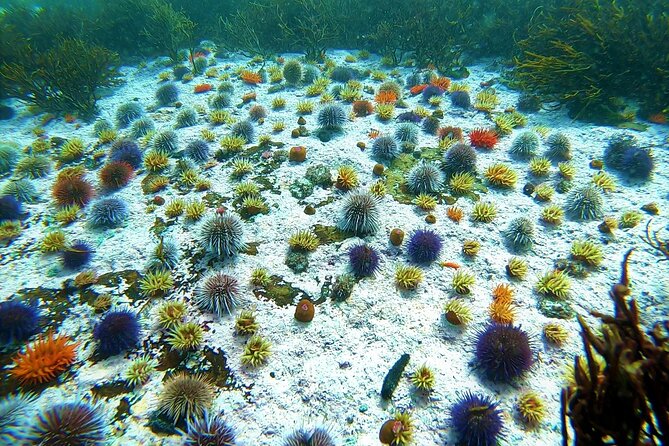
Cape Town’s kelp forest is the star here. From the surface, it may look like a patch of seaweed. Beneath it, you can find swaying kelp, fish, octopus, sea stars, anemones, brittle stars, abalone, and shy sharks. Seals, stingrays, and penguins sometimes pass by, adding a welcome element of surprise.
I like the easy shore entry and the fact that you do not need to be a strong swimmer. I also like the thoughtful safety setup: each guide carries a buoy that you can hold if you need extra support. The main drawback is that the location depends on weather, so the famous Windmill Beach outing is not guaranteed on your date.
Key points to know before you book
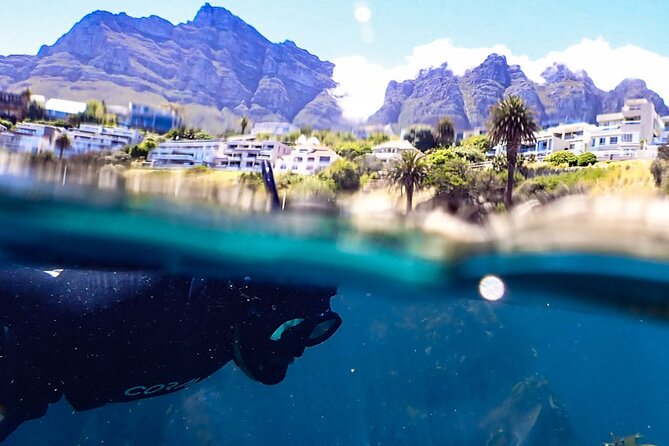
- Windmill Beach is the usual setting: Most outings take place near Simon’s Town, but the guide chooses the site according to sea conditions and visibility.
- No boat is involved: You enter from the shore, which keeps the experience simple and avoids a boat ride in potentially rough water.
- The gear is supplied: Wetsuits and snorkeling equipment are provided, but towels, food, and drinks are not.
- Beginners are welcome: The team offers a briefing, helps with fitting, and stays close during the water entry.
- Marine life is never guaranteed: You might see octopus, fish, shy sharks, and sea stars, while seals, rays, and penguins are occasional surprises.
- Small groups keep help close: The maximum group size is 10 people, useful for first-time snorkelers who want personal attention.
What makes Cape Town’s kelp forest special
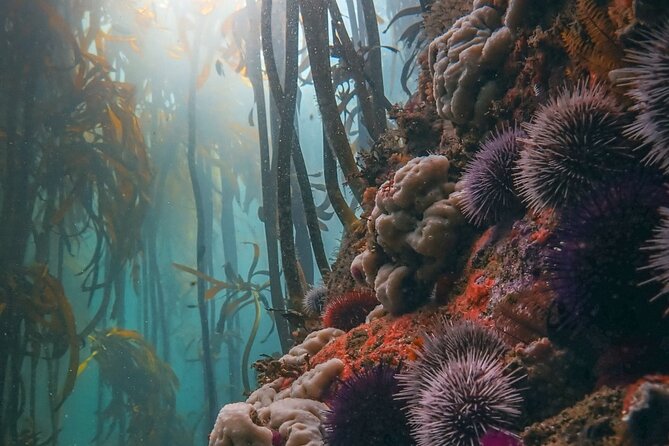
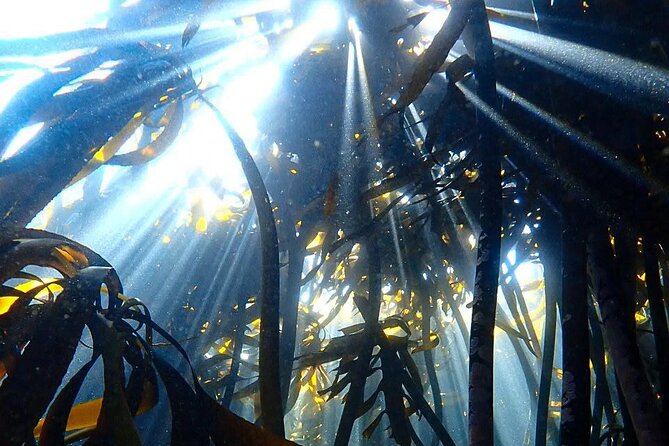
This is not a standard tropical snorkeling trip. You will not be looking for coral gardens or warm, shallow lagoons. Cape Town’s underwater world is cooler, darker, and more atmospheric, with tall kelp creating narrow passages and shifting cover for marine life.
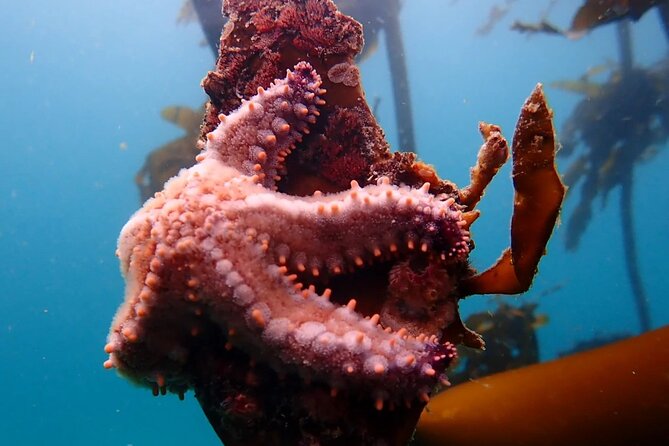
The kelp forest is home to many small creatures that are easy to miss without guidance. A guide can point out a sea star tucked against the rocks, an anemone moving with the water, or an octopus changing position. You might also encounter brittle stars, abalone, and several types of fish.
Shy sharks are another possible sighting. The name sounds dramatic, but the appeal is their quiet, elusive nature. They are not the kind of animal you should expect on every outing. Their appearance depends on the site, conditions, and luck.
The setting also changes the mood of the trip. Instead of following a fixed route, you explore the part of the forest that is safest and clearest that day. That makes the outing feel more like a guided search than a display arranged for you.
A few more Cape Town trips to weigh up
- St. Lucia: Cape Vidal Snorkeling Adventure
★ 4.5 · 17 reviews - From St Lucia: Cape Vidal Full-Day Snorkeling Safari
★ 4.8 · 10 reviews - Caged and Cageless Shark Snorkelling on Durban’s Aliwal Shoal
★ 5.0 · 9 reviews
The Muizenberg start and first briefing
Your meeting point is at 1 Albert Road in Muizenberg. The experience lasts about three hours and 30 minutes, and the session begins at the center with an introduction to the ocean environment and the equipment.
The briefing matters. A good explanation helps you understand how to move through kelp without fighting it, how to use your mask and snorkel, and what marine life you might encounter. The team also explains the safety process before you reach the water.
You will be fitted with the supplied snorkeling equipment. The wetsuits are one of the practical strengths of the experience, since Cape Town’s water is not known for tropical warmth. Proper fitting can make the difference between concentrating on the forest and thinking only about being cold.
You should bring your own towel, along with food and drinks for afterward. Those items are not included. The center is near public transportation, which gives you an alternative to driving, although the actual snorkeling site may be somewhere else on the peninsula.
Why the snorkeling site can change
The team chooses the water entry point according to the day’s weather, visibility, and calmness. Windmill Beach in Simon’s Town is used on most days, but the final choice is not fixed.
This flexibility is sensible. A famous location is not worth much if the water is murky or the entry is rough. The best outing may take place at a less familiar site where you can see more clearly and enter with less trouble.
The tradeoff is certainty. If you have planned your entire day around Windmill Beach, you may need to adjust your expectations. The activity is built around safe and pleasant conditions, not a rigid promise of one particular beach.
The company may also cancel if the weather is poor or if the minimum number of participants is not reached. In either case, you are offered another date or experience, or a full refund.
Entering from shore instead of using a boat
Every location uses a shore entry. There is no boat transfer, no boat timetable, and no need to climb into open water from a moving platform.
That makes the format appealing if you prefer a straightforward start. You can get changed, receive help at the edge, and enter gradually. The guides assist you as you get comfortable with the equipment.
Shore entry does not mean the water is effortless. Ocean conditions can vary, and the team selects a suitable site for the day. You should still listen carefully during the briefing and tell the guide if you feel uneasy.
The safety buoy is an especially useful touch. Less confident snorkelers can hold onto it while the guide remains nearby. You are not left to manage the water alone, and you do not need to pretend to be more comfortable than you are.
Same country, a completely different kind of day:
- Wine Tour: Paarl, Franschhoek & Stellenbosch incl 3 wineries
★ 5.0 · 3,940 reviews - Cape Town: Hop-On Hop-Off Bus Tour with Optional Cruise
★ 4.8 · 3,929 reviews - Cape Town: Cape of Good Hope & Penguins Day Tour with Pickup
★ 4.7 · 3,362 reviews - Zipline Cape Town – From Foot of Table Mountain Reserve
★ 5.0 · 3,179 reviews
What you might see beneath the kelp
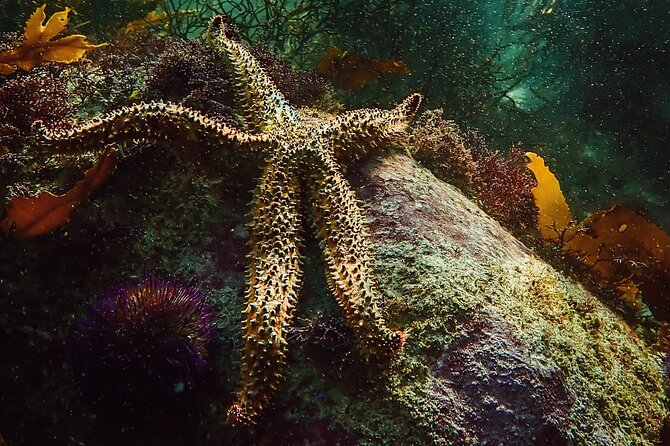
The marine life list is broad, but it is best treated as a set of possibilities rather than a checklist. The ocean decides what appears.
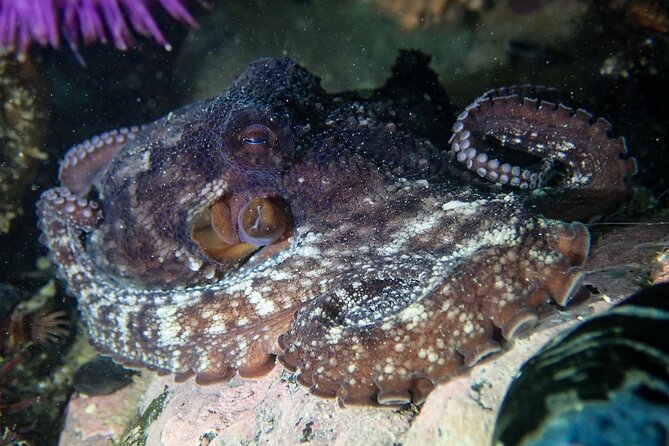
You might see fish moving through the kelp, an octopus resting among the rocks, or shy sharks keeping out of the way. Sea stars, anemones, brittle stars, and abalone add interest at the seafloor.
The more unusual sightings are seals, stingrays, and penguins. These encounters happen occasionally, and their unpredictability is part of the appeal. A passing seal can make a calm snorkeling session feel suddenly wild, while a penguin sighting would be a memorable bonus.
Your guide helps you notice details that you might otherwise swim past. The guides are there to identify creatures, manage the group, and help you stay relaxed. Chris is one guide specifically praised for his strong understanding of the marine life and his ability to explain what you are seeing.
Do not expect a guaranteed animal encounter. You are booking a chance to explore a living coastal habitat, not a controlled wildlife exhibit. If the water offers only a few fish and kelp on your date, the experience will be quieter than a lucky day with octopus and penguins.
A good first snorkeling outing
You do not need to be a skilled swimmer, and the activity is suitable for most ages. That does not remove every physical demand, but it does make this a reasonable introduction to snorkeling for many people.
First-time snorkelers receive help with the equipment and water entry. One participant described it as a first snorkeling experience and found the staff consistently available to help. That is important because the first few minutes can be the hardest part, especially when you are adjusting to a mask, breathing through a snorkel, and moving in a wetsuit.
The maximum group size is 10. That is small enough for guides to keep an eye on people and answer questions without turning the session into a crowded procession.
If you are nervous, say so before entering. The buoy is there for exactly this reason. You can use it to settle your breathing and gain confidence rather than forcing yourself to swim farther than feels comfortable.
The activity is not presented as a technical freediving session. It is a guided snorkeling experience, with the focus on safety, marine life, and comfort. That makes it more suitable for a curious beginner than for someone seeking a demanding underwater training course.
The role of the guides
The guide’s work begins before you reach the water. Equipment fitting, the marine-life talk, and the safety instructions all shape the quality of the outing.
Once you enter, the guide helps you get comfortable, points out creatures, and carries the safety buoy. This combination of instruction and support is particularly useful in a kelp forest, where visibility and movement can feel unfamiliar.
The strongest guide feedback centers on friendliness, practical help, and clear knowledge of the sea life. Chris receives specific praise for explaining what people were seeing. Other staff are described as professional, friendly, and accommodating.
That tone matters more here than on a simple sightseeing walk. If your mask leaks or you are unsure how to move through the kelp, you need a guide who responds quickly and calmly.
After the water
When the snorkeling ends, the group returns for a debrief and changes back into dry clothes. Towels are not supplied, so pack one.
You can either leave directly from the snorkeling site if you have your own vehicle or return with the group to the Muizenberg center. This choice affects the rest of your day.
Leaving from the site can save time if you are driving onward toward Simon’s Town or another Cape Peninsula stop. Returning to Muizenberg is more convenient if you arrived without a car or want to finish the experience at the original meeting point.
The activity ends back at the meeting point as its standard arrangement. If you plan to depart from the beach, confirm the details with the team before the session begins so you know exactly how your transport will work.
Price and overall value
The supplied price is shown as $0.00. Because that figure is unusual for a guided activity that includes equipment and instruction, check the final booking total carefully before paying or relying on it in your budget.
The value of the experience comes from more than the time in the water. You are also receiving a marine-life briefing, a wetsuit and snorkeling equipment, guide support at the shore, and a safety buoy for anyone who needs it.
A private outing could offer more control, but this activity has a maximum of 10 people. For a group session, that is a reasonable size, especially for beginners who may need help with fitting and entry.
The trip is most worthwhile if you value local guidance and want to understand the kelp forest rather than simply rent equipment and swim near the beach. If you already own gear and feel confident in the water, the instruction may be less important to you. For a first outing, it adds real value.
Timing, transport, and what to pack
Allow the full three hours and 30 minutes. The time includes the briefing, fitting, travel to the chosen snorkeling site, water session, debrief, and changing.
The meeting point is in Muizenberg and is near public transportation. Since the water location changes, do not assume that the start and finish of the active snorkeling portion will be at the same place as the center.
Bring:
- A towel
- Food and drinks
- Dry clothes for after the session
- Transport plans if you want to leave from the snorkeling site
The supplied equipment covers the main snorkeling needs. You do not need to bring your own mask, snorkel, or wetsuit unless you prefer to use personal gear, though the included equipment is designed for the activity.
Because conditions control the location, keep some flexibility in your Cape Town schedule. A rigid plan can make a weather change frustrating. A free half-day lets you accept the guide’s decision without losing another important booking.
Who should book this experience
I would point first-time snorkelers toward this outing, especially those who want help with equipment and do not feel fully confident in open water. The easy shore entries, small group limit, and buoy support make it less intimidating than an unguided swim.
It also suits families and mixed-ability groups, since not everyone needs to be an accomplished swimmer. The phrase most ages still has limits, and each person should judge their own comfort in the sea, but the format is built to provide support.
Nature lovers should enjoy the chance to look for small creatures rather than simply count on one headline sighting. The kelp, anemones, brittle stars, and abalone can be as interesting as the larger animals.
You may want to skip it if you need a guaranteed beach, guaranteed wildlife, or a warm-water snorkeling setting. Weather can alter the location, and the marine life is unpredictable. Strong swimmers looking for speed or technical challenge may also find the pace too gentle.
Cancellation and weather protection
You can cancel up to 24 hours before the start time for a full refund. Changes made less than 24 hours before the experience are not accepted, and cancellations inside that window are not refunded.
The weather rule is important for an ocean activity. If conditions are poor, you are offered a different date or a full refund. The same applies if the minimum number of participants is not met and the session is canceled.
Confirmation is provided at booking. Keep an eye on the local start time when judging the 24-hour cancellation deadline.
Should you book Cape Town kelp forest snorkeling?
Book it if you want a guided, beginner-friendly look at one of Cape Town’s most distinctive marine environments. The best reasons are the warm equipment, shore-based format, small group, practical guides, and buoy support for less confident swimmers.
Go in with realistic expectations. You might see an octopus, shy shark, seal, ray, or penguin, but you might also spend most of the session studying kelp and smaller creatures. That uncertainty is not a flaw if you enjoy nature on its own terms.
Check the final price, bring a towel and refreshments, and leave room in your schedule for a weather-based site change. For a first snorkeling experience or a relaxed marine-life outing, Cape Town Freediving offers a thoughtful way to meet the Great African Sea Forest.
FAQ
Where does the kelp forest snorkeling experience start?
It starts at Cape Town Freediving’s center at 1 Albert Road, Muizenberg, Cape Town, 7950, South Africa.
How long does the experience last?
The experience lasts approximately three hours and 30 minutes.
Is Windmill Beach always the snorkeling location?
No. Windmill Beach in Simon’s Town is used on most days, but the final location depends on weather, calmness, and visibility.
Does the tour use a boat?
No. All snorkeling locations use shore entries, and no boat is involved.
Do I need to be a skilled swimmer?
No. The experience does not require you to be a skilled swimmer, and guides carry a safety buoy that less confident snorkelers can hold.
What equipment is included?
Snorkeling equipment and the equipment needed for the activity are provided. The experience also includes a marine-life and equipment briefing.
Are towels, food, and drinks included?
No. You need to bring your own towel, food, and drinks.
What happens if the weather is poor?
If poor weather causes a cancellation, you are offered a different date or a full refund. You may also receive a new date, another experience, or a full refund if the minimum number of participants is not reached.
Just added around Cape Town
- Private Tour to 20 Wine Tasting in Stellenbosch and Franschhoek★ 5.0 · 11 reviews
- Sunset Safari Big 5 Aquila with Snacks and Wine Tasting★ 5.0 · 12 reviews
- Robben Island, Kirstenbosch wine tasting Tour★ 5.0 · 10 reviews
- Zip Line and Wine from Cape Town★ 5.0 · 14 reviews
- Explore Atlantis Sand Dunes with a 1hour 30mins sandboarding tour★ 5.0 · 5 reviews
- Private Group Photoshoot in Cape Town★ 5.0 · 21 reviews
- Private Transfer from Cape Town International Airport★ 5.0 · 4 reviews
- 1 Hour Cape Town City Center Photoshoot Experience★ 5.0 · 19 reviews
Snorkeling, compared.
Caged and Cageless Shark Snorkelling on Durban’s Aliwal Shoal
Read our review →
Kosi Bay Mouth Experience – Kayaking, Snorkeling, Fish Trap Tour and Fish braai
Read our review →Browse the lists this tour appears in