Reviewed · FULL-DAY
Full day Ceres and Bainskloof trike tour.
A trike puts you in the open air, not behind a bus window. You feel the wind, smell the countryside, and get a wide view as the road climbs from Cape Town into the Western Cape mountains. I like the route’s variety: two historic mountain passes and the fruit-growing country around Ceres. I also like that guide Willem keeps the tour private for a group of up to two.
The main drawback is the long day on an exposed vehicle. You need to be comfortable with wind, changing mountain weather, and an eight-hour outing. Lunch is not included, and the $341.76 price is for the group rather than each person.
Key points to know before you book
- Open-air riding: A trike gives you direct contact with the air, scents, and scenery instead of a bus window.
- Two famous passes: You cross Du Toits Kloof on the way out and historic Bainskloof Pass on the return.
- Ceres fruit country: The one-hour stop brings you to a small town known for peaches, pears, apples, plums, and grapes.
- Private for up to two: You ride with your own group rather than joining a large shared excursion.
- Willem is your guide: He helps with helmets and makes comfort a clear priority during the day.
- Bring money for food and drinks: Lunch and alcoholic beverages are not included.
Why the trike changes the whole trip
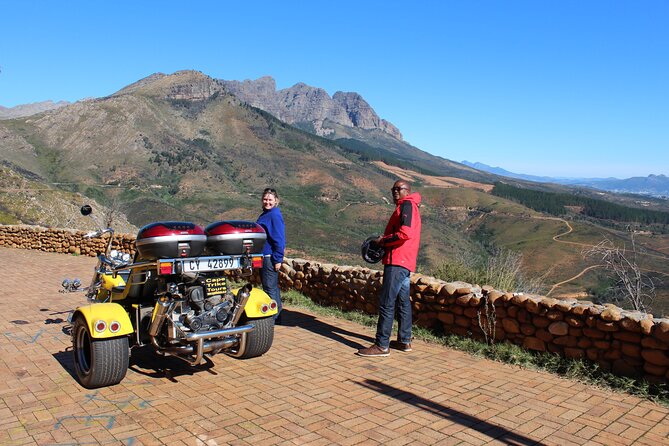
The vehicle is the experience here, not just the way you get from one stop to another. On a trike, you are exposed to the road and the countryside. You hear more, smell more, and see to the sides without a row of glass and seats blocking the view.
That openness also makes the ride more physical. A bus can feel dull but climate-controlled. A trike can feel exciting, yet wind and temperature matter. I would choose this tour for the sense of movement and freedom, not for a soft, passive ride.
The arrangement is private, with only your group participating and space for up to two people. That matters if you want a quieter day or prefer not to spend hours making small talk with strangers. It also gives Willem room to help with practical details, including putting helmets on and taking them off.
The route covers a lot of ground in about eight hours. You are not simply visiting one town and returning. You travel through mountain country, farming valleys, fruit-growing districts, wine areas, and old settlements. The changing scenery is the reason to book.
A few more Cape Town trips to weigh up
- Cape Point and Boulder’s Penguins Full Day Tour
★ 5.0 · 3,118 reviews - From Cape Town: Cape Point & Boulders Beach Full-Day Tour
★ 4.8 · 3,032 reviews - Cape of Good Hope & Boulder Penguins Full-Day Tour from Cape Town
★ 5.0 · 2,347 reviews
Leaving Cape Town for Du Toits Kloof
The tour starts at 9:00 am, with pickup offered. From Cape Town, the route follows the N1 toward the Du Toits Kloof Pass. This first stretch sets the tone: you leave the city behind and begin climbing toward the mountains.
At the pass, you have a photo stop. The pause is short, but useful. A mountain road can pass quickly when you are concentrating on the ride, so stopping gives you time to look back at the route and take in the scenery from higher ground.
Du Toits Kloof is also a good early test of the trike. You will notice the temperature, wind, and road conditions more clearly than you would in a closed vehicle. Dress for exposure, and do not assume a warm Cape Town morning will feel the same at the pass.
I like this opening because it avoids a slow start. You begin with a major road, gain height, and reach a clear viewpoint before moving into the quieter parts of the route. If you want a tour built around short walks and long café stops, this is not that. The road itself is the main attraction.
Through Rawsonville and the Slanghoek Valley
After Du Toits Kloof, the route descends toward Rawsonville. From there, it turns toward Slanghoek and runs through the Slanghoek Valley.
This is one of the prettiest parts of the day. The route passes between mountains and through areas associated with wheat, vines, and rivers. On a trike, these details are easier to notice because you are not separated from the air by closed windows. The smells of the countryside become part of the ride.
The Slanghoek section also gives the day a more local feel. You are not being taken directly from one major sight to another. Instead, you move through working country, with the road connecting small communities and farming areas.
There is no separate scheduled stop listed here, so expect to appreciate it while riding. Keep your eyes open, but also let Willem handle the road. The safest way to enjoy the scenery is to treat the journey as the attraction rather than trying to photograph every moment.
Ceres, the one-hour town stop
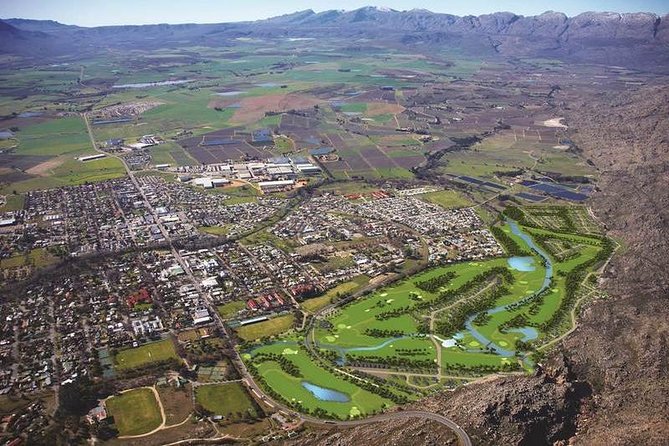
The route continues to Wolseley and then Ceres, where you stop for about an hour. Ceres was first settled in 1729 and developed as a town in 1849. It is known for fruit, with peaches, pears, apples, plums, and grapes grown in the surrounding area.
This is the most practical pause in the middle of the day. You have time to get something to eat, stretch your legs, and see a small town rather than only viewing it from the road. Lunch is not included, so plan to pay for your own food.
The one-hour limit keeps the tour moving, but it also means you should not expect a long town visit. You might find enough time for a meal and a short look around, but the experience is not designed as a detailed historical tour of Ceres.
What I like about this stop is the connection between place and produce. Ceres is not included merely as a convenient turnaround point. Its identity comes from the fruit grown in the district, and the stop gives the route a sense of purpose beyond mountain scenery.
Same country, a completely different kind of day:
- Wine Tour: Paarl, Franschhoek & Stellenbosch incl 3 wineries
★ 5.0 · 3,940 reviews - Cape Town: Hop-On Hop-Off Bus Tour with Optional Cruise
★ 4.8 · 3,929 reviews - Cape Town: Cape of Good Hope & Penguins Day Tour with Pickup
★ 4.7 · 3,362 reviews - Zipline Cape Town – From Foot of Table Mountain Reserve
★ 5.0 · 3,179 reviews
Returning over Bainskloof Pass
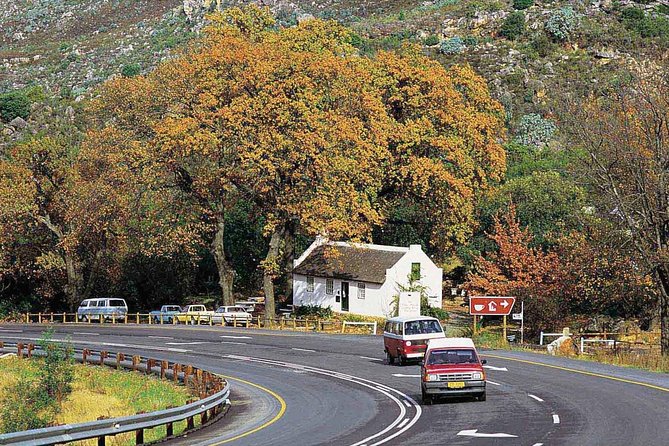
The return journey takes you over Bainskloof Pass, built by Thomas Bain in 1853. It is still regarded as an engineering masterpiece, and its age gives the road a different character from the modern N1.
You have about 20 minutes at Bainskloof Pass. That is enough for a short stop and photographs, though not a long walk or extended visit. The pass is best understood as part of the route itself: a historic road cut through mountain country, with changing views as you travel.
This second pass is a strong reason to choose the full-day route instead of a simpler countryside outing. Du Toits Kloof and Bainskloof are not interchangeable. Crossing both gives the day a pleasing shape, with one major mountain road on the outward leg and another on the return.
The timing is worth noting. After several hours on the trike, Bainskloof comes late in the day. Some people will find the final pass a rewarding high point. Others may feel ready for a shorter ride by then. Your enjoyment will depend on how much you like being on the road for long stretches.
Wellington, Paarl, and the trip home
After Bainskloof, the route continues to Wellington for a drink stop. Alcoholic beverages are not included, so drinks are at your own expense. The stop offers a chance to pause before the final run back toward Cape Town.
Wellington is a historic town, and the route then continues through Paarl before joining the N1 motorway. These final sections provide a contrast to the mountain passes and rural valleys. You return through established towns and then onto a faster main road.
The day ends with drop-off at your hotel or guesthouse. Pickup is offered at the beginning, but the supplied details do not specify the exact pickup area or any special pickup surcharge. Confirm those points when booking, especially if your accommodation is outside central Cape Town.
The final motorway stretch will not be the most scenic part of the tour. That is normal for a route covering this much ground. Its value is practical: it gets you back after a full loop through the Western Cape.
The guide and the private format
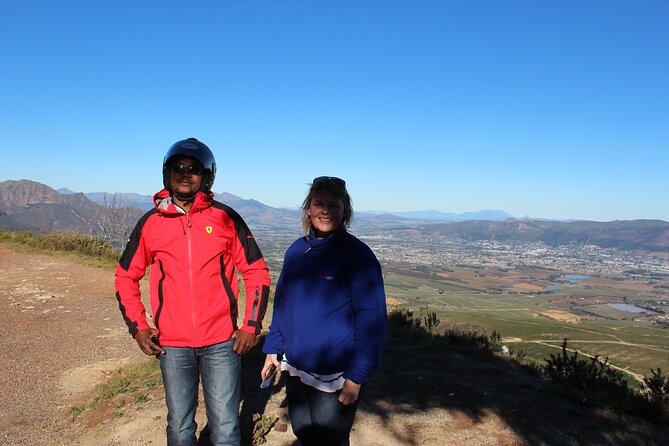
Willem is the named guide for this experience. His role is especially important on a trike because comfort and confidence affect the whole day. He helps with putting on and removing helmets, and he pays attention to whether you are comfortable.
That may sound like a small detail, but it matters. A helmet can be awkward when you are preparing to ride, and a long open-air trip is more enjoyable when the practical steps are handled calmly.
The private format is another major advantage. Only your group participates, with a maximum of two people. This suits a couple, two friends, or anyone who wants the day to feel personal rather than scheduled around a large group.
There is less flexibility in the route than on a private car tour because the listed day has a clear path and several timed stops. Still, a small group usually makes communication easier. If you have a preference about food, photo pauses, or comfort, it is sensible to discuss it with Willem at the start.
What the $341.76 group price means
The price is $341.76 per group of up to two people, not $341.76 for each person. For two people, that works out to $170.88 each before any food or drinks. For one person, the full group price still applies.
That makes the tour easier to justify for two people sharing the booking. You receive an eight-hour private outing, an experienced guide, pickup offered, and a route covering several distinct parts of the region. You are paying for the vehicle, the guiding, and the time involved in a long scenic loop.
Lunch is not included, and drinks are not included. Set aside extra money for the Ceres food stop and the Wellington drink stop. The tour also does not list entrance fees, but the two stated attractions have free admission.
I see the value mainly in the route and the private trike format. If you only want transport to Ceres, the cost may feel high. If you want an open-air day that connects both passes, valley roads, fruit country, and historic towns, the price makes more sense.
Comfort, timing, and who should book
This is best for people who enjoy roads as much as destinations. You should be happy spending most of the day outside and moving between stops. The tour is also a good fit for couples or friends who want a private outing without a large group.
The experience may not suit someone who wants a relaxed indoor vehicle, a slow lunch, or several hours to explore each town. The stops are short compared with the time spent riding. You should also be prepared for the possibility that mountain weather feels cooler or windier than Cape Town.
Most people can participate, according to the provided activity details. No special accessibility information is supplied, so you should ask the operator about any personal mobility or seating concerns before paying.
Confirmation is sent within 48 hours of booking, subject to availability. The booking is non-refundable and cannot be changed for any reason, so only reserve once your plans are firm.
Should you book the Ceres and Bainskloof trike tour?
Book it if you want an open-air road day rather than a standard sightseeing transfer. The best parts are the freedom of the trike, the private setting, Willem’s hands-on help, and the route over both Du Toits Kloof and Bainskloof.
Think twice if you dislike wind, need a flexible cancellation policy, or prefer long visits at one or two destinations. For two people who enjoy mountain roads and want to see several sides of the Western Cape in one day, this is a distinctive and good-value private outing.
FAQ
What is the duration of the Ceres and Bainskloof trike tour?
The tour lasts approximately eight hours.
What time does the tour start?
The stated start time is 9:00 am.
Where does the tour take place?
The tour starts in Cape Town and travels through Du Toits Kloof, Rawsonville, Slanghoek, Wolseley, Ceres, Bainskloof Pass, Wellington, Paarl, and back to Cape Town.
Is hotel pickup available?
Pickup is offered, and the day ends with drop-off at your hotel or guesthouse.
How many people can join the private tour?
The tour is private and is available for a group of up to two people.
Is lunch included?
No. Lunch is not included, so you should budget for food during the stop in Ceres.
Are alcoholic beverages included?
No. Alcoholic beverages are not included.
How long is the stop in Ceres?
The scheduled stop in Ceres lasts one hour.
How long is the stop at Bainskloof Pass?
The scheduled stop at Bainskloof Pass lasts about 20 minutes.
Is the tour refundable if I cancel?
No. The experience is non-refundable and cannot be changed for any reason.
Just added around Cape Town
- Private Tour to 20 Wine Tasting in Stellenbosch and Franschhoek★ 5.0 · 11 reviews
- Sunset Safari Big 5 Aquila with Snacks and Wine Tasting★ 5.0 · 12 reviews
- Robben Island, Kirstenbosch wine tasting Tour★ 5.0 · 10 reviews
- Zip Line and Wine from Cape Town★ 5.0 · 14 reviews
- Explore Atlantis Sand Dunes with a 1hour 30mins sandboarding tour★ 5.0 · 5 reviews
- Private Group Photoshoot in Cape Town★ 5.0 · 21 reviews
- Private Transfer from Cape Town International Airport★ 5.0 · 4 reviews
- 1 Hour Cape Town City Center Photoshoot Experience★ 5.0 · 19 reviews
Full-Day, compared.
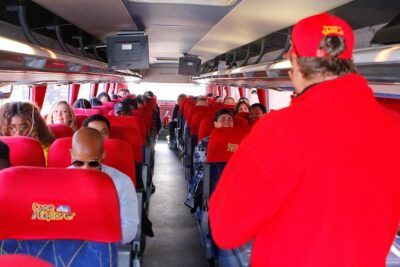
Cape Point and Boulder’s Penguins Full Day Tour
Read our review →
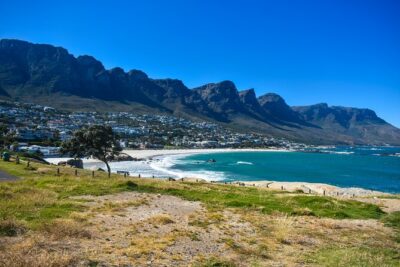
Cape of Good Hope & Boulder Penguins Full-Day Tour from Cape Town
Read our review →

Full-Day Winelands Tour with Wine Tastings & Food
Read our review →
MUST DO: Boulders Beach & Cape Point Full Day Tour #1 Rated
Read our review →
Soweto /Johannesburg and Apartheid Museum Guided Full Day Tour
Read our review →