
Reviewed · LESEDI CULTURAL VILLAGE TOURS
Johannesburg: Lesedi Cultural Village Show with Pickup
Lesedi Cultural Village puts five South African cultural traditions into one half-day visit, beginning with drumming and ending with a lively music and dance performance. You move through the homesteads of the Zulu, Xhosa, Ndebele, Basotho and Pedi, then have time for lunch and African crafts.
I like the private pickup in an air-conditioned vehicle, especially if you are staying in Sandton, Rosebank, Pretoria’s Hatfield, or another listed area. I also like the mix of explanation and performance: the audiovisual presentation gives you a frame for the visit, while the dancers and drummers bring the material to life. The main drawback is that this is an arranged cultural village rather than a visit to a working rural community, and lunch costs extra.
Key points at a glance
- Five traditions in one visit: See homesteads associated with the Zulu, Ndebele, Xhosa, Basotho and Pedi peoples.
- A strong opening: The welcome takes place in an amphitheatre decorated with Ndebele-style paintings and accompanied by drumming.
- The finale is the liveliest part: Music, drums, singing and choreographed dance close the cultural program.
- Private transport is included: Pickup and drop-off are provided in an air-conditioned vehicle for a group limited to three people.
- Lunch is optional: You can eat at the Nyama Choma restaurant, but food and drinks are not part of the $130 price.
- Guide quality matters: Mary has been praised as a warm driver, while Maryam has been noted for adding conversation about culture and current affairs.
A one-hour ride from Johannesburg to the bushveld
The outing begins at your accommodation, provided it is in one of the listed pickup areas. These include Sandton, Rosebank, Houghton Estate, Westcliff, Fourways, Randburg, Roodepoort, Bedfordview, Edenvale, Kempton Park, Midrand, Menlyn, Centurion, Parktown, Lynnwood, Melrose, Brooklyn and Hatfield.
That broad pickup map is a real advantage. You do not need to arrange a separate taxi to a central meeting point, and the vehicle is private rather than a large coach. The group limit is three people, which makes the ride easier for couples, friends or a small family group.
The drive to Lesedi is described as about an hour from Johannesburg. You leave the city for the bushveld and rocky hills around the village. The drive is not the main event, but it helps shift the day from urban sightseeing to a more open setting.
Pickup details deserve attention when you book. The experience lists several Pretoria areas, including Hatfield and Brooklyn, but not every Pretoria neighborhood. If you are outside the named zones, confirm the pickup point before paying. The same applies to drop-off, which returns you to the listed accommodation area used for collection.
More Lesedi Cultural Village Tours in Hartbeespoort:
- Lesedi Cultural Village
★ 4.9 · 14 reviews - Lesedi Cultural Village, Sterkfontein Caves or Maropeng Mus
★ 5.0 · 10 reviews - Cradle of Humankind and Lesedi Cultural Village
★ 4.2 · 8 reviews
Drums and painted walls at the Ndebele amphitheatre
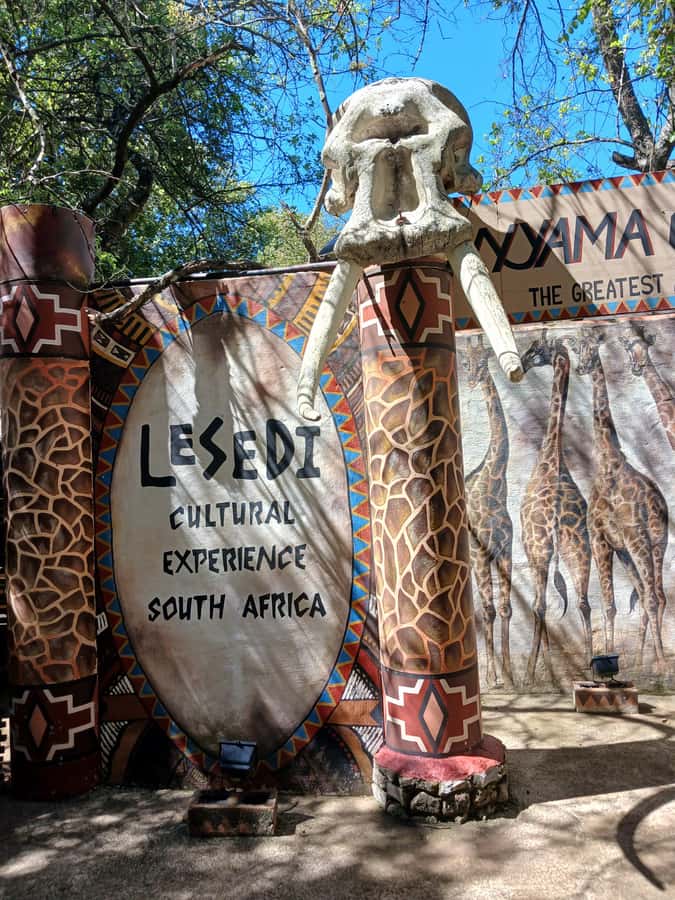
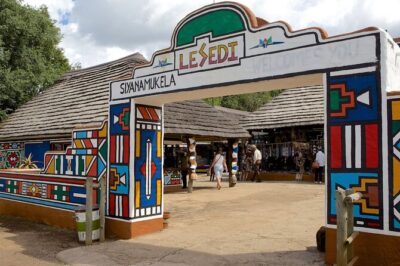
The first formal welcome takes place in the Ndebele village amphitheatre. Drumming sets the tone, and the walls are decorated with painted tribal homesteads. Ndebele design is known for bold geometric patterns, so this first stop gives you a visual introduction before the guided walk begins.
This opening works well because it does not start with a long lecture. You hear the drums, look at the painted setting and get an immediate sense that the visit will use performance as well as explanation.
The amphitheatre is also a useful place to settle into the schedule. You are not expected to wander around on your own and guess what each building means. The guide leads the group onward, giving the visit a clear order.
Photography may be appealing here because of the painted walls and traditional structures. Still, the supplied details do not specify photography rules, so ask your guide before taking close portraits or photographing performers. A simple question is better than an awkward moment.
The audiovisual introduction before the walking tour
The next stop is the Ingoma amphitheatre, where an audiovisual presentation introduces the history and culture of the groups represented at Lesedi. This section gives you broad context before you see the homesteads.
I find this kind of introduction useful at a place that covers five different traditions in a short period. Without it, the visit could become a quick parade of buildings and costumes. The film helps separate the cultural groups and gives you a few ideas to listen for during the guided walk.
At the same time, do not expect a university course in South African anthropology. The program is designed for a general audience and moves at a sightseeing pace. It offers a starting point, not the last word on Zulu, Xhosa, Ndebele, Basotho or Pedi identity.
Your guide is an important part of this section. English is the stated language, and the tour is limited to three participants. That small size gives you a better chance to ask questions than you would have in a large group.
Mary has been singled out for being a pleasant driver, while Maryam has been praised for discussing African culture and current affairs. Guide assignments can vary, so treat those names as examples rather than a guarantee. If you enjoy conversation, ask about modern life as well as the formal traditions shown at the village.
Five homesteads, five cultural introductions
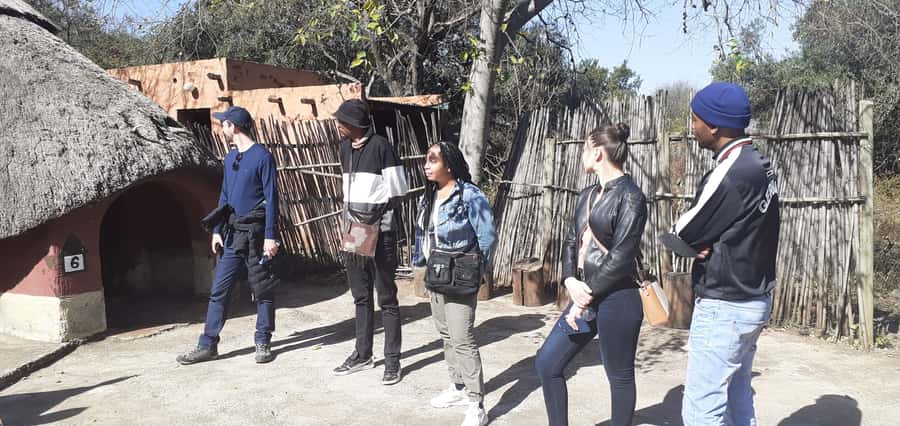
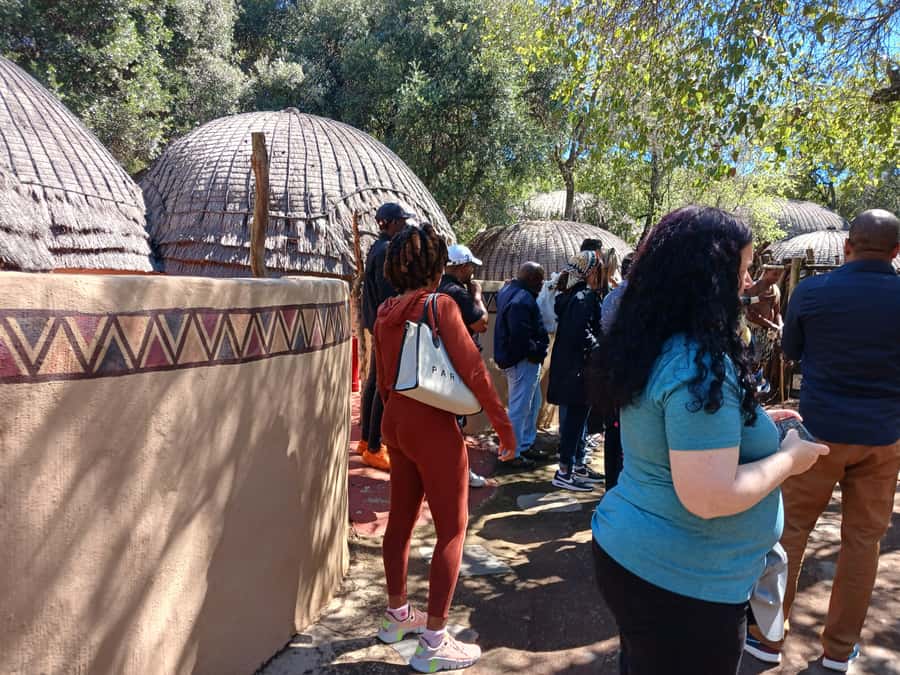
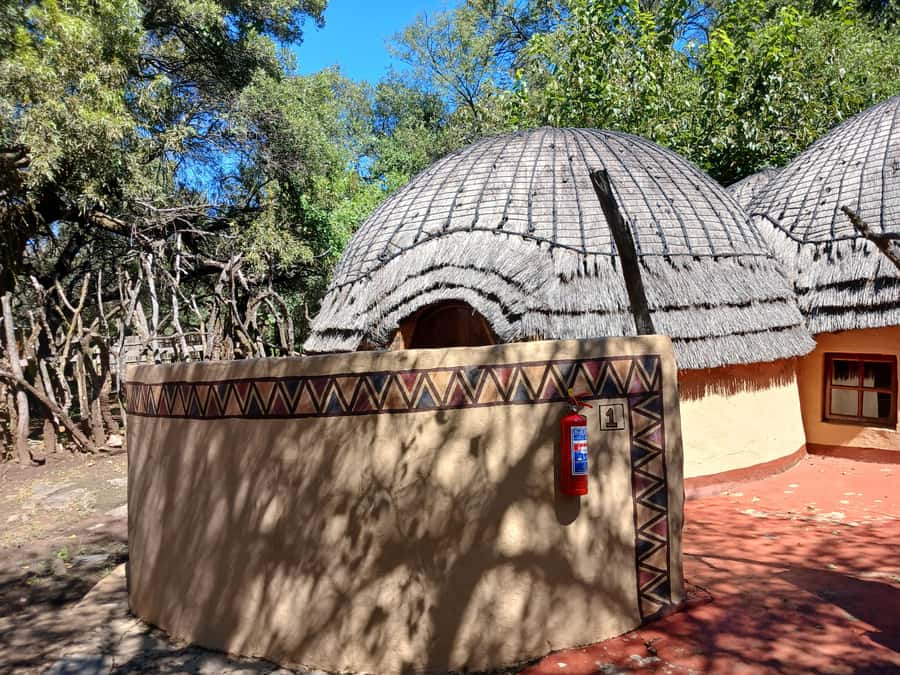
The walking tour visits homesteads associated with the Ndebele, Zulu, Xhosa, Basotho and Pedi. This is the educational core of the experience.
You will see how the village presents different building styles, domestic spaces and cultural symbols. The value is in comparing them side by side. A single cultural stop can leave you with a general impression, but five in one route make differences easier to notice.
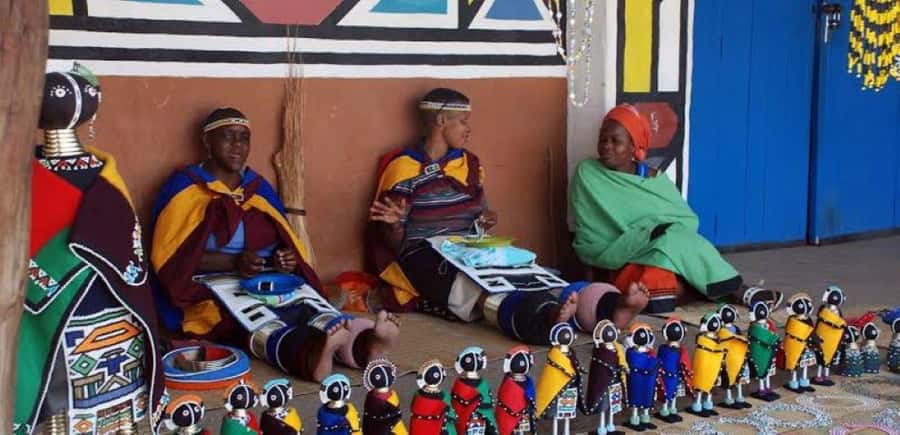
The Ndebele section connects naturally with the painted amphitheatre. Strong color and geometric decoration provide one of the clearest visual markers of the visit. The Zulu and Xhosa sections add other cultural references, while the Basotho and Pedi homesteads broaden the picture beyond the groups most familiar to many international visitors.
The route is presented as a guided walk and sightseeing visit lasting about two hours, including the dance program. Comfortable shoes are essential. You are moving between homesteads and performance areas, and the experience is not built around sitting in a vehicle for the entire day.
Keep your expectations measured. Lesedi presents cultural traditions in a compact, visitor-friendly format. The homesteads are part of an organized attraction, so you are seeing selected examples rather than visiting private homes or meeting an entire community in its everyday setting.
That does not make the visit useless. It simply tells you how to read it. I would use Lesedi as an accessible introduction, then seek out museums, township experiences or longer cultural programs if you want more detail about present-day South African life.
A few more Hartbeespoort trips to weigh up
- Drumstruck at Silvermist. Live African Drum Show & Wine tasting
★ 5.0 · 137 reviews - Cape Town: Silvermist Estate Wine Tasting & Drumstruck Show
★ 4.9 · 103 reviews
Music, dance and ancestral stories in the amphitheatre
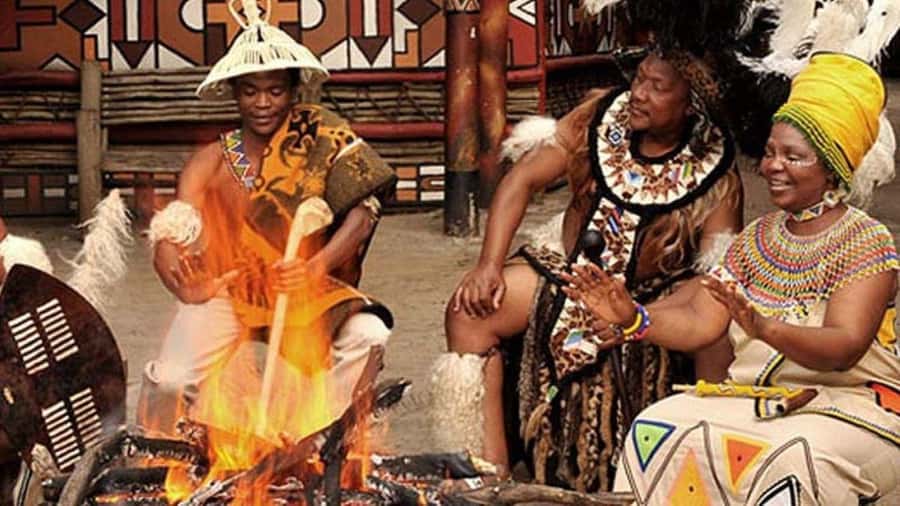
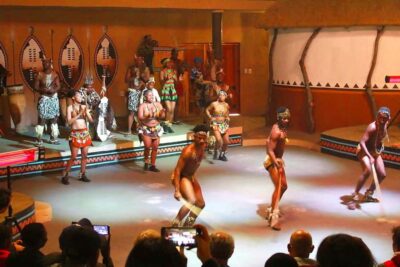
The cultural dance performance is the emotional high point. The show uses choreographed movement, drums and song to present ancestral folklore and rituals. The combination is easy to follow even if you have little background in the traditions.
The drumming gives the performance its pulse, while the dancing shows how movement can carry meaning without translation. You will also hear singing, and the program is designed as an ensemble production rather than a quiet demonstration.
This is the part that gives the visit its energy. The film and homestead walk ask you to listen and look closely. The performance gathers those themes into a memorable finish.
It is also the portion most likely to feel staged. The dance show is prepared for an audience, with a set venue and a choreographed sequence. If you want an unplanned village celebration, this is not that. If you want a clear, entertaining introduction that fits into a half-day, the format makes sense.
The performance has received especially strong praise for its music, dancing and entertainment value. Food has also earned high marks from the available feedback, though you must choose the optional lunch to judge that part for yourself.
Nyama Choma lunch and the crafts market
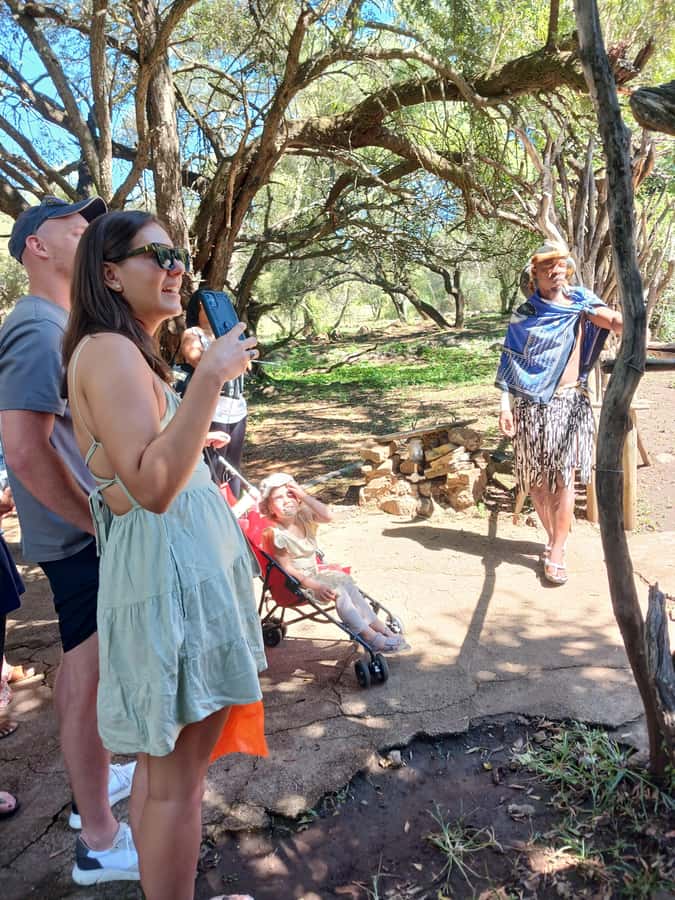
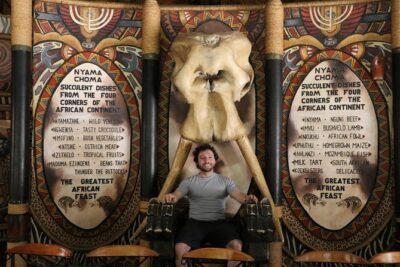
After the cultural program, you have about an hour for dessert, lunch and shopping. The Nyama Choma restaurant serves a South African buffet, but lunch and drinks are extra.
The optional meal gives you flexibility. You can pay for the buffet if you want to make the outing a complete half-day program, or skip it if you have a later booking or prefer to eat elsewhere. Since the total outing lasts five hours, lunch can make the pace feel more relaxed rather than turning the visit into a rush from one stop to the next.
The food is worth considering because it adds another cultural layer. A performance shows you music and movement; a South African buffet gives you a chance to sit down with local food after the tour. The exact dishes are not specified, so do not book based on a particular menu.
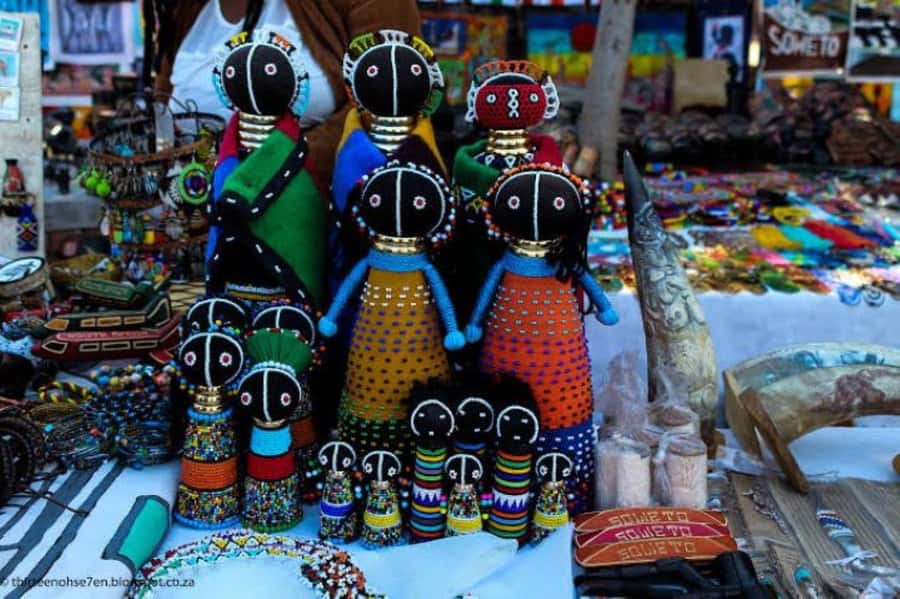
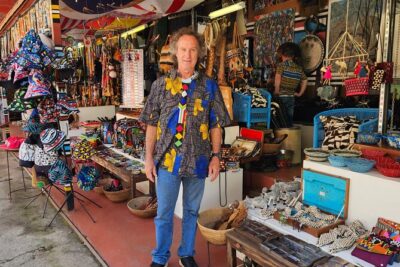
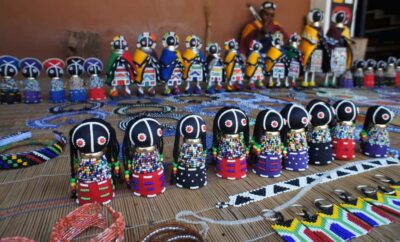
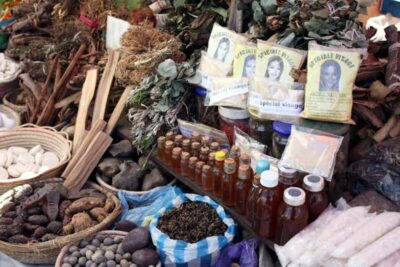
The shop and flea market sell African clothing, beads, bags, magnets, artifacts and other curios. This is a convenient place to buy a small reminder of the day, but purchases are not included. I would set a budget before you browse, particularly if you are traveling with children or collecting gifts.
The market can feel commercial, and that is part of the trade-off. You get easy access to crafts without searching across the city, but the items are being sold in a visitor setting. Look carefully at quality and price, and ask what you are buying if an item is described as traditional or handmade.
What the $130 price really covers
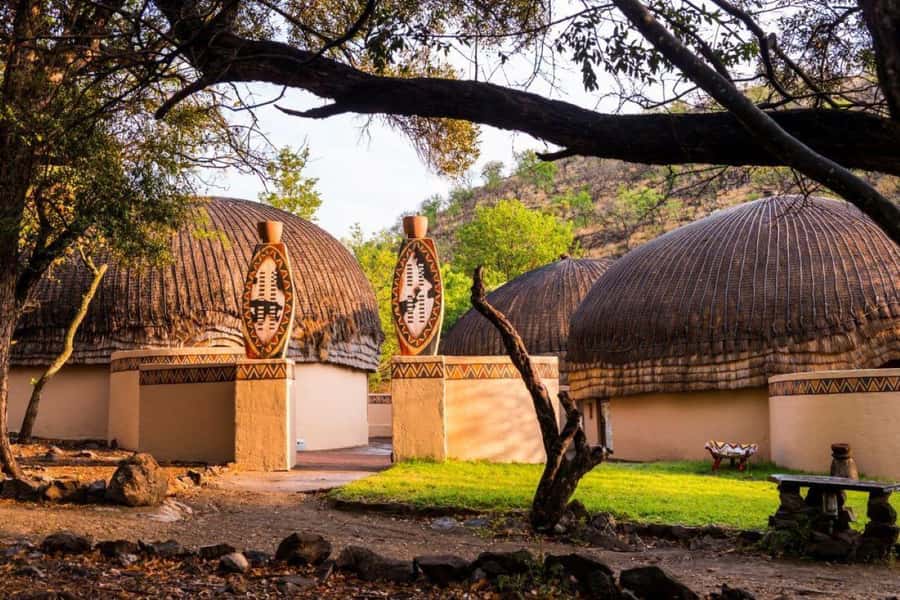
At $130 per person, this is not the cheapest cultural outing around Johannesburg. The price makes more sense if you value door-to-door transport and a very small group.
Your fee covers private pickup and drop-off at your accommodation, an air-conditioned vehicle and the cultural entrance fee. With only up to three participants, you are paying for space and convenience as well as admission. That can be good value for a couple or small group that would otherwise arrange private transport separately.
The five-hour length also matters. You are not paying for a short stage show alone. The day includes transport, the welcome, the audiovisual presentation, the homestead tour, the dance performance and time for lunch or shopping.
Lunch and drinks are the main extra cost. Shopping is another optional expense. Add those to your budget before comparing the tour with a package that includes a meal.
I would call the price fair for visitors who want a simple, private outing from Johannesburg or selected Pretoria areas. It is less compelling if you already have a rental car, want a low-cost independent visit, or prefer a long and detailed cultural program.
Who will get the most from Lesedi
This experience suits first-time visitors who want a broad introduction to South Africa’s cultural diversity without planning several separate visits. It also works for couples and small groups who prefer private transport and an English-speaking guide.
The program is a good match for anyone who enjoys a clear schedule, live performance and visual displays. You get a little history, a little architecture, music, dance, food and shopping in one outing.
I would also recommend it to people staying in the northern Johannesburg areas listed for pickup. Sandton, Rosebank, Houghton Estate, Westcliff, Fourways and Randburg are especially practical starting points, while Hatfield and Brooklyn are the named Pretoria options.
The experience is not suitable for children under 12. That age rule is firm in the supplied details, so families with younger children need another plan.
You should also be comfortable with walking and standing. Comfortable shoes are specifically recommended, and the program moves through several areas before the final meal or market visit.
How to make the five hours work well
Wear comfortable shoes and choose clothing that lets you walk easily. The setting is outside the city, so bring what you normally need for a half-day outing, but the supplied information does not list extra equipment or a dress code.
Decide in advance if you want lunch. If you do, allow for the additional charge for the buffet and drinks. If you skip it, the final hour includes shopping and time at the restaurant area, so you may want to plan your own meal later.
Keep some room in your schedule after the stated five hours. The tour includes collection and return, and the exact start time depends on availability. The listed duration is useful for planning, but do not place an important appointment immediately afterward.
If you want the most from the guide, ask questions during the homestead walk rather than waiting until the dance show. Ask how the traditions shown relate to modern South Africa, as this can turn a general cultural presentation into a more personal conversation.
Cancellation is flexible: you can cancel up to 24 hours before the experience for a full refund, and you can reserve now and pay later. That is useful when your Johannesburg plans are still shifting.
Should you book this cultural village visit?
Book it if you want a well-organized half-day introduction to five South African cultural groups, with private pickup, a small group and a lively performance at the end. The strongest reasons are the easy transport, the range of traditions covered and the chance to speak with a guide such as Maryam about culture and current affairs.
Think twice if you want an unscripted community visit, extensive academic detail or an all-inclusive price. The village is a staged cultural attraction, lunch costs extra and the schedule gives each group a compact introduction.
For many first visits to Johannesburg, the balance works. You get more than a dance show, but you should read the homesteads and performances as an accessible presentation rather than a complete picture of South Africa’s many communities. If that matches what you want, the $130 price is reasonable, especially for a private group of three.
FAQ
How long does the Lesedi Cultural Village experience last?
The experience lasts five hours, including pickup and drop-off from your accommodation.
Where does pickup take place?
Pickup is available from listed accommodation areas in Johannesburg, including Sandton, Rosebank, Houghton Estate, Westcliff, Fourways, Randburg, Roodepoort, Bedfordview, Edenvale, Kempton Park, Midrand, Menlyn, Centurion, Parktown, Lynnwood and Melrose. Pretoria pickup is listed for Hatfield and Brooklyn.
Is transportation included?
Yes. Private pickup and drop-off are included in an air-conditioned vehicle.
What cultural groups are presented at Lesedi?
The visit covers the Zulu, Xhosa, Ndebele, Basotho and Pedi cultural groups.
Is lunch included in the price?
No. Lunch and drinks are not included. You can purchase an optional South African buffet lunch at the Nyama Choma restaurant.
What language is the tour conducted in?
The live tour guide language is English.
Are children allowed on the tour?
Children under 12 are not permitted on this experience.
Can I cancel the booking?
Yes. You can cancel up to 24 hours in advance for a full refund. You can also reserve and pay later.
Just added around Hartbeespoort
- Lesedi Cultural Village★ 4.9 · 14 reviews
- Lesedi Cultural Village, Sterkfontein Caves or Maropeng Mus★ 5.0 · 10 reviews
- Johannesburg: Lion and Safari Park tour. Pick up Privately★ 5.0 · 3 reviews
- Hartbeespoort Dam: 1 Hour Cruise & Sunday Buffet Lunch★ 4.2 · 21 reviews
- Elephant & Monkey Santuary with Lion Park Tour★ 4.6 · 3 reviews
- Cradle of Humankind and Lesedi Cultural Village★ 4.2 · 8 reviews
- Hartbeespoort: Self-Drive Lion and Safari Park Tour★ 4.7 · 64 reviews
- Hartbeespoort Dam: The Luxury Alba Boat Cruise with Food★ 3.9 · 81 reviews
Lesedi Cultural Village Tours, compared.
Lesedi Cultural Village and Cradle of Humankind Tour
Read our review →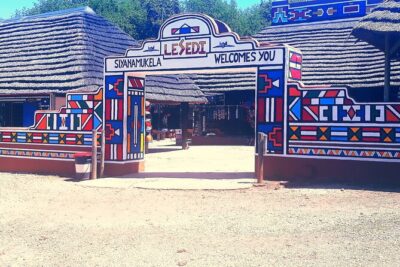
Browse the lists this tour appears in